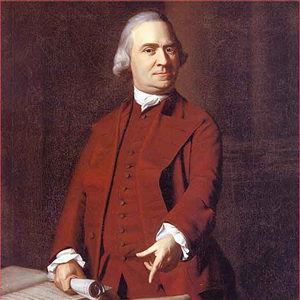
Covenant
What is Covenant? The very concept of Covenant is not a part of our language, not even in Christian circles. This theological concept was in fact a core component of what was understood in our Founders era. Yes, The interactive relationship between individuals, society and individuals as well as the first Covenant of the inner determination of God in three persons to establish salvation were Founders premises for governance.
The American Founders looked at the Reformation context for the definition of Covenant. Here is a simple definition:
“The term “covenant” is of Latin origin (con venire), meaning a coming together. It presupposes two or more parties who come together to make a contract, agreeing on promises, stipulations, privileges, and responsibilities. 1”
In this program, I am covering the use of Covenant in Foundational writings including the Constitution of Massachusetts, writings about Sam Adams, letters or documents written to or by Sam Adams and a perspective from John Witherspoon in his work “Lectures On Moral Society.”
Promises Made = Promises Kept
This section will be a very quick and simple analysis or comparison between the RNC convention and the demon-crat convulsion. I elaborate on the key concepts from “Lectures On Moral Society” by Rev. Dr. Withspoon with,
“Contracts should be of things evidently possible, and probably in our power. Contracts by which men oblige themselves to do things impossible, are no doubt void from the beginning; but if the impossibility was known to the contracting party, it must have been either absurd or fraudulent. When things engaged for become impossible by the operation of Providence without a man’s own fault, the contract is void, and he is guiltless—as if a man should covenant to deliver at a certain place and time a number of cattle, and when he is almost at the place of destination they should be killed by thunder, or any other accident, out of his power.” page 163
One must take in that the above is premised on understanding the essence of “An Oath.”
“Among the signs and appendages of contracts, are oaths and vows.
An oath is an appeal to God, the searcher of hearts, for the truth of what we say, and always expresses or supposes an imprecation of his judgment upon us, if we prevaricate.
An oath therefore implies a belief in God, and his Providence, and indeed is an act of worship, and so accounted in Scripture, as in that expression, Thou shall fear the Lord thy God, and shalt swear by his name. It use in human affairs is very great, when managed with judgment. It may be applied and indeed has been commonly used (1) in the contracts of independent states, who have no common earthly superior. In ancient times it was usual always to close national treaties by mutual oaths. This form is not so common in modern times, yet the substance remains; for an appeal is always supposed to be made to God, against the breach of public faith.” page 170
I will discuss and point out that both political parties have broken their Covenants with the Citizens of these United States and at every level of state government. They do not take their ‘Oath’ seriously. They only go through the motions of saying the words without considering the deep meaning of those words.
You and Covenants
In what I have been establishing this year regarding ‘political theology,’ the question at the heart of our present political environment is personal. What is your understanding and part in the family, local, state and national Covenants in our Constitutional form of governance?
What is your duty within the human perspective of governance in the context of Covenant – that relationship between you,