
Sign up to save your podcasts
Or

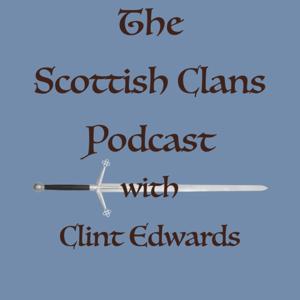


Campbells and MacDonalds: Allies and Kinsmen of Robert the Bruce
Think Clan Campbell and Clan Donald were always sworn enemies? Think again. In this episode, you’ll learn how these two great Highland clans rose to power side by side in the late 13th and early 14th centuries. Their rise came through intermarriage, shared blood, and loyalty to Robert the Bruce in the Scottish Wars of Independence.
Long before Glencoe and the 17th-century civil wars, the Campbells of Lochawe and the MacDonalds of Islay were family. Angus Mór MacDonald married a daughter of Sir Colin Campbell (Cailean Mór), which made their son, Angus Óg MacDonald, the nephew of Sir Neil Campbell of Lochawe. Neil married Mary Bruce, the king’s sister, so the Bruce was his brother-in-law. When Robert the Bruce was a hunted fugitive in 1306, Neil and Angus Óg helped him escape through Argyll. After the Bruce defeated the MacDougalls at the Battle of the Pass of Brander in 1308, both families gained greatly from the fall of Clan Dougall. Angus Óg was granted Islay, which set the stage for the Lordship of the Isles.
If you descend from Clan Campbell, Clan Donald, Clan MacDougall, or any of their septs, this episode reframes one of Scotland’s most famous clan rivalries. It traces the shared roots of Argyll, the Isles, and the Bruce cause in medieval Scottish history.
Source:
Links:
The Battle of Culloden on 16 April 1746 was the final major battle of the Jacobite Rising of 1745–46 and a decisive defeat for Charles Edward Stuart’s army. But while thousands of Jacobite soldiers fought and died on Culloden Moor, only four clan chiefs were killed in the battle itself. In this episode, we look at those chiefs, their clans, and the circumstances that brought them onto the battlefield that day. We also consider Charles MacLean of Drimnin, who served as a proxy leader for his imprisoned chief and led the MacLean contingent at Culloden, earning an honorable mention for his role and sacrifice.
The number of Scottish clan chiefs killed at Culloden was relatively small, but the cultural and political consequences of the battle were enormous. The defeat marked a turning point in the history of the Scottish Highlands and had profound consequences for the clan system, Highland society, Gaelic culture, and the relationship between the Scottish Highlands and the British state. By looking specifically at the chiefs who died at Culloden, we can put a human face on one of the most important turning points in Scottish clan history and better understand what was lost on 16 April 1746.
Learn more about The Scottish Clans:
Support The Scottish Clans on Patreon:
Shop The Scottish Clans:
Subscribe on YouTube:
Listen on Apple Podcasts:
Listen on Spotify:
Contact:
The Battle of Flodden in 1513 was one of the greatest military disasters in Scottish history—but its impact on the Scottish clans went far beyond the battlefield. In this episode, we examine the remarkable number of Scottish clan chiefs who fell at Flodden, working through the clans whose leadership was suddenly cut down and considering what the loss of so many chiefs meant for the continuity of clan leadership. The death of a chief was not simply the loss of one individual; it could create succession problems, weaken a kindred, and open the door to rival claims and political instability. By looking at the clans affected by Flodden, we can better understand the human and political consequences of the battle and why its effects continued to be felt long after the fighting ended. If you are interested in Scottish clan history, the Battle of Flodden, Scottish chiefs, clan succession, and medieval Scottish history, this episode offers a closer look at one of the most consequential moments in the history of Scotland's kindreds.
Promised links:
Podcast episode on clan chief succession
Here's the websited a gave a shoutout to: Glen Discovery
🌐 Website: scottishclans.info
In this episode, we step into one of the darkest chapters of clan history: the Massacre of Eigg. Reading directly from Stuart McHardy's The Well of the Heads, we tell the story of the Smooring of the MacDonalds — the moment invading MacLeods cornered the MacDonalds of ClanRanald hiding in a sea cave on the Isle of Eigg and killed nearly the entire population of the island by lighting brush fires at the cave mouth and suffocating everyone inside.
After reading the story straight from the source, we break down a few key details worth a closer look — which MacLeods and which MacDonalds? The importance of Eigg in the history of the Hebrides, and whether this story ever actually took place...
Links:
The fall of the Lordship of the Isles didn't just fracture a clan — it set off a centuries-long story of survival, rivalry, and extinction. In Part 2, we continue our deep dive into the independent branches that emerged from the ruins of Clan Donald, focusing on four clans that carved out their own identities and legacies — and honoring the branches that didn't survive into the modern era.
If you haven't listened to Part 1 yet, start there — we lay the groundwork with the history of the Lordship, its forfeiture in 1493, and an introduction to the major branches of Clan Donald.
The Branches Covered in This Episode:
🗡️ MacDonalds of Keppoch — Based in Lochaber, the Keppoch MacDonalds were notorious for holding their lands by the sword rather than by legal title. They remained a powerful and combative force in the Highlands well into the 18th century, fighting at Killiecrankie and Culloden.
🗡️ MacDonalds of Glencoe — A small branch descended from Iain Abrach, the MacDonalds of Glencoe are best known today as the victims of the 1692 Massacre of Glencoe, one of the most notorious acts of betrayal in Scottish history.
🗡️ MacDonalds of Largie (Kintyre) — Descended from the ancient line holding Kintyre, the Largie branch maintained a presence in one of the most historically significant territories of the old Lordship of the Isles.
🗡️ Clan Donald of Dunyveg — Also known as Clan Ian Mòr, this branch dominated Kintyre and Islay and had deep ties to the MacDonnells of Antrim in Ulster, making them a major force in Gaelic Scotland and Ireland.
⚔️ Honorable Mentions — The Lost Branches:
Missed Part 1?Catch up on the history of the Lordship of the Isles, its dramatic fall in 1493, and the first wave of independent Clan Donald branches — including Sleat, Clanranald, Glengarry, and the MacDonnells of Antrim.
Resources & Links:
🏴 Scottish Clans Website: www.scottishclans.info
☕ Support the Show on Patreon: https://www.patreon.com/scottishclansHelp keep Scottish clan history alive — every contribution makes a difference!
👕 Battle Shirts & Clandanas: https://stores.inksoft.com/the_scottish_clans/shop/homeWear your clan pride!
🎤 Book an In-Person or Virtual Scottish Clans Seminar: Email [email protected]
📺 Watch on YouTube: https://www.youtube.com/@thescottishclans
Clan Donald · MacDonalds of Keppoch · MacDonalds of Glencoe · Massacre of Glencoe · Clan Dunyveg · MacDonalds of Largie · Kintyre · Lordship of the Isles · Scottish clans · Scottish history · Highland clans · Scottish ancestry · MacIain of Ardnamurchan · Clan Ian Mòr · Scottish podcast · Gaelic history
When the Lordship of the Isles fell in 1493, it didn't just end a political dynasty — it shattered one of the most powerful Scottish clans in history. In this episode, we explore how the mighty Clan Donald ceased to exist as a single unified clan and instead splintered into multiple independent branches, each with its own chief, territory, and identity.
Whether you're tracing Scottish ancestry, fascinated by Highland history, or just discovering the world of Scottish clans, this is the story that explains why the MacDonalds cease to exist as one clan and, until recently, there was no single MacDonald clan.
What You'll Learn in This Episode:
Resources & Links:
🏴 Scottish Clans Website: www.scottishclans.info
☕ Support the Show on Patreon: https://www.patreon.com/scottishclansHelp keep Scottish clan history alive — every contribution makes a difference!
👕 Battle Shirts & Clandanas: https://stores.inksoft.com/the_scottish_clans/shop/homeWear your clan pride!
🎤 Book an In-Person or Virtual Scottish Clans Seminar: Email [email protected]
📺 Watch on YouTube: https://www.youtube.com/@thescottishclans
Which Scottish clans truly dominated the landscape of Scotland? In Part 2 of this two-part series, we continue our look at the 15 biggest Scottish clans, measured by territory, influence, and the number of cadet branches they produced. These were the kindreds that expanded, adapted, and established lasting power across multiple regions—shaping the political and social fabric of Scotland.
Aimed at those newer to clan history, this episode completes the list and adds important context for understanding how these large kin-groups functioned, grew, and maintained influence over time. Together with Part 1, this provides a clear foundation for identifying the major clans and understanding why some families rose to prominence while others remained more localized.
Website: https://scottishclans.info
Which Scottish clans were truly the largest and most powerful? In this episode of the Scottish Clans podcast, we look at the 15 biggest Scottish clans, judging their influence by the amount of land they controlled and the number of cadet branches they produced. These were the kindreds that dominated regions, produced numerous offshoot families, and shaped the political and military landscape of Scotland for centuries.
Designed especially for those newer to clan history, this episode provides a clear introduction to the major players of the clan world and explains how certain families grew into sprawling kin-groups with far-reaching influence. This is Part 1 of a two-part series, where we begin examining the clans whose power, territory, and branches made them giants in Scottish history.
Website: https://scottishclans.info
In this episode, I read and discuss the story behind the Keppoch Murders from Stuart McHardy’s The Well of the Heads, one of the most haunting episodes in the history of Clan Donald. This account explores the killing of the Keppoch chief and his brother by members of their own kindred, revealing the volatile internal politics of Highland clan society and the deadly consequences of disputed leadership. After reading the story that gives McHardy’s book its name, I close with historical context on the cadet branches of Clan Donald and explain how Coll “of the Cows” MacDonald of Keppoch connects to the lineage involved in the Keppoch Murder narrative. For those interested in Scottish clan history, Highland succession disputes, and the realities behind clan violence, this episode separates legend from documented tradition while situating the event within the broader structure of Clan Donald.
Support the work on Patreon: https://www.patreon.com/scottishclans
In this episode, I step away from a simple Highland–Lowland divide and draw on research from Wilson McLeod’s PhD thesis, Divided Gaels: Gaelic Scotland and Gaelic Ireland, 1200–1650 to show just how fragmented and uneven Gaelic Scotland really was. Using McLeod’s work, I explore how some Highland regions lay at the cultural core of the Lordship of the Isles, while others sat on its margins or were shaped by entirely different political and social forces—and how parts of the Lowlands retained Gaelic far longer than is usually assumed. The result is a far messier, more regional picture of language, identity, and power than the clean lines we often draw on maps. This episode is an invitation to rethink easy categories and to see Gaelic Scotland as a patchwork of overlapping influences rather than a binary world.
Support the work at patreon.com/scottishclans
Watch on the Scottish Clans YouTube channel
Explore articles and resources at the Scottish Clans Website - https://scottishclans.info
Merch - Clandanas and Battle Shirts
From the publisher's feed

3,172 Listeners
5,366 Listeners

4,754 Listeners

37,542 Listeners

3,161 Listeners

3,335 Listeners

1,888 Listeners

2,037 Listeners
29,029 Listeners

3,131 Listeners

1,380 Listeners

514 Listeners

2,399 Listeners

883 Listeners
1,147 Listeners