
Sign up to save your podcasts
Or

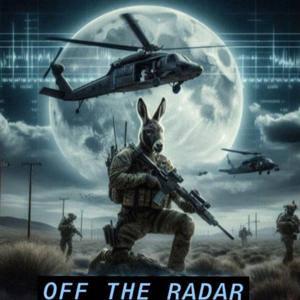

This is the third and final part of our interview focused on how Civil Affairs serves as the connective tissue between the military and civil government during military operations. Civil Affairs engage and leverage the civil component or population of an area, region, or country. Civil Affairs operates during peace time operations, competition, crisis, and conflict by providing guidance and support to both the military and civil government. During rotation 25-02 at the National Training Center (NTC) a Civil Military Operations Center (CMOC), a Company level CA entity, executed SOF operations along side a conventional Brigade. This three part episode discusses the experiences that the CMOC had during that rotation.
Jessica Lauder: MAJ Lauder is the CMOC Chief. Jess was an Chemical Officer in the National Guard prior to switching to active duty Air Defense Officer prior to becoming SOF Civil Affairs. As a CA Officer, she has operational experience across CENTCOM.
Pat McCluskey: CPT McCluskey is the lead Civil Affairs Observer Coach-Trainer for Burro team. He served as the lead OC/T for this CMOC only rotation. Pat has operational experience in EUCOM.
CPT Weston Rich is a member of SOF Plans at the NTC and former member of Burro Team, the Special Operations Training Detachment OC/T Team at NTC. Prior to his time at NTC, Weston served as a Detachment Commander with 1st SFG (A) and as an Infantry Officer with 3-509th IN (ABN)/4/25 ID (now part of 2/11 ABN DIV). Following his time at NTC, Weston will attend Carnegie Mellon University with a follow-on assignment to Army Futures Command.
- CA serving as the sole ARSOF entity during a CTC rotation, CMOC fulfilling all staff functions and being the sole SOF entity integrating with a conventional brigade
- The importance of Intel and having the right people working on Intel, Intel war fighting function in the targeting cycle
- integration through physically being co-located versus integrating and interoperating while displaced
- Commanders guidance; specifying what the limits might be and the criteria that needs to be met by the unit if action
- Prolonged Casualty Care scenario; using non-standard medical network and planning evacuation; passing of information from adjacent unit missions to get unit faction the required information in a timely manner
- Balancing operations and resources ins resource constrained environment, managing battle rhythm with rhythm of battle
- Deliberate method for planning, communication, and executing the plan
- Civil Affairs in Large Scale Combat: consolidation of gains (more USACAPOC task), creating opportunities beyond the FLOT and creating operational time for the maneuver force, horizontal escalation: actions in third countries or separate regions that effect the combat zone, influencing the Division deep and extended deep areas
- Commander’s role to visualize the battlefield, commander serving as plans officer to push the planning process further forward and visualize the future battlefield to make decisions now to drive end state
- biggest lessons learned: fundamentals: PCC/PCIs, comms, taking training seriously, systems and processes, mentally towards training
To provide feedback please email the host, CPT Rich, at [email protected].
Produced, edited, and sound engineering by Micah Popp of Salty Sounds
 View all episodes
 By Burro Team

4.2
55 ratings
This is the third and final part of our interview focused on how Civil Affairs serves as the connective tissue between the military and civil government during military operations. Civil Affairs engage and leverage the civil component or population of an area, region, or country. Civil Affairs operates during peace time operations, competition, crisis, and conflict by providing guidance and support to both the military and civil government. During rotation 25-02 at the National Training Center (NTC) a Civil Military Operations Center (CMOC), a Company level CA entity, executed SOF operations along side a conventional Brigade. This three part episode discusses the experiences that the CMOC had during that rotation.
Jessica Lauder: MAJ Lauder is the CMOC Chief. Jess was an Chemical Officer in the National Guard prior to switching to active duty Air Defense Officer prior to becoming SOF Civil Affairs. As a CA Officer, she has operational experience across CENTCOM.
Pat McCluskey: CPT McCluskey is the lead Civil Affairs Observer Coach-Trainer for Burro team. He served as the lead OC/T for this CMOC only rotation. Pat has operational experience in EUCOM.
CPT Weston Rich is a member of SOF Plans at the NTC and former member of Burro Team, the Special Operations Training Detachment OC/T Team at NTC. Prior to his time at NTC, Weston served as a Detachment Commander with 1st SFG (A) and as an Infantry Officer with 3-509th IN (ABN)/4/25 ID (now part of 2/11 ABN DIV). Following his time at NTC, Weston will attend Carnegie Mellon University with a follow-on assignment to Army Futures Command.
- CA serving as the sole ARSOF entity during a CTC rotation, CMOC fulfilling all staff functions and being the sole SOF entity integrating with a conventional brigade
- The importance of Intel and having the right people working on Intel, Intel war fighting function in the targeting cycle
- integration through physically being co-located versus integrating and interoperating while displaced
- Commanders guidance; specifying what the limits might be and the criteria that needs to be met by the unit if action
- Prolonged Casualty Care scenario; using non-standard medical network and planning evacuation; passing of information from adjacent unit missions to get unit faction the required information in a timely manner
- Balancing operations and resources ins resource constrained environment, managing battle rhythm with rhythm of battle
- Deliberate method for planning, communication, and executing the plan
- Civil Affairs in Large Scale Combat: consolidation of gains (more USACAPOC task), creating opportunities beyond the FLOT and creating operational time for the maneuver force, horizontal escalation: actions in third countries or separate regions that effect the combat zone, influencing the Division deep and extended deep areas
- Commander’s role to visualize the battlefield, commander serving as plans officer to push the planning process further forward and visualize the future battlefield to make decisions now to drive end state
- biggest lessons learned: fundamentals: PCC/PCIs, comms, taking training seriously, systems and processes, mentally towards training
To provide feedback please email the host, CPT Rich, at [email protected].
Produced, edited, and sound engineering by Micah Popp of Salty Sounds

544 Listeners
1,077 Listeners

112,263 Listeners
780 Listeners
38 Listeners
46,070 Listeners
1,662 Listeners
410 Listeners

29,378 Listeners
10 Listeners

96 Listeners
161 Listeners