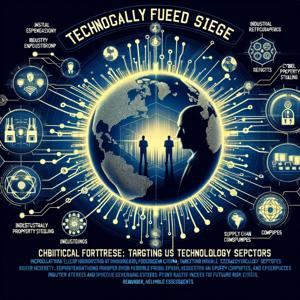
This is your Silicon Siege: China's Tech Offensive podcast.
Let’s get right into Silicon Siege: China’s Tech Offensive, I’m Ting—cyber scout, tech tactician, and your eyes on the digital dragon’s latest moves. These past two weeks have been a blur, even by my caffeine-fueled, always-on standards.
First up, industrial espionage—we’re not just talking old-school USB drops. The Washington Examiner recently uncovered United Imaging, a Chinese medtech giant with deep CCP ties and a rap sheet for swiping sensitive NIH-funded research. They’ve got hardware in top US labs, and three employees were once caught red-handed funneling cancer trial data and device IP back to Shanghai. This isn’t just a one-off—Wired notes medical records and clinical data are prime targets. CISA even warned about backdoors in Chinese-made hospital monitors, letting attackers run remote code whenever they fancy. The Biosecure Act is inching through Congress, trying to slam the door on federal contracts with biotech firms linked to the PLA, but until then, the exfil party rages on.
On the intellectual property front, Nvidia and Qualcomm—two of America’s chip crown jewels—are under Beijing’s antitrust microscope. The Times of India reports that Qualcomm’s just been hit with a probe over its acquisition of Israel’s Autotalks, with China’s State Administration for Market Regulation alleging they didn’t properly disclose deal details. Same playbook as last month’s Nvidia inquisition. Now, I’m no lawyer, but when nearly half of Qualcomm’s revenue comes from China, these investigations feel less about fair play and more about strategic leverage. Wall Street Journal says it’s a pattern: Target US tech’s China cash cow, squeeze for concessions, repeat. Meanwhile, over at TechInsights, a Canada-based semiconductor analyst, the Chinese government just slapped them on the “unreliable entity list”—apparently for snooping a bit too closely on Huawei’s chip progress.
Supply chain? Oh, it’s a mess. The FCC’s been on a tear, yanking millions of Huawei, Hikvision, ZTE, and Dahua devices—cameras, smartwatches, you name it—from US online stores. FCC Chair Brendan Carr told Reuters these gadgets could let Beijing surveil Americans, disrupt networks, or worse. And it’s not just finished goods—on October 28, the FCC votes to ban any device with components from these firms, closing a major loophole. This is about as close to a digital blockade as it gets, with online retailers now under orders to screen every listing, every SKU, every byte.
The strategic implications? Let’s just say both sides are reloading. Trump dropped a 100% tariff bomb on all Chinese imports, plus export controls on “critical software”—likely targeting chip design tools, per Fortune. China’s riposte? Sweeping rare earth export curbs—remember, they control 90% of global processing, says the South China Morning Post. Alfredo Montufar-Helu, a managing director at Ankura Consulting, called Beijing’s rare earth maneuvering “uncha
This content was created in partnership and with the help of Artificial Intelligence AI.