
Sign up to save your podcasts
Or

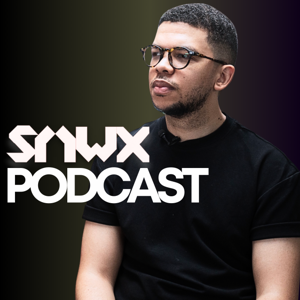


Based on Podcast App listening data
Dada Morero joins Dr Sizwe Mpofu-Walsh on SMWX to discuss his journey into politics, his record as Johannesburg’s mayor and the choices facing the city ahead of the local government elections. From growing up in Orlando West and becoming involved in student activism to working in civilian intelligence and city administration, Morero reflects on the experiences that shaped his leadership. He revisits his first 25-day stint as mayor, the instability of coalition government and his priorities on crime prevention, municipal finances and service delivery. The conversation tackles the Auditor-General’s findings, wasteful expenditure, water shortages, electricity interruptions and deteriorating roads, with Morero defending his administration’s approach and outlining its infrastructure investment plans.
Help shape a young person’s future with Cell C Take A Child To Work. Find out how to get involved: https://cellctakeachildtowork.co.za/?utm_source=leading-edge-growth&utm_medium=display&utm_campaign=youth-month_tactw&utm_term=&utm_content=smwx&utm_id=CON_FY27_CM_PRE_AW_MUL_NA_NAT_PRB_LEG_MUL_YOUTH-MONTH
Justice Mbuyiseli Madlanga, former Constitutional Court Judge, joins us on SMWX to have a conversation about his early life, what drew him to the Law, his career as an advocate, and his many landmark judgements and court appearances, including the ICJ in 2004. In this episode, we get to know and understand the man behind the name and where it all truly began. Justice Madlanga also reflects on the life and legacy of Oliver Tambo. The interview was filmed on the sidelines of the Oliver Tambo Memorial Lecture, hosted by the Oliver and Adelaide Tambo Foundation in collaboration with Infinity Dynamic Strategy.
Lukhona Mnguni returns to SMWX for a conversation with Dr Sizwe Mpofu-Walsh about his campaign to become Johannesburg’s mayor and Rise Mzansi’s plans to rebuild the city. Drawing on stories from the campaign trail, he discusses the everyday corruption, crime and water shortages affecting residents, and why so many are losing faith in politics. He outlines proposals to stabilise municipal finances, make procurement transparent, repair water infrastructure and establish an investment fund that gives residents a stake in the city’s recovery, alongside ward-level budgets to strengthen community participation. Turning to the battle for City Hall, Mnguni explains why he believes Helen Zille is unlikely to become mayor, sets out Rise Mzansi’s conditions for a stable coalition and challenges Floyd Shivambu’s proposal that the largest party should automatically take the mayoralty. At the heart of the discussion is whether Johannesburg’s next government can move beyond political deal-making to restore services, accountability and public trust
Who is Cape Town really being built for? Brett Herron joins SMWX to unpack the city’s housing and affordability crisis, explain why he left the DA, and discuss his allegations about donor and property developer influence over affordable housing. He outlines GOOD’s proposals for building homes, reducing municipal tariffs and regulating Airbnb, while questioning whether residents are being priced out of their own city. The conversation also tackles tourism and digital nomads, inequality and informal settlements, crime and gangsterism on the Cape Flats, and Herron’s opposition to the proposed N2 wall. He sets out his alternative, reflects on his record in government, and answers questions about smaller parties, coalitions and GOOD’s ability to govern Cape Town.
Ekurhuleni Executive Mayor Doctor Xhakaza joins SMWX for a frank conversation about the city’s future ahead of the 2026 local government elections. He makes the ANC’s case for another term, outlines plans to revive manufacturing and establish a university, and responds to the Madlanga Commission revelations involving the EMPD. Xhakaza also addresses his fallout with the EFF, the removal of Dunga, tensions over coalition arrangements and efforts to recover revenue lost through billing manipulation. The discussion tackles gender-based violence, whistleblower protection and the personal risks of confronting corruption.
MK Party MP Vusi Shongwe joins SMWX for a conversation about Parliament’s ad hoc committee, the Madlanga Commission and the political battles surrounding Feroz Khan. He explains why he believes Khan was shielded from appearing before the committee and questions Julius Malema and the EFF’s handling of the matter. Shongwe recounts a Durban meeting where he alleges he was offered money and cars, shares his account of being abducted in Tembisa, and discusses allegations involving Shadrack Sibiya, Cat Matlala and Crime Intelligence. Beyond the investigations, he reflects on his background in music production and the SAPS, his long-standing relationship with former President Jacob Zuma and his journey into politics. Turning to the local government elections, Shongwe outlines MK’s ambitions in Ekurhuleni and Johannesburg and its priorities on security, jobs and service delivery. He also defends the party’s leadership changes, responds to concerns about suspensions and redeployments, and explains his reservations about holding an elective conference.
Dr Sizwe Mpofu-Walsh breaks down the latest election polls on SMWX, updating the picture of South Africa’s political landscape and the battle for control of its major metros. What do the new numbers suggest about the ANC, DA, MK Party, EFF, ActionSA and other contenders—and how has the outlook shifted? Sizwe examines where parties are gaining ground or coming under pressure, which races could deliver surprises, and the coalition possibilities that could determine who actually governs after the votes are counted. Looking beyond the headline percentages, this analysis considers voter turnout, undecided voters and the limits of polling to distinguish emerging trends from uncertain predictions. From the contest for Johannesburg to the broader balance of power, we unpack what the latest numbers could mean for South Africa’s local government elections and the country’s political future.
Floyd Shivambu returns to SMWX for a conversation with Dr Sizwe Mpofu-Walsh about Mayibuye’s first election campaign and his call for a new approach to coalition government. Predicting widespread hung councils, he argues that the largest party should take the mayor’s office . The discussion tackles Johannesburg’s financial and service-delivery crises, his support for the ANC’s candidate-list court challenge, and why he believes political cooperation must come before personal rivalries. Shivambu also responds to Dr Mbuyiseni Ndlozi’s criticism of new political parties and makes his case for constitutional reform, land restitution and a stronger role for traditional leaders. From the Madlanga Commission and what he describes as a “parallel underground state” to the ANC’s future, immigration and unemployment, the conversation explores his vision for Mayibuye and the changes he believes South Africa needs.
Helen Zille returns to SMWX for a conversation with Dr Sizwe Mpofu-Walsh about her campaign to become Johannesburg’s mayor and how she would tackle the city’s financial and service-delivery crises. She outlines proposals to fix the billing system, make procurement transparent and ring-fence water and electricity revenue, while working with Treasury and the presidency on Johannesburg’s recovery. Zille also weighs the DA’s coalition options, questions whether an ANC partnership could tackle corruption, rules out a deal with MK and proposes extending the Madlanga Commission’s work to Johannesburg. From her digital-first campaign and viral pothole swim to immigration, policing and the DA’s leadership transition, the discussion explores both the campaign trail and the challenges of governing. Looking beyond the local elections, she reflects on the Government of National Unity, the ANC’s declining dominance and what the Phala Phala controversy could mean for Cyril Ramaphosa’s future.
Acting Justice Tembeka Ngcukaitobi unpacks South Africa’s Constitution and Bill of Rights in an interactive lecture with learners at the Constitutional Court. He explains who the Constitution protects, the distinction between rights reserved for citizens and those enjoyed by everyone, and what this means for access to education, healthcare and protection from violence. Through practical examples and questions from the students, he explores what the right to basic education should mean in their own classrooms, why rights come with responsibilities, and how ordinary people give meaning to the Constitution. The discussion also tackles discrimination against migrants, gender-based violence, frustrations over service delivery, landmark court judgments and accountability when government fails to comply with court orders. At its heart is Ngcukaitobi’s idea of “constitutionalism from below”: a Constitution that people must actively build, defend and bring to life in their communities.
From the publisher's feed
Ranked by our users in the last 21 days

35 Listeners
62 Listeners

48 Listeners
14 Listeners
6,953 Listeners

20 Listeners

174 Listeners
125 Listeners

23 Listeners

9 Listeners

6 Listeners

4,218 Listeners

0 Listeners

7 Listeners

10 Listeners