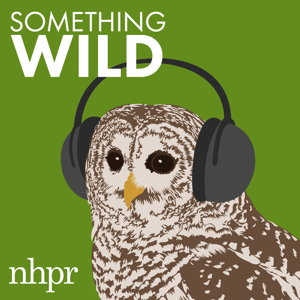
Something Wild

Something Wild

By Dave Anderson, Grace McCullochScience
Download on the App Store

Something Wild episodes

  • Something Wild: Photosynthesis in Winter
    It’s stick season in New Hampshire; the leaves are gone, our landscape exposed; a white blanket covers everything you see. Our trees are dormant. Aren’t they? To look at them, it wouldn’t seem that trees aren’t doing much right now. But it turns out there’s more going on than meets the eye. The phenomenon of photosynthesis is well documented, we all know that plants use their leaves to convert sunlight into sugar, or carbohydrates. But that’s not the only place photosynthesis happens.
    7 min
  • Something Wild: The Deer Hunter
    Dave "Superman" Anderson: Sitting in a tree stand in the icy pre-dawn darkness has become a cherished winter time ritual for me. I wasn’t raised in a hunting family, yet I live on a tree farm with fruit trees, vegetable gardens, and a backyard maple sugarhouse. Seeing and tracking deer is common. They’re beautiful, graceful, sometimes pesky… and very tasty. My decision to hunt is about meat: venison that’s clean, local, and grass-fed. It’s about forging closer connections to the forest where I
    5 min
  • Something Wild: Citizen Science & The Christmas Bird Count
    When we think about the kinds of people making important contributions to science, we might imagine someone in a white lab coat, squinting into a microscope, or pouring over reams of computer data. Truth is, good science can also be accomplished by everyday people-- citizen scientists-- volunteering in both large and small collaborations. National Audubon’s Christmas Bird Count, is a great example of one such collaboration. It started on Christmas Day back in 1900, by a n ornithologist named
    5 min
  • Something Wild: The Standing Dead
    Standing dead trees (often called snags) are common in our forests, and it’s hard to overstate just how vital a role they play in a healthy ecosystem. These gray ghosts provide food and shelter for a whole heap of forest critters; a total of 43 species of birds and mammals are specially adapted to nesting or denning inside tree cavities. But before a dead tree becomes a high-rise condo for a long list of species, it first undergoes a remarkable transformation. In fact, snags undergo a series of
    4 min
  • Something Wild: Erratic Cycles
    Autumn in New Hampshire is a wonderful time to watch and observe some easily recognizable stages of natural cycles: hawks migrating, leaves changing color…bears fattening up as they get ready to hibernate. But while we tend to think of cycles as a circular, repeatable pattern, unfolding year after year-- we should note that there are varying degrees of “cyclical” activity that can be quite complicated. The main reason for this? Nature is filled entropy, or randomness. Political historian Henry
    5 min
  • Something Wild: It's All in the Breeding
    A common theme on Something Wild is breeding. (Which is why we always sip our tea with our pinkies extended.) Seriously, though, we talk about the how, when and where because there are a lot of different reproductive strategies that have evolved in nature. Today we take a closer look at two such strategies through the lens of "how often": semelparity and iteroparity.
    5 min
  • Something Wild: How Scatter Hoarders Prepare for Winter
    You may be familiar with hoarders (not the TV show, but same idea). In nature, a hoarder will hide food in one place. Everything it gathers will be stored in a single tree or den. But for some animals one food cache isn't enough. We call them scatter hoarders. A "scatter hoarder" hides food in a bunch of different places within its territory. The gray squirrel is a classic example, gathering acorns and burying them in trees or in the ground. Not all squirrels are hoarders. Red squirrels are
    5 min

About Something Wild

From the publisher's feed

Something Wild has been exploring the wonder of the landscape that surrounds us in New Hampshire for over 25 years!

More shows like Something Wild

Outside/In by NHPR

Outside/In

1,474 Listeners

10 Minute Writer's Workshop by New Hampshire Public Radio

10 Minute Writer's Workshop

138 Listeners

Science Friday by Science Friday and WNYC Studios

Science Friday

6,420 Listeners

Civics 101 by NHPR

Civics 101

2,554 Listeners

The Daily by The New York Times

The Daily

112,250 Listeners

Bear Brook by NHPR

Bear Brook

15,598 Listeners

The Wild with Chris Morgan by KUOW News and Information

The Wild with Chris Morgan

3,435 Listeners

Document by NHPR

Document

819 Listeners

Patient Zero by NHPR

Patient Zero

1,363 Listeners

Stranglehold by NHPR

Stranglehold

327 Listeners

The 13th Step by New Hampshire Public Radio

The 13th Step

992 Listeners

NHPR Books by NHPR

NHPR Books

8 Listeners

N.H. News Recap by NHPR

N.H. News Recap

7 Listeners

The Youth Development Center by NHPR

The Youth Development Center

283 Listeners

Check This Out by New Hampshire Public Radio

Check This Out

5 Listeners

The Final Days of Sgt. Tibbs by NHPR

The Final Days of Sgt. Tibbs

127 Listeners

Death Resulting by NHPR

Death Resulting

42 Listeners

Homegrown NH by New Hampshire Public Radio

Homegrown NH

0 Listeners

Operation Night Cat by New Hampshire Public Radio

Operation Night Cat

118 Listeners

Safe to Drink by NHPR

Safe to Drink

2 Listeners