
Sign up to save your podcasts
Or



The topic of sex and its role in religious institutions, including the church, has been a subject of discussion and controversy throughout history. Different religions and denominations have diverse views on sexuality, celibacy, marriage, and sexual ethics.
Some churches have strict guidelines on sexual conduct for their clergy, emphasizing celibacy or chastity as a way to devote themselves entirely to their religious calling. In contrast, others embrace the idea of a healthy and respectful approach to sexuality within the context of marriage and committed relationships.
It's essential to recognize that discussions about sex, religion, and spirituality can be complex and multifaceted. They involve cultural, historical, and theological considerations, and opinions on these matters can vary widely among individuals and religious communities.
For a comprehensive understanding of various religious perspectives on sex and its role in the church, it would be best to research specific religious doctrines, teachings, and practices. Additionally, consulting religious scholars or representatives from different denominations can provide more in-depth insights into their respective views on this topic.
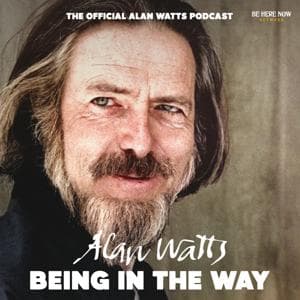
Alan Watts was a prominent philosopher, writer, and speaker known for his work in popularizing Eastern philosophy and spirituality in the Western world during the mid-20th century. He explored various concepts related to the nature of reality, the self, and human consciousness. Watts had a unique way of expressing complex philosophical ideas in a more accessible and engaging manner.
Alan Watts had diverse perspectives regarding the topic of God. He did not adhere to any specific religious dogma, but he explored spirituality and the nature of the divine in various ways. He often emphasized the interconnectedness of all things and the idea that life and the universe are in a constant state of flux. Watts had a deep appreciation for Eastern philosophies, particularly Zen Buddhism, and he often compared them to Western religious and philosophical traditions.
"Eros and the Eschaton" is a phrase that originates from ancient Greek philosophy and has been used in various contexts throughout history. "Eros" refers to the Greek god of love, desire, and attraction, while "eschaton" comes from the Greek word eschatos, meaning "last" or "end."
In the context of philosophy and theology, "Eros and the Eschaton" is often associated with the idea of the ultimate fulfillment or culmination of love and desire. It can represent the concept of a final or ultimate state of existence, often associated with transcendence, enlightenment, or the realization of a higher spiritual or metaphysical truth.
In modern literature and music, "Eros and the Eschaton" has been used as a title or theme. Notably, it is the name of an indie pop band from the United States. They released an album in 2015 titled "Home Address for Civil War," which includes a track named "Eros and the Eschaton."
The usage and interpretation of "Eros and the Eschaton" can vary depending on the specific context in which it is used. It often reflects themes of love, longing, transcendence, and the search for meaning in different aspects of human existence.
"Finnegans Wake" is a novel written by James Joyce. It was published in 1939 and is widely considered one of the most challenging and complex works of literature in the English language.
The book is known for its experimental style, dense language, and complex narrative structure. It is written in a stream-of-consciousness manner and incorporates multiple languages, puns, wordplay, and neologisms. The narrative follows various characters and their dreamlike experiences, blurring the lines between reality and imagination.
The plot of "Finnegans Wake" is difficult to summarize due to its abstract and nonlinear nature. The story revolves around the character of Humphrey Chimpden Earwicker, also known as HCE, and his family. The book explores themes of history, mythology, language, and identity.
Joyce intended "Finnegans Wake" to be a culmination of his literary experiments and a representation of the universal human experience. The language used in the novel is highly complex and requires careful study and interpretation. It is often considered more of a work to be deciphered and analyzed than to be read for straightforward narrative enjoyment.
Due to its complexity, "Finnegans Wake" has divided critics and readers. Some consider it a masterpiece of modernist literature, praising its linguistic innovations and literary depth. Others find it incomprehensible and impenetrable. Regardless, it remains an important and influential work in the literary canon and continues to fascinate scholars and readers interested in experimental literature.
When Alan Watts discusses the concept of "What does it mean when you say 'I'?" he is delving into the fundamental question of self-identity and the nature of the individual. Watts was a philosopher, writer, and speaker known for his interpretations of Eastern philosophy, particularly Zen Buddhism.
According to Watts, our sense of self, or the "I," is something that we often take for granted as a fixed and separate entity. We tend to identify ourselves with our thoughts, emotions, physical bodies, and personal history. However, Watts challenges this conventional understanding by suggesting that the self is not a separate and independent entity, but rather an interconnected and transient part of the larger whole.
He suggests that our sense of self is a construct created by our minds, which constantly generates thoughts, beliefs, and narratives about who we are. This construct is a product of our conditioning, societal influences, and the way we perceive and interpret the world around us.
Watts emphasizes that when we examine the nature of the self more closely, we find that it is elusive and difficult to pin down. We cannot isolate a single aspect or characteristic that defines our true essence. Instead, he encourages us to explore the experience of being alive in the present moment and to recognize that our sense of self is intertwined with the entire fabric of existence.
In Eastern philosophies, such as Zen Buddhism, the idea of the self is often seen as an illusion or a temporary manifestation, referred to as the "ego." The ego is considered a construct that gives us the illusion of separateness and creates suffering when we become attached to it.
Watts suggests that by letting go of our fixed ideas about the self, we can cultivate a more profound sense of connection and unity with the world. He encourages us to embrace the fluidity and interdependence of existence, recognizing that we are not separate from the universe but rather an integral part of it.
Ultimately, when Watts asks, "What does it mean when you say 'I'?" he is inviting us to question our assumptions about the self, to explore the nature of our identity, and to consider the possibility of a more expansive and interconnected way of being.
Terence McKenna was a prolific speaker and writer who explored various subjects, including consciousness, psychedelics, shamanism, and the nature of reality. He authored several books, such as "Food of the Gods," "True Hallucinations," and "The Archaic Revival," among others.
"Turn On, Tune In, Drop Out" is a book written by Timothy Leary, a prominent figure in the counterculture movement of the 1960s. The book, published in 1966, encapsulates Leary's ideas and philosophy regarding the exploration of consciousness and the rejection of societal norms.
The title itself encapsulates Leary's main message. "Turn on" refers to the idea of expanding one's consciousness through various means, such as psychedelic substances like LSD. Leary believed that by altering our perception of reality, we could gain new insights and experiences.
"Tune in" emphasizes the importance of attuning oneself to the present moment and connecting with one's inner self. Leary encouraged individuals to explore their own consciousness and find their own truths, rather than relying on external authorities or societal expectations.
"Drop out" signifies a rejection of mainstream societal structures and conventions. Leary advocated for individuals to break free from societal constraints and find their own paths in life, pursuing personal fulfillment and spiritual growth.
In his book, Leary explores these concepts in detail, discussing the potential of psychedelic experiences, the role of spirituality and mysticism, and the need for personal freedom and self-expression. He argues that by turning on, tuning in, and dropping out, individuals can attain a higher level of consciousness and create a more enlightened and harmonious society.
Overall, "Turn On, Tune In, Drop Out" presents Timothy Leary's countercultural vision of personal liberation and societal transformation through the exploration of consciousness and the rejection of traditional societal norms.
"Turn On, Tune In, Drop Out" is a book written by Timothy Leary, a prominent figure in the counterculture movement of the 1960s. The book, published in 1966, encapsulates Leary's ideas and philosophy regarding the exploration of consciousness and the rejection of societal norms.
The title itself encapsulates Leary's main message. "Turn on" refers to the idea of expanding one's consciousness through various means, such as psychedelic substances like LSD. Leary believed that by altering our perception of reality, we could gain new insights and experiences.
"Tune in" emphasizes the importance of attuning oneself to the present moment and connecting with one's inner self. Leary encouraged individuals to explore their own consciousness and find their own truths, rather than relying on external authorities or societal expectations.
"Drop out" signifies a rejection of mainstream societal structures and conventions. Leary advocated for individuals to break free from societal constraints and find their own paths in life, pursuing personal fulfillment and spiritual growth.
In his book, Leary explores these concepts in detail, discussing the potential of psychedelic experiences, the role of spirituality and mysticism, and the need for personal freedom and self-expression. He argues that by turning on, tuning in, and dropping out, individuals can attain a higher level of consciousness and create a more enlightened and harmonious society.
Overall, "Turn On, Tune In, Drop Out" presents Timothy Leary's countercultural vision of personal liberation and societal transformation through the exploration of consciousness and the rejection of traditional societal norms.
From the publisher's feed

227,563 Listeners
2,626 Listeners

1,286 Listeners

522 Listeners

1,280 Listeners
3,703 Listeners

44 Listeners

236 Listeners

6 Listeners
134 Listeners
798 Listeners

1,423 Listeners
25 Listeners

43 Listeners

450 Listeners