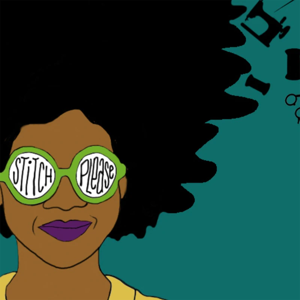
Stitch Please

Stitch Please

Download on the App Store
  • Favorites

    50

    Followers

  • Typical duration

    28 min

    per episode

Based on Podcast App listening data

Stitch Please episodes

  • Sister Sewists of Black Sewing Network

    Sign up for the Black Women Stitch quarterly newsletter!   

    Check out our merch here 

    Leave a BACKSTITCH message and tell us about your favorite episode. 

    Join the Black Women Stitch Patreon

    Amazon Store


    Black Sewing Network

    Black Sewing Network is a platform that celebrates and amplifies black voices in the sewing community. We host daily sewalongs on social media that encourage and motivate members of the sewing community to sew daily!


    Lisa Woolfork

    Lisa Woolfork is an associate professor of English specializing in African American literature and culture. Her teaching and research explore Black women writers, Black identity, trauma theory, and American slavery. She is the founder of Black Women Stitch, the sewing group where Black lives matter. She is also the host/producer of Stitch Please, a weekly audio podcast that centers on Black women, girls, and femmes in sewing. In the summer of 2017, she actively resisted the white supremacist marches in her community, Charlottesville, Virginia. The city became a symbol of lethal resurging white supremacist violence. She remains active in a variety of university and community initiatives, including the Community Engaged Scholars program. She believes in the power of creative liberation.

    Insights from this episode:

    • Brittanie and SheShe’s sewing journey and in Black Sewing Network
    • Brittanie’s goal of learning, to basically understand what she’s doing. Her approach to developing her skills, being strategic and choosing who to learn from
    • SheShe’s habit of “over consuming” and her goal of passing on her knowledge to others, in the easiest possible way
    • Brittanie and SheShe’s current products when sewing
    • The difference between hoarding and provisioning
    • Insights about whether to choose the design or the fabric first
    • “Knit Fabric” as a textile
    • Lisa talks about her two upcoming books; a book about “Black Stitch Liberation” and a book about where certain fabrics came from
    • Brittanie and SheShe uncover the Black Sewing Network story
    • Some final words of wisdom


    Quotes from the show:

    • “Once you have your machine and you take it out of the box, first of all take it out of the box, don’t waste that money; because if you’re not gonna take it out of the box, you shouldn't have bought it. There is no such thing as a “beginner”. You will forever be a “beginner” if you never try, you have to try. It’s a whole community that will literally walk you through the project step-by-step. We have set up work of one hour to eleven hours on live, we’re not gonna leave you. Take it out of the box, we got you.” – Brittanie, Stitch Please, Episode #203
    • “Start somewhere! Find somewhere to start. It’s like if you have a mess in your house, focus on one thing and start there first and then tackle a little at a time. And don’t try to think you can do everything, starting off at the back; because then you’re gonna get overwhelmed, and when you get overwhelmed, you just wanna quit. So, find somewhere to start and start there.” – SheShe, Stitch Please, Episode #203


    Resources Mentioned:

    • Emerald Curtain https://emeraldcurtainfabric.com/
    • Nicole Elise https://www.nicoleelise.shop/
    • Accuquilt https://www.accuquilt.com/


    Stay Connected:

    YouTube: Black Women Stitch

    Instagram: Black Women Stitch

    Facebook: Stitch Please Podcast


    Lisa Woolfork

    Instagram: Lisa Woolfork

    Twitter: Lisa Woolfork


    Black Sewing Network

    Website: Black Sewing Network

    Facebook: Black Sewing Network

    Instagram: Black Sewing Network

    Tiktok: Black Sewing Network

    LinkTree: Black Sewing Network

    Email: [email protected]


    Brittanie

    Instagram: Brittanie

    Tiktok: Brittanie


    SheShe

    Instagram: SheShe

    Tiktok: SheShe, SheShe  


    Subscribe to our podcast + download each episode on Apple Podcasts and Spotify.


    This episode was produced and managed by Podcast Laundry.

    Sign up for the Black Women Stitch quarterly newsletter

    Check out our merch here

    Leave a BACKSTITCH message and tell us about your favorite episode.

    Join the Black Women Stitch Patreon

    Check out our Amazon Store

    Stay Connected:

    YouTube: Black Women Stitch

    Instagram: Black Women Stitch

    Facebook: Stitch Please Podcast

    17 min
  • Sketch to Stitch: NY Fashion Week with Sahara Clemons

    Sign up for the Black Women Stitch quarterly newsletter!   

    Check out our merch here 

    Leave a BACKSTITCH message and tell us about your favorite episode. 

    Join the Black Women Stitch Patreon

    Amazon Store


    Lisa Woolfork

    Lisa Woolfork is an associate professor of English specializing in African American literature and culture. Her teaching and research explore Black women writers, Black identity, trauma theory, and American slavery. She is the founder of Black Women Stitch, the sewing group where Black lives matter. She is also the host/producer of Stitch Please, a weekly audio podcast that centers on Black women, girls, and femmes in sewing. In the summer of 2017, she actively resisted the white supremacist marches in her community, Charlottesville, Virginia. The city became a symbol of lethal resurging white supremacist violence. She remains active in a variety of university and community initiatives, including the Community Engaged Scholars program. She believes in the power of creative liberation.

    Sahara Clemons

    Sahara Clemons is a multimedia artist and designer born in Washington D.C and based in Charlottesville, Virginia. Clemons revels in the fluidity of artistic mediums and interweaves painting, textiles, and dance in her creative process. Her work explores the intersection of race and gender and provides commentary on the socio-political forces that shape identity. Her work has been shown at the Virginia Museum of Fine Arts, Second Street Gallery, The Bridge Progressive Arts Institute, and McGuffey Art Center. Clemons is a YoungArts alumni and is currently pursuing a Bachelor of Fine Arts Degree from Rhode Island School of Design.

    Insights from this episode:

    • How to go from ‘sketch’ to ‘stitch’
    • The techniques behind textile manipulation
    • The importance of defining your purpose when doing creative work
    • Tips for overcoming your fear of making mistakes and taking chances
    • Being creative when you don’t have a lot of resources

    Quotes from the show:

    • “I feel like I’m a very conceptual person when it comes to making, and I think it always starts off with the story. Mainly I think the core aspect of that is making it personal and authentic to my journey as not just an artist, but as a person.” – Sahara Clemons, Stitch Please, Episode #202 [05:53]
    • “I think too often we think about sewing or fashion and manufacturing, but that’s not all that you’re doing and this is one of the reasons I think that fashion is art. The same things that we see in art, or the things that go into making art, go into making the garments that we ultimately see.” – Lisa Woolfork, Stitch Please, Episode #202 [08:51]
    • “What I appreciate about fashion is that idea of community-building and bringing people into the clothing.” – Sahara Clemons, Stitch Please, Episode #202 [11:35]
    • “I wanted the collection to go through the transition of a person’s mindset when it comes to body exploration… knowing that it is a healing process rather than, ‘this is okay, my scars are okay.’ With all of society and you yourself, it’s hard to feel that way and it’s really challenging to go through that process, and that’s what I wanted to share. That it’s more about this healing and embracing a new perspective of yourself rather than an immediate dopamine rush of what it is, because it is hard sometimes to let go.” – Sahara Clemons, Stitch Please, Episode #202 [25:40]
    • “I paralleled [pearls] with this idea of feeling like your body is an antagonizing force. Seeing how you can turn that around and how that creates in yourself this beauty and thing you have to overcome with yourself is a powerful journey that ends up being very beautiful.” – Sahara Clemons, Stitch Please, Episode #202 [35:40]

    Resources Mentioned:

    • Sahara’s first appearance on the Stitch Please podcast
    • Supima Design Competition
    • CLO computer-assisted 3D design program

    This week’s episode is sponsored by AccuQuilt

    Stay Connected:

    YouTube: Black Women Stitch

    Instagram: Black Women Stitch

    Facebook: Stitch Please Podcast

    Lisa Woolfork

    Instagram: Lisa Woolfork

    Twitter: Lisa Woolfork

    Sahara Clemons

    Website: Sahara Clemons

    Instagram: sgcoriginals

    Subscribe to our podcast + download each episode on Apple Podcasts and Spotify.

    This episode was produced and managed by

     Podcast Laundry

    .

    Sign up for the Black Women Stitch quarterly newsletter

    Check out our merch here

    Leave a BACKSTITCH message and tell us about your favorite episode.

    Join the Black Women Stitch Patreon

    Check out our Amazon Store

    Stay Connected:

    YouTube: Black Women Stitch

    Instagram: Black Women Stitch

    Facebook: Stitch Please Podcast

    42 min
  • Fall Sewing Plans

    Sponsored by Accuquilt!    Sign up for the Black Women Stitch  newsletter!   

    Check out our merch here   Leave a BACKSTITCH message and tell us about your favorite episode. 

    Join the Black Women Stitch Patreon

     Amazon Store

    Patterns Mentioned: Vogue 1940, Simplicity 8982, Mimi G for Simplicity 9687 KnowMe 2046, The Rushcutter Dress by In the Folds, The Naomi Shirt by Coffee and Thread

    Lisa Woolfork

    Lisa Woolfork is an associate professor of English specializing in African American literature and culture. Her teaching and research explore Black women writers, Black identity, trauma theory, and American slavery. She is the founder of Black Women Stitch, the sewing group where Black lives matter. She is also the host/producer of Stitch Please, a weekly audio podcast that centers on Black women, girls, and femmes in sewing. In the summer of 2017, she actively resisted the white supremacist marches in her community, Charlottesville, Virginia. The city became a symbol of lethal resurging white supremacist violence. She remains active in a variety of university and community initiatives, including the Community Engaged Scholars program. She believes in the power of creative liberation.

    Get Your Stitch Together tips from the episode:

    • Lisa's fall sewing plans to accommodate her medical boot
    • Her plans to make a failed Simplicity knit pattern again
    • How wide leg pants could fit over her boot
    • Ideas for hacking a Vogue dress into a tunic
    • Tips for extending a shirtdress into a tunic
    • Tricks for adjusting patterns for curvy figures
    • Lisa's thoughts on dress pockets and stretchy zippers
    • How Mimi G's wide pants could work with the boot
    • Fabrics Lisa enjoys for fall sewing


    Sign up for the Black Women Stitch quarterly newsletter

    Check out our merch here

    Leave a BACKSTITCH message and tell us about your favorite episode.

    Join the Black Women Stitch Patreon

    Check out our Amazon Store

    Stay Connected:

    YouTube: Black Women Stitch

    Instagram: Black Women Stitch

    Facebook: Stitch Please Podcast

    40 min
  • Bisa Butler

    Sponsored by Accuquilt! 

    Sign up for the Black Women Stitch quarterly newsletter!   

    Check out our merch here 

    Leave a BACKSTITCH message and tell us about your favorite episode. 

    Join the Black Women Stitch Patreon

    Amazon Store

    Lisa Woolfork

    Lisa Woolfork is an associate professor of English specializing in African American literature and culture. Her teaching and research explore Black women writers, Black identity, trauma theory, and American slavery. She is the founder of Black Women Stitch, the sewing group where Black lives matter. She is also the host/producer of Stitch Please, a weekly audio podcast that centers on Black women, girls, and femmes in sewing. In the summer of 2017, she actively resisted the white supremacist marches in her community, Charlottesville, Virginia. The city became a symbol of lethal resurging white supremacist violence. She remains active in a variety of university and community initiatives, including the Community Engaged Scholars program. She believes in the power of creative liberation.


    Bisa Butler

    Bisa Butler is an award winning African American textile artist known for her vibrantly stunning larger than life sized quilted portraits that captivate viewers around the world. Formally trained, Butler graduated Cum Laude from Howard University with a Bachelor’s in Fine Art degree and it was during this time that she began to experiment with fabric as a medium and became interested in collage techniques. She then went on to earn a Master’s in Art from Montclair State University in 2005. While in the process of obtaining her Master’s degree, Butler took a Fiber Arts class where she had an artistic epiphany and she finally realized how to express her art.  “As a child, I was always watching my mother and grandmother sew, and they taught me. After that class, I made a portrait quilt for my grandmother on her deathbed, and I have been making art quilts ever since.”

    After working as a high school art teacher for thirteen years, Butler was awarded a Gordon Parks Foundation Fellowship in 2002 and exhibited in Switzerland during Art Basel with the Jeffrey Deitch Gallery. Many institutions and museums have acquired Butler’s work including the Art Institute of Chicago for a solo exhibition, The Smithsonian National Museum of African American History and Culture, and The Renwick Gallery of the Smithsonian American Art Museum.


    Insights from this episode:

    • Why it’s important to uplift and encourage each other, starting with the children in our lives
    • How Bisa uses her art to affirm the dignity of historical figures
    • The process of researching historical figures and time periods to accurately portray them through art
    • How different colors play into the meaning expressed in her art
    • How Bisa infuses her quilts with the music she’s listening to as she creates
    • What happens when you stop starting with ‘white’ as a default
    • Insights into the difference between studying art education (teaching people how to make art) vs. learning how to make art yourself

    Quotes from the show:

    • “I’m always seeking for truth and to find those essential truth elements about Black people.” – Bisa Butler, Stitch Please, Episode #200
    • “I have had people ask me, people who don’t necessarily look like us so they don’t have a full understanding, ‘I notice that you make all of your subjects look regal. Why, or what’s the process of that?’ I would say I’m just looking at them and this is the way they appear to me. I’m not trying to make them look regal; if anything maybe it’s just that you’re looking at them more carefully. The dignity or that inner regality, I can’t give it to them; they have it already.” – Bisa Butler, Stitch Please, Episode #200
    • “My interest in colorism is why the features look very African American. I don’t want to dilute that in any way. I’m loving our full lips, broad noses, or whatever the case may be.” – Bisa Butler, Stitch Please, Episode #200
    • “I love that word ‘talisman’ because it acknowledges that spiritual resonance and also having a mantra. We’ve always been very spiritual people and we’ve always been people who have to think hopefully and we have to think about the world beyond us or even after us. A lot of times we have to pray for our living relatives who we may not be able to protect in the way that we want to.” – Bisa Butler, Stitch Please, Episode #200
    • “Music is such a strong form of communication; it’s such a strong form of art because you don’t need words, you just need to hear the sound to understand somebody’s emotional output. The composer, musician, they can make you feel sad, they can make you feel happy, they can make your heartbeat go faster, they can make you go to sleep. That’s a control of power that can be passed down through the ages. The music, as long as it’s in a form that you can hear, you can hear how somebody felt hundreds of years before you.” – Bisa Butler, Stitch Please, Episode #200
    • “The music to me is more than an aid; it’s the explanation.” – Bisa Butler, Stitch Please, Episode #200
    • “For Black Women Stitch and the Stitch Please podcast we center Black women, girls, and femmes in sewing to make a deliberate choice to center Blackness. Also one of the things I’m studying a lot in my own work is the question of what happens when you stop starting with white… Stop acting like color is something that is new when white supremacy operates in this country deliberately through our laws and customs.” – Lisa Woolfork, Stitch Please, Episode #200
    • “We are the sum of all the people who came before us.” – Lisa Woolfork, Stitch Please, Episode #200
    • “Be kind to yourself. Be patient with yourself. Treat yourself like you treat other people; it will help you get your stitch together. Enjoy your life. Look at beautiful things. Take classes and learn, and be patient if things don't look or seem the way you want because we are all growing in this life together and you will get there.” – Bisa Butler, Stitch Please, Episode #200

    Resources Mentioned:

    • Francis and Violette, 2001
    • The Holsinger Collection, Bill Hurley’s portrait, and Bisa’s interpretation: A Man’s Worth, 2019
    • This Here Flesh: Spirituality, Liberation, and the Stories That Make Us by Cole Arthur Riley (“You don’t give dignity, you affirm it.”)
    • Bisa Butler: Portraits at the Art Institute of Chicago and accompanying playlist
    • I Owe You Nothing by Seinabo Sey (song)


    Stay Connected:

    YouTube: Black Women Stitch

    Instagram: Black Women Stitch

    Facebook: Stitch Please Podcast

    Lisa Woolfork

    Instagram: Lisa Woolfork

    Twitter: Lisa Woolfork

    Bisa Butler

    Website: Bisa Butler

    Instagram: Bisa Butler

    Twitter: Bisa Butler

    LinkedIn: Bisa Butler

    LinkTree: Bisa Butler

    Email: [email protected]

    Subscribe to our podcast + download each episode on Apple Podcasts and Spotify.

    This episode was produced and managed by  Podcast Laundry.

    Sign up for the Black Women Stitch quarterly newsletter

    Check out our merch here

    Leave a BACKSTITCH message and tell us about your favorite episode.

    Join the Black Women Stitch Patreon

    Check out our Amazon Store

    Stay Connected:

    YouTube: Black Women Stitch

    Instagram: Black Women Stitch

    Facebook: Stitch Please Podcast

    1 hr 1 min
  • Chawne Kimber: A Sew Black live episode

    Start of the show. 0:09

    • Welcome to stitch please, official podcast of black women's stitch.
    • Black women at quilt con.
    • Finding a safe place from her heart to land.
    • Quilting as a way to escape mathematics.
    • What does “I miss hope” bring to me? 3:33
    • The scale of I miss hope.
    • The frustration and tension of following the news.
    • The intersection of quilting and activism.
    • The process of creating a statement quilt.
    • Defining risks as risks. 8:38
    • Risks in her work and how she defines them.
    • Being featured by scholastic.
    • Being a Scholastic Book Fair girl.
    • Black girl math magic. 12:56
    • The Black girl math magic subscription box.
    • The Renwick museum acquisition process.
    • All makers except hetero white males.
    • The call from the Renwick curator.
    • America owns my quilt. 18:05
    • America owns her quilt.
    • The poker metaphor, bet on yourself and win.
    • Bipac quilters are being relegated to a separate category.
    • The binary of beautiful quilts and statement quilts.
    • How she thinks about balance in her work. 22:22
    • The 10th anniversary of quilt con.
    • How quilting has changed over the last decade.
    • A scene from Amadeus.
    • Balance between texture and the overall aesthetic of the piece.
    • How to leave space without leaving space? 25:57
    • How to quilt with an out-of-focus line.
    • How Instagram is controlling quilting.
    • Small pieces of art on a wall.
    • Creating a quilt for instagram.
    • The words “I can't breathe” 29:38
    • Chawne makes the words to express his thoughts.
    • The title of the episode, patchwork to power.
    • Black women's liberatory stitching traditions.
    • Power, liberation and process of stitching quilts.
    • The power of the needle and needle. 34:12
    • The power of the needle and needle.
    • Words of wisdom for the interviewee.
    • Take care of yourself and your health.
    • Support Black Women Stitch on Patreon.

    Sign up for the Black Women Stitch quarterly newsletter

    Check out our merch here

    Leave a BACKSTITCH message and tell us about your favorite episode.

    Join the Black Women Stitch Patreon

    Check out our Amazon Store

    Stay Connected:

    YouTube: Black Women Stitch

    Instagram: Black Women Stitch

    Facebook: Stitch Please Podcast

    39 min
  • Rashida Coleman Hale: Sew Black Live

    This episode of the Stitch Please podcast features Naomi Johnson as host interviewing guest Rashida Coleman Hale and Lisa, live at the Modern Quilt Guild's 10th anniversary QuiltCon event in Atlanta. Lisa explains her motivation for attending QuiltCon for the first time and shares her excitement over the increased representation of Black women and Black-owned businesses at the event. Rashida discusses debuting her new fabric line and the emotional experience of seeing Black women wearing and excited about her fabrics. The hosts share their "fangirl" moments meeting renowned Black quilters like Latifah Saafir in person.

    They also discuss Lisa's intentionality about who she chooses to collaborate with for Black Women Stitch projects, and her realization that suffering through unpaid work would not dismantle capitalism or white supremacy - but taking resources to support Black women's crafts could. The hosts and Rashida share advice on self-care and "getting your stitch together" during difficult times. The episode celebrates community, ancestral crafts, collaboration, and joyful spaces for Black women quilters.

    Sign up for the Black Women Stitch quarterly newsletter


    Check out our merch here

    Leave a BACKSTITCH message and tell us about your favorite episode.

    Join the Black Women Stitch Patreon

    Check out our Amazon Store


    Stay Connected:

    YouTube: Black Women Stitch

    Instagram: Black Women Stitch

    Facebook: Stitch Please Podcast

    36 min
  • Stitching Ancestry: A Sew Black Live episode with Sarah Bond and e bond
    • Introduction to this episode. 0:09
    • Welcome to the official podcast of Black Women Stitch, the sewing group, where Black Lives matter.
    • Thanks to underwriters Spoonflower, Moda, and Bernina
    • This is a “very special episode” because this episode is Sew Black at Quiltcon.
    • Watch word of the day. 3:21
    • Sarah has been collaborating with dead women from her family for the last 30 years, and now she gets to collaborate with an actual live bond thanks to her collaboration with her cousin, e bond
    • Bringing the two different ways of thinking about conversation visually and not always in terms of sound to the Word of Mouth quilt.
    • Working with Lavinia. 7:25
    • Lavinia was her great-great-grandmother 
    • Three quilts from Lavinia are on display.
    • Lavinia was born enslaved in 1858 and lived a difficult life. She was making this to express something that she needed to express.
    • The audacity of a woman born to slavery.
    • Black Aliveness. 10:39
    • In an antiBlack world, Blackness is demanded of Black people. In a Black world, being is all that is required.
    • Lavinia Unbound quilt.
    • What do you see in this piece? 12:33
    • Sarah is now part of the collections. She will always pick a quilt that is from either Anna or Lavinia that they then remake in the fabric as part of inspiration. She gets to name it.
    • In e bond’s first collection, Glyphs, the fabric designed to represent the genius scifi author Octavia Butler, reflects the balance between data and barbed wire.
    • Jane was born in 1828. 15:19
    • This quilt was made by Jane, who was born in 1828, and is a white glove situation to prevent oils from hands from touching the quilt.
    • Jane had two sons by Preston.
    • The moment when it suddenly occurred to me. 17:26
    • She was there for 18 years before he took advantage of her. She had other children that she was not able to keep.
    • She made quilts together with her sister.
    • How did the quilt get its name? 21:30
    • The quilt is a basket quilt in red, blue and white, in red and blue, and white. It is in the 1870s and was popular at that time.
    • It was a popular quilt pattern that was popular in that time, and some of the reds and blues faded out.
    • Thank you to our sponsors and audience. 24:52
    • The podcast is a live show at Quiltcon. They are grateful to their sponsors, their audience, and to e bond and Sarah Bond for bringing an inexplicably powerful reminder of who and what Black women are capable of.
    • If you'd like to support the Stitch Please podcast financially, you can do that by supporting them on Patreon.

    Sign up for the Black Women Stitch quarterly newsletter

    Check out our merch here

    Leave a BACKSTITCH message and tell us about your favorite episode.

    Join the Black Women Stitch Patreon

    Check out our Amazon Store

    Stay Connected:

    YouTube: Black Women Stitch

    Instagram: Black Women Stitch

    Facebook: Stitch Please Podcast

    31 min
  • Stitching For the Culture: A SEW BLACK LIVE EPISODE

    ​​Celebrate the 200th episode of the Stitch Please podcast by contributing to the next 200 episodes.

    Join the Black Women Stitch Patreon community  to get videos of the podcast, BTS, and other bonus content. 

    Donate via Act Blue (tax deductible)  to support our Capacity Building campaign in September and October. Donations earn bonus entries for the giveway. 

    Stitching FOR THE CULTURE, Produced by Latrice Sampson Richards

    Sara Trail, Social Justice Sewing Academy     @sjsacademy   www.sjsacademy.org

    Bianca Springer, Thanks I Made Them  @thanksImadethem www.thanksImadethem.com

    Nikki Griffin @sewingmystyle www.sewingmystyle.com

    Highlights:

    • 0:09 - Dive into a world where stitching, culture, and Black lives interweave. Welcome to our official Sew Black at quiltcon podcast episode!
    • 4:42 - Bianca, the creative genius behind "Represent! Embroidery” book, opens up about her journey. Discover how a period of recovery birthed an Black-centered embroidery book with vibrant designs, and how the essence of it evolves.
    • 10:30 - The panel sheds light on the importance of culture. They tackle the misrepresentations in white spaces and stress the significance of nurturing self-agency and autonomy in children.
    • 12:01 - Meet Nikki Griffin, an Atlanta native with an unstoppable sewing spirit. From bras to jeans, her contributions to the Atlanta sewing style are nothing short of inspiring.
    • 17:27 - Sewing transcends craft. Learn about its power for social justice, its global movement, and its deep resonance within the Black women community of Atlanta.
    • 20:42 - Support stitches community. Applause for the amazing Social Justice Sewing Academy team for their continuous dedication and passion. Together, they're revolutionizing the art through fabric and giving a fresh, unique experience for kids.
    • 25:13 - Rules, boundaries, and quilting? Sarah delves into how traditional quilting norms can sometimes confine and control, urging listeners to 'get their stitch together.'
    • 26:49 - Expand your horizons.

    Sign up for the Black Women Stitch quarterly newsletter

    Check out our merch here

    Leave a BACKSTITCH message and tell us about your favorite episode.

    Join the Black Women Stitch Patreon

    Check out our Amazon Store

    Stay Connected:

    YouTube: Black Women Stitch

    Instagram: Black Women Stitch

    Facebook: Stitch Please Podcast

    39 min
  • Tea with Queen and J visits Stitch Please!

    Sign up for the Black Women Stitch quarterly newsletter!   

    Check out our merch here 

    Leave a BACKSTITCH message and tell us about your favorite episode. 

    Join the Black Women Stitch Patreon

    Amazon Store


    Queen

    Queen is a Bronx native with a Harlem heart, did college in Queens, currently resides in Brooklyn, and like most New Yorkers forgets Staten Island exists. Creating safe, nourishing spaces for Black femmes and folks impacted by misogynoir through digital media and live events is her style of activism. She is one half of The Tea with Queen and J. podcast and centers dismantling white supremacist patriarchal capitalism, because why the fuck not! Always encouraging healthy community building, her podcast’s annual Black podcast meetup, #PodinLiveNYC, has grown into the largest Black podcaster meetup in the world! Ms.Vixen, her online magazine, has been running 7 years strong, and with the addition of live events and workshops through the Ms.Vixen IRL series, plus Ms. Vixen The Podcast, she continues to deliver incisive, witty, lit womanist perspectives on pop culture, media, and politics. Queen’s work has also been featured at Afropunk.com, AMny, and you can catch her as a panelist on the youtube series, The Grapevine. Always someone with something to say, her goal is media domination, to always have huge hair, and to always stay fly.


    J.

    J. is a cultural critic, podcast producer, and a womanist race nerd from the Bronx focused on dismantling white supremacist patriarchal capitalism while laughing, drinking tea, and indulging in various forms of Black joy. For over five years she's created audio content centering Black women and Black femme-identifying individuals, exploring America's caste system, allowing herself to learn and be challenged publicly, and sharing her journey through mental health. As a podcast geek with a commitment to increasing visibility and access for people of color, she co-founded #PodinLiveNYC, the largest annual Black podcast meetup in the world. In addition to freedom and liberation, Janicia loves cosplay, believes there's a special place in her heart (and hell) for body paint, and lovingly asks that you do not call her a "lady".


    Lisa Woolfork

    Lisa Woolfork is an associate professor of English specializing in African American literature and culture. Her teaching and research explore Black women writers, Black identity, trauma theory, and American slavery. She is the founder of Black Women Stitch, the sewing group where Black lives matter. She is also the host/producer of Stitch Please, a weekly audio podcast that centers on Black women, girls, and femmes in sewing. In the summer of 2017, she actively resisted the white supremacist marches in her community, Charlottesville, Virginia. The city became a symbol of lethal resurging white supremacist violence. She remains active in a variety of university and community initiatives, including the Community Engaged Scholars program. She believes in the power of creative liberation.


    Insights from this episode:

    • Making spaces like music festivals feel more welcoming to queer folks
    • Creating intergenerational events that appeal to everyone and avoid ageism
    • The effect of marginalized people thinking from a scarcity mindset
    • Who gets their work published and why
    • Why it’s important to remember that there is always room for your voice and your story
    • The role of capitalism in holding us back from pursuing our interests


    Quotes from the show:

    • “The community activated to provide a kind of care, and I think that is something that you really can’t harness or you can’t force.” – Lisa Woolfork, Stitch Please, Episode #195
    • “I think as a marginalized person you’re always thinking about the deficit; you’re always thinking about the scarcity. On purpose you’re made to think there’s not enough for everyone, so you don’t ask for more. If there’s not enough, you won’t ask for more. If there’s not enough, you won’t require more. If there’s not enough, you won’t expect more. That’s just what is stuck down your throat as a marginalized person. So it is really important for us to remind everyone that the market can never be saturated. That language in itself is exclusionary to make you not want to do this, to make you think it’s not possible for you to be in a space.” – Queen, Stitch Please, Episode #195
    • “People don’t think of all the players in capitalism and how invested corporations are in keeping independent creators, entrepreneurs, out of this space… They want to control the market, so they will tell you the market is flooded until they’re ready to play. There’s a lot at work to keep individuals from playing whatever the game is.” – J., Stitch Please, Episode #195
    • “There’s a lot of that trying to maintain the status quo, and that is a symptom and a function of maintaining the capitalisty, and all of these little things work to the benefit of those on top of the financial hierarchy that we have, and that is power.” – J., Stitch Please, Episode #195
    • “I think the question to ask is ‘who benefits?’. If you count yourself out, if you take yourself out of the game before you give yourself a chance, who benefits from that? You are not benefitting, because you're not following something you’re excited about. Don’t count yourself out. Don’t push yourself out because you’re afraid.” – Lisa Woolfork, Stitch Please, Episode #195
    • “When I started this podcast, it was just like when I created Black Women Stitch. I built what I needed. I needed to know that there were other Black women, girls, and femmes out in the world doing things with needle and thread, that I did not have to turn to these sources that were crafted by white people for the benefit of other white people but told to me like ‘yes, you can do it too, but if it doesn’t fit you, then something’s wrong.’ None of that is the case. There absolutely is not just a history of us in this tradition, but also us being great innovators and making things that are completely new. And to also leave something behind for those who will come next and make sure that door is propped wide open for more flourishing to continue beyond just what’s happening right now. I think that anything we can do to make that more of a regular practice would be to the good. I really do.” – Lisa Woolfork, Stitch Please, Episode #195
    • “None of us are free unless all of us are free. I don’t understand how we don’t appreciate that. You don’t get to just be a little bit racist. You don’t get to be a little bit oppressive of other people because it makes you feel better or because you think you have good reason for it. That is not the way to wholeness. It’s just not the way.”  – Lisa Woolfork, Stitch Please, Episode #195


    Resources Mentioned

    • PodInLiveNYC
    • Essence festival


    Stay Connected:

    YouTube: Black Women Stitch

    Instagram: Black Women Stitch

    Facebook: Stitch Please Podcast


    Lisa Woolfork

    Instagram: Lisa Woolfork

    Twitter: Lisa Woolfork


    Tea with Queen and J

    Website: Tea with Queen and J

    Instagram: teawithqj

    Twitter: TeawithQJ

    Facebook: teawithqueenandj

    Tumblr: teawithqueenandj

    Email: [email protected]


    Queen

    Twitter: @TheQueenSpeaks_

    Instagram: @TheQueenSpeaks_

    YouTube: @MsVixen

    Email: [email protected]


    J.

    Twitter: @JaniciaF

    Instagram: @JaniciaF

    Podcast: Drapetomaniax: Unshackled History


    Subscribe to our podcast + download each episode on Stitcher, Apple Podcasts, and Spotify.


    This episode was produced and managed by Podcast Laundry.

    Sign up for the Black Women Stitch quarterly newsletter

    Check out our merch here

    Leave a BACKSTITCH message and tell us about your favorite episode.

    Join the Black Women Stitch Patreon

    Check out our Amazon Store

    Stay Connected:

    YouTube: Black Women Stitch

    Instagram: Black Women Stitch

    Facebook: Stitch Please Podcast

    57 min
  • Her Hoop Dreams

    Sign up for the Black Women Stitch quarterly newsletter!   

    Check out our merch here 

    Leave a BACKSTITCH message and tell us about your favorite episode. 

    Join the Black Women Stitch Patreon

    Amazon Store


    Jennifer Oldham

    Jennifer Oldham is a thread artist who creates beautiful embroidery hoop designs through which we can see our sisters and ourselves. Jennifer shares her designs through @herhoopdreams and a collection of her work was recently displayed at the Nashville Hermitage Library. While her mom has sewn throughout her entire life and she wore handmade clothes regularly including to her prom and her wedding, Jennifer never took to sewing like her mom did but used the skill when she first got married and couldn’t afford to buy curtains and placemats, making them herself. Still, she understood the beauty, skill, and time it takes to make things by hand and eventually found her joy in embroidering.


    Lisa Woolfork

    Lisa Woolfork is an associate professor of English specializing in African American literature and culture. Her teaching and research explore Black women writers, Black identity, trauma theory, and American slavery. She is the founder of Black Women Stitch, the sewing group where Black lives matter. She is also the host/producer of Stitch Please, a weekly audio podcast that centers on Black women, girls, and femmes in sewing. In the summer of 2017, she actively resisted the white supremacist marches in her community, Charlottesville, Virginia. The city became a symbol of lethal resurging white supremacist violence. She remains active in a variety of university and community initiatives, including the Community Engaged Scholars program. She believes in the power of creative liberation.


    Insights from this episode:

    • How Jennifer discovered an art form that spoke to her
    • Expressing facial features in a realistic way through embroidery and getting the details right
    • How learning and unlearning play an important role in both the creating process and in life
    • Where Jennifer gets her inspiration from
    • The importance of seeing ourselves and people who look like us expressed through art
    • The therapeutic power of creative art forms


    Quotes from the show:

    • “You are creating things from your needle and thread that are a reflection of so much Black beauty, so much patience, so much intricate detail.” – Lisa Woolfork, Stitch Please, Episode #194
    • “Even now I still take things to my mother’s house for her to sew them!” – Jennifer Oldham, Stitch Please, Episode #194
    • “A part of the journey that I’m on is one of unlearning things that don’t fit who I am now and recreating myself–or creating myself and being intentional about that.” – Jennifer Oldham, Stitch Please, Episode #194
    • “This is my year, this is my time, this is my phase of life. Finding me, rediscovering me, taking the pieces that still work and basically stitching them together.” – Jennifer Oldham, Stitch Please, Episode #194
    • “Learning and unlearning, all of these are such vital elements of what it means to just exist in this world, and you have given us a model for putting that not on stage or Instagram where that feels sometimes so forced, but making something really permanent and beautiful and taking the time to do so. That’s something I really appreciate, the care and detail about your work.”  – Lisa Woolfork, Stitch Please, Episode #194
    • “Sometimes people have asked me how do you decide what to make, and it’s just whatever I’m interested in at the moment; there is no rhyme or reason. I’m just like ‘I want to make that!’, so I make it. Which is very freeing! There aren’t a lot of spaces in our daily lives where we can just do what we want. Sometimes there might be pockets of that, but it feels like with this particular medium I can just do what I want, and it feels very freeing, it feels very calming. It’s a good way to sometimes feel a little bit more control when things feel out of control.” – Jennifer Oldham, Stitch Please, Episode #194
    • “I think one of the things that matter most in sewing and in life is to have boundaries. To exercise your boundaries to stay within the lines that you create yourself, not necessarily what other people have created for you. To take time to play. For me, play is just as vital as breathing. Make boundaries for yourself, honor other people’s boundaries, and just enjoy yourself!” – Jennifer Oldham, Stitch Please, Episode #194


    Stay Connected:

    YouTube: Black Women Stitch

    Instagram: Black Women Stitch

    Facebook: Stitch Please Podcast


    Lisa Woolfork

    Instagram: Lisa Woolfork

    Twitter: Lisa Woolfork


    Jennifer Oldham

    Instagram: @herhoopdreams


    Subscribe to our podcast + download each episode on Stitcher, Apple Podcasts, and Spotify.


    This episode was produced and managed by Podcast Laundry.

    Sign up for the Black Women Stitch quarterly newsletter

    Check out our merch here

    Leave a BACKSTITCH message and tell us about your favorite episode.

    Join the Black Women Stitch Patreon

    Check out our Amazon Store

    Stay Connected:

    YouTube: Black Women Stitch

    Instagram: Black Women Stitch

    Facebook: Stitch Please Podcast

    29 min

About Stitch Please

From the publisher's feed

Dive deep into the vibrant world of sewing with the award-winning Stitch Please podcast, an official show of Black Women Stitch – the sewing group where Black lives matter. Uniquely crafted for those who love sewing, this sewing podcast is a gem that centers around Black women, girls, and femmes, weaving threads of creativity, technique, and passion with every episode.

More shows like Stitch Please

The Read by Loud Speakers Network

The Read

27,357 Listeners

Seamwork Radio: Sewing and Creativity by Seamwork

Seamwork Radio: Sewing and Creativity

717 Listeners

Travel with Rick Steves by Rick Steves

Travel with Rick Steves

2,504 Listeners

Code Switch by NPR

Code Switch

14,657 Listeners

Therapy for Black Girls by iHeartPodcasts and Joy Harden Bradford, Ph.D.

Therapy for Black Girls

5,679 Listeners

Ear Hustle by Ear Hustle & Radiotopia

Ear Hustle

20,481 Listeners

Ologies with Alie Ward by Alie Ward

Ologies with Alie Ward

24,533 Listeners

Dressed: The History of Fashion by Dressed Media

Dressed: The History of Fashion

1,492 Listeners

Ghost of a Podcast: Astrology & Advice with Jessica Lanyadoo by Jessica Lanyadoo

Ghost of a Podcast: Astrology & Advice with Jessica Lanyadoo

4,251 Listeners

Here's The Thing by iHeartPodcasts and The Volume

Here's The Thing

7,768 Listeners

Articles of Interest by Avery Trufelman

Articles of Interest

3,560 Listeners

IMO with Michelle Obama and Craig Robinson by Higher Ground

IMO with Michelle Obama and Craig Robinson

13,008 Listeners

Jade + X. D. by Jade + X. D.

Jade + X. D.

1,117 Listeners

Vibe Check by Zach Stafford, Saeed Jones

Vibe Check

1,776 Listeners

What Now? with Trevor Noah by Trevor Noah

What Now? with Trevor Noah

4,215 Listeners