
Sign up to save your podcasts
Or

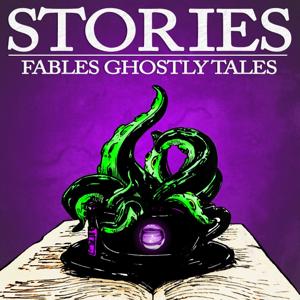


G'daaay Legends! 💜💜💜
This week on Stories Fables Ghostly Tales, I’m sharing the story of April Tinsley.
She was eight years old when she disappeared in Fort Wayne, Indiana, in 1988. For a long time, there were no clear answers — just fragments. A neighborhood. A walk home. A case that never fully left people’s minds.
What makes this story compelling isn’t shock or twists. It’s the way it unfolds. Details that don’t seem important at first. Long stretches where nothing appears to change. And then, years later, pieces that suddenly start to connect.
In this episode, we look at:
What life in Fort Wayne looked like before the case changed it
Who April was beyond the headlines
The unanswered years that followed her disappearance
The unsettling messages that surfaced later on
And the moment when evidence finally pointed somewhere specific
If you’re drawn to cases where the tension comes from what’s missing — from what people didn’t know for a long time — this is one you’ll want to listen to closely.
Thanks, as always, for being here and for listening.
GRATEFULLY...
Your Tale Teller 💜💜💜
Pictures of Fort WayneOld Fort WayneThis episode explored a difficult but important idea:
the traits that define serial killers are not strengths—they are structural weaknesses.
Popular culture often frames serial killers as calculating, fearless, or powerful. But when examined through real cases and repeated behaviours, the opposite becomes clear. Every trait that allowed harm also guaranteed escalation, exposure, and collapse.
Manipulation
Boundary violation
Fantasy
Compartmentalization
Entitlement
What ultimately separates a normal citizen from a serial killer is not anger, trauma, or dark thoughts.
It is correction.
Most people feel guilt and stop.
Most people feel fear and pull back.
Most people recognize boundaries and restrain themselves.
Serial killers are defined not by emotionless cruelty, but by the absence of internal systems that interrupt harm.
These traits are not impressive.
They are not rare gifts.
They are warning signs.
And they always fail the person who relies on them.
Thank you for listening legends! And I hope this episode hits the spot for you! 💜💜💜💜
On a November night in 1984, she stepped out of a roller rink in Lynbrook, New York. The lights were still buzzing behind her. Music still playing. Teenagers still laughing. The world she’d been part of for the last few hours kept moving forward without her.
Something had gone wrong inside. She’d been fired from her job at the snack bar. Witnesses later remembered her crying as she left. The record doesn’t preserve the exact words exchanged, or the reason it escalated to that moment. What it does preserve is how she walked out—upset, shaken, and alone.
And then she started home.
Four blocks is nothing. It’s the kind of distance that feels safe. Familiar. Automatic. The kind of walk you don’t think twice about—especially at sixteen.
Theresa never arrived home...
What followed was not just a murder, but a chain reaction that stretched across decades: fear gripping a small community, pressure mounting on investigators, confessions that later unravelled, and three men sent to prison for a crime they did not commit.
For years, the system believed it had an answer.
It didn’t.
DNA—silent for decades—eventually spoke. It overturned convictions. It reopened wounds. And it left one question hanging in the air longer than anyone should have to wait for the truth.
Who killed Theresa Fusco?In this episode, we trace that four-block walk forward and backward through time. We sit in the quiet moments most stories rush past: a girl holding back tears, a parent insisting something is wrong, evidence sealed away and nearly forgotten, and the long, unbearable weight of waiting.
And then—forty years later—something ordinary is thrown away.
A small, modern detail bridges the past and the present, forcing the case to move again. Not toward spectacle. Toward accountability.
This is not a story about shock.
It’s a story about how easily someone can disappear.
How hard the truth can be to recover.
And how one name deserves to be spoken with care, even after all this time.
Her name was Theresa Fusco, we shall always remember you.
----
Thank you immensely for your patience mates on this episode! Thank you for the well wishes via email and through Patreon💜💜💜💜 lucky to have a community full of legends!
This is a confronting episode. It involves graphic violence.
I keep the tone respectful, but it’s still a hard listen — so please take care of yourself while you’re hearing it.
If you or someone you know needs support in Australia, you can contact 1800RESPECT (24/7).
💜💜💜Welcome Legends! 💜💜💜Tonight’s episode is one of the heaviest I’ve ever covered on Stories Fables Ghostly Tales — a case from Aberdeen, New South Wales (NSW) in the Hunter Valley, known widely in Australian true crime as “The Butcher of Aberdeen.”
This is the story of Katherine Knight and John Price, and the events that unfolded across late February 2000 into March 1, 2000 — a 2000 murder case that remains one of the most infamous and confronting examples of New South Wales crime in modern memory.
And I want to be really clear before you hit play:
This episode isn’t here to sensationalise anything. It’s here to bear witness — and to show how domestic violence and coercive control can build quietly, behind closed doors, until the consequences become irreversible.
In this one, The Tale Teller takes you through the full arc — not just the headlines — including:
A grounded look at Aberdeen NSW and the Hunter Valley setting, and why this case shook a small town so deeply
Who John Price was, and what people around him noticed in the lead-up
The history of Katherine Knight, and the escalating violence that came before this relationship
The relationship dynamic — intimidation, control, threats, and the warning signs of coercive control
The final days before the murder, including the AVO / restraining order and why leaving is often the most dangerous moment
The night of the crime (Feb 29 / March 1, 2000) and what investigators walked into
The court outcome in NSW, including life imprisonment without parole
The aftermath, and why this remains one of the most infamous Australian homicide cases ever recorded
A closing reflection on why domestic violence should never be treated as a “private matter”
Katherine Knight was later held at Silverwater Women’s Correctional Centre, and this case remains a grim reference point in True Crime Australia — not because of spectacle, but because it forces a conversation people still avoid.
The Town of Aberdeen Australia:
https://commons.wikimedia.org/wiki/File:Aberdeen_NSW_banner.JPG
Thank you for being here, truly.
💜💜💜💜💜💜💜
For supporting the show, for listening with care, and for backing storytelling that doesn’t treat real people like entertainment.
I’m your Tale Teller…
and I’ll see you in the next one. 🖤
What happens when a case goes cold — but because time got there first....
Because in true crime, some stories don’t stay unsolved due to a lack of effort.
They stay unsolved because the world simply didn’t have the tools to hear what the evidence was trying to say.
This week on Nocturne Files: True Crime, we step into the case of Kerryn Tate — last seen in daylight in Mount Lawley in 1979, and found the following morning in bushland near Karragullen.
For decades, her case lived inside a gap.
A small window of time where everything changed… and nobody could explain how.
Cold cases aren’t only about what we don’t know.
They’re about what stops moving.
Leads that run out.
Witnesses who forget.
Details that soften at the edges.
A file that stays open — but never progresses.
And yet, sometimes… the future shows up.
Not with a confession.
Not with a dramatic reveal.
But with science — patient, methodical, unromantic science — finally catching up to a question that’s been waiting for years.
This episode explores that shift.
Not with sensationalism or shock-value detail, but by sitting with what it means when an answer arrives late — and how a name can change the weight of silence, even when there’s no courtroom ending.
Because some truths don’t arrive loudly.
They arrive slowly.
Piece by piece.
Over decades.
That’s all I’ll say for now.
Thank you for being curious.
And thank you for being willing to sit with the unresolved parts — with care.
💜💛 You're all amazing, and thank you so much for your fantastic support! 💜💛
Grateful as always you living legends!!! And here's to more True Crime Episodes just around the corner....
— Your Tale Teller
There’s a quiet question that sits at the centre of this week’s episode.
What happens when someone disappears — and never comes back — but there’s no crime scene, no physical proof, and no clear ending?
In true crime, these are known as no-body cases. And they’re some of the most unsettling stories we encounter, not because they’re dramatic, but because they’re incomplete.
No-body cases aren’t about what we can see.
They’re about what stops happening.
Phone calls that never come.
Routines that never resume.
Lives that simply… pause, and never restart.
For a long time, silence is treated as uncertainty. But as years pass, that silence begins to take on a different weight. It stops feeling neutral. It starts to feel deliberate — or interrupted.
This episode explores that shift.
Not with graphic detail or courtroom theatrics, but by sitting with the idea that absence itself can tell a story, if we’re willing to listen long enough.
No-body cases ask us to rethink what “evidence” really means. They challenge our instincts. And they remind us that some truths don’t arrive loudly — they arrive slowly, over time.
That’s all I’ll say for now.
Thank you for being curious.
And thank you for being willing to sit with the unanswered.
You're all amazing, and thank you so much for your fantastic support!
— Your Tale Teller
As we all wobble toward this coming Wednesday — New Year’s Eve — I wanted to pop my head out of the shadows, dust off the trench coat, and give you a proper Patreon cuddle in words. Because you lot aren’t just “supporters”… you’re my mates. You’re the campfire crew. The ones who stick around when the story goes quiet and the air gets heavy.
And speaking of heavy…
This week’s episode is the kind that doesn’t just tell a story — it waits with you.
It’s the Bristol Cold Case: Louisa Dunne, murdered in 1967, solved 58 years later.
This is one of those cases that starts in a place so ordinary it feels sacred: a street with routines, neighbours who noticed, a woman whose life had a rhythm to it. The sort of life that says “nothing bad should happen here.”
And yet… it did.
What shook me most isn’t just the crime itself — it’s the sheer length of the silence afterwards. Decades of unanswered questions. A family living inside a question mark. A community that never quite forgot. And then, finally… the future arrives with the tools to read what the past preserved.
It’s a story about memory, patience, and the kind of justice that turns up late… but still matters when it does.
I’ve told it with one rule at the centre: Louisa is not a headline. She’s a person. A life. A name that deserves to be spoken with respect.
Now—before the fireworks start popping and someone’s uncle tries to cook sausages like it’s an Olympic sport…
I want to wish you, genuinely, a Happy New Year for this coming Wednesday.
May 2026 bring you more peace than panic, more belly laughs than doomscrolling, and fewer mysterious noises in the hallway at 2am. (And if you do hear something… well… you didn’t hear that from me. Good luck. Godspeed.)
Thank you for being here. Thank you for being the kind of people who show up for stories with heart — and for the humans inside them.
And a special, warm, slightly dramatic bow to my VIP party in the dark:
Matto Star — my Oud Night Tea Titan: you majestic baroque-loving pillar of this whole operation.
Lezzasaurus Rex: gym-powered warlord energy, ready to suplex 2025 into the bin.
Mayah — Queen of Cats: regal, watchful, and absolutely judging the year from a sunbeam.
Sangeetha — The Seer: already knows how my New Year’s is going to go and is politely not telling me.
And to my epic splendiferous Earl Grey Enforcers, and all tiers thereafter, my deepest (lowest bow) thanks!
You lot keep the lantern lit.
If you listen to this episode, tell me:
What’s the one detail that stuck to your ribs? The kind you can’t shake even after you’ve turned the lights back on.
Happy Pending New Year, my friends.
I’m your Tale Teller — and I’ll see you in the next tale. 🕯️✨
Some True Crime stories announce themselves loudly.
This one doesn’t.
It begins quietly — with a late shift, a famous name, and a decision that, on the surface, feels ordinary. But beneath it sits a Murder Investigation that would stretch across years, courtrooms, and headlines, becoming one of the most unsettling Celebrity Crime cases in modern memory.
In this episode of Stories Fables Ghostly Tales, we examine the death of Lana Clarkson and the long road that followed — a case forever tied to Phil Spector, the legendary Beatles Producer, architect of The Wall of Sound, and one of the most influential figures in Music History.
But this is not a story about musical genius.
It’s a story about power, pressure, and what happens when Hollywood’s glow fades into something much darker.
On the night she died, Lana Clarkson was working at the House of Blues — a working actress doing what so many in Hollywood do to stay afloat. By morning, she was dead inside Pyrenees Castle, Phil Spector’s fortress-like mansion, and the world was left trying to understand what had happened behind those gates.
As the case unfolds, this episode guides you through:
The Hollywood Murders narrative that quickly took shape in the media
How Forensic Science became central to challenging the initial defence
Why this case turned into years of tense Courtroom Drama, including a mistrial and a second jury
How fame, legacy, and public perception collided with evidence and testimony
This isn’t sensational storytelling.
There’s no spectacle here — only careful reconstruction, verified facts, and the quiet weight of accountability.
Because when a case involves a music icon, a guarded estate, and a woman whose life was reduced to a headline, the most important thing is getting the story right.
If you think you know the Phil Spector case — listen closely.
There are details here that rarely receive the attention they deserve.
Thank you all for your amazing support!!! It's almost that time of year and I'm excited for the new year ahead legends!!! Again you are all amazing and thank you for the love!! 💜💜💜
Welcome legends to your Research and True Crime Episode!
Skidmore, Missouri is the kind of town you’d usually drive through without ever taking off your sunglasses. One main street, a couple of brick buildings, fields on every side.
And in 1981, that quiet little dot on the map did something unthinkable.
In broad daylight, in the middle of Main Street, the town bully Ken Rex McElroy was shot to death while sitting in his red pickup truck.
Dozens of people were there.
No one “saw” who did it.
No one was ever charged.
In this story, I walk you through:
Who McElroy was, and how one man could hold an entire town in fear for years
The shooting of an elderly grocer that should have put him away
The tense town meeting at the Legion Hall, where people quietly realised the law wasn’t going to save them
The slow, silent walk down Main Street
The red truck, the gunshots, and the instant, perfect wall of “I didn’t see a thing”
And because this is Stories Fables Ghostly Tales, we thread it all through one extra chill:
A teenager with a camera.
One photo taken seconds before the shots.
And a strange shape caught in the truck’s window…
Maybe it’s a trick of the light.
Maybe it’s guilt.
Maybe it’s the moment a whole town becomes something it can’t easily explain.
This one isn’t about jump scares or gore.
It’s about fear, power, and what people do when they’ve run out of “proper” options.
If tiny towns, unsolved justice, and the feeling that something is still standing on that empty street at night gets under your skin…
WHAT would you have done mates....let Ken rule your town even though he's almost taken a life? Tell me your thoughts...
Hit play...and...
Welcome to Skidmore.
A black-and-white portrait of Ken Rex McElroy.
Main Street, Skidmore
A current-day photo of Skidmore’s main drag: cracked road, small storefronts, flat Midwestern horizon. Great for getting the “tiny, worn farm town” feel.
Gratefully yours....Here's to more True Crime Stories legends!
Your Tale Teller! 💜💜💜💜💜💜
From the publisher's feed
Japanese true crime and Japanese folklore. Each episode pairs one real criminal case with the myth that shares its structure. Sada Abe and the jorogumo. The Saitama kennel murders and the inugami. Inokashira Park and the noppera-bo.
Stories Fables Ghostly Tales has been running since 2017, with more than 1000 episodes and over one million listens. Hosted by the Tale Teller. Alongside the Japanese series you will find creepypasta, NoSleep, Let's Not Meet, ghost stories, urban legends, Old Time Radio, Project Gutenberg classics and original horror audio drama.
New episodes every week. There is a story here for everyone.
Stay curious. Stay a little scared.
651 Listeners
642 Listeners
2,923 Listeners
4,879 Listeners
5,357 Listeners
628 Listeners
1,972 Listeners
3,765 Listeners

1,246 Listeners
383 Listeners
901 Listeners
779 Listeners
585 Listeners

174 Listeners
1,509 Listeners