
Sign up to save your podcasts
Or



Send us a text message and tell us your thoughts.
From the cobblestone streets of Montego Bay to the airwaves of your favorite podcasting platform, Kerry-Ann Reid-Brown, founder of Breadfruit Media and producer of Strictly Facts, joins us as we reflect on the evolution of Strictly Facts: A Guide to Caribbean History & Culture and discuss her passion for Caribbean American narratives.
Wading through the complex currents of Caribbean heritage, this episode serves as an audio compass guiding us through the shared experiences that unite the diaspora. Through the medium of podcasting, we unearth the common cultural threads—from migration patterns to the very words we speak—that bind us together, ensuring that our stories continue to thrive and reach new shores. We harmonize over the show's vision, the historical narratives infused with cultural revelations in segments like Strictly Facts Sounds, and share some of our favorite moments and episodes, revealing the profound impact of memorializing events like the Kendal Railway Tragedy for future generations. So tune in, as we celebrate Strictly Facts on the eve of Caribbean American Heritage Month and our love for Caribbean storytelling through podcasting.
Kerry-Ann Reid-Brown is the founder of Carry On Friends, a digital platform. She is also the host, Carry On Friends: The Caribbean American Experience, a show with authentically energetic Caribbean vibes, and thoughtful dialogue around culture, heritage, career, and everyday life that make up the Caribbean American experience. Through Breadfruit Media, Reid-Brown produces content, specifically podcasts with a priority and emphasis on stories by Caribbean Americans on a variety of topics reflecting the diversity of experiences of the Caribbean’s global diaspora.
When she is not producing or recording episodes, she is fostering a community with the Caribbean Podcast Directory which is a growing list of podcasts created by people of Caribbean Heritage whether in the region or in the diaspora. Professionally, Reid-Brown has over 15 years of experience in a variety of roles resulting in a unique blend of project management, HR, talent development, operations, customer relations and marketing experiences. I am currently a learning & development program manager for a management consulting company.
Support the show
Connect with Strictly Facts - Instagram | Facebook | Twitter | LinkedIn | YouTube | Website
Looking to read more about the topics covered in this episode? Subscribe to the newsletter at www.strictlyfactspod.com to get the Strictly Facts Syllabus to your email!
Want to Support Strictly Facts?
Produced by Breadfruit Media
Send us a text message and tell us your thoughts.
Join us for a riveting discussion with Dr. Shani Roper, Curator at the University of West Indies Museum, as we celebrate a monumental event—the homecoming of the Jamaican Giant Galliwasp from Scotland, an emblem of natural heritage that's been away since the 1850s. The stirring tale of this lizard's return is not only a first in the repatriation of natural history specimens to the Caribbean region but also a testament to the collaborative spirit between international institutions.
Embracing the complexities of international diplomacy and reparations, we recount the behind-the-scenes efforts that paved the way for the Giant Galliwasp's return. Dr. Roper and I dissect everything from the meticulous negotiations and logistics involving the CITES (Convention on International Trade in Endangered Species) conventions to the detailed protocols that ensured the specimen's safe journey back to the Natural History Museum of Jamaica. The impact of this successful transfer extends beyond the mere physical possession—it's a powerful acknowledgement of Caribbean heritage, shaping policies and legal frameworks essential for the preservation of historical narratives.
Weaving the social history of the galliwasp into our discussion, Dr. Roper showcases a creature steeped in the folklore & collective memory of Jamaica. The episode also casts a wider net on the topic of artifact repatriation, considering the roles of diasporic communities and the necessary steps Caribbean nations must take to protect and honor their repatriated cultural property. As we celebrate this significant chapter in Jamaica's story, we invite listeners to reflect on the broader implications of this homecoming for our shared global history.
Shani Roper is Curator of the UWI Museum and has worked for twenty years in the museum sector in Jamaica. She is also Co-President of Museums Association of the Caribbean and holds a PhD (Rice University) in Caribbean history with a focus on Caribbean childhoods. Dr Roper has published on histories of Caribbean childhoods, poor relief and Caribbean perspectives on the museums.
Support the show
Connect with Strictly Facts - Instagram | Facebook | Twitter | LinkedIn | YouTube | Website
Looking to read more about the topics covered in this episode? Subscribe to the newsletter at www.strictlyfactspod.com to get the Strictly Facts Syllabus to your email!
Want to Support Strictly Facts?
Produced by Breadfruit Media
Send us a text message and tell us your thoughts.
Joined by Mr. Kevin Farmer of the Barbados Museum and Historical Society, we explore identity, cultural preservation, and the journey of Caribbean museums from colonial-era institutions to centers that shape national consciousness and safeguard heritage. Mr. Farmer's insights illuminate the evolution of Caribbean museums, spotlighting their crucial role in giving voice to marginalized communities and confronting complex histories within their walls. We capture the essence of a collective awakening, when cultural policies and spaces like the National Art Gallery in Jamaica emerge, nurturing local talent and innovation, as well as national journeys to define identity through cultural institutions. We also tackle global resonance, the repatriation of artifacts, to discuss the wider challenges of decolonizing archaeology. From this episode, gain a richer appreciation for the power of museums in both reflecting and shaping our collective memory and identity.
Kevin Farmer is currently Deputy Director of the Barbados Museum and Historical Society (BMHS). As Deputy Director of the Barbados Museum, he has the responsibility for museum exhibition programming and capital campaign fundraising. He holds a Master’s degree in History (Heritage Studies) from the University of the West Indies, Cave Hill, Barbados, and has lectured in Archaeology at the Department of History at the University of the West Indies, St. Augustine, Trinidad and taught at the UWI Cave Hill in their MA Heritage Studies program.
A member of the Barbados World Heritage Committee, he was site manager for the property Historic Bridgetown and its Garrison, and is currently site manager for the Newton Enslaved Burial Ground. Mr. Farmer is co-editor of the publication entitled: Pre-colonial and Post-Colonial Contact Archaeology in Barbados (2019); Plantation to Nation: Caribbean Museums and National Identity(2012) along with articles written on cultural resource management, historical archaeology, and the future of heritage development.
A member of the International Association of Caribbean Archaeologists and Museum Association of the Caribbean he has provided expert advice to Regional partners on the 1970 Convention, Disaster Resilience, and Museum Development. His research interests include the creation of cultural identity in post-colonial states, the role of museums in national development, the management and curation of archaeological resources, and the role of heritage in national development.
Support the show
Connect with Strictly Facts - Instagram | Facebook | Twitter | LinkedIn | YouTube | Website
Looking to read more about the topics covered in this episode? Subscribe to the newsletter at www.strictlyfactspod.com to get the Strictly Facts Syllabus to your email!
Want to Support Strictly Facts?
Produced by Breadfruit Media
Send us a text message and tell us your thoughts.
Join us as we journey through the linguistic heritage of Saint Lucia with Soir Smith, a passionate St. Lucian Kwéyòl advocate, guiding us through the colorful landscape of French-based creole languages that flourish across the Caribbean. These tongues, far from just a derivative of French, are rich embodiments of culture, history, and identity. We unravel these histories woven from the threads of African, European, and Indigenous Caribbean peoples, challenging the notion that Creole is merely "broken French." Together, we celebrate the unique complexities of these languages, reflecting resilience in the face of colonization.
Our exploration deepens as we traverse the grammar and verb usage of St. Lucian Creole, uncovering how it is distinguished from its French roots. We dissect the verb 'to be,' marvel at the absence of silent letters, and ponder the historical weight carried by speaking Creole. Smith shares her journey, weaving personal tales and the profound motivation behind her mission to author a book on St. Lucian Creole. This episode isn't just a discussion; it's an homage to a language that represents freedom and unyielding ancestral bonds throughs linguistic liberation
As a passionate advocate for language and culture, Soir Smith has dedicated her life to preserving and promoting the rich heritage of Saint Lucian kwéyòl. With a deep love for writing, Smith has recently accomplished a significant milestone by completing her first book, a comprehensive guide to learning the language of Saint Lucian kwéyòl. An Introduction to Kwéyòl Sent Lisi serves as a testament to her commitment to preserving the essence of St. Lucian cultural identity. By providing a comprehensive guide, Smith aims to empower individuals to embrace and celebrate their unique linguistic heritage. Smith also actively engages with the community by offering kwéyòl lessons and advocating for the recognition and appreciation of kwéyòl in various spheres, including education, arts, and social initiatives. She remains steadfast in her mission to ensure that the language and culture of Saint Lucian kwéyòl along with the other Antillean French based creoles continue to flourish, enriching the lives of present and future generations. Follow Soir online on YouTube, TikTok, and Instagram.
Support the show
Connect with Strictly Facts - Instagram | Facebook | Twitter | LinkedIn | YouTube | Website
Looking to read more about the topics covered in this episode? Subscribe to the newsletter at www.strictlyfactspod.com to get the Strictly Facts Syllabus to your email!
Want to Support Strictly Facts?
Produced by Breadfruit Media
Send us a text message and tell us your thoughts.
The Caribbean is a region of a myriad of languages, Caribbean sign languages included. In this episode, we’re joined by Caribbean sign language scholar Kris M Ali to discuss the diversity of sign languages, from the shores of Jamaica to the Bay Islands. It's not just about communication; it's a tapestry of identity, history, and resiliency. We uncover the challenges faced by lesser-known sign languages and the potential harm of a one-size-fits-all approach to language policy. Our conversation traverses the cultural significance behind these languages, the vibrant activism of local communities that has sparked change, the battles for legal recognition, and the power these languages hold in fostering rights for the Deaf community. Join us for our first discussion and stay tuned for Part II coming soon. Be sure to check out the transcript of this episode here.
Kris Ali is a PhD candidate in the department of linguistics at University of California Santa Barbara. Her research interests are broadly Caribbean languages, language documentation and description, social and linguistic justice for Caribbean people, decolonial theory, queer and trans linguistics and sign language linguistics. She uses collaborative and community-based research methods, is interested in indigenous research methodologies and follows the Caribbean tradition of liberatory linguistics in which she was trained during her first two degrees at the University of the West Indies, St Augustine. She is a trained Trinidad and Tobago Sign Language interpreter. Home for her is Trinidad and Tobago. Learn more about Kris on her website and connect with her on LinkedIn.
Support the show
Connect with Strictly Facts - Instagram | Facebook | Twitter | LinkedIn | YouTube | Website
Looking to read more about the topics covered in this episode? Subscribe to the newsletter at www.strictlyfactspod.com to get the Strictly Facts Syllabus to your email!
Want to Support Strictly Facts?
Produced by Breadfruit Media
Send us a text message and tell us your thoughts.
There are stories we typically don't tell during Women's History Month, one of whihc is the narrative of Judith Phillip (1760-1848), an enslaver from Grenada whose family's dominion over Carriacou and Petit Martinique tells a story not just of land and wealth but race and colonial allegiances against the backdrop of the transatlantic slave trade. This episode discusses the intricacies of Caribbean history, weaving the personal story of a mixed-race family into the broader fabric of 18th-century Caribbean society.Support the show
Connect with Strictly Facts - Instagram | Facebook | Twitter | LinkedIn | YouTube | Website
Looking to read more about the topics covered in this episode? Subscribe to the newsletter at www.strictlyfactspod.com to get the Strictly Facts Syllabus to your email!
Want to Support Strictly Facts?
Produced by Breadfruit Media
Send us a text message and tell us your thoughts.
As we weave through Women's History Month and International Women's Day, the patchwork of Caribbean women's literature takes center stage. With scholar Dr. Warren Harding, we celebrate the novels and poetry that carve out a space for the stories of Caribbean women. Our conversation turns the pages of history, culture, and activism, as Dr. Harding shares the profound influence of storytellers like Miss Lou and his own family's narratives on his Jamaican heritage and academic focus.
Caribbean women's voices unfold in our discussion on the role of these writers in painting a nuanced portrait of their communities, both at home and in the diaspora. We acknowledge the diversity within these stories, showcasing how they lay the groundwork for dialogues on marginalization and resistance. Trailblazers like Makeda Silvera and Merle Hodge are brought into the spotlight, illuminating their significant contributions to the literature that serves as a beacon for revolutionary thought.
The final thread of our episode examines the profound impact of Silvera on the writing and publishing industry through Sister Vision Press. We traverse the landscape of narratives that intersect with race, gender, and citizenship, celebrating how these stories from Michelle Cliff to Edwidge Danticat enrich our literary horizons. This episode is a testament to the transformative power of Caribbean literature and a heartfelt invitation to embrace these compelling voices in their own exploration of the written word.
*Noted Correction: Sister Vision Press was founded in 1985.
Dr. Warren Harding is an Assistant Professor of English, General Literature and Rhetoric at Binghamton University. His work engages practices of reading, Black feminist literary and cultural criticism, and literary fieldwork in contemporary Caribbean and Afro-diasporic literary cultures. In his first monograph, tentatively titled Migratory Reading: Black Caribbean Women and the Work of Literary Cultures, he uses interviews, archival research, and close reading to study the interventions of five women: Rita Cox, Makeda Silvera, Merle Hodge, Soleida Ríos and M. NourbeSe Philip.Prior to Binghamton, he was the Diversity in Digital Publishing Postdoctoral Research Associate at Brown University Digital Publications where he supported the conceptualization, research and administration of a set of public-facing faculty digital publications that center the history and experience of oppressed or marginalized peoples. He earned his PhD in Africana Studies from Brown University in 2021.
Support the show
Connect with Strictly Facts - Instagram | Facebook | Twitter | LinkedIn | YouTube | Website
Looking to read more about the topics covered in this episode? Subscribe to the newsletter at www.strictlyfactspod.com to get the Strictly Facts Syllabus to your email!
Want to Support Strictly Facts?
Produced by Breadfruit Media
Send us a text message and tell us your thoughts.
Join us as we voyage through the seas of Caribbean geography and politics as we explore the layers of history etched into nations' names and named and unnamed islands that are part of them. From twin islands like Antigua and Barbuda to archipelagos such as The Bahamas, we explore the entwined nature of geography and governance and how it shapes the cultural identity of these nations and delve into the complex political relationships that define the Caribbean narrative, including the dependencies of Carriacou and Petit Martinique to Grenada and the independence movements that have left an indelible mark on the region.
Have you considered how a name can capture a multitude of stories, struggles, and triumphs? In this episode, we invite you to reflect on the tales of Antigua and Barbuda's journey to their current standing, and the impact of political status on the names and recognition of Caribbean nations. No stone is left unturned as we examine the lesser-known facts about dependencies and political autonomy within this diverse and dynamic region.
Support the show
Connect with Strictly Facts - Instagram | Facebook | Twitter | LinkedIn | YouTube | Website
Looking to read more about the topics covered in this episode? Subscribe to the newsletter at www.strictlyfactspod.com to get the Strictly Facts Syllabus to your email!
Want to Support Strictly Facts?
Produced by Breadfruit Media
Send us a text message and tell us your thoughts.
Join the conversation with Dr. Mónica Jiménez on Strictly Facts, where we peel back the layers of Puerto Rico's unique political situation and the heavy hand of U.S. legislative decisions on the island's fate. Through Dr.Jiménez's personal ties and her scholarly examination in her forthcoming book, Making Never, Never Land: Race and Law in the Creation of Puerto Rico, we gain an intimate glimpse into the Puerto Rico's legal status as an unincorporated territory and the systemic challenges that have been magnified by American legal precedents.
As we traverse the complex terrain of Puerto Rico's status, Dr. Jiménez helps us navigate the moral dilemmas and economic strategies that have historically shaped American colonial ambition. The island's lack of federal representation and the tangible repercussions of past and present U.S. legal frameworks lead us through a reflective exploration of a legacy marred by racial and colonial practices. We confront these enduring issues head-on, casting light on the implications that reverberate through Puerto Rican society today.
Mónica A. Jiménez is a poet and historian. She is currently assistant professor in the African and African Diaspora Studies Department at the University of Texas at Austin. Her research and writing explore the intersections of law, race, and empire in Latin America and the Caribbean. Her first book, Making Never-Never Land: Race and Law in the Creation of Puerto Rico, will be published in 2024 by the University of North Carolina Press.
Dr. Jiménez has received fellowships in support of her work from the Institute for Citizens and Scholars (formerly the Woodrow Wilson Foundation), the Ford Foundation, and the Mellon Foundation, among others. In 2021, she was named an inaugural Letras Boricuas fellow by the Mellon and Flamboyan Arts Foundations. She holds a PhD in history from the University of Texas at Austin and a JD from the University of Texas School of Law. Her poetry and scholarly writing have appeared or are forthcoming in WSQ: Women Studies Quarterly, Latino Studies, CENTRO: Journal of the Center for Puerto Rican Studies, Radical History Review, NACLA Report on the Americas, Hayden’s Ferry Review, and sx salon, among others.
Support the show
Connect with Strictly Facts - Instagram | Facebook | Twitter | LinkedIn | YouTube | Website
Looking to read more about the topics covered in this episode? Subscribe to the newsletter at www.strictlyfactspod.com to get the Strictly Facts Syllabus to your email!
Want to Support Strictly Facts?
Produced by Breadfruit Media
Send us a text message and tell us your thoughts.
Celebrate with us as Strictly Facts hits a milestone 75th episode—our heartfelt thanks goes out to each one of you for embarking with us on this journey of enlightenment and shared knowledge. Today, we raise the curtain on the contentious and historic border dispute between Guyana and Venezuela, a saga with roots tangled deep in the colonial era and now fueled by the modern-day allure of oil. Through the lens of the December 2023 referendum and the extended history of The Guianas, we illuminate the myriad facets of this geopolitical struggle, highlighting the stakes for indigenous communities and the sovereignty of nations.
Bringing context to the present, we analyze Guyana's strategic moves, including an appeal to the International Court of Justice and a call for US support, against the backdrop of Venezuela's territorial claims. Featuring insights from leaders like President Irfa Ali and regional bodies like CARICOM, we piece together a narrative that stretches beyond borders into the heart of Caribbean resilience. Join us as we untangle the complex interplay of history, diplomacy, and emerging oil interests in a Caribbean story that continues to shape the future of an entire region.
Support the show
Connect with Strictly Facts - Instagram | Facebook | Twitter | LinkedIn | YouTube | Website
Looking to read more about the topics covered in this episode? Subscribe to the newsletter at www.strictlyfactspod.com to get the Strictly Facts Syllabus to your email!
Want to Support Strictly Facts?
Produced by Breadfruit Media
From the publisher's feed
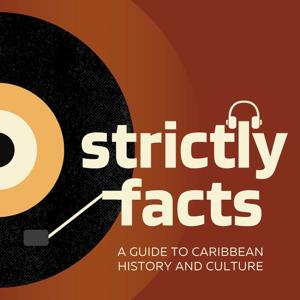
Are you passionate about Caribbean history, its diverse culture, and its impact on the world? Join Strictly Facts: A Guide to Caribbean History and Culture as we explore the rich tapestry of…

31,973 Listeners

6,720 Listeners

43,320 Listeners

38,681 Listeners

7,845 Listeners
14,658 Listeners

87,051 Listeners

111,852 Listeners

56,432 Listeners

9,081 Listeners

24,541 Listeners

10,263 Listeners

4,773 Listeners

15,918 Listeners

298 Listeners