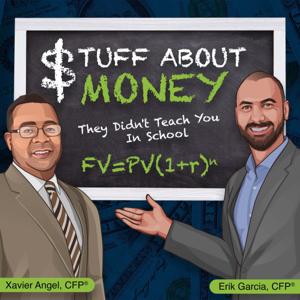
Stuff About Money They Didn't Teach You In School

Stuff About Money They Didn't Teach You In School

By Erik Garcia, CFP® & Xavier Angel, CFP®BusinessEducationInvesting
Download on the App Store

Stuff About Money They Didn't Teach You In School episodes

  • Episode 85: Should You Pay Your Mortgage Off Early?

    Debt. Some people hate it. Some people tolerate it. And when it comes to a mortgage, the debate gets even more interesting. In this episode of Stuff About Money They Didn’t Teach You in School, Erik Garcia unpacks the question that’s been on the minds of several clients this week: Should I pay off my mortgage early? With four unique client scenarios—ranging from low-interest-rate borrowers with excess cash flow to high-rate homeowners debating a refinance—Erik highlights why there’s no one-size-fits-all answer. Along the way, he shares his personal philosophy on debt (hint: not all debt is created equal) and why blindly following financial advice can sometimes backfire.


    As the episode unfolds, Erik explores the key factors to consider when making this decision—your interest rate, cash flow, investment potential, and, most importantly, your comfort level with risk. Sure, being mortgage-free sounds appealing, but what if paying it off means leaving yourself cash-poor? Trading your liquidity for a paid-off home might seem like the responsible move, but could it actually be a risky bet? Before you rush to throw extra payments at your mortgage, tune in to this thought-provoking conversation to ensure your financial strategy aligns with your long-term goals.


    Episode Highlights:

    • Erik outlines four different client situations, each with unique mortgage rates, cash flow, and financial goals. (01:28)
    • Erik discusses key factors to consider when deciding whether to pay off a mortgage early, including interest rates, cash flow, and investment opportunities. (04:10)
    • Erik highlights common reasons people choose to pay off their mortgage early, such as peace of mind, retirement planning, and reduced interest costs. (07:31)
    • Erik breaks down how interest rates impact the decision to invest extra money versus paying down a mortgage. (12:09)
    • Erik explains the role of risk tolerance, noting that some people are comfortable investing while carrying debt, while others feel uneasy. (15:00)
    • Erik explains how homeowners should consider future expenses, like home renovations and unexpected costs, before accelerating mortgage payments. (18:47)
    • Erik encourages listeners to evaluate their own financial situation, use mortgage calculators, and consult a financial planner before making a decision. (21:49)
    • Erik explains why liquidity is crucial and warns against using all available cash to pay off a mortgage too soon. (22:10)

    • Key Quotes:

      • “Risk tolerance and comfort with debt. Some people have the risk tolerance to invest while carrying debt. Others might feel uneasy by having a mortgage balance. So, having a conversation, a thoughtful conversation about how much debt you feel like you can tolerate is important.” - Erik Garcia, CFP®, BFA
      • “Avoid credit card debt as much as possible, like the plague, car debt, school debt, sometimes it's unavoidable, so you want to be prudent and judicious in that.” - Erik Garcia, CFP®, BFA

      • Resources Mentioned:

        • Erik Garcia, CFP®, BFA
        • Xavier Angel, CFP®, ChFC, CLTC
        • Plan Wisely Wealth Advisors
        • 25 min
        • Episode 84: Tomorrow Never Comes: Why We Put Off Financial Decisions

          In this episode of the Stuff About Money podcast, Erik and Xavier kick off this episode with a slightly humorous conversation about the unique way people from New Orleans speak—because if nothing else, in The Big Easy, they have their own way of doing things. But that same tendency to do things our way extends beyond language—it also applies to how we handle money. More specifically, how we don’t handle it. That’s right, this episode dives into the all-too-common habit of financial procrastination and why we keep telling ourselves, “I’ll take care of it tomorrow.”


          Why do we put off saving for retirement, getting life insurance, or investing for the future? It turns out, human nature makes it easy to prioritize today’s wants over tomorrow’s needs. Erik and Xavier explore the psychology behind why we delay crucial financial decisions, touching on everything from marshmallow experiments to why our future selves feel like total strangers. They also break down practical ways to stop stalling and start acting—from automation to visualization and a little bit of accountability (actually, a lot of accountability). Lean into this conversation for a fresh perspective on making smarter financial choices—or at the very least, to expand your New Orleans vocabulary.


          Episode Highlights:

          • Erik and Xavier discuss common New Orleans phrases and their connection to financial habits. (02:00)
          • Xavier shares a powerful story about a client who delayed purchasing life insurance and faced devastating consequences. (04:32)
          • Erik explains present bias, the tendency to prioritize immediate rewards over future financial security. (09:04)
          • Xavier emphasizes the impact of procrastination on financial planning, especially for business owners. (10:05)
          • Erik introduces the concept of future self-continuity, explaining how people struggle to identify with their future selves. (12:01)
          • Xavier shares a story of a client who secured life insurance just in time, ensuring financial stability for their family. (19:09)
          • Erik breaks down the cost of delaying financial decisions, from rising life insurance premiums to missed investment growth opportunities. (21:12)
          • Xavier stresses the emotional impact of financial procrastination and how it leads to stress, shame, and regret. (27:01)
          • Erik and Xavier outline strategies to overcome procrastination, including visualization, automation, simplification, and accountability. (31:06)

          • Key Quotes:

            • “We're paying for something today, robbing ourselves from the future for something that we consumed yesterday.” - Erik Garcia, CFP®, BFA
            • “We all understand what we need to do, what we're not doing, what we know we need to do, and we're ashamed because we're not following through.” - Xavier Angel, CFP®, ChFC, CLTC
            • “If we can connect our present self to our future self. That's going to help us make more intentional decisions for, uh, for tomorrow.” - Erik Garcia, CFP®, BFA

            • Resources Mentioned:

              • Erik Garcia, CFP®, BFA
              • Xavier Angel, CFP®, ChFC, CLTC
              • Plan Wisely Wealth Advisors
              • 40 min
              • Episode 83: Is the Piggy Bank Dead? Teaching Kids to Manage Digital Money

                In this episode of Stuff About Money They Didn’t Teach You in School, certified financial planners Erik Garcia, CFP®, and Xavier Angel, CFP®, are joined by Javier Sanchez, AVP of Financial Literacy for Fidelity Bank. Together, they explore how teaching kids about money has shifted in the digital age. The classic piggy bank may be fading, but the need for financial education is stronger than ever. Javier shares practical insights on starting financial conversations early, navigating the risks of credit cards, and the importance of modeling good money behavior for our children. They also dive into how mobile banking apps and automated savings can help young people develop healthy financial habits. 


                From personal stories—like Erik’s experience of spending more when swiping a credit card compared to paying with cash—to actionable advice on budgeting and avoiding credit card debt, this episode is packed with valuable tips for parents and caregivers. And hey, even if you think you’ve got your finances figured out, you might just walk away with a few new money skills yourself—or at least feel slightly more prepared than your kids. Be sure to follow, share, and let us know how you’re teaching money skills at home!


                Episode Highlights:

                • Erik and Javier reflect on the importance of starting financial literacy early and the role of practical tools like the piggy bank. (03:00)
                • Javier explains why children need a clear, visual savings vessel to understand the concept of saving money. (07:33)
                • Javier discusses the challenges of teaching kids about digital money and the importance of introducing mobile banking at an early age. (11:00)
                • Javier shares insights on how children can develop awareness of their income and spending habits using apps and alerts. (16:00)
                • The conversation shifts to the pitfalls of credit cards, emphasizing the need for parents to teach kids about borrowing costs and responsible use. (20:47)
                • Javier explains the significance of modeling good financial behavior for children to emulate. (29:00)
                • Javier shares practical advice, such as leveraging library resources and encouraging kids to invest in self-development. (36:46)

                • Key Quotes:

                  • “ Is the piggy bank dead? Absolutely not. Younger children need a container or a vessel that's clear, actually, so they can see that money growing. That instills that, hey, it's got to grow.” - Javier Sanchez
                  • “You can make very little money and still have an 850 credit score. It just means being smart and wise with your choices” - Javier Sanchez
                  • “If you're responsible, your kids follow that path. If you're very irresponsible, or you always seem to be struggling with your money, nine times out of ten, unless your kid sees it and says, ‘I don't want to live like this,’ they'll fall into that same habit.” - Javier Sanchez

                  • Resources Mentioned:

                    • Javier Sanchez
                    • Fidelity Bank
                    • Erik Garcia, CFP®, BFA
                    • Xavier Angel, CFP®, ChFC, CLTC
                    • Plan Wisely Wealth Advisors
                    • 41 min
                    • Episode 82: Will 2025 Bring More Volatility? Expert Market Outlook with Phil Blancato

                      What should you expect in 2025? Will market volatility and inflation trends continue to dominate the economy? In this dynamic episode of Stuff About Money They Didn’t Teach You in School, host Erik Garcia, CFP®, sits down with Phil Blancato, Chief Market Strategist for Osaic Wealth Management and CEO of Ladenburg Thalmann, to break down the biggest surprises of 2024 and what’s ahead for the markets. They dive into whether the explosive growth of the Magnificent 7 tech giants can continue and discuss how market corrections and volatility could impact investors in the coming year.

                      Are you ready for potential market pullbacks in 2025? Erik and Phil share practical strategies to help you navigate economic uncertainty and position your portfolio for long-term success. Tune in for valuable insights and expert guidance on managing risk in today’s unpredictable market. If you find this episode helpful, follow the show and share it with someone who’s looking to make smarter financial moves this year!


                      Episode Highlights:

                      • Phil emphasizes separating emotions from investments with his philosophy: "The market doesn’t love you, don’t love it." (04:09)
                      • Phil explains the persistent inflation in 2024 and its impact on Federal Reserve policies. (05:13)
                      • Global monetary interventions since 2008 have created an unprecedented economic environment. (07:06)
                      • Erik reflects on 2024’s record market performance and inflation challenges. (08:35)
                      • Phil predicts a return to "normal" market conditions in 2025 and sees opportunities in U.S. equities and bonds. (17:21)
                      • Phil discusses the dominance of big tech and advises diversification to mitigate risk. (18:12)
                      • Erik highlights the importance of aligning investment decisions with overall financial goals. (26:13)
                      • AI, crypto, and energy will drive emerging market opportunities in 2025. (30:35)
                      • Phil closes by advising investors to focus on long-term strategies. (32:37)

                      • Key Quotes:

                        • “Risk plus time equals reward. Real simple. Risk plus time equals reward. The market doesn't love you, don't love it, and you'll do just fine” - Phil Blancato
                        • “Think about being invested in the supply chain for AI, not just an AI company like NVIDIA, all the parts that are needed to make a chip or the software to build it. I think that residual component is quite interesting.” - Phil Blancato
                        • “The world is generally deflationary, and by that I mean productivity, the more productive we are creates deflation.” - Phil Blancato

                        • Resources Mentioned:

                          • Phil Blancato
                          • Osaic Wealth Management
                          • Ladenburg Thalmann
                          • Erik Garcia, CFP®, BFA
                          • Xavier Angel, CFP®, ChFC, CLTC
                          • Plan Wisely Wealth Advisors
                          • 37 min
                          • Episode 81: Ditch Your Resolutions: Rewire Your Mindset for Financial Success

                            Why do most New Year's resolutions fail, and why is it often a waste of time to even set them? In this engaging episode of "Stuff About Money," certified financial planners Xavier Angel and Erik Garcia commit to changing their mindset as they usher in 2025. They explore the common pitfalls of resolutions, revealing that a staggering 80% of goals fall by the wayside within the first month. Instead of traditional resolutions, Xavier and Erik emphasize the importance of actionable strategies that focus on living in the gain and creating new neural pathways for lasting change.


                            Listeners will discover practical tips on how to celebrate their achievements, no matter how small, and the significance of accountability in achieving financial goals. From automating savings to embracing a mindset of continuous improvement, this episode is packed with insights that will inspire you to take charge of your financial future. Tune in and learn how to make 2025 your most successful year yet!


                            Episode Highlights:

                            • Erik emphasizes the importance of building on the strong foundation laid in 2024 to execute plans successfully in 2025. (03:06)
                            • Erik discusses why many New Year's resolutions fail and how focusing on measurable, actionable goals can lead to better outcomes. (05:15)
                            • Xavier shares how measuring and celebrating small wins can create momentum, using a mutual client’s financial success as an example. (10:21)
                            • Erik introduces the mindset of living in the gain, where accomplishments are celebrated rather than focusing on what hasn’t been achieved. (13:06)
                            • Xavier highlights the power of delegation in freeing up time for high-value tasks and shares his personal growth in this area. (19:42)
                            • Erik explains how creating new neural pathways helps develop healthy habits and why routine plays a crucial role in sustaining behavioral changes. (23:00)
                            • Erik discusses automation as a form of accountability, making it easier to maintain financial goals such as saving with purpose. (32:00)
                            • Xavier concludes by emphasizing the importance of accountability and finding a partner to share and track your goals. (34:44)

                            • Key Quotes:

                              • “Rather than saying this is my New Year's resolution, let's come up with something that's measurable and that you can actually execute on.” - Xavier Angel, CFP®, ChFC, CLTC
                              • “The majority of the financial decisions we make are driven by behavior, not logic. Changing that behavior is key.” - Erik Garcia, CFP®, BFA

                              • Resources Mentioned:

                                • Erik Garcia, CFP®, BFA
                                • Xavier Angel, CFP®, ChFC, CLTC
                                • Plan Wisely Wealth Advisors
                                • 36 min
                                • Episode 80: Common Money Mistakes Advisors See Clients Make

                                  In this episode of Stuff About Money They Didn't Teach You in School, host Erik Garcia, CFP®, teams up with Brenton Harrison, the host of the New Money, New Problems podcast, to discuss the most common financial mistakes clients make. Recorded live at Osaic's annual Connected conference in Orlando, they explore the emotional factors that influence poor investment decisions, the critical differences between risk tolerance and risk capacity, and the myths surrounding passive income.


                                  Erik and Brenton share real-world examples and insights from their practices as financial advisors, highlighting how emotions like fear and greed can derail sound financial planning. They stress the importance of defining financial purpose and aligning investment strategies with personal goals. Tune in for actionable tips and a deeper understanding of how to make informed financial decisions for a more secure future.


                                  Episode Highlights:

                                  • Erik discusses how emotional decisions, driven by greed and fear, often lead to poor financial outcomes. (02:13)
                                  • Benton explains the concept of risk capacity and how it differs from risk tolerance, emphasizing its role in long-term investment strategies. (04:48)
                                  • Benton emphasizes the misconception that real estate is a passive investment and explains the realities of managing properties. (10:52)
                                  • Erik explains the importance of attaching purpose to investments, such as distinguishing between cash flow and capital appreciation strategies. (13:15)
                                  • Benton discusses the mistake of buying homes too big or too small for one’s financial situation and shares tailored advice based on income potential. (15:26)
                                  • Erik highlights the value of a "statement of financial purpose" to align financial decisions with personal values and long-term goals. (18:27)
                                  • Benton emphasizes the importance of starting financial plans that align with long-term objectives, avoiding unsustainable patterns. (23:11)
                                  • Benton shares the mistake of perpetually budgeting for car loans. (25:45)

                                  • Key Quotes:

                                    • “People act counter to what they say they feel as an investor. I will come across people who are so conservative and they are so afraid of the market that they'll be in their forties before they invest in anything outside their 401k.” - Brenton Harrison
                                    • “Don't start some plan of action that doesn't tie into what you want to be doing 10, 15 years from now.” - Brenton Harrison

                                    • Resources Mentioned:

                                      • Brenton Harrison
                                      • New Money, New Problems podcast
                                      • Erik Garcia, CFP®, BFA
                                      • Xavier Angel, CFP®, ChFC, CLTC
                                      • Plan Wisely Wealth Advisors
                                      • 29 min
                                      • Episode 79: Navigating Student Loans: A Roadmap to Funding College with John Hupalo

                                        In this episode, Erik Garcia, CFP®, and host of the Stuff About Money podcast, continues his conversation with John Hupalo from My College Corner, exploring the complex world of student loans. Building on their previous discussion about the FAFSA form, they cover the various types of loans available to students, including federal, private, and state-based options. John shares valuable insights on responsible borrowing, the differences between subsidized and unsubsidized loans, and how parents can navigate the financial landscape to support their children's education. 


                                        Join them as they unpack essential questions surrounding student loans, such as what to consider when comparing offers, the impact of cosigners, and effective repayment strategies. This episode aims to empower parents and students with the knowledge they need to make informed decisions about financing college, ensuring a brighter financial future for everyone involved.


                                        Episode Highlights:

                                        • Erik discusses the common struggle parents face between saving for retirement and funding their children’s education. (03:12)
                                        • John explains the importance of prioritizing retirement savings over college funding and the emotional aspect of this decision. (04:12)
                                        • John explains the differences between subsidized and unsubsidized federal loans and the responsibilities they entail for borrowers. (10:25)
                                        • John discusses tuition payment plans as a valuable tool to reduce student borrowing through incremental payments. (19:05)
                                        • John shares the advantages of private credit loans for parents, including fixed rates and co-signer release options. (30:32)
                                        • Erik emphasizes the importance of having early, realistic conversations with children about college affordability to manage expectations. (39:00)
                                        • John shares insights on exploring non-traditional options, such as lesser-known colleges with strong programs, as alternatives to expensive brand-name schools. (41:07)
                                        • Erik discusses the need to separate emotions from financial decisions to ensure sound choices for long-term stability. (44:23)

                                        • Key Quotes:

                                          • “Every single student who goes to college, no matter what parents make or have, is eligible for a federal student loan.” - John Hupalo
                                          • “This is the time in life to be realistic, not optimistic and not pessimistic about what it is, right? You know how much you saved or didn’t save, and that’s not a value judgment.” - John Hupalo

                                          • Resources Mentioned:

                                            • John Hupalo
                                            • My College Corner
                                            • Erik Garcia, CFP®, BFA
                                            • Xavier Angel, CFP®, ChFC, CLTC
                                            • Plan Wisely Wealth Advisors
                                            • 48 min
                                            • Episode 78: Navigating FAFSA with John Hupalo

                                              In this episode of the "Stuff About Money" podcast, host Erik Garcia, CFP®, CHFC®, BFA®, welcomes back his good friend John Hupalo from mycollegecorner to discuss college financing. This is part one of their conversation, where they tackle FAFSA season and share insights, tips, and a few laughs about the sometimes overwhelming process of financial aid applications. They also explore common misconceptions about financial aid and how to best prepare for the application process. Erik humorously suggests that having a therapist on speed dial might be a wise choice for families navigating these financial waters together!

                                              Join Erik and John as they explore the rising costs of college tuition and the various ways families can prepare financially. From the complexities of federal loans to the realities of saving for college, this episode is packed with valuable information—and a few light-hearted moments about the emotional rollercoaster that comes with planning for higher education. In part two of their conversation, they will discuss the different loan options available to students. Whether you're a parent with a college-bound child or just curious about the financial aid landscape, this conversation is sure to enlighten!


                                              Episode Highlights:

                                              • John explains why FAFSA opens each year and its importance for families with college-bound students. (1:07)
                                              • John discusses FAFSA’s purpose in determining eligibility for federal grants, loans, and work-study programs. (5:55)
                                              • John advises high-income families on why completing FAFSA can still matter for scholarships and federal loans. (11:02)
                                              • John explains contributor roles in FAFSA and how separated or divorced parents should provide financial information. (19:00)
                                              • John breaks down the Student Aid Index (SAI), its difference from the Expected Family Contribution (EFC), and its implications for aid eligibility. (25:00)
                                              • John explains the value of federal student loans for students and contrasts them with the pitfalls of Parent PLUS Loans. (30:15)
                                              • John emphasizes the importance of early financial conversations with students to set realistic college expectations. (35:10)
                                              • John advises families to leverage professional judgment if their financial circumstances change significantly after FAFSA submission. (41:00)

                                              • Key Quotes:

                                                • “Saving a dollar today is better than borrowing one tomorrow. We actually registered that trademark. We love that.” - John Hupalo
                                                • “Every single student is eligible, like Bill Gates’ kids, you know, they’re all eligible for federal student loans.” - John Hupalo
                                                • “Financial fit is important because academically and socially, it might be a great fit, but you have to know what’s realistic financially.” - John Hupalo

                                                • Resources Mentioned:

                                                  • John Hupalo
                                                  • mycollegecorner
                                                  • Erik Garcia, CFP®, BFA
                                                  • Xavier Angel, CFP®, ChFC, CLTC
                                                  • Plan Wisely Wealth Advisors
                                                  • 44 min
                                                  • Episode 77: Less Bad Decisions: How To Build Wealth with Bradley Flowers

                                                    In this episode of "The Stuff About Money They Didn't Teach You in School," host Erik Garcia welcomes Bradley Flowers, co-host of "The Insurance Guys Podcast" and owner of Portal Insurance. Bradley shares his unique perspective on improving both golf scores and financial health by focusing on making fewer bad decisions rather than striving for perfection. They discuss how this approach can lead to better outcomes in wealth-building and entrepreneurship.


                                                    Bradley and Erik explore common financial mistakes and strategies to avoid them, drawing parallels between golf and financial decision-making. Bradley also shares insights from his entrepreneurial journey, emphasizing the importance of long-term success by minimizing errors. 


                                                    Tune in to learn how a shift in mindset can enhance both your financial literacy and your golf game.


                                                    Episode Highlights:

                                                    • Bradley shares his experience with VR golf and how it helps him practice managing mistakes. (02:07)
                                                    • Bradley’s story of playing with a PGA coach and the lessons on controlling risk and avoiding catastrophic mistakes. (05:27)
                                                    • Bradley shares a personal anecdote about winning a dollar from a PGA tour golfer and how smart risk-taking led to success. (12:29)
                                                    • Erik explains a lesson from his mentor on the importance of choosing safe, consistent gains over risky decisions. (15:23)
                                                    • Bradley shares his approach to avoiding financial mistakes by consulting with a financial advisor. (20:41)
                                                    • Bradley discusses the value of hiring for weaknesses and the difference between business focus and overextending with multiple ventures. (29:26)
                                                    • Bradley discusses how prioritizing relationships over profits helped him gain valuable business insights. (37:21)
                                                    • Erik and Bradley conclude with reflections on avoiding hasty decisions by surrounding oneself with supportive people. (44:46)

                                                    • Key Quotes:

                                                      • “My whole strategy in a nutshell is to never put all the chips on the table. You know what I mean? Like I'm never going to put everything at risk. And, you know, I think it's having good people around you because it's easier.” - Bradley Flowers
                                                      • “Your education is really the only thing that can’t be taken away from you. It’s the relationships and the connections...like that’s really where the value is.” - Bradley Flowers
                                                      • “Build your strengths, not your weaknesses, don’t put it all on the table, be smart.” - Bradley Flowers

                                                      • Resources Mentioned:

                                                        • Bradley Flowers LinkedIn
                                                        • The Insurance Guys Podcast
                                                        • Portal Insurance
                                                        • Erik Garcia, CFP®, BFA
                                                        • Xavier Angel, CFP®, ChFC, CLTC
                                                        • Plan Wisely Wealth Advisors
                                                        • 47 min
                                                        • Episode 76: Investing in Quality: A Conversation with Kevin Caron, CFA

                                                          In this episode of the "Stuff About Money" podcast, hosts Erik Garcia, CFP®, BFA™, ChFC®, and Xavier Angel, CFP®, ChFC®, CLTC, discuss investing with Kevin Caron, CFA, Senior Portfolio Manager for Washington Crossing Advisors. They explore the firm's investment philosophy, focusing on quality companies with a track record of consistent growth and profitability. Kevin explains their emphasis on businesses that are well-capitalized, with low debt and attractive valuations, ensuring a focus on durability and predictability. 


                                                          The discussion also touches on the strengths and limitations of this investment approach, including when it performs well and potential times of underperformance. Kevin shares the metrics used to select these companies and provides insights into current economic events, such as the market's narrow leadership by the "magnificent seven" stocks and record U.S. equity valuations. Learn how a focus on quality can lead to a strong and resilient investment strategy.


                                                          Episode Highlights:

                                                          • Kevin reflects on the past 20 years in the financial markets, highlighting the impact of 0% interest rates and stock market growth. (2:42)
                                                          • Kevin introduces Washington Crossing Advisors' investment philosophy, focusing on quality investing and how it differs from momentum investing. (5:23)
                                                          • Kevin breaks down Washington Crossing’s proprietary grading system for companies, based on financial stability and asset performance. (12:49)
                                                          • Kevin discusses the challenge of evaluating tech companies under their quality standards, and how valuation plays a crucial role. (13:34)
                                                          • Kevin elaborates on the impact of volatility on portfolio returns, using the tortoise and hare analogy to illustrate steady performance versus high-risk investments. (23:56)
                                                          • Kevin explains how Washington Crossing Advisors assesses risk by focusing on predictable, flexible, and durable companies. (26:26)
                                                          • Kevin highlights the importance of building a balanced portfolio with a foundation of conservative, stable investments before venturing into riskier investments. (28:02)
                                                          • Kevin shares the composition of Washington Crossing’s investment committee and the importance of math in investment decision-making. (29:57)
                                                          • Kevin emphasizes maintaining a quality-focused portfolio to navigate both expected and unforeseen market challenges. (35:42)

                                                          • Key Quotes:

                                                            • “I think that by and large, many people overcomplicate investing, and it doesn't need to be all that complicated. And the best way to think is like a bond investor, even if you're an equity investor, because a bond investor asks two simple questions. The first question is whether or not the bond is going to pay me back, and the second question is whether or not I'm being paid to take on the risk.” - Kevin Caron, CFA
                                                            • “We know what we do. We know what we don’t do, and our style, because it’s so carefully prescribed, it’s very hard for us to deviate from something once you very clearly define what it is you’re looking for.” - Kevin Caron, CFA

                                                            • Resources Mentioned:

                                                              • Kevin Caron, CFA
                                                              • Washington Crossing Advisors
                                                              • Erik Garcia, CFP®, BFA
                                                              • Xavier Angel, CFP®, ChFC, CLTC
                                                              • Plan Wisely Wealth Advisors
                                                              • 43 min

                                                              About Stuff About Money They Didn't Teach You In School

                                                              From the publisher's feed

                                                              They might not have taught you the stuff about money you needed to know to build wealth, but Xavier and Erik are ready to take you back to school. When it comes to money, it is never too late to start…

                                                              More shows like Stuff About Money They Didn't Teach You In School

                                                              The Holy Post by Phil Vischer

                                                              The Holy Post

                                                              4,430 Listeners

                                                              Up First from NPR by NPR

                                                              Up First from NPR

                                                              56,445 Listeners

                                                              The Insurance Dudes© by The Insurance Dudes: Craig Pretzinger and Jason Feltman

                                                              The Insurance Dudes©

                                                              169 Listeners

                                                              Power Producers Podcast by David Carothers

                                                              Power Producers Podcast

                                                              116 Listeners

                                                              The Megyn Kelly Show by SiriusXM

                                                              The Megyn Kelly Show

                                                              39,397 Listeners

                                                              The Insurance Buzz by Michael and Courtney Weaver

                                                              The Insurance Buzz

                                                              130 Listeners