
Sign up to save your podcasts
Or

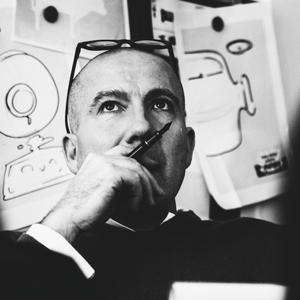


If you’ve ever wondered how reliant creatives are on their producers, count how many are married to them.
Lots.
Including me, my two creative partners at Campbell Doyle Dye and dozens of friends.
Psychologists say we seek qualities in a partner we don't have ourselves.
To create more complete children.
So right brainers, who come up with the theories, need left brainers to help turn them into reality.
Yvonne Chalkley has turned more crazy, impossible, can’t-be-done theories into reality than anyone.
After watching her ads, you could be forgiven for thinking each came with a blank cheque for production and a guarantee that the creatives had final sign off.
Obviously, neither were true.
How you navigate between the differing demands from the client, agency, film production company and creative team I don't know.
Don’t compromise and the script may not get made.
Compromise too much and the script and it may not be worth making.
And here’s the really weird, spooky thing - I can’t find anyone who’s ever heard Yvonne raise her voice.
Or say no.
I asked her to explain.
(She said ‘yes’, obvs.)
This is the first episode edited by Parv - thanks Parv!
(What were the other guests- chopped liver?)
Imagine a day where you don’t own a computer, and you lose your phone just after breakfast.
We used to live like that.
Every damn day.
With virtually no access to information.
Researching how to be better at your job wasn’t a thing.
Advertising people didn’t do podcasts or post articles about their work.
True, there were books, but not many.
Aside from awards annuals, the main two were ‘Ogilvy On Advertising’ and ‘Bill Bernbach’s Book’.
Occasionally you’d photocopy an article from Campaign, Creative Review or Direction magazine.
Dave Trott’s ‘How To Get Your First Job In Advertising’ was the most useful.
I had a copy of a copy of a copy of a copy of a copy.
The text was so faded and broken up it looked like an old religious document.
Which it was in a way.
It’s still great. (I’ve attached a copy below.)
Later, The Copy and Art Direction Books turned up.
They were a revelation – good creatives explaining how they create.
(If you haven’t read Richard Foster’s piece do, you’ll be a 9% better writer after reading it.)
We have the opposite problem today; too much.
But it leads to a kind of inertia.
A bit like living next to St. Pauls, you put off visiting, because you think ‘it’ll be there tomorrow, next week, next year’.
The other problem is who is or isn’t worth listening to?
LinkedIn if packed with people aggressively telling you exactly how to create ads as good as the ones they… like.
At the other end of the spectrum are people like Dave Trott, George Tannenbaum, Brian Burch, The Behind The Billboard guys, Rory Sutherland, Ben Kay and many more I’ll be embarrassed tomorrow that I forgot to mention.
And Steve Hudson.
He posts a series called The Power Of Advertising on LinkedIn where he breaks down his (and Victoria Fallon’s) ads from nose to tail.
From brief to air.
What’s great about it is the work.
A lot of teams have a style or preference, Steve (and Victoria) don’t.
At least, not that I can spot.
What links Audi to Anti-Smoking to One To One to Levi’s to Kingshield other than they’re all great?
The weirdest thing about our chat was realising how short their creative career was.
10 years.
They took it very seriously, which lead to some great work, but maybe some bad decisions too.
Hearing about Steve’s career was a bit like watching a horror film.
Instead of shouting ‘LOOK BEHIND YOU!’ I was shouting ‘DON’T RESIGN TO HEGARTY!’ or ‘STAY AT ABBOTT MEAD!’.
Anyway, it was a great chat, hope you enjoy it.
Creating is different to managing.
Creators try to break rules, managers set them.
Creators look inward, managers look outward.
Creators are introverts, managers are extroverts.
Not 100%, but most, AMV/BBDO once Myers Briggs tested their creative department.
The results came back - fifty people were rated ‘I’ (introvert), one was ‘E’ - the creative boss (Peter Souter).
I’s are ‘more likely to be successful in careers like writing, science and art’.
Makes sense.
“I’s are predominantly concerned with their own thoughts and feelings rather than with external things. Give an extrovert a problem and they’ll share it with others, give it to an introvert and they’ll ‘go into a cave alone to solve it’.
(Try finding a cave these days. In Soho. Nightmare.)
Today, creatives are often described as being “on the spectrum”.
Whether their diagnosis is right or wrong, it's true, our brains are wired differently.
It's fine when they need someone to look at a problem from a new angle.
More difficult when they need someone to play the role of manager.
That dark, cosy cave is swapped for bright, stranger-filled boardrooms.
Primarily to pitch, possibly the furthest distance from that cave.
You may be told to ‘have chemistry’ with six strangers from the world of moist wipes.
Or to present your funniest ‘jokes’ to some folks about to spend £6m persuading the public that their product has isn’t a cake, as its name suggests, it’s actually a biscuit.
It’s an adjustment.
Some adapt quicker than others.
I found it tough.
In the early days of CDD, clients having just left after a pitch, Peter Mead looked up at me and sighed “You should’ve seen David Abbott present creative work”.
Heartbreaking.
What did Abbott do?
How did he present?
I’d love to have seen him present creative work.
But agencies rarely invest in training or mentoring, they lob you in and hope you can swim.
It's like telling a footballer to “Put this helmet and shin pads on, you’re now a Cricketer’.
How do you make that transition less record scratchy?
I thought it’d be helpful for those about to go through it to have a bit more understanding of where they're headed.
To do this, I managed to pin down someone who knows more about pitching than anyone else; Martin Jones.
He’s sat on both sides of the table - he ran new business at the biggest agency in Britain at the time; J. Walter Thompson,
then ran the biggest intermediary in the Country for the last thirty years; The AAR.
Personally, he's run over a thousand over the last thirty years.
It’s meant that he’s seen every agency and senior person pitch.
I’ve known Martin since Arsenal’s Invincibles team, over the years he’s given me endless advice, but hearing him talk about his experience was a revelation.
If you have anything to do with new business; listen, you’ll be better at the end.
Hope you enjoy it.
Whatever happened to funny ads?
Have clients stopped buying them?
Or have agencies stopped writing them?
They used to dominate the ad breaks.
Humour was the first tool you reached for after being handed a brief.
Why? Well, as that Poppins women says ‘A spoonful of sugar makes the medicine go down’.
Actually…did they dominate ad breaks?
Maybe I’ve slipped on my rose-tinted specs again?
I reach for an old D&AD Annual.
Randomly, I pick up 1991’s.
34 tv and cinema ads featured; 28 were funny.
Of the 28, the most awarded were for Barclaycard and Red Rock Cider.
They feel slightly odd today.
They aren’t ‘advertising funny’, they’re actually funny.
In a way that I can’t imagine them popping up between Bake Off?
I don’t know whether it’s because they don’t take the product very seriously? Some even make fun of it. (Imagine; making fun of the very people who pay the bills?)
Or maybe getting bigger laughs than the programmes that surround you feels like bad form?
Like you have aspirations above your station.
I decided to do a bit of rudimentary desk research, discovering that humour is still surprisingly popular.
The public love it, apparently.
Much preferring it to being lectured to or bullshitted.
So why the lack of funny ads?
Even ad testing companies are urging us to produce more.
(Yes System 1, I’m talking about you.)
In an effort to better understand this humour thing, I went straight to the Chairman of the Board, the Grand Fromage, the Capo di Tutti Frutti – John Lloyd.
Not only did he shoot both the campaigns above, he’d spent two decades beforehand producing the funniest stuff on tv, including Not The Nine O’clock News, Blackadder and Spitting Image.
We had a lovely chat, hope you enjoy it.
“A lot of people on your podcast became creatives by accident.”
Someone messaged me this last week (after listening to four of them back-to-back).
I got me thinking; why do creatives become creatives?
I’d divide them into two groups.
The Lifestyle Brigade™ - attracted by the trappings. (Nothing wrong with that - it’s why most people go to work.)
And the Expressionists™ - attracted by putting a bit of themselves out into the world.
A point of view, an observation, a joke, whatever.
Like 90% of creatives, they're likely to be introverts.
Advertising, for them, is the conduit to a wider audience.
It's not like creating a widget in an ad factory, it’s much more personal.
Their work reflects the values they live by.
They don't find it helpful to patronise, bullshit or lie when talking to people day to day, so they don't do it talking to people via pixels or ink.
Dealing with humans on a regular basis, they've found logic, facts, humour and honesty persuade harder.
So these are the tools the reach for most often.
Nick Cohen is one of the best examples of the Expressionists™.
It's hard to think of anyone who’s leaned harder into the ‘honest’ tool.
Nick has just written an excellent book about his fabulous experiment - Mad Dogs and Englishmen.
It's a joy.
It made me want to get into advertising all over again.
We had a great chat about the book, the agency and honesty in advertising.
Hope you enjoy it.
So far, I’m about eighty podcasts in.
If someone tells me they listen, they usually follow up with ‘that Frank Lowe one’s great’ (or ‘sick’, depending on their age).
I always ask why, but never get a clear answer.
They just like it.
It was enjoyable to record too, but I left wondering why
he’d barely mentioned Lowe Howard-Spink.
As if he’d only ever worked at CDP.
Which was a shame, CDP had been amazing, but they weren’t my era.
Lowe’s was.
By the time I’d snuck into advertising the cool agencies were the new ones – GGT, BBH, AMV and the agency that carried Frank’s name.
Year after year, they won big awards for big clients.
Stella Artois, Vauxhall, Tesco, Heineken, I could go on.
So I will – Lloyds Bank, Reebok, Weetabix, Gordons Gin, Parker Pens, The Mail On Sunday, Condor, Castella, Tizer, Ovaltine, KP, The Hanson Trust, Birds Eye, Smirnoff, Coca-Cola – they were huge.
And all of those clients won awards.
And, unlike CDP, they started opening or acquiring offices across the globe.
But it wasn’t always this way.
In 1981, only months after opening their doors, they were in turmoil.
Totally dysfunctional.
Having swiped a big chunk of CDP’s senior talent, they didn’t have a plan or structure of how to use them.
Who over-saw who?
Did anybody over-see anybody?
Who was Creative Director?
Dave Horry? Alan Waldie? John O’Driscoll? John Kelley? Alfredo Marcantonio? Or the recently added former CDP superstar Geoff Seymour?
They found that too many creative leaders meant they had no creative leader.
Six months in, Horry, O’Driscoll and Kelley walk.
On the way out the door, they advise Frank that he needed a Creative Director and it should be the least-known and youngest of the breakaways – Alfredo Marcantonio.
Suddenly, things started to work.
We talk about why and the rest of Marc’s career, hope you enjoy it.
I used to like Teslas, I nearly bought one.
Not any more.
Obviously it’s still a great product, but it’s an Elon Musk company.
And his purchase of Twitter, and subsequent flooding of my feed with his thoughts has put me off him.
I choose not to give my money to a multi billionaire who whines everyday about how unfair the world is.
I want best product for the least amount of money, but who I buy it from counts too.
If I like the company I’ll give the benefit of the doubt, if I don’t, I’ll swerve them.
I suspect I’m not alone.
But most creative work is judged as if it’s being consumed by a cyborg, only logic and facts, as if 1% more of this or 3% less of that will win the day.
Rarely factoring in what people may think of the company.
I guess it gets you talking about brand advertising and that’s indulgent and squishy isn’t it?
Not like hard sell – that makes the money, doesn’t it?
Paul Feldwick gives a different view in his excellent book ‘Why Does The Peddlar Sing?’.
And unlike most books written by people about themselves……it’s unvarnished.
It focuses on the famous Barclaycard campaign; from the first pitch to the last ad.
If you’d have asked him why the campaign was successful back then, he’d have pointed to the key messages, like the free travel insurance.
Now, he he has a different view ‘Rowan Atkinson. People liked him and that rubbed off on Barclaycard.’
And the messaging underpinning the ads? ‘Well, an ad has to have a message, otherwise it just feels a bit weird?’
I really enjoyed chatting with Paul, hope you enjoy it too.
P.s. The peddlar sings to attract and enchant people, it increases sales.
A muffin company wants to make more money.
It's hard to increase their current customers weekly muffin intake - so they need add some new ones.
To flip muffin fans who aren't choosing theirs, they need to tell them about their company or muffins that will get them to try one.
And tell them in a way that gets their attention.
But the first thing they need to do is choose who to speak to.
An ad agency?
A design company?
Branding agency?
Packing firm?
Social media experts?
Behavioural scientists?
Media agency?
I could go on.
And on.
Is it helpful to muffin companies out there to slice ‘communication’ into so many tiny specialisms?
Some ad agencies dabble in design, some designer companies do the odd ad.
But why is it so segmented?
Essentially, we're all working with words and pictures to create personalities.
Michael Johnson has always straddled that line, the last 30 years running Johnson Banks.
And straddled it well, picking up every creative award going, for design and advertising.
We had a great chat, hope you enjoy it.
Dx
From the publisher's feed

316 Listeners

15,606 Listeners

3,040 Listeners

1,139 Listeners

840 Listeners