
Sign up to save your podcasts
Or

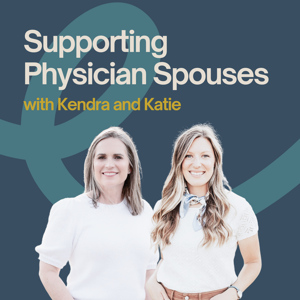


Today we're talking about the kind of rest physician spouses actually need during the holidays—especially when the whole world seems to slow down while your home ramps up. If you're carrying the family load while navigating your spouse's demanding end-of-year schedule, this episode was made for you.
Today we're talking about…Rest—not the "add another task to your list" kind, but the biological, necessary kind that helps you survive and stay present during an already overwhelming season.
In this episode, we talk about:
The three types of rest most depleted in physician families during the holidays
How emotional suppression drains your energy (and what to do instead)
Why some social interactions restore you—and others drain you
How sensory overload impacts your brain and your patience
Micro-practices you can implement this week, not "when things calm down"
You'll hear:
A vivid scene of what emotional overload looks like for a physician spouse on December 16th
A powerful reframe that your kids don't need you to overcompensate—they need your authenticity
Practical micro-practices for emotional, social, and sensory rest that take 1–3 minutes
This episode is especially for you if:
You're carrying the mental, emotional, and logistical load while your partner works unpredictable hours
You feel guilty for needing support because your spouse is already exhausted
You want the holiday season to feel more grounded—but you have no idea where to start
Dr. Saundra Dalton-Smith's Rest Quiz: restquiz.com
Sacred Rest by Dr. Saundra Dalton-Smith
Micro-practices for emotional, social, and sensory rest (from the episode)
Need help applying this work? Book a coaching session with Kendra
Get email updates + free resources: www.supportingphysicianspouses.com
Follow us on Instagram: @supportingphysicianspouses
Learn about coaching & support for physician spouses: www.itgetsbetternow.com
In this episode, Katie and Kendra talk honestly about what it's like to attend holiday events solo as a physician spouse. From classroom parties to winter concerts, this season often highlights the unique pressures physician families face. We normalize the mixed emotions, offer simple ways to reduce the pressure to "perform," and share strategies to stay connected with your partner and present with your kids—even when you're the only adult who can be there.
✨ Key TakeawaysYour presence matters more than perfection. Kids remember how it felt, not whether two parents were in the audience.
Normalize your emotions. Feeling sad, overwhelmed, or disappointed doesn't mean you're doing anything wrong.
Prepare yourself and your kids ahead of time. A quick, calm conversation before the event can reduce meltdowns and help everyone feel grounded.
Have a simple response ready when someone asks, "Where's your spouse?"—something warm, brief, and not emotionally loaded.
You don't have to overcompensate. Be present, not perfect.
Stay connected as a couple. Share short videos, send a quick voice memo, or debrief the moment afterward so your partner still gets to be part of it.
Find solidarity. Look for the other solo parents—you're not the only one.
Here are the resources mentioned in today's episode along with ways to connect more deeply with our community:
From the EpisodeSee, Say, Feel, Do Framework
Holiday routines & grounding rituals we referenced throughout the conversation
Kendra's Coaching: It Gets Better Now Personalized coaching for physician spouses navigating seasons of stress, transition, and identity shifts.
Instagram (@supportingphysicianspouses) Daily encouragement, tools, and community for the physician family journey.
Join SPS Office Hours Monthly drop-in coaching and conversation—a space to get support, ask questions, and connect with other physician spouses in real time.
Podcast Website / Additional Resources Access downloads, guides, and past episodes all in one place.
In this honest solo episode, Katie shares what's coming up for her as December begins—resistance, overwhelm, perfectionism, small-space stress, seasonal energy dips, and the pressure to "make magic" during the holidays. Instead of powering through it, she slows down and walks through the SEE–SAY–FEEL–DO framework in real time to bring intention, clarity, and compassion into the season.
If you're feeling behind, heavy, stretched thin, or unsure how to make the holidays feel good for you, this episode will feel like a breath of fresh air.
Listen In If You've Ever Felt:Overwhelmed by the holiday mental load
Pressure to buy, curate, or perform your way into "magic"
Exhausted before the season even begins
Triggered by small-space decorating or clutter
A dip in energy or mood as the days get darker
Like you're doing the emotional labor and planning alone
Unsure how you want the holidays to feel
Behind the Mic email list
Office Hours with Kendra and Katie
It Gets Better Now Coaching with Kendra
In this episode, Katie and Kendra talk honestly about navigating holidays in medical families—when schedules rarely match the calendar, traditions shift, and expectations don't go as planned.
Listen If You've Ever Felt…Sad or frustrated celebrating without your spouse
Guilty for not doing "traditional" holidays
Tired of explaining your family's reality
Worried your kids are missing out
Unsure how to create meaning when nothing feels normal
The mindset shift that removes holiday pressure
Creating flexible, meaningful traditions
Splitting celebrations without losing connection
Quality-over-quantity holiday planning
Supporting kids without toxic positivity
Avoiding the "woe is me" spiral
Why holidays get easier with time and experience
This week, Kendra and Katie unpack a quiet but common struggle among physician spouses: the belief that gratitude and dissatisfaction can't coexist.
We explore:
Why so many physician spouses downplay their hard moments
The "gratitude as gaslighting" trap
How privilege guilt + comparison silence our real needs
A simple AND vs BUT framework to spot healthy vs harmful gratitude
How to hold emotional complexity without minimizing yourself
Four questions to help you take action instead of staying stuck
Why acknowledging what's hard is not selfish—but essential for thriving
Key Takeaway: You can be grateful and want change. You can love your life and need more support. Both things can be true.
Resources Mentioned"It Gets Better Now" Coaching with Kendra
Supporting Physician Spouses Community + Podcast Archive
10-10-10: A Life-Transforming Idea — Suzy Welch
Artful TV series (BYUtv)
When the call schedule explodes, the backup plan fails, and everyone's unraveling — how do you hold it all together?
In the final episode of The Predictability Problem Series, Kendra and Katie unpack what it really means to create flexible family systems that bend but don't break when medicine runs the clock.
You'll learn:
Why rigid plans actually increase stress in high-uncertainty seasons
The Plan B Framework — Predict, List, Automate, Name — to restore calm when things go sideways
How to build "structured flexibility" that keeps the household steady
Why Plan B isn't failure — it's the foundation of resilience
Simple system swaps to turn daily survival into sustainable rhythm
Because predictability isn't about control — it's about confidence that you can recover, reset, and reconnect no matter what medicine throws your way.
🔗 Resources & Links🩺 Connect with us off the Podcast - All our freebies + Office Hours registration: stan.store/supportingphysicianspouses
💬 Book a coaching consult or learn more: itgetsbetternow.com/schedule
Instagram @supportingphysicianspouses
Email us! [email protected]
⏱️ Timestamps0:00 – Welcome & Series Recap 4:30 – Why rigid systems crack under medical unpredictability 8:20 – The Plan B Framework explained 14:10 – Flexible systems in real life (bedtime, call weeks, holidays) 22:00 – How to apply Plan B without guilt 27:15 – Closing thoughts + next steps
Even the calmest, most grounded person can feel off balance when their relationship starts to feel like two people living parallel lives. In Week 3 of The Predictability Problem Series, Katie explores how physician spouses can rebuild calm through connection, even when medicine keeps changing the plan.
You'll hear:
A real-life story of emotional safety in action
Research from Dr. Tate Shanafelt and Dr. Wayne Sotile on what predicts thriving in physician families
How much "meaningful time" couples actually need—and what to do if you can't get it
Why micro rituals of connection (3 minutes, 3 times a day) are the secret to predictability when schedules never stop shifting
Practical examples you can try this week—no extra time required
Because predictability doesn't come from your calendar—it comes from knowing you can count on each other.
Links & Resources Mentioned: 🩺 All freebies + Office Hour registration: stan.store/supportingphysicianspouses 💬 Learn about coaching for physician spouses: ItGetsBetterNow.com
Timestamps: 0:00 – Welcome + recap of The Predictability Problem Series 3:40 – The accident story that redefined emotional safety 7:55 – What research says about time, connection, and burnout 11:20 – Why emotional safety = predictability 14:00 – How to create "micro rituals" (3x3 framework) 22:40 – Co-regulation and the biology of connection 26:30 – Weekly challenge: Build your micro rituals 29:15 – Closing + what's next in the series
When the text comes — "Got pulled into a case. Won't make it for dinner." — your whole body reacts. The plan falls apart, and suddenly, you're bracing again.
This week, Kendra walks physician spouses through the science of why unpredictability hits so hard — and a powerful, research-backed framework for reclaiming calm in the middle of it. Drawing from cognitive behavioral therapy and resilience training, she shares the ANCHOR Framework — six practical steps to shift from bracing for chaos to anchoring in calm, even when the schedule changes for the hundredth time.
You'll learn:
Why your brain interprets unpredictability as danger — and how to retrain it for safety.
How to move from "here we go again" to "I can handle this."
What affect labeling and cognitive reappraisal mean in real life (hint: they can actually lower stress hormones).
The six ANCHOR steps:
Acknowledge what's real
Notice your narrative
Challenge it with choice
Hold a grounding cue
Orient toward what's stable
Re-engage with intention
Plus — how one small ritual (like lighting a candle) can become your nervous system's cue that you're safe, even when plans change.
If you've ever felt the constant tension of life with a physician in training, this episode will remind you: calm isn't something you wait for — it's something you can create.
🔗 Links Mentioned:Free ANCHOR Framework Worksheet: Download here
Join our next Office Hours at supportingphysicianspouses.com
One-on-One Coaching with Kendra at ItGetsBetterNow.com
If you've ever said, "Our calendar is held hostage by the call schedule," or, "I can't plan anything until we know the rotation," this episode is for you.
In Part 1 of The Predictability Problem Series, we're exploring how to reclaim rhythm and calm in a life that's constantly being reshaped by medicine.
We'll unpack what happens to our nervous systems when life feels unpredictable, the science behind why autonomy matters (thank you, Self-Determination Theory!), and how even tiny "pockets of control" can help restore your sense of balance and peace.
You'll walk away with four practical ways to design micro-rhythms that belong to you — the kind that hold even when medicine doesn't.
In This EpisodeWhy unpredictability keeps your nervous system in "alert mode"
The 3 psychological needs that help humans thrive (and how medicine often disrupts them)
What autonomy really means — and how to reclaim yours, even in small ways
How to create personal and family rituals that anchor you, not overwhelm you
The "Four-Step Framework" to design rhythms that last:
Choose what's fully in your control
Shrink until it's doable
Name it to make it visible
Treat it like a boundary
Pick one small rhythm that feels nourishing and realistic for you or your family. Ask yourself:
"What helps me feel grounded — and what would it take to protect that?"
📥 Free ResourceIt's one thing to listen — it's another to actually create change. That's why we made a free companion resource to help you start designing your pockets of predictability in a life that's anything but predictable.
👉 Get your download here: Your link will arrive via email, with a guide to help you turn today's conversation into practical action.
Connect with UsFollow along on Instagram @supportingphysicianspouses or email us anytime at [email protected] — we love hearing from you!
Sign up for Office Hours at supportingphysicianspouses.com
If you found this episode helpful, please rate and review the podcast. Every review helps another physician spouse find this community and feel less alone in the unpredictability of medical life.
October is Pregnancy and Infant Loss Awareness Month, and in this heartfelt conversation, Kendra and Katie sit down with Amy Watson, a certified life coach who helps women navigate the deep grief that follows miscarriage, stillbirth, and infant loss. Amy shares her personal story — from losing her daughter Lauren and later her baby River, to transforming that pain into purpose by supporting others walking a similar path.
This episode is for everyone — whether you've personally experienced loss or want to know how to better support a friend, colleague, or loved one who has. Together, we explore how to show up with compassion, what to say (and what not to say), and how even small gestures can make a big difference.
Amy's story is raw, real, and full of hope. She reminds us that grief and love coexist — and that speaking a baby's name, showing up, and saying something is always better than silence.
You'll Learn:
Amy's personal story of loss, healing, and becoming an advocate for grieving parents
What parents who've experienced pregnancy or infant loss most need from friends and family
The power of saying a baby's name and acknowledging both grief and parenthood
Why it's never too late to reach out — even if time has passed
How partners may experience grief differently and ways to support them
Resources and organizations helping families after loss
Additional Resources:
Connect with Amy: 🌐 Website: smoothstonescoaching.com 📸 Instagram: @amy.smoothstonescoaching
Join the Office Hours Waitlist:
From the publisher's feed