
Sign up to save your podcasts
Or



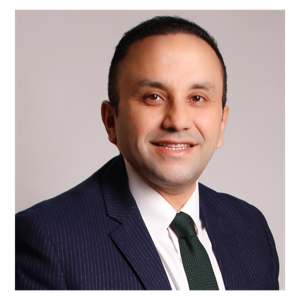
The average survival rate for patients with myelofibrosis is six years. But this varies based on potential treatments. There are no drugs that can modify the outcome for myelofibrosis, and the only treatment that leads to cure is an allogeneic hematopoietic cell transplantation (allo-HCT). However, because of the high rates of morbidity and mortality, this treatment must be carefully considered based on the patient. CANCER BUZZ spoke to Gabriela S. Hobbs. MD, Assistant Professor of Medicine, Harvard Medical School, and Clinical Director of Leukemia, Massachusetts General Hospital in Boston, MA. Listen as Dr. Hobbs discusses symptom scoring, risk stratification, and effective practices in building a strong myelofibrosis program.
"…If a patient is higher risk, they should be referred to transplant; also patients who are high risk are more likely to have low blood counts, low platelets, and low red blood cells that may also influence how these patients are treated." – Gabriela S. Hobbs. MD
This project is supported by AbbVie and GSK.
Gabriela S. Hobbs. MD
Assistant Professor of Medicine
Harvard Medical School
Clinical Director of Leukemia
Massachusetts General Hospital
Boston, MA
Resources:
Leukemia & Lymphoma Society
MPN Research Foundation
 View all episodes
 By Association of Cancer Care Centers
5
3030 ratings
The average survival rate for patients with myelofibrosis is six years. But this varies based on potential treatments. There are no drugs that can modify the outcome for myelofibrosis, and the only treatment that leads to cure is an allogeneic hematopoietic cell transplantation (allo-HCT). However, because of the high rates of morbidity and mortality, this treatment must be carefully considered based on the patient. CANCER BUZZ spoke to Gabriela S. Hobbs. MD, Assistant Professor of Medicine, Harvard Medical School, and Clinical Director of Leukemia, Massachusetts General Hospital in Boston, MA. Listen as Dr. Hobbs discusses symptom scoring, risk stratification, and effective practices in building a strong myelofibrosis program.
"…If a patient is higher risk, they should be referred to transplant; also patients who are high risk are more likely to have low blood counts, low platelets, and low red blood cells that may also influence how these patients are treated." – Gabriela S. Hobbs. MD
This project is supported by AbbVie and GSK.
Gabriela S. Hobbs. MD
Assistant Professor of Medicine
Harvard Medical School
Clinical Director of Leukemia
Massachusetts General Hospital
Boston, MA
Resources:
Leukemia & Lymphoma Society
MPN Research Foundation

7 Listeners
1 Listeners