
Sign up to save your podcasts
Or

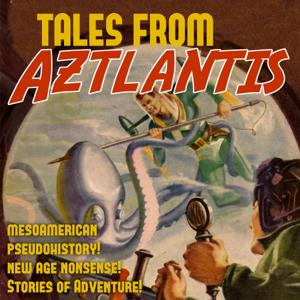


The "Indias Mexicanas" who arrived in New Mexico during early colonization brought with them traditional healing and ceremonial practices. Members of the church often accused these women of practicing "witchcraft." In this episode, we are joined by New Mexico State Historian Rob Martinez to discuss the legacies of these women!
listener comments? Feedback? Shoot us a text!
Support the show
Order "NEVER WILL IT BE LOST" and get $5 off!
Support Lignum: A Cultural Haven in MéridaYour Hosts:
Kurly Tlapoyawa is an archaeologist, ethnohistorian, and filmmaker. His research covers Mesoamerica, the American Southwest, and the historical connections between the two regions. He is the author of numerous books and has presented lectures at the University of New Mexico, Harvard University, Yale University, San Diego State University, and numerous others. He most recently released his documentary short film "Guardians of the Purple Kingdom," and is a cultural consultant for Nickelodeon Animation Studios.
@kurlytlapoyawa
Ruben Arellano Tlakatekatl is a scholar, activist, and professor of history. His research explores Chicana/Chicano indigeneity, Mexican indigenist nationalism, and Coahuiltecan identity resurgence. Other areas of research include Aztlan (US Southwest), Anawak (Mesoamerica), and Native North America. He has presented and published widely on these topics and has taught courses at various institutions. He currently teaches history at Dallas College – Mountain View Campus.
Find us:
Welcome to the ad-free & extended version of Episode 77! As a premium member, we thank you for supporting the podcast.
What if I told you that there is an 18th-century painting of the Virgin Mary, armed with an Aztec weapon and surrounded by the bloody violence of the Pueblo Revolt, hanging in the New Mexico History Museum in Santa Fe? And that the Virgin herself had appeared to a 6-year-old little girl to give a warning about the revolt, and this image of the Virgin would later become known as "The Virgin of the Macana." In our latest episode, we delve into the mythology surrounding the origin of this image and explore its relevance to the Pueblo Revolt of 1680, as well as take a look at the presence of Mesoamerican warriors in Colonial New Mexico.
All this and more, on this episode of the Tales From Aztlantis podcast!
The Pueblo Revolt of 1680 was a pivotal moment in which the Pueblo people of New Mexico rose up against Spanish colonists, driving them out and securing their independence for 12 years. During the uprising, approximately 21 Franciscans and nearly 400 colonists lost their lives. Interestingly, no artists of that time ever bothered to memorialize this significant event in their work. It wasn’t until the later 18th-century that visual representations of the revolt began to emerge. One such image, a painting known as The Virgin of the Macana—is now housed in the New Mexico History Museum.
listener comments? Feedback? Shoot us a text!
Order "NEVER WILL IT BE LOST" and get $5 off!
Support Lignum: A Cultural Haven in MéridaYour Hosts:
Kurly Tlapoyawa is an archaeologist, ethnohistorian, and filmmaker. His research covers Mesoamerica, the American Southwest, and the historical connections between the two regions. He is the author of numerous books and has presented lectures at the University of New Mexico, Harvard University, Yale University, San Diego State University, and numerous others. He most recently released his documentary short film "Guardians of the Purple Kingdom," and is a cultural consultant for Nickelodeon Animation Studios.
@kurlytlapoyawa
Ruben Arellano Tlakatekatl is a scholar, activist, and professor of history. His research explores Chicana/Chicano indigeneity, Mexican indigenist nationalism, and Coahuiltecan identity resurgence. Other areas of research include Aztlan (US Southwest), Anawak (Mesoamerica), and Native North America. He has presented and published widely on these topics and has taught courses at various institutions. He currently teaches history at Dallas College – Mountain View Campus.
Find us:
What if I told you that there is an 18th-century painting of the Virgin Mary, armed with an Aztec weapon and surrounded by the bloody violence of the Pueblo Revolt, hanging in the New Mexico History Museum in Santa Fe? And that the Virgin herself had appeared to a 6-year-old little girl to give a warning about the revolt, and this image of the Virgin would later become known as "The Virgin of the Macana." In our latest episode, we delve into the mythology surrounding the origin of this image and explore its relevance to the Pueblo Revolt of 1680, as well as take a look at the presence of Mesoamerican warriors in Colonial New Mexico.
All this and more, on this episode of the Tales From Aztlantis podcast!
The Pueblo Revolt of 1680 was a pivotal moment in which the Pueblo people of New Mexico rose up against Spanish colonists, driving them out and securing their independence for 12 years. During the uprising, approximately 21 Franciscans and nearly 400 colonists lost their lives. Interestingly, no artists of that time ever bothered to memorialize this significant event in their work. It wasn’t until the later 18th-century that visual representations of the revolt began to emerge. One such image, a painting known as The Virgin of the Macana—is now housed in the New Mexico History Museum.
listener comments? Feedback? Shoot us a text!
This December, I'll be joining Skeptoid Adventures as your guide for The Mysteries of the Maya, where we'll travel through the Yucatán exploring remarkable archaeological sites, uncovering the real history behind the Maya civilization, and separating fact from fiction along the way.
To reserve your spot, all you need is a fully refundable $500 deposit. Your deposit is refundable through August 1, so you can reserve your place with confidence. After Au
Lignum is a haven for culture, rest, and resistance. We believe in celebrating community and honoring the land that holds us. At our urban “milpa,” we practice indigenous science that respects the natural cycles of the region, and most of our workshops are hosted by indigenous and local experts. Every project we do is grounded in collective memory, creativity, and respect for the land and its people.
Order "NEVER WILL IT BE LOST" and get $5 off!
Support Lignum: A Cultural Haven in MéridaYour Hosts:
Kurly Tlapoyawa is an archaeologist, ethnohistorian, and filmmaker. His research covers Mesoamerica, the American Southwest, and the historical connections between the two regions. He is the author of numerous books and has presented lectures at the University of New Mexico, Harvard University, Yale University, San Diego State University, and numerous others. He most recently released his documentary short film "Guardians of the Purple Kingdom," and is a cultural consultant for Nickelodeon Animation Studios.
@kurlytlapoyawa
Ruben Arellano Tlakatekatl is a scholar, activist, and professor of history. His research explores Chicana/Chicano indigeneity, Mexican indigenist nationalism, and Coahuiltecan identity resurgence. Other areas of research include Aztlan (US Southwest), Anawak (Mesoamerica), and Native North America. He has presented and published widely on these topics and has taught courses at various institutions. He currently teaches history at Dallas College – Mountain View Campus.
Find us:
We here at Tales From Aztlantis would like to issue the following public service announcement: PLEASE DO NOT rely on social media posts as your sole source of historical and archaeological information. This should not be a controversial statement. Yet every day, social media feeds are inundated with well-meaning individuals uncritically sharing and reposting pseudohistory without bothering to check the sources or seek outside information.
Tik Tok, in particular is easily the worst offender when it comes to the spread of pseudohistory, pseudoarcheology, and general conspiracism. The speed with which a short video containing absolute nonsense can be created and shared on Tik Tok is truly impressive. And thanks to its algorithm, those who consume such disinformation are repeatedly inundated with more and more nonsense, creating a never-ending loop of paranoid conspiracism and pseudo historical group-think.
One such outlandish claim that frequently pops up on pseudohistory-promoting social media sites is our topic for this episode: the battle of Cagayan. For those unfamiliar with the general narrative, it usually goes like this:
“In 1582, a small, battle-hardened group consisting of 40 Tlaxkaltekah and Spanish soldiers defeated a thousand Japanese Samurai at the Battle of Cagayan in the Phillipines.”
At face value this story sounds super badass. But is this actually what happened? Did a small band of spunky Tlaxkaltekah and Spanish soldiers really vanquish a THOUSAND Japanese Samurai in a Thermopylae-style beat down in the Phillipines?
Let's find out!
Your hosts:
Kurly Tlapoyawa is an archaeologist, ethnohistorian, and filmmaker. His research covers Mesoamerica, the American Southwest, and the historical connections between the two regions. He is the author of numerous books and has presented lectures at the University of New Mexico, Harvard University, Yale University, San Diego State University, and numerous others. He most recently released his documentary short film "Guardians of the Purple Kingdom," and is a cultural consultant for Nickelodeon Animation Studios.
@kurlytlapoyawa
Ruben Arellano Tlakatekatl is a scholar, activist, and professor of history. His research explores Chicana/Chicano indigeneity, Mexican indigenist nationalism, and Coahuiltecan identity resurgence. Other areas of research include Aztlan (US Southwest), Anawak (Mesoamerica), and Native North America. He has presented and published widely on these topics and has taught courses at various institutions. He currently teaches history at Dallas College – Mountain View Campus.
listener comments? Feedback? Shoot us a text!
Support the show
Order "NEVER WILL IT BE LOST" and get $5 off!
Support Lignum: A Cultural Haven in MéridaYour Hosts:
Kurly Tlapoyawa is an archaeologist, ethnohistorian, and filmmaker. His research covers Mesoamerica, the American Southwest, and the historical connections between the two regions. He is the author of numerous books and has presented lectures at the University of New Mexico, Harvard University, Yale University, San Diego State University, and numerous others. He most recently released his documentary short film "Guardians of the Purple Kingdom," and is a cultural consultant for Nickelodeon Animation Studios.
@kurlytlapoyawa
Ruben Arellano Tlakatekatl is a scholar, activist, and professor of history. His research explores Chicana/Chicano indigeneity, Mexican indigenist nationalism, and Coahuiltecan identity resurgence. Other areas of research include Aztlan (US Southwest), Anawak (Mesoamerica), and Native North America. He has presented and published widely on these topics and has taught courses at various institutions. He currently teaches history at Dallas College – Mountain View Campus.
Find us:
Happy May Day!
Tlakatekatl reads an article originally published in 1976 in a Chicano newspaper called, Voz Fronteriza, from San Diego, CA. The article is entitled, "International Worker’s Day,” and it's by Kaarina Palomino.
The article does an excellent job of bringing May Day and Cinco de Mayo together in conversation in relation to labor struggles and anti-colonialism globally. We thought it fit the moment, so we're sharing it with you fine folks. Enjoy!
Y que Viva El Cinco de Mayo!
listener comments? Feedback? Shoot us a text!
Support the show
Order "NEVER WILL IT BE LOST" and get $5 off!
Support Lignum: A Cultural Haven in MéridaYour Hosts:
Kurly Tlapoyawa is an archaeologist, ethnohistorian, and filmmaker. His research covers Mesoamerica, the American Southwest, and the historical connections between the two regions. He is the author of numerous books and has presented lectures at the University of New Mexico, Harvard University, Yale University, San Diego State University, and numerous others. He most recently released his documentary short film "Guardians of the Purple Kingdom," and is a cultural consultant for Nickelodeon Animation Studios.
@kurlytlapoyawa
Ruben Arellano Tlakatekatl is a scholar, activist, and professor of history. His research explores Chicana/Chicano indigeneity, Mexican indigenist nationalism, and Coahuiltecan identity resurgence. Other areas of research include Aztlan (US Southwest), Anawak (Mesoamerica), and Native North America. He has presented and published widely on these topics and has taught courses at various institutions. He currently teaches history at Dallas College – Mountain View Campus.
Find us:
Our sponsors:
Arkeogato Tours
Shop Aztlantis
GO PREMIUM!
The National Association for Chicana and Chicano Studies, or NACCS as it is more commonly known, recently held its 50th annual conference. This time in my hometown of Albuquerque, New Mexico. Now, for those who are unaware, here's a bit of background and history about the organization as featured on the official NACCS website.
“The Association was first named the National Caucus of Chicano Social Scientists from 1972-1973. After the Caucus's first meeting November 17, 1973, at the University of California at Irvine, the members of the steering committee unanimously voted to change the name to the National Association of Chicano Social Scientists (NACSS).
In 1976, during the 3rd NACSS Conference participates voted to rename the organization to the National Association for Chicano Studies (NACS).
In 1995 during the National Conference in Spokane, Washington, the body unanimously voted to change the name from the National Association for Chicano Studies to the National Association for Chicana and Chicano Studies (NACCS).”
Its stated mission, once again from the website is:
“To advance the interest and needs of the Chicana and Chicano community. To advance research in Chicana and Chicano Studies. To advance the professional interest and needs of Chicanas and Chicanos in the academy.”
Now, I found it interesting that the very first sentence of the NACCS's mission statement is to advance the interests and needs of the Chicana and Chicano community. because I, like most members of the Chicana and Chicano community here in Albuquerque, had no idea whatsoever that the conference was even happening in my own city. And not only that, but when I did hear about the conference, I looked into the registration process thinking that I might participate, only to find that the cost of registering for the conference was far too expensive for your average community member. Now with this in mind, I sat down with Dr. Ernesto Todd Mireles of Northern Arizona University and author Scott Russell Duncan of Maiz Poppin Press, Both of whom were in town to attend the conference.
Your Host:
Kurly Tlapoyawa is an archaeologist, ethnohistorian, and filmmaker. His research covers Mesoamerica, the American Southwest, and the historical connections between the two regions. He is the author of numerous books and has presented lectures at the University of New Mexico, Harvard University, Yale University, San Diego State University, and numerous others. He most recently released his documentary short film "Guardians of the Purple Kingdom," and is a cultural consultant for Nickelodeon Animation Studios.
@kurlytlapoyawa
listener comments? Feedback? Shoot us a text!
This December, I'll be joining Skeptoid Adventures as your guide for The Mysteries of the Maya, where we'll travel through the Yucatán exploring remarkable archaeological sites, uncovering the real history behind the Maya civilization, and separating fact from fiction along the way.
To reserve your spot, all you need is a fully refundable $500 deposit. Your deposit is refundable through August 1, so you can reserve your place with confidence. After Au
Lignum is a haven for culture, rest, and resistance. We believe in celebrating community and honoring the land that holds us. At our urban “milpa,” we practice indigenous science that respects the natural cycles of the region, and most of our workshops are hosted by indigenous and local experts. Every project we do is grounded in collective memory, creativity, and respect for the land and its people.
Support the show
Order "NEVER WILL IT BE LOST" and get $5 off!
Support Lignum: A Cultural Haven in MéridaYour Hosts:
Kurly Tlapoyawa is an archaeologist, ethnohistorian, and filmmaker. His research covers Mesoamerica, the American Southwest, and the historical connections between the two regions. He is the author of numerous books and has presented lectures at the University of New Mexico, Harvard University, Yale University, San Diego State University, and numerous others. He most recently released his documentary short film "Guardians of the Purple Kingdom," and is a cultural consultant for Nickelodeon Animation Studios.
@kurlytlapoyawa
Ruben Arellano Tlakatekatl is a scholar, activist, and professor of history. His research explores Chicana/Chicano indigeneity, Mexican indigenist nationalism, and Coahuiltecan identity resurgence. Other areas of research include Aztlan (US Southwest), Anawak (Mesoamerica), and Native North America. He has presented and published widely on these topics and has taught courses at various institutions. He currently teaches history at Dallas College – Mountain View Campus.
Find us:
Our sponsors:
Arkeogato Tours
Shop Aztlantis
GO PREMIUM!
The Whiteness of “Latinx”
A couple of years back, Kurly came across a video online about the Chicano Moratorium March of August 29, 1970. In case you’ve never heard of it, the march was a watershed moment in the Chicano Movement, in which the Los Angeles Police met a peaceful Chicana-Chicano-led protest against the Vietnam War with extreme violence. The ensuing police riot claimed three lives, most notably that of Journalist Ruben Salazar. It remains an important chapter in Chicana-Chicano history. Yet the video claims the Chicano Moratorium “sparked a movement in defense of Latinx lives.”
Wait... what?
In this episode we talk about the Eurocentric roots of "Latinidad," and how "Latinx" identity is a colonialist tool that centers whiteness while erasing those of Indigenous and African descent.
Your hosts:
Kurly Tlapoyawa is an archaeologist, ethnohistorian, and filmmaker. His research covers Mesoamerica, the American Southwest, and the historical connections between the two regions. He is the author of numerous books and has presented lectures at the University of New Mexico, Yale University, San Diego State University, and numerous others. He is currently a professor of Chicano Studies at the Colegio Chicano del Pueblo, a free online educational institution.
@kurlytlapoyawa
Ruben Arellano Tlakatekatl is a scholar, activist, and professor of history. His research explores Chicana/Chicano indigeneity, Mexican indigenist nationalism, and Coahuiltecan identity resurgence. Other areas of research include Aztlan (US Southwest), Anawak (Mesoamerica), and Native North America. He has presented and published widely on these topics and has taught courses at various institutions. He currently teaches history at Dallas College – Mountain View Campus.
listener comments? Feedback? Shoot us a text!
Support the show
Order "NEVER WILL IT BE LOST" and get $5 off!
Support Lignum: A Cultural Haven in MéridaYour Hosts:
Kurly Tlapoyawa is an archaeologist, ethnohistorian, and filmmaker. His research covers Mesoamerica, the American Southwest, and the historical connections between the two regions. He is the author of numerous books and has presented lectures at the University of New Mexico, Harvard University, Yale University, San Diego State University, and numerous others. He most recently released his documentary short film "Guardians of the Purple Kingdom," and is a cultural consultant for Nickelodeon Animation Studios.
@kurlytlapoyawa
Ruben Arellano Tlakatekatl is a scholar, activist, and professor of history. His research explores Chicana/Chicano indigeneity, Mexican indigenist nationalism, and Coahuiltecan identity resurgence. Other areas of research include Aztlan (US Southwest), Anawak (Mesoamerica), and Native North America. He has presented and published widely on these topics and has taught courses at various institutions. He currently teaches history at Dallas College – Mountain View Campus.
Find us:
Our sponsors:
Arkeogato Tours
Shop Aztlantis
GO PREMIUM!
In the late 19th century, a Mexican rancher named Florentino Juárez set the stage for a nationalistic hoax, the consequences of which continue to echo among Mexicano and Chicano communities. Beneath the altar of the village church in Ixcateopan, Guerrero, Juarez placed half-burnt bones, a handful of artifacts, and a copper plaque crudely engraved with the words “1525–1529. Lord and King Coatemo.” The remains, he claimed, belonged to none other than Kwawtemok, the last sovereign Tlahtoani of the Mexika people. This forgery was driven by Juárez’s ambition to elevate the status of his village and exploit Mexico’s rapidly growing cultural nationalism. The subsequent controversies, investigations, and appropriation of the legend surrounding the alleged “Tomb of Kwawtemok” help us understand the nature of Mexican national identity and the interplay between elite and grassroots manipulation of historical symbols.
Your Hosts:
Kurly Tlapoyawa is an archaeologist, ethnohistorian, and filmmaker. His research covers Mesoamerica, the American Southwest, and the historical connections between the two regions. He is the author of numerous books and has presented lectures at the University of New Mexico, Harvard University, Yale University, San Diego State University, and numerous others. He most recently released his documentary short film "Guardians of the Purple Kingdom," and is a cultural consultant for Nickelodeon Animation Studios.
@kurlytlapoyawa
Ruben Arellano Tlakatekatl is a scholar, activist, and professor of history. His research explores Chicana/Chicano indigeneity, Mexican indigenist nationalism, and Coahuiltecan identity resurgence. Other areas of research include Aztlan (US Southwest), Anawak (Mesoamerica), and Native North America. He has presented and published widely on these topics and has taught courses at various institutions. He currently teaches history at Dallas College – Mountain View Campus.
listener comments? Feedback? Shoot us a text!
This December, I'll be joining Skeptoid Adventures as your guide for The Mysteries of the Maya, where we'll travel through the Yucatán exploring remarkable archaeological sites, uncovering the real history behind the Maya civilization, and separating fact from fiction along the way.
To reserve your spot, all you need is a fully refundable $500 deposit. Your deposit is refundable through August 1, so you can reserve your place with confidence. After Au
Lignum is a haven for culture, rest, and resistance. We believe in celebrating community and honoring the land that holds us. At our urban “milpa,” we practice indigenous science that respects the natural cycles of the region, and most of our workshops are hosted by indigenous and local experts. Every project we do is grounded in collective memory, creativity, and respect for the land and its people.
Order "NEVER WILL IT BE LOST" and get $5 off!
Support Lignum: A Cultural Haven in MéridaYour Hosts:
Kurly Tlapoyawa is an archaeologist, ethnohistorian, and filmmaker. His research covers Mesoamerica, the American Southwest, and the historical connections between the two regions. He is the author of numerous books and has presented lectures at the University of New Mexico, Harvard University, Yale University, San Diego State University, and numerous others. He most recently released his documentary short film "Guardians of the Purple Kingdom," and is a cultural consultant for Nickelodeon Animation Studios.
@kurlytlapoyawa
Ruben Arellano Tlakatekatl is a scholar, activist, and professor of history. His research explores Chicana/Chicano indigeneity, Mexican indigenist nationalism, and Coahuiltecan identity resurgence. Other areas of research include Aztlan (US Southwest), Anawak (Mesoamerica), and Native North America. He has presented and published widely on these topics and has taught courses at various institutions. He currently teaches history at Dallas College – Mountain View Campus.
Find us:
Our sponsors:
Arkeogato Tours
Shop Aztlantis
GO PREMIUM!
Indigenous people of the Americas and the Horse
Every once in a while, we see a story posted on social media claiming that horses never went extinct in the Americas and that Indigenous people had the horse long before the arrival of Europeans. If you spend any time on Indigenous social media, you probably know what we are talking about. Supporters of this claim seek to dispel what they view as a Eurocentric myth. A myth that, in their eyes, buries the true history of the horse in the Americas by discounting Indigenous oral traditions and ignoring archaeological evidence that would reshape our understanding of history.
But do these claims stand up to scrutiny? Did the horse really go extinct in the Americas? And what does all of this have to do with a religious zealot from the 1800s? Well dear listeners, hold on tight because it’s going to be a bumpy ride as we explore:
Your Hosts:
Kurly Tlapoyawa is an archaeologist, ethnohistorian, and filmmaker. His research covers Mesoamerica, the American Southwest, and the historical connections between the two regions. He is the author of numerous books and has presented lectures at the University of New Mexico, Harvard University, Yale University, San Diego State University, and numerous others. He most recently released his documentary short film "Guardians of the Purple Kingdom," and is a cultural consultant for Nickelodeon Animation Studios.
@kurlytlapoyawa
Ruben Arellano Tlakatekatl is a scholar, activist, and professor of history. His research explores Chicana/Chicano indigeneity, Mexican indigenist nationalism, and Coahuiltecan identity resurgence. Other areas of research include Aztlan (US Southwest), Anawak (Mesoamerica), and Native North America. He has presented and published widely on these topics and has taught courses at various institutions. He currently teaches history at Dallas College – Mountain View Campus.
Cited in this podcast:
Pleistocene Megafauna in Beringia
Archaeological Fantasies
Pseudoarchaeological Claims of Horses in the Americas
New Research Rewrites the History of American Horses
Early dispersal of domestic horses into the Great Plains and northern Rockies
Pratt Cave
listener comments? Feedback? Shoot us a text!
Support the show
Order "NEVER WILL IT BE LOST" and get $5 off!
Support Lignum: A Cultural Haven in MéridaYour Hosts:
Kurly Tlapoyawa is an archaeologist, ethnohistorian, and filmmaker. His research covers Mesoamerica, the American Southwest, and the historical connections between the two regions. He is the author of numerous books and has presented lectures at the University of New Mexico, Harvard University, Yale University, San Diego State University, and numerous others. He most recently released his documentary short film "Guardians of the Purple Kingdom," and is a cultural consultant for Nickelodeon Animation Studios.
@kurlytlapoyawa
Ruben Arellano Tlakatekatl is a scholar, activist, and professor of history. His research explores Chicana/Chicano indigeneity, Mexican indigenist nationalism, and Coahuiltecan identity resurgence. Other areas of research include Aztlan (US Southwest), Anawak (Mesoamerica), and Native North America. He has presented and published widely on these topics and has taught courses at various institutions. He currently teaches history at Dallas College – Mountain View Campus.
Find us:
Our sponsors:
Arkeogato Tours
Shop Aztlantis
GO PREMIUM!
Well, dear listeners, it happened. Like a super-shitty reboot of a failed TV show that nobody asked for, Donaldo Octavius Frump is back for season two. And like all shitty reboots, this one looks like it’s just going to be more of the same: a rancid clown car of tired, racist, bullshit. Only this time he’s brought along a friend, A similarly focused little troll who many think is pulling the strings. I’m referring to, of course, the world’s richest and dumbest human being, Elon Musk. And the combined power of these pathetic clowns has already had disastrous effects. One of Ronald’s primary campaign promises was the institution of a mass deportation program inspired by the infamous “Operation Wetback” of the 1950s. You know, that bygone era when America was “great.” This comes as no surprise really, as Trompito has publicly praised these Eisenhower-era immigration raids since he first ran for president way back in 2016. And leading up to the recent election, he only escalated his verbal attacks on immigrants, proclaiming to his sycophants and cultists that immigrants are “poisoning the blood of our country.”
In fact, at the Republican National Convention this past July, he declared that "The Republican platform promises to launch the largest deportation operation in the history of our country," as his crowd of dipshit supporters held up signs bearing the phrase "mass deportation now!"
He even directly referenced Operation Wetback way back in 2015 (he didn’t identify it by its name at the time, but I’m sure we can look forward to the normalization of the word “Wetback” in the coming months.) Ronald stated, "You look back in the 1950s, you look back at the Eisenhower administration, take a look at what they did, and it worked.”
But did it work? Historians say the program tore families apart, violated civil rights — and at times, turned deadly. And yeah, I would be remiss if I didn’t mention that former President Barack Obama earned the title of “deporter-in-chief” for overseeing the deportation of 3 million plus individuals, 2/3 of which had no criminal record. But he ain’t gonna be President again, and we need to prepare ourselves for the shitshow on the immediate horizon.
So with that, dear listeners, we here at the Tales From Aztlantis Podcast thought it would be prudent to take a look at Operation Wetback and its precursor the Bracero Program. Because as they say, everything old is new again.
listener comments? Feedback? Shoot us a text!
This December, I'll be joining Skeptoid Adventures as your guide for The Mysteries of the Maya, where we'll travel through the Yucatán exploring remarkable archaeological sites, uncovering the real history behind the Maya civilization, and separating fact from fiction along the way.
To reserve your spot, all you need is a fully refundable $500 deposit. Your deposit is refundable through August 1, so you can reserve your place with confidence. After Au
Lignum is a haven for culture, rest, and resistance. We believe in celebrating community and honoring the land that holds us. At our urban “milpa,” we practice indigenous science that respects the natural cycles of the region, and most of our workshops are hosted by indigenous and local experts. Every project we do is grounded in collective memory, creativity, and respect for the land and its people.
Order "NEVER WILL IT BE LOST" and get $5 off!
Support Lignum: A Cultural Haven in MéridaYour Hosts:
Kurly Tlapoyawa is an archaeologist, ethnohistorian, and filmmaker. His research covers Mesoamerica, the American Southwest, and the historical connections between the two regions. He is the author of numerous books and has presented lectures at the University of New Mexico, Harvard University, Yale University, San Diego State University, and numerous others. He most recently released his documentary short film "Guardians of the Purple Kingdom," and is a cultural consultant for Nickelodeon Animation Studios.
@kurlytlapoyawa
Ruben Arellano Tlakatekatl is a scholar, activist, and professor of history. His research explores Chicana/Chicano indigeneity, Mexican indigenist nationalism, and Coahuiltecan identity resurgence. Other areas of research include Aztlan (US Southwest), Anawak (Mesoamerica), and Native North America. He has presented and published widely on these topics and has taught courses at various institutions. He currently teaches history at Dallas College – Mountain View Campus.
Find us:
From the publisher's feed
We explore Chicano, Mexicano, and Mesoamerican history, archaeology, and culture, and combat the spread of disinformation about these very topics. Your hosts Kurly Tlapoyawa and Ruben Arellano…
Goodpods #1 in the Top 100 Chicano Podcasts (3 years running!)

91,022 Listeners

43,852 Listeners

5,746 Listeners

1,860 Listeners
3,781 Listeners
1,114 Listeners

14,655 Listeners
1,066 Listeners
6,108 Listeners
16,668 Listeners
16,365 Listeners

2,080 Listeners
1,012 Listeners

15,882 Listeners

2,633 Listeners