
Sign up to save your podcasts
Or



Send us Fan Mail
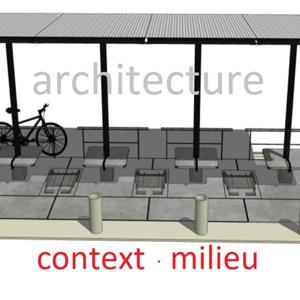
Reflecting on situations when we encounter the student is stuck and cannot move forward with his design, we ask why? A couple of conclusions based on some deliberations: 1) Lack of understanding 'context' for the first-degree student where there is too much fixation on 'form' learned in the first year; 2) Lack of design approach on dealing with the context and coming up with programs that cannot support the 'concept' for the design thesis (MArch) student. This is just an interlude that I am thinking about right now.
© 2021 Talk Architecture, Author: Naziaty Mohd Yaacob
Photo (artwork): Design thesis section (by Naziaty Mohd Yaacob)
Support the show
Do subscribe for premium content and special features which will help to support and sustain Talk Architecture podcast on a more in-depth explanation on design thesis and processes. These special commentaries and ‘how to’ explanations are valuable insights and knowledge not found elsewhere!
Send us Fan Mail
You cannot take out 'people' from the context. Context is arguably very tangible, as we can assume that form is obviously tangible. Chris Alexander, 1971, said that: form is the design solution whereas, context defines the design problem. Context comes first, form later. Defining the context well, understanding people and relationships, she is trying to be 'in the user' who is using the space, thus the designer makes sense of the place, connecting people with the existing context, making a 'new context'. Taking into account the old setting, transforming into a new setting. What can an architectural designer do? What can an architecture student do? Are the students limited due to experience? But what if the student understands the quote: Design is a conversation between creativity and context (Low, 2014), and getting it, about the user. How powerful is that? Realizing what architecture is about, giving meaning to forms. Not knowing much, but attempting to actually emphatise the user, you can set the skill earlier on.
© 2021 Talk Architecture, Author: Naziaty Mohd Yaacob
Photo (artwork): Design thesis section (by Naziaty Mohd Yaacob)
Support the show
Do subscribe for premium content and special features which will help to support and sustain Talk Architecture podcast on a more in-depth explanation on design thesis and processes. These special commentaries and ‘how to’ explanations are valuable insights and knowledge not found elsewhere!
Send us Fan Mail
Context is about people and relationships.
“The ultimate object of design is form” (Christopher Alexander, 1977). He further stated that: “Every design problem begins with an effort to achieve fitness between two entities: the form in question and its context”. The form is the solution to the problem; the context defines the problem”
But what is 'context'?
We continue the conversation around this quote:
"Design is the Conversation Between Creativity and Context" (Kevin Mark Low (author) in Small Projects, ORO Editions (May 1, 2014)). More on the discussion regarding my students struggling with 'context' as their precedents are all about form, which is the more tangible. Context is more complex in this regard.
© 2021 Talk Architecture, Author: Naziaty Mohd Yaacob
Photo (artwork): Design thesis section (by Naziaty Mohd Yaacob)
Support the show
Do subscribe for premium content and special features which will help to support and sustain Talk Architecture podcast on a more in-depth explanation on design thesis and processes. These special commentaries and ‘how to’ explanations are valuable insights and knowledge not found elsewhere!
Send us Fan Mail
We continue the conversation around this quote:
"Design is the Conversation Between Creativity and Context" (Kevin Mark Low (author) in Small Projects, ORO Editions (May 1, 2014))
Introducing on 'specific context', which later was often quoted as 'context specificities' (after Low), when dealing with a design project, may it be a real-life project or a student's project in the second year, I would like to refer to the quote above and after that I would quote Chris Alexander in his book "Notes on the Synthesis of Form" (1971), in particular, this one: “The ultimate object of design is form”, I would argue, that, context first and then, form.
My students are struggling more when they approach their design with the form and try to fit in the reasons why (that form) later. We need to provide this advice to our students, to place more importance on 'context'. I will be starting a series on this, as a way to make sense of the issue of the design approach and how we as tutors need to manage this carefully in the learning experience of our future architects.
© 2021 Talk Architecture, Author: Naziaty Mohd Yaacob
Photo (artwork): Drawing of a Leaf (by Naziaty Mohd Yaacob)
Support the show
Do subscribe for premium content and special features which will help to support and sustain Talk Architecture podcast on a more in-depth explanation on design thesis and processes. These special commentaries and ‘how to’ explanations are valuable insights and knowledge not found elsewhere!
Send us Fan Mail
Discussion on how to design for inclusivity, focusing on adaptive re-use and conservation practice, suggesting ways on how to go about this based on some case studies.
You would want your design to include as many people as possible, especially if it is a public building. But you do not want to make your building feel like it's a 'medical facility' with all those stainless steel railings, for example. What can you do?
© 2021 Talk Architecture, Author: Naziaty Mohd Yaacob
Photo (artwork): "Pavement tiles in Raub" by Naziaty Mohd Yaacob
Support the show
Do subscribe for premium content and special features which will help to support and sustain Talk Architecture podcast on a more in-depth explanation on design thesis and processes. These special commentaries and ‘how to’ explanations are valuable insights and knowledge not found elsewhere!
Send us Fan Mail
We continue with the readings from the next 3 pages of the book entitled: The Model and Its Architecture by Patrick Healy, where he examines the architectural model. The readings so far touched upon, metaphors, concepts, ideology and other assertions. What I find most useful so far with what was discussed in part 1 & 2, is how to think and argue the relationship between 'theory and model'. Although we will be going through 'chemistry' models and deliberation on what is 'truth' (for example), I explained the message from the book, in terms of the use of Classical orders and columns. Not knowing the words well or having the time to check for the exact definitions, I conveyed as much as I could to the listeners. Hope it helps.
© 2021 Talk Architecture, Author: Naziaty Mohd Yaacob
Photo (artwork): The book cover of The Model and Its Architecture by Patrick Healy
Support the show
Do subscribe for premium content and special features which will help to support and sustain Talk Architecture podcast on a more in-depth explanation on design thesis and processes. These special commentaries and ‘how to’ explanations are valuable insights and knowledge not found elsewhere!
Send us Fan Mail
What are the pre-occupations that the architect has with the model? Is it always to do with depicting exactly what one needs to build? That depends on the context the model is being made for. And models are not always about architecture, as we have models of atoms and molecules in chemistry and mathematical models. The first 3 page reading of the book entitled: The Model and Its Architecture by Patrick Healy, where he examines the architectural model, but in the beginning, the author explained about other models.
© 2021 Talk Architecture, Author: Naziaty Mohd Yaacob
Photo (artwork): The book cover of The Model and Its Architecture by Patrick Healy
Support the show
Do subscribe for premium content and special features which will help to support and sustain Talk Architecture podcast on a more in-depth explanation on design thesis and processes. These special commentaries and ‘how to’ explanations are valuable insights and knowledge not found elsewhere!
Send us Fan Mail
You would want your design to include as many people as possible, especially if it is a public building. But you do not want to make your building feel like it's a 'medical facility' with all those stainless steel railings, for example. What can you do? Some thoughts here on how to approach your design and achieve a balance in making it more functional and yet, aesthetically pleasing. How to negotiate all those compliance and standards and feel good about the aesthetics of your building and getting your desired outcomes, yet feel pleased with yourself. Look out for more thoughts on this in Part 2, coming soon.
© 2021 Talk Architecture, Author: Naziaty Mohd Yaacob
Photo (artwork): "Pavement tiles in Raub" by Naziaty Mohd Yaacob
Support the show
Do subscribe for premium content and special features which will help to support and sustain Talk Architecture podcast on a more in-depth explanation on design thesis and processes. These special commentaries and ‘how to’ explanations are valuable insights and knowledge not found elsewhere!
Send us Fan Mail
If students or architecture/graduates are not able to hold a conversation and be engaged with others such as their tutors and peers, their employers, the other consultants, the contractor and supplier, the design team members, they would not be able to form a connection and be able to do their job in a satisfactory manner. Extending our discussion on the topic of how to compete globally, the skills of verbal engagement including holding a conversation are not superficial. In that form of engagement, the students are able to interpret the world, form an opinion and communicate well. This episode referred to the clubhouse event at the ''School of Architecture" clubhouse room and quoted from Huat Lim's points.
© 2021 Talk Architecture, Author: Naziaty Mohd Yaacob
Photo (artwork): The "winged seed of desire" found in Bangsar's Jalan Sepat (or some fish name).
Support the show
Do subscribe for premium content and special features which will help to support and sustain Talk Architecture podcast on a more in-depth explanation on design thesis and processes. These special commentaries and ‘how to’ explanations are valuable insights and knowledge not found elsewhere!
Send us Fan Mail
What do you learn in architecture schools nowadays? There are so many things to learn apart from your studio work, you would have a few other classes going on concurrently. What has been gained and what is at a loss? Can a student/graduate be able to hold a conversation? Consistently, this point was made by Huat Lim in our podcast and clubhouse event [School of Architecture Session last 28 September 2021], which is a graduate/student of architecture need to learn how to "hold a conversation", talking about an idea, a concept, a theory, even a piece of current news, in an intelligent manner, with a point of view. It would be interesting to explore this aspect, as we believe that a person who can converse, can also design and resolve many design problems including technical requirements. Talking is part of the design process.
© 2021 Talk Architecture, Author: Naziaty Mohd Yaacob
Photo (artwork): Raintree at Jalan Kampung Attap, Kuala Lumpur.
Support the show
Do subscribe for premium content and special features which will help to support and sustain Talk Architecture podcast on a more in-depth explanation on design thesis and processes. These special commentaries and ‘how to’ explanations are valuable insights and knowledge not found elsewhere!
From the publisher's feed
Hosted by Naziaty Mohd Yaacob, Ph.D.
Malaysian Architect | Universal Design & Accessibility Expert (MS 1184 Specialist) | Former Associate Professor (28+ years) | Advocate for…
Launched in April 2020, Talk Architecture delivers intimate, reflective conversations on architecture education, practice, and human impact—hosted solely by Naziaty Mohd Yaacob. Rooted in Malaysia yet resonating globally, the podcast connects local insights with universal challenges faced by architects worldwide.
Every episode centres inclusivity, empathy, and equity, drawing on Naziaty’s expertise in universal design, ageing-in-place, sensory architecture, and professional well-being. Global listeners value candid critiques of education models, graduate employability hurdles, and practice realities.
Essential listening for architecture students, professionals, educators, and thought leaders everywhere who are shaping inclusive, resilient built environments in an era of technological and demographic change.
Subscribe on most available platforms, such as Spotify, Apple Podcast, Buzzsprout, Podcaster, Amazon Music etc.