
Sign up to save your podcasts
Or

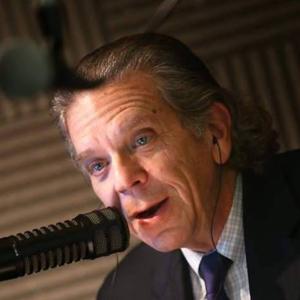


We hear over and over, that we are a nation of immigrants. Unfortunately, we’re hearing it in a boiler factory. We are hearing it over the cacophony of noise about race, about change and about security and raw politics.
What’s lost is the reality of the very personal immigrant experience. What it’s like to be a stranger in a strange land. To straddle two nations, appreciate both, and not look at nationalism and culture as a zero sum game.
The immigrant experience demands a degree of self awareness that is not present in most Americans. That by itself changes that way that immigrants see themselves and the world around them. It creates a kind of heightened reality, appreciation and skepticism that most of us don't have the privilege of seeing.
That’s why we need people like award winning journalist Alfredo Corchado, who’s recent book is Homelands: Four Friends, Two Countries, and the Fate of the Great Mexican-American Migration.
My conversation with Alfredo Corchado:
Fifty years ago, during the last great social and political upheaval in America, young people lead the way. The mantra of the day, of not trusting anyone over 30, defined the generational and political divide.
Today we face an altogether different, but equally powerful social and political dislocation. Except that this time we wonder, where are the young people. Where are the millennials, where is the rising generation.
Perhaps it’s why the Parkland kids struck such a resonate note. With David Hogg reminding us that the children will lead us.
But in our current divide, all sides of boomers and gen X, red and blue, are battling for the hearts, minds and soul of the millennial generation. The left has the advantage of the natural state of liberalism in the young, but the right has the organization, the business savvy and the money.
How this plays out may truly impact the fate of the republic. This is the subject of a series of stories by journalist Michael Hobbes.
My WhoWhatWhy.org conversation with Michael Hobbes:
Groucho Marx famously said, upon resigning the Friars club, that he would “never want to belong to any club that would have him as a member.” That line has been used since by those that are afraid of not belonging. What better way to prevent being excluded than saying, or convincing yourself, that you don’t want to join?
The facts, and our world today, tell us something entirely different. Not only do we want to belong, but we want to belong to groups that are exactly like us. While tribalism may be built into our DNA, the added anxiety and fear in our culture today, puts that tribalism on steroids.
This tribalism is enhanced by our hi-speed 24/7 world. It accentuates fear of the other, it drives our identity politics, and it fuels our confirmation bias driven life. In short, the more we want or need to belong, the more we are divided. All leading us to the conclusion that Groucho had the right idea.
This is also the idea put forth by Howard J. Ross in his new book Our Search for Belonging: How Our Need to Connect Is Tearing Us Apart.
My conversation with Howard Ross:
The founders were wise enough that they made freedom of the press first among equals, as a constitutional guarantee. They also even understood fake news in the form of the pamphleteers of the day. But they never could have imagined bots and trolls and social media, as a way for that fake news to be disseminated at light speed. We’ve seen how lies beak from the gate quickly, and the truth can seldom seem to catch up.
For those that aren’t monitoring the news 24/7, and for the vast majority of the country that has neither the time nor resources to fact check every story, or each new online site, how are we to determine, as Stephen Colbert would say, the truthiness of stories.
We’ve seen lately that algorithms alone simply don’t work. So how can the human element be brought in, in a way that is informative and yet not intrusive? In a process that allows for advocacy, opinion and human bias, but still respects facts, expertise and professionalism? The answer might be Newsguard.
Steven Brill is the founder of American Lawyer, Court TV, Brill's Content and the Yale Journalism initiative. He’s recently confounded NewsGuard.
My conversation with Steven Brill:
There's an old axiom with respect to quality and culture that says if something is popular, it can't be very good. Certainly that's true for fast-food, overhyped action movies and maybe even some crummy literature. However, there's a way that creativity can be combined with commercial success that brings out the best of both. What's more, creativity in this regard, is not something that's limited to those that are born geniuses.
To examine this, I talked to Allen Gannett, the author of The Creative Curve: How to Develop the Right Idea, at the Right Time.
My conversation with Allen Gannett:
A few weeks ago , the press reported aggressively on the fact that Kim Kardashian had visited the White House. Just as it had the visits of Kid Rock and Ted Nugent before her. With homage toDr. Seuss, Oh, how far we have fallen.
On April 29, 1962, John F. Kennedy welcomed a group of Nobel Prize winners to the White House. Other guests included William Styron, James Baldwin, Mary Welsh Hemingway, Ernest Hemingway’s widow, who sat next to the President and grilled him on Cuba policy. Also there were John Glenn, historian Arthur M. Schlesinger, Jr., Researcher Linus Pauling, and Pablo Casals. Actor Fredric March gave a public recitation after the meal,
Held at the height of the Cold War, the dinner celebrated American achievement, and symbolized a time when ideas and facts were esteemed, divergent viewpoints could be respectfully discussed and the great minds of an age might all dine together in the glamour of “the people’s house.”
It was about this event that Kennedy said, “I think this is the most extraordinary collection of talent, of human knowledge, that has ever been gathered together at the White House — with the possible exception of when Thomas Jefferson dined alone.”
To revel for twenty minutes on what used to be, you’ll want to listen to Joesph Esposito, the author of Dinner in Camelot: The Night America's Greatest Scientists, Writers, and Scholars Partied at the Kennedy White House.
My conversation with Joseph Esposito:
By now we are all familiar with crimes and criminals on Wall Street. Bernie Madoff, Enron, Ivan Boesky, Barry Minkow and many others that have become household names. On the West Coast, the startup world of Silicon Valley had been somewhat spared from this taint. The world of “insanely great products,” “do no evil,” and “bringing friends together,” has, at least until recently, kept it’s patina.
Yet in a world where people want to see the future and want to be a part of it, it certainly was a fertile ground for fraud. And no one perpetrated a greater fraud than Elizabeth Holes and her company Theranos.
The story of a company whose mission was to tell you everything about your blood, with a simple finger prick, seemed too good to be true. And like most thing that seem too good to be true, it was.
John Carreyrou is a two-time Pulitzer Prize-winning investigative reporter at The Wall Street Journal. He has, from the beginning, been the leader in telling the story of Elizabeth Holmes and Theranos. His book, soon to be a major motion picture, is Bad Blood: Secrets and Lies in a Silicon Valley Startup
My conversation with John Carreyrou:
I assume that most of you believe that the state of America has seldom been worse. Racial progress, America as a melting pot, the global alliance that has seen us through the past 75 years, character, civility, and liberal democracy itself, all seem to be under siege. While this is all true, it's also true is that we’ve been here before.
There have been many dark moment in American history. Maybe there is something in our very DNA that sets us up for it. But certainly from the Alien and Sedition acts though the Civil War, the industrial revolution, America First, the great depression, Jim Crow, the cold war and the tyranny of Joe McCarthy, we’ve seen that bad things happen to good countries.
Each time though we have emerged stronger. We have understood that the fault was not in our stars, but in ourselves and so we have reached deeply within ourselves for our better angels. But as the pundits of Wall Street ask all the time, is it different this time? This is the heart of Pulitzer Prize winning historian and best selling author Jon Meacham's latest work The Soul of America: The Battle for Our Better Angels
My conversation with Jon Meacham:
Everyday we get another glimpse of just how divided America is. The racial training at Starbucks, the horrendous tweets from Roseanne Barr, and the ongoing collection of psychotic hate filled lies from the president, are just some recent manifestations.
To try and understand it all, Charlie LeDuff takes the journalistic admonition to “go here,” and puts it on steroids. Charlie is part of the great tradition of participatory journalists, people like George Plimpton, and David Foster Wallace. In his latest work Sh*tshow!: The Country's Collapsing . . . and the Ratings Are Great, what he participates in is America as it is today. And for him, it is splintering, collapsing and headed down the drain and in his view, no one is really talking about it.
My conversation with Charlie LeDuff:
Since last weeks tragic news, many have spoken of the multiple talents of Anthony Bourdain. Over the years I had the privilege of learning about Bourdain, in his own words.
Beginning all the way back in 2002, I had the opportunity to speak with him several times. We talked about foods around the world, the lure of the restaurant business, the depressing state of food culture in America, how he got his start, and what it meant to be chef today. He told me that what he did was "like running away with the circus."
What follows are some clips from those conversations.
From the publisher's feed