
Sign up to save your podcasts
Or

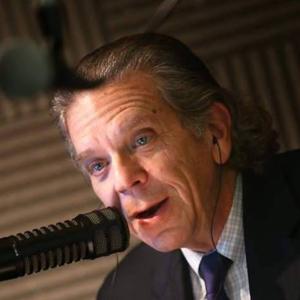


The great songwriter Johnny Mandel wrote in the theme song for MASH, that “Suicide is Painless.” It’s not. The emotional pain and depression that often leads to it is anything but. Moreover the pain for the survivors is unfathomable.
Yet we have witnessing an epidemic of suicide among some of best and brightest young people today. Suicide is now the second leading cause of death among college students.
And back in 2014 and 2015, even such an esteemed institution as MIT experienced a suicide cluster, resulting in the death of 6 students and 1 faculty member.
Because of its deeply personal nature, the search for symptoms and causes needs to be more personal than clinical. After the MIT suicides an MIT computer science professor, Daniel Jackson, set out to do something to begin to understand what had happened and to help others.
What he did, reached not into the pharmacy, but into the soul of his students. These end result is Portraits of Resilience.
My conversation with Professor Daniel Jackson:
There are many that believe that solution of our fractured politics is simply for individuals to take power from the grassroots. That bottom up organizing is the antidote to the wave of authoritarianism that is sweeping the world.
The counter to that argument is that even with committed grass roots efforts, charismatic and effective leadership is essential.
The 60’s represented the end of consensus politics in America. Since that time we have been searching for the politician or leader that could restore that. The irony has been that in this time of hyper polarity, it’s been impossible for that leader to emerge. So we look back to what might have been. And when we do, the image, the mythology and the reality of Bobby Kennedy rises as an apparition from the body politic.
He had a unique ability to to match an empathetic and compassionate agenda with the instincts of a street fighter. Something the left has not been very good at. As we mark the death of Bobby Kennedy today, I’ve joined by Richard Allen, the author of RFK: His Words for Our Times
My conversation with Richard Allen:
How did our culture, politics and economy get where we are today? Just how bad is it and is it fixable? By comparison, 50 years ago, the country was truly coming apart. War, assassination and riots undermined the very fabric of America.
All of this came just twenty years after the Greatest Generation won the the war, and five years after Camelot. Out of this cauldron came of age a new generation. One, as Kennedy said, was “born in this century, tempered by war, disciplined by a hard and bitter peace, proud of our ancient heritage.”
So what happened and how does it explains today’s disfunction, chaos, distrust and tribalism? The tailspin we seem to be in, finds it origins and in turn maybe its solutions, in the the molten core of something that happened in the 1960’s
To try and find and pull these threads together, Steven Brill gives us Tailspin: The People and Forces Behind America's Fifty-Year Fall--and Those Fighting to Reverse It
My conversation with Steven Brill:
In trying to understand what makes us tick, people still debate the old nature vs. nurture argument. Yet modern science, medicine, psychology and biology all tell us it’s far more complex.
In fact it’s a little like a variation of the uncertainty principle in physics. The very act of trying to understand our behaviors or the behavior of others, tell us more about the observers and sometimes the way in which the observer is even influenced by others behavior
This complexity is what Robert Sapolsky examines in Behave: The Biology of Humans at Our Best and Worst.
My conversation with Robert Sopolsky:
We hear over and over in our domestic political debates about the need to improve America’s infrastructure, that to do so is good for business and in the big picture, good for the economy and a projection of America as a global leader. Certainly, LaGuardia Airport and the 45 years it took to build the Second Avenue Subway in New York are not good indications.
On the other side of the world, few countries have repeatedly taken on infrastructure projects as big as those taken on by China. From the movement of water to the transportation of people, the Chinese have seen infrastructure not only as good for its internal economy, but as a true projection of pride and power. Now, these projects have pierced the Chinese border in the form of China’s One Belt, One Road project. The question is, has China gone a railroad bridge too far?
This is the among the questions that Will Doig asks in his book High-Speed Empire: Chinese Expansion and the Future of Southeast Asia.
My WhoWhatWhy.org conversation with Will Doig:
Someone once said of actors that they have their emotions much closer to the surface than the rest of us, in order to make them more easily accessible. If this is true, than it might be said that for some comedians their emotions are not just close to the surface, but raw and fully exposed.
In the case of Robin Williams this certainly seems to have been the case. With Williams you always had the feeling that the more he exposed about himself and about the human condition, the more he made us see it and laugh about it, the more it took him to deep and dark places to find it.
With comedians it's often a question as to whether they are just reflective of the culture and the time they work in, or perhaps the way Lenny Bruce did, they actually help shape that culture.
For Williams the jury is still out. That’s why Dave Itzkoff’s new biography of Williams, Robin, is so important.
My conversation with Dave Itzkoff:
Historians have long written about inflection points in history. In American history, events surrounding the Revolution, the War of 1812, the Civil War & Reconstruction, the Industrial Revolution, the Great Depression, and WWII, are all such points.
It’s arguable that we may very well be living though another one right now. But clearly the last great historical inflection point came exactly fifty years ago, and reached its apogee in the year of 1968. Lyndon Johnson was President, and a series of events led us to believe like Yeats, “that the center cannot hold, and that mere anarchy was loose upon the land.”
The Tet Offensive, MLK and RFK assassinations, the Praque Spring, racial conflicts, the Democratic Convention in Chicago, Lyndon Johnson's decision not to seek reelection and the election of Richard Nixon and Spiro Agnew, made 1968 quite a year.
Lyndon Johnson presided over it all and that's the story that historian Kyle Longley tells in LBJ's 1968: Power, Politics, and the Presidency in America's Year of Upheaval
My conversation with Kyle Longley:
The debate over Gina Haspel running the CIA has, like most things, devolved into a partisan political debate: The usual tribes, the usual sides, and the usual arguments. But if we can only step back a bit, we see that it’s so much more. It goes to the heart of who we are as a nation, as a moral society, and whether we can ever again be that shining city on a hill.
As the nomination becomes closer to a vote in the Senate, we’re going to talk about it with John Kiriakou, who was the first member of the intelligence community to expose the CIA’s use of torture, and as a result, became one of the very few Americans ever prosecuted under the Espionage Act, for which he served 23 months in federal prison.
My WhoWhatWhy.org conversation with John Kiriakou.
Look at any days news output, and its getting harder and harder to separate fact from fiction. Not because of fake news, but because the real news and the actions of so many cross the bounds of credible behavior.
As someone recently pointed out, after a few recent days of the usual craziness, if someone had submitted the days real events has a script or story idea for West Wing, or Homeland or even House of Cards, , it would have been rejected as too absurd.
The sad truth is that it’s really happening. This is why it’s sometimes necessary to look at it all in the realm of fiction or specifically a kind of meta fiction. This is what Laurie Calhoun does in her novel You Can Leave.
My conversation with Laurie Calhoun:
It’s become a cliche, but the fact is that in just the past 10 years, almost everything we do has changed. From the way we drive, take pictures, communicate, shop, to the way we seek relationships.
What hasn’t changed is the fundamental underlying idea of human relationships. Connecting, relating and maybe even falling in love. It’s probably a good thing that evolutionary biology is not subject to Moore's Law.
So how do we reconcile the two? How does Tinder or Match or Bumble sync up with our human needs, which have not really changed all that much in thousands of years? Trying to tie these threads together is Joanna Coles in her new book Love Rules: How to Find a Real Relationship in a Digital World
My conversation with Joanna Coles:
From the publisher's feed