
Sign up to save your podcasts
Or

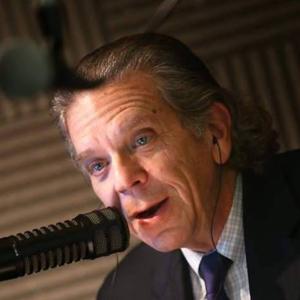


Trump, Brexit, and the worldwide populist revolution are not causes, but symptoms. Symptoms of a wider systemic plague of fear of change, anxiety, and a feeling by people of being part of a world they no longer can control or even understand.
Technology today, rather than being a cause, is merely the host that carries the fear. Not unlike the Industrial Revolution a century ago, disruptive change takes its toll. The difference now is that it all happens at hyper speed, and in full view 24/7. How we deal with it, whether we put those that have been left behind in Hillary Clinton’s basket of deplorables, or find leadership that will lift up entire countries may very well determine the fate of the world.
Ian Bremmer, the president and founder of Eurasia Group is more on point than most in understanding all this is going on. He explains a big part of it in Us vs. Them: The Failure of Globalism.
My WhoWhatWhy.org conversation with Ian Bremmer:
In his book Profiles in Courage, JFK writes that courage exists “when a man does what he must — in spite of personal consequences, in spite of obstacles and dangers, and pressures — and that is the basis of all human morality.”
It’s hard to even think about this in the realm of pubic life in 2018. A time when courage is in short supply, reality is subjective and facts are not the “stubborn things” that John Adams said they were, but merely fungible talking points to gin up the base.
It’s sad then that we have to rely almost solely on history to find examples of this courage and morality. That’s where multiple Pulitzer Prize winning journalist Thomas Ricks tanks us in his joint biography Churchill and Orwell: The Fight for Freedom
My conversation with Thomas Ricks:
There is a line from the 1973 movie The Way We Were, where Katie Morosky, played by Barbra Streisand, talks about Hubbell Gardner, played by Robert Redford. She says of Gardner/Redford, “In a way he was like the country he lived in; everything came too easily to him.”
And that has been a narrative, albeit, often a false one, of ease and grace that the public often seeks to buy into with respect to its leaders. Certainly Kennedy successfully exploited it, maybe even laid the political predicate for it, in his race against Nixon in 1960. In a way it was even a part of the Obama narrative.
On the flip side, it may have very well worked against Hillary Clinton in 2016. It seems that for Hillary Clinton, nothing came easily. Everything she had ever achieved was, or appeared to be, a struggle. One that played out on the public stage for more than 40 years.
Jennifer Palmieri got to see this up close and personal as Hillary Clinton’s Communications Director, and herself a veteran of many years in politics and in the White House. She brings it all into focus in her new book Dear Madam President: An Open Letter to the Women Who Will Run the World
My conversation with Jennifer Palmieri:
Woody Allen once said that the world was divided into the horrible and the miserable. The horrible he thought were people with terminal cases, blind people, and the crippled. “I don't know how they get through life,” he said. “It's amazing to me.”
To answer Woody Allen's existential question, it is usually hope that carries the day. But the form that that hope takes can vary widely. Sometimes, it grows out of faith, sometimes out of denial and sometimes out of science. This is often true for both real cutting edge science, or the placebo that is most Western medicine.
Author and journalist Richard M. Cohen, has long lived with conditions Woody Allen would call horrible. Yet though his writings and his voice, he has not only defined his hope, he has given it to others. He does so once again in his look at stem cell research in Chasing Hope: A Patient's Deep Dive into Stem Cells, Faith, and the Future.
My conversation with Richard M. Cohen:
Isn’t it interesting that the more we have technology to save us time, the more we complain about not having enough time. Before the digital revolution we never heard as much talk about everyone not having enough time.
Just think about how much time we spend setting up our CRM and To do list apps, when a simple list in a notebook might have actually been faster.
And while the technology of everything from dating apps to GPS, may make things more efficient, do they actually limit our ability to see the wider world, and in so doing make us cogs in a wheel that sacrifice our humanity and our sense of wonder. That what author and distinguished scholar Edward Tenner looks at in The Efficiency Paradox: What Big Data Can't Do
My conversation with Edward Tenner:
There is not a day that goes by that the subject of immigration is not in some way part of our national discussion. However, even with all the talk, there is little focus on either the large number of immigrants that arrive from China, or on the their immigrant experience.
We think very little about what it must be like leaving one's country, friends, family and culture behind, to begin anew as a stranger in a strange land.
Perhaps if we all understood the commitment, the bravery, the strength it takes to do that, we would be having a very different conversation about immigration.
That experience is the world that Lauren Hilgers gives up a window into in Patriot Number One: American Dreams in Chinatown
My conversation with Lauren Hilgers:
In 1964 Lyndon Johnson enacted his war on poverty. Three years later Robert Kennedy knelt in a crumbling shack in Mississippi, watching a toddler pick rice and beans off of a dirt floor. What Robert Kennedy saw on that trip would impact him personally and in part, drive is run for the Presidency one year later.
While Vietnam was the seminal issue of the day, poverty and its nexus with the civil rights movement, were very much on Kennedy’s mind.
Ellen Meacham takes us back to this transformative moment for RFK in Delta Epiphany: Robert F. Kennedy in Mississippi.
My conversation with Ellen Meacham:
The legendary studio boss Harry Cohn once said to one of his writers, that if you want to send a political message, use Western Union. The point was that movies were for entertainment. Some have even tried to make that argument with respect to novels, but over the years, this has hardly been the case.
One of the great examples is Ayn Rand’s The Fountainhead. Released 75 years ago, this month. This story of ambition, love, and architecture reverberates through our political discourse today, both in middle America and in the halls of Congress. What other 75-year-old novel can spark a heated debate between Paul Ryan and Paul Krugman?
Yaron Brook is an Israeli American entrepreneur and writer. He’s the current chairman of the board of the Ayn Rand Institute where he was its executive director from 2000 to 2017 and is leading the effort to mark the 75th anniversary of The Fountainhead.
My WhoWhatWhy.org conversation with Yaron Brook:
Emma Gonzalez and David Hogg understood how to maximize social media to achieve the highest in democratic ends. The Russians and Cambridge Analytica used that same social media to undermine democracy, to spread lies, and to manipulate facts.
Recently we’ve seen Mark Zuckerberg and members of Congress musing about the business model of Facebook and the holy grail of hyper-directed advertising. All of this, good and bad, misses the larger point.
In a world that is totally interconnected, when every aspect of Internet culture feeds steroids to the human tribal instinct, when information moves at the speed of light, and when there is more of it than we have the evolutionary ability to process, is this technology simply antithetical to traditional ideas of democracy? Particularly to the system that our founders passed down to us.
Perhaps it’s no coincidence that as the Internet grows, so to do authoritarian regimes. As tech companies get bigger, democratic institutions become smaller. What is the nexus to all of this and if it’s true, do we have to change tech or change the very idea of democracy?
All of this is at the core of work by Jamie Bartlett in his book The People Vs Tech: How the internet is killing democracy (and how we save it)
My WhoWhatWhy.org conversation with Jamie Bartlett:
I think it was Howard Cosell who first referred to sports at the “toy department of life.” Oftentimes player performance has been put down as people say that “it’s not rocket science.”
The fact is however, that we now know it is neuroscience, computer science, medical science, AI, and a whole lot more.
We often talk about the game of golf as being so much inside the heads of players. But now, new research show us that this is just as true for football, basketball, and especially baseball.
The metrics that drove Moneyball, have now been amplified to include new arenas of scientific data. This data may be the handicapping tools and tip sheets for the future of sports. Zach Schonbrun takes us inside this new science in The Performance Cortex: How Neuroscience Is Redefining Athletic Genius.
My conversation with Zach Schonbrun:
From the publisher's feed