
Sign up to save your podcasts
Or



Summary
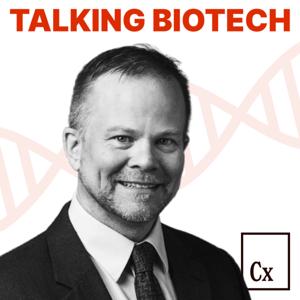
In this episode of the Talking Biotech Podcast, Dr. Matthew Disney discusses the potential of RNA as a therapeutic target, exploring its historical context, pathogenic roles in diseases, and the challenges and innovations in drug design. The conversation delves into specific diseases like myotonic dystrophy, ALS, and various cancers, highlighting the advantages of small molecules in treatment and the future directions of RNA therapeutics.
In this episode of the Talking Biotech podcast, Dr. Max Scott discusses the significant threat posed by screw worms, a parasitic insect that lays eggs in live animals, leading to severe economic and health impacts on livestock. The conversation covers the historical eradication efforts using the sterile insect technique, the current resurgence of screw worms in North America, and the innovative biotechnology approaches being explored to control their populations, including gene drive technology. The episode also addresses the public perception of genetic technologies in agriculture and the importance of continuous monitoring and advocacy for effective pest management.
In this episode of the Talking Biotech podcast, Dr. Jackie Douglas discusses the emerging field of neoantigens and their significance in cancer immunotherapy. Neoantigens, which are unique to cancer cells, offer a promising target for personalized immunotherapies. The conversation covers the formation of neoantigens, the role of HLA alleles in their presentation, recent advances in research, and various therapeutic strategies being explored. Challenges such as patient response variability and the need for affordable treatments are also highlighted, along with the potential for future developments in the field.
In this episode of the Talking Biotech podcast, Dr. Kevin Folta interviews Derek Small, co-founder and CEO of Syndeoo, focusing on the increasing prevalence of neurological disorders and the challenges in developing effective therapies. They discuss the importance of synaptic function in mental health and neurodegenerative diseases, the innovative Boost platform for drug development, and the potential of event-driven pharmacology. The conversation highlights the hope for new treatments in the pipeline for conditions like depression and Alzheimer's disease.
Listener Request! The YouTube channel Veritasium has been recognized by scientists and the public as a great source for scientific information. So what happened in the recent episode? The episode originally entitled "Exposing the Monsanto Conspiracy" attempts to link the historic horrors of Agent Orange and contaminated herbicides with current claims against the herbicide glyphosate. To build the story this science channel relies on horrible sources and poor scholarship to build the illogical conclusion that because a company had a bad past, and anti-biotech activists and money-hungry lawyers build a narrative, then the herbicide must cause cancer. This, despite the overwhelming consensus from independent research and regulatory bodies that says there is no evidence of carcinogenicity at dietary or occupational exposure levels. This episode is designed to help the scientific listener understand the actual evidence and how even traditionally good communications efforts can become vehicles for anti-scientific campaigns.
Anti-vaccination activists, including the US Health and Human Services Secretary, decry the risk of vaccination. In two recently developed vaccines the emerging story is that there is risk in not being vaccinated. Analysis of large data sets shows that over the last 20 years, those vaccinated with the HPV vaccine have a lower incidence of cervical, penile and anal cancers, as they should. But they also show lower incidence of other cancers as well, such as lung, blood and nervous system cancers. The shingles vaccines seem to have protective effects against dementia, heart disease and stroke. All of thse findings suggest that broader vaccination may have public health benefit. More importantly, these may be strategies against vaccine hesitancy, as families don't remember the sourge of polio and measles, but they likely know someone with cancer or dementia. These findings could be a way to nucleate a shift in vaccine perception among evidence deniers.
HPV and Other Cancers: https://www.sciencedirect.com/science/article/pii/S1043661825002762
Shingles vaccine and dementia: https://www.nature.com/articles/s41586-025-08800-x
Shingles vaccine and cardiovascular disease: https://academic.oup.com/cid/advance-article/doi/10.1093/cid/ciaf440/8229580
Singles vaccine and cardiovascular disease: https://academic.oup.com/eurheartj/article/46/30/2991/8124786
In this episode of the Talking Biotech podcast, Dr. Andrey Zarur, CEO of Greenlight Biosciences, discusses the innovative applications of RNA technology in agriculture. The conversation covers the challenges of food security, the role of RNA in pest control, and the regulatory advantages of RNA-based products. Dr. Zarur highlights the efficacy and safety of RNA insecticides, fungicides, and herbicides, as well as the company's efforts to address bee health. The discussion also touches on public perception and the importance of transparent communication in biotechnology.
00:00
Introduction to RNA and Its Role in Agriculture
02:02
Challenges in Global Food Production
05:07
The Promise of RNA Technology
10:05
Regulatory Landscape for RNA-Based Solutions
13:52
Stability and Application of RNA Products
18:00
Product Development and Efficacy of RNA Pesticides
19:48
Targeting Specific Pests with RNA Technology
26:51
AI in RNA Design and Future Prospects
30:01
Innovative Approaches to Pest Control
32:41
Targeting Specific Pests with RNA Technology
35:22
Challenges in Regulatory Approval and Public Perception
38:02
Engaging with the Public and NGOs
42:46
Addressing the Varroa Mite Crisis in Beekeeping
49:18
Developing RNA Solutions for Weed Management
Summary
In this episode of the Talking Biotech podcast, Dr. Kevin Folta interviews Dr. Robert Tarone, a retired scientist with extensive experience in cancer statistics and experimental design. They discuss the controversial IARC monograph that classified glyphosate as a probable human carcinogen, the flaws in the evaluation process, and the implications of this classification on legal actions against glyphosate manufacturers. Dr. Tarone critiques the evidence used by IARC, emphasizing the lack of credible data linking glyphosate to cancer, and highlights the importance of rigorous scientific methodology in evaluating such claims.
In this episode of the Talking Biotech podcast, Kevin Folta and Dr. David Zaruk discuss the complexities surrounding glyphosate, particularly in light of the IARC Monograph 112 published a decade ago. They explore the implications of the reclassification of glyphosate as a probable carcinogen, the ensuing litigation, influence and corruption, and the ethical concerns regarding scientific integrity. The conversation delves into the role of the media, the influence of litigation finance, and the future of glyphosate in agriculture, emphasizing the need for transparency and evidence-based discussions over jury decisions.
This conversation explores the domestication of pigs, highlighting their importance in human society, the historical evidence of their domestication, and innovative research methods used to study their relationship with humans. Dr. Jiajing Wang from Dartmouth College discusses the significance of dental calculus in elucidaing pig diets and behaviors, as well as the complex interactions between humans and pigs throughout history.
From the publisher's feed

32,046 Listeners

6,762 Listeners

30,701 Listeners

43,359 Listeners

9,187 Listeners

4,028 Listeners
2,052 Listeners
608 Listeners
766 Listeners

3,641 Listeners
12,188 Listeners

820 Listeners

6,431 Listeners

111,799 Listeners

4,164 Listeners