
Sign up to save your podcasts
Or

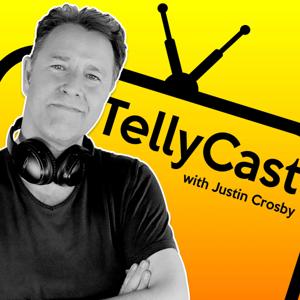


In the second part of our MIPCOM 2026 special, Justin Crosby talks to two studio leaders who come to the creator economy from opposite directions.
Tanya Cohen spent her career representing film stars and directors at WME and Range Media Partners. In April she left that business to become co-CEO of Made By Us Studios, the LA studio she runs with creator-economy pioneer Leanne Perice. She explains why she made the move, how Dentsu came to back the studio’s slate, and why she thinks advertisers are returning to the old model of underwriting content.
Steve Hulford is founder and CEO of Toronto’s Underknown, which is marking its tenth anniversary. Its channels include What If, How to Survive, Aperture and Animal Logic, with 22 million YouTube subscribers between them. Steve explains why the studio’s creators are full-time staff, and what it was like to lose half its revenue overnight when Facebook shut down Watch pages. He describes the timing that kept What If off Discovery and National Geographic, and why YouTube is now the first stop.
In this episode:
The Digital Content Forum takes place in London on 5 November. Entries for the Digital Video Awards open the same day.
Sign up for The Drop newsletter
www.Vuulr.com
Enrol on the TellyCast Digital Bootcamp
Buy tickets for the Digital Content Forum
Subscribe to the TellyCast YouTube channel for exclusive TV industry videos
Follow us on LinkedIn
Connect with Justin on LinkedIN
TellyCast videos on YouTube
TellyCast website
TellyCast insta
TellyCast Twitter
TellyCast TikTok
In the first of two TellyCast specials recorded in Cannes at MIPCOM 2026, Justin Crosby talks to the producers, studio founders and agency leaders working out where scripted, social video and brand-funded content meet.
Steven Moffat and Sue Vertue of Hartswood Films open the show with Number 10, their new Channel 4 comedy drama set behind the most famous door in Britain. They explain why Downing Street works as a workplace drama, why authentically British shows travel best internationally, and why Moffat sees micro drama as a real creative challenge. As he puts it, there is nothing special about the hour-long episode, which only came from the technology of the time. They also answer the inevitable Sherlock question.
Josh, Ben and Jamie from After Party Studios talk about life after the Sister acquisition. They discuss bringing the craft of Gangs of London and Black Doves to young audiences at social speed, the case for 15-minute episodic series on YouTube, the growth of their sports division, and what the Red Bull and Disney+ Max Verstappen vs 100 project shows about live, creator-led brand activations.
Kathy Boxall, Head of Entertainment at Dentsu, explains the agency’s title sponsorship of MIPCOM’s new BrandWorks strand and its 55-episode micro drama for P&G’s Native, which it describes as the first brand-funded full-length micro drama in the US. She shares Dentsu’s Gen Z research showing long viewing sessions on micro dramas, and makes the case for shoppable social video as the missing link between entertainment and proven sales.
Lucinda Hicks, Group CEO of Sister, closes the episode with the thinking behind the After Party deal, Sister’s minority investment in Common Interest Group, and the new Amol Rajan venture. She explains why the group is cautious about piling into micro drama, why it sees vertical scripted content more broadly, and why the next 12 months are about making the whole worth more than its parts.
Sign up for The Drop newsletter
www.Vuulr.com
Enrol on the TellyCast Digital Bootcamp
Buy tickets for the Digital Content Forum
Subscribe to the TellyCast YouTube channel for exclusive TV industry videos
Follow us on LinkedIn
Connect with Justin on LinkedIN
TellyCast videos on YouTube
TellyCast website
TellyCast insta
TellyCast Twitter
TellyCast TikTok
Lucy Smith left TV development two and a half years ago to launch Fawkes Digital. The company has just rebranded as Studio Fawkes. It has landed its first linear commission, with street-dating format Date Me Right Now heading to MTV. And Lucy says revenues have tripled in the last six months.
In this episode she explains why Studio Fawkes treats brands as broadcasters rather than "a money pot", and why she believes the old-school TV model is "totally dead and wildly unsustainable". She describes how a L'Oréal-sponsored podcast with creator Paige Lewin led to a haircare line that sold out almost instantly, with a 50/50 split on format and merchandise sales. She also explains why every Studio Fawkes idea starts with a long-tail commercial goal.
Sign up for The Drop newsletter
www.Vuulr.com
Enrol on the TellyCast Digital Bootcamp
Buy tickets for the Digital Content Forum
Subscribe to the TellyCast YouTube channel for exclusive TV industry videos
Follow us on LinkedIn
Connect with Justin on LinkedIN
TellyCast videos on YouTube
TellyCast website
TellyCast insta
TellyCast Twitter
TellyCast TikTok
Rob Rawlings spent 25 years in premium factual TV before co-founding Full Slate Media, a production studio and boutique agency working with creators, brands and digital publishers across YouTube, Instagram and TikTok. His recent LinkedIn post asked whether UK indies have lost their nerve, and he joins Justin Crosby to make the case.
They discuss why the old commission-and-sell model is shrinking year on year, why so much post-Edinburgh talk about YouTube has not turned into investment, and how indies can use development budgets, existing shoots and in-house editors to build audiences and IP of their own. Rob also explains why creators now refer to TV as "legacy media", and why trained TV storytellers are better placed than most to succeed on YouTube.
Sign up for The Drop newsletter
www.Vuulr.com
Enrol on the TellyCast Digital Bootcamp
Buy tickets for the Digital Content Forum
Subscribe to the TellyCast YouTube channel for exclusive TV industry videos
Follow us on LinkedIn
Connect with Justin on LinkedIN
TellyCast videos on YouTube
TellyCast website
TellyCast insta
TellyCast Twitter
TellyCast TikTok
Our interview with former Top Gear boss Andy Wilman has passed 200,000 views on YouTube and around 400,000 elsewhere. Justin Crosby asks YouTube strategist Seb Losardo, who has helped grow John Nellis's channel from 600,000 to 16 million subscribers, to explain why, and how to repeat it.
Seb explains how to find outlier guests, why an AI-generated thumbnail beat our usual design in an A/B test, and why he tells creators not to be led by their most vocal fans. He sets out his 40/30/30 rule for dividing effort between packaging, the intro and the rest of the video, an approach that turns traditional TV workflow on its head.
The conversation also covers why preamble costs viewers, how gaps between sections cause audiences to drop off, how YouTube editing differs from TV, and why brands spending heavily on talent still end up with videos nobody watches.
Seb will be speaking at the Digital Content Forum on 5 November at BFI Southbank.
TellyCast is produced by Spirit Studios and recorded in London.
Sign up for The Drop newsletter
www.Vuulr.com
Enrol on the TellyCast Digital Bootcamp
Buy tickets for the Digital Content Forum
Subscribe to the TellyCast YouTube channel for exclusive TV industry videos
Follow us on LinkedIn
Connect with Justin on LinkedIN
TellyCast videos on YouTube
TellyCast website
TellyCast insta
TellyCast Twitter
TellyCast TikTok
Victor Bengtsson runs production at Sidemen Entertainment. In this episode, recorded at the TellyCast Digital Content Forum 2025, he explains how the company built Inside, a Big Brother-style format developed with no TV experience and no format experts in the room, and turned it into a Netflix number one.
Victor takes us through Sidemen's Core Missions structure, the single-sentence pitch rule that governs every idea, and the decision to test Inside on a second YouTube channel before committing serious money. He explains why the company deliberately avoids hiring format specialists at the ideation stage, how a 30-day pre-production sprint led to 55 million views in ten days, and what happened when Netflix came calling. The conversation also covers the tension between YouTube instinct and traditional TV development, and why Victor believes reintroducing fun to the commissioning process is the industry's biggest missed opportunity.
This is a candid look at how a digital-first creator business out-developed the TV industry at its own game.
www.Vuulr.com
Enrol on the TellyCast Digital Bootcamp
Buy tickets for the Digital Content Forum
Subscribe to the TellyCast YouTube channel for exclusive TV industry videos
Follow us on LinkedIn
Connect with Justin on LinkedIN
TellyCast videos on YouTube
TellyCast website
TellyCast insta
TellyCast Twitter
TellyCast TikTok
Jungle Creations built an audience of 145 million followers across a portfolio of social-first media brands. The harder question, and the one Siobhan McDade has spent the past few years answering, is what you do with that audience once the platforms stop paying for it.
Siobhan is Chief Publishing Officer at Jungle Creations, the London business behind Twisted, VT, Four Nine, Level Fitness and, most recently, Sporf. She joins Justin Crosby to explain how the company reduced its dependence on platform revenue, why publishing revenue grew 32% year on year, and how a viral PepsiCo recipe video turned into a retail product that has sold more than a million units.
The conversation covers the strategy Jungle calls URL to IRL: Twisted now operates more than 130 delivery-only restaurants, a cookbook, supermarket ranges and pop-ups, and the new Twisted Labs division has formalised the route from social hit to physical product. McDade argues that the threshold for taking a brand into the real world has nothing to do with follower count and everything to do with the depth of the community behind it.
Sign up for The Drop newsletter
www.Vuulr.com
Enrol on the TellyCast Digital Bootcamp
Buy tickets for the Digital Content Forum
Subscribe to the TellyCast YouTube channel for exclusive TV industry videos
Follow us on LinkedIn
Connect with Justin on LinkedIN
TellyCast videos on YouTube
TellyCast website
TellyCast insta
TellyCast Twitter
TellyCast TikTok
This week Justin Crosby is joined by Andy Wilman, the producer behind Top Gear, The Grand Tour and Clarkson's Farm, for a conversation about handing the format to a new generation.
The Grand Tour returns to Prime Video on 4 September with a presenting trio built from digital-first talent: Thomas Holland and James Engelsman of the YouTube channel Throttle House, and trainspotter and qualified mechanical engineer Francis Bourgeois. Wilman talks through the casting logic that ruled out famous faces, the mechanics of testing on-screen chemistry before a series is greenlit, and why he believes the format's biggest moments were never planned, only discovered.
He also reflects candidly on the show's origins as a rushed response to a punishing Amazon contract, the eye-watering costs behind its biggest stunts, and why he now sits as a consultant rather than the hands-on producer he was for two decades. The conversation closes with a look at Clarkson's Farm's demanding edit process, and a wider question for the industry: would Top Gear have worked as a YouTube-native show, or did it need the BBC to kick against?
Plus this week's Story of the Week, Hero of the Week, and Get in the Bin.
Sign up for The Drop newsletter
www.Vuulr.com
Enrol on the TellyCast Digital Bootcamp
Buy tickets for the Digital Content Forum
Subscribe to the TellyCast YouTube channel for exclusive TV industry videos
Follow us on LinkedIn
Connect with Justin on LinkedIN
TellyCast videos on YouTube
TellyCast website
TellyCast insta
TellyCast Twitter
TellyCast TikTok
Is uploading a documentary to YouTube really a route to serious money? At the TellyCast Digital Content Forum 2025, Lucy Smith (Fawkes Digital) chairs a panel of factual specialists working across the creator economy: Gerrit Kemming (founder and MD, Quintus Studios), Marvin Benoit (founder, Baker's Dozen Studios, former commissioning editor at Sky Originals and creative executive at YouTube Originals) and Jamie MacDonald (head of originals, After Party Studios).
The panel gets into what actually separates people who own audience from people who own IP, and why that distinction now shapes how factual programming gets funded, made and sold. Kemming explains why Quintus deliberately built its own YouTube audience rather than staying a pure distributor, and how that audience now replaces two or three pre-sale partners on a co-production. Benoit and MacDonald discuss splitting IP between production companies and creators, using Don't Get Catfish as a case study, and why "collaborate or evaporate" is becoming the operating principle for factual production.
Other topics covered: patchwork financing and moving beyond broadcaster-only development; which factual genres actually monetise well and why territory affects CPM; using digital platforms to trial and prove IP cheaply before scaling budget; the risk of creator talent not porting successfully across platforms; and what traditional broadcasters stand to lose by not competing in this space.
Recorded at BFI Southbank as part of the TellyCast Digital Content Forum 2025.
Sign up for The Drop newsletter
www.Vuulr.com
Enrol on the TellyCast Digital Bootcamp
Buy tickets for the Digital Content Forum
Subscribe to the TellyCast YouTube channel for exclusive TV industry videos
Follow us on LinkedIn
Connect with Justin on LinkedIN
TellyCast videos on YouTube
TellyCast website
TellyCast insta
TellyCast Twitter
TellyCast TikTok
Ahead of the TellyCast Digital Content Forum returning to BFI Southbank on 5 November, we're revisiting one of last year's standout sessions.
Daniel Winner chairs a conversation with three of the most active investors in creator and social video businesses in the UK: Indi Sunner of Lunar X, Jason Kingston-Brown of Viewture, and Claire Geddie of Electrify Video Partners.
They discuss why institutional capital has replaced vanity investing in this space, what makes a YouTube-first business investible, how valuations are actually calculated, why the "thousand true fans" model has overtaken subscriber count as the metric that matters, and what founders need in place before they raise.
Watch the panel session
Recorded live at the TellyCast Digital Content Forum 2025.
Sign up for The Drop newsletter
www.Vuulr.com
Enrol on the TellyCast Digital Bootcamp
Buy tickets for the Digital Content Forum
Subscribe to the TellyCast YouTube channel for exclusive TV industry videos
Follow us on LinkedIn
Connect with Justin on LinkedIN
TellyCast videos on YouTube
TellyCast website
TellyCast insta
TellyCast Twitter
TellyCast TikTok
From the publisher's feed

669 Listeners
32 Listeners

9 Listeners
606 Listeners

976 Listeners
163 Listeners

10,141 Listeners

3,031 Listeners

1,121 Listeners

1,139 Listeners

882 Listeners

859 Listeners

1,436 Listeners

10 Listeners
3 Listeners