That Shakespeare Life

That Shakespeare Life

By Cassidy CashSociety & CultureHistory
Download on the App Store

That Shakespeare Life episodes

  • Candlemas, Traditions, and Hampton Court Palace

    William Shakespeare never mentions the celebration of Candlemas by name in his works, but we know Shakespeare was involved in the celebration of Candlemas in 1602 from a diary entry written by a man named John Manningham, who wrote about attending a performance of Shakespeare's Twelfth Night, on February 2 of that year, the traditional Feast Day of Candlemas.This 1602 performance took place at Middle Temple Hall, one of the ancient and prestigious training and education establishments for lawyers in the heart of London. Shakespeare also spent Candlemas in other years with his acting troupe at the royal court, producing plays for Elizabeth I and James I.

    What was Candlemas? How was it celebrated? Why was Shakespeare involved in staging plays for the Queen and King? What did they look like, and why were they performed on Candlemas? Who was there? And what do we know about how the plays were received?

    To answer these questions, and to introduce us to the holiday of Candlemas, and to Shakespeare as a court performer, welcome to our guest Brett Dolman, historian and curator at Hampton Court Palace, where Shakespeare himself once performed.

    Hosted on Acast. See acast.com/privacy for more information.

    45 min
  • Hue and Cry
    Shakespeare uses the phrase, "Hue and cry" twice in his plays. Once in Henry IV Part 1and again inMerry Wives of Windsor. In the Middle Ages, this phrase represented acivilian peacekeeping effort that remained officially on the books in England until the19thcentury. Amounting, on an extremely basic level, to what those in the US mayrecognize as a "citizen's arrest," hue and cry allowed the average person to performpolicing duties in the face of witnessing a crime. Hue and Cry remained active as apunitive measure for Shakespeare's lifetime and here today to explain for us exactlywhat it means to "raise and hue and cry" in both legal and practical terms, as well aswho was allowed to use this method of civic policing, along with why and when it wasuseful, is our guest, Samatha Sagui

    Hosted on Acast. See acast.com/privacy for more information.

    27 min
  • Henry IV, Henry V, and King Richard II
    The spectacular downfall of King Richard II, followed by the successors Henry IV and then Henry V, are famously depicted in Shakespeare's plays. The Life and Death of King Richard II is a prequel to what's known as Shakespeare's Henriad plays, or the Henry Plays, consisting of Henry IV Part 1, Henry IV part 2, and Henry V. Richard II is believed to have been written around 1595, and while the plays tow the line in terms of what Tudor monarchs would have wanted you to believe the histories of these men, there are some places where Shakespeare's version conflicts with known history about Richard II and Henry IV. Our guest this week has recently completed a book on both these Kings of England, titled appropriately, THE EAGLE AND THE HART: The Tragedy of Richard II and Henry IV, in which she details the real history of two of the most famous, yet also two of the most often misunderstood (thanks in no small part to Shakespeare) Kings of England. To help us wade into Shakespeare's history plays and sort out fact from fiction, we are delighted to welcome Helen Castor to the show today.

    Hosted on Acast. See acast.com/privacy for more information.

    35 min
  • Golf for the 16th Century: Explore Clubs, Gear, and Courses
    Shakespeare may not mention the word "golf" in his plays, and in exploring history, it seems that the game was a little bit obscure, certainly not something played widely, but nevertheless it was present for Shakespeare's lifetime, with some major moments for golf history overlapping with the life of William ShakespeareFor example, it was England's King James I, patron of Shakespeare's company the King's Men, who allowed golf to be played on Sundays. Here today to help us explore the history of the game of golf for Shakespeare's lifetime, including what equipment was used, what kind of rules were in place for the game, and what archaeological records survive to tell the tale about what golf was like in the 16-17th century is our guest and founder of the Society of Golf Historians, Connor Lewis.

    Hosted on Acast. See acast.com/privacy for more information.

    31 min
  • Epiphany Celebrations and Customs for the 16-17th Century
    January 6 is the day that many celebrate a holiday called Epiphany, the first manifestation of Jesus as the Son of God to the Gentiles, which happened through the visit of the Magi, or the Three Kings, who visited Jesus and brought him the now famous gifts of gold, frankincense, and myrr. The holiday was celebrated in Shakespeare's lifetime, but just like today when the holiday is marked by cultural and regional variations for exactly what those celebrations will include, Epiphany in the 16-17th century was unique as well. Here today to walk us through the history of Epiphany and how it was celebrated in Shakespeare's lifetime is our guest, Beatrice Groves.

    Hosted on Acast. See acast.com/privacy for more information.

    22 min
  • Ice Skating and Winter Sports
    When the weather was cold in England, it could get frigidly cold, even causing the rivers and lakes to freeze over. In Elizabethan England, you may be surprised to learn that ice sports, such as skating, even hockey, were practiced on the ice in wintertime. To share with us the history of these sports, the archaeological record that survives to demonstrate that history, as well as what we know about ice skating and physical skates that were used to accomplish these activities, is our guest and historian, Tomas Masar.

    Hosted on Acast. See acast.com/privacy for more information.

    22 min
  • Wassail, Wassailing, and the 16th Songs to Sing

    A drink, as much as it was songs and a group activity, wassail has been a traditional part of the Christmas season in England, and particularly a favorite of Twelfth Night celebrations, for centuries, including before and during the life of William Shakespeare. In Shakespeare's Macbeth, Lady Macbeth talks about wine and wassail going together to muddle up the brain, Falstaff mentions a wassail candle in Henry IV Part II, and three other references in Shakespeare's plays refer to wassail as something that happened at night and existed somewhere between a greeting and something that could lead to trouble. Here today to share with us the songs from Shakespeare's lifetime that were considered wassail songs, as well as to help us unravel the complicated history of what it meant to go wassailing from the house and how that's related to Christmas and even apple trees, is our guest and musical historian, Debi Simons.

    Hosted on Acast. See acast.com/privacy for more information.

    37 min
  • Veterinarian Medicine, Farriers, and Marshalcy
    Shakespeare's plays mention horses over 300 times across his works, reflecting the huge place in the every day lives of people that this animal occupied. For something that was so essential for travel and for work, it makes sense that a horse owner would want to make sure their horse received the best of care. The art of horse doctoring in the 16th century generally fell under the purview of the blacksmith, who was responsible for the horse shoeing. The word for practicing medicine on animals for the medieval period was known as "marshalcy" in English, and it comes from the word "menescalia" in Catalan. Today, they are best known as farriers. Our guest this week, Carmel Ferragud, is an expert in the history of veterinarian medicine and specifically the history of Marshalcy. Today he joins us to discuss the activities of the 16th century farrier, what kind of medical care was available for animals in the 16-17th century, and exactly what veterinarian medicine would have been like for Shakespeare's lifetime.

    Hosted on Acast. See acast.com/privacy for more information.

    55 min
  • Mead, Metheglin, Hydromel, and Other Fermented Drinks
    Mead has been made since ancient times and is the poster drink for historical gatherings, often being carried around in a large mug. You may know that this beverage is alcoholic, but you may be surprised to learn how it is different from other alcoholic drinks, particularly in the 16th century. If you look up mead today, it's known as a honey wine and can be mixed with a variety of herbs and spices, and as the recipes describe it, mead starts to sound more like a beer than a wine, and since wine is made from grapes, not honey, you may confused about what makes a "honey wine" like mead. To learn more about what defines this classic historic brew, and how that's different from other varieties of distilled or fermented beverages, as well as to walk through the history of how to make mead, we are delighted to welcome our guest, Laura Angotti.

    Hosted on Acast. See acast.com/privacy for more information.

    55 min
  • Migraines, Symptoms, and Treatments for 16-17thC

    In Shakespeare's Romeo and Juliet, the nurse complains of a headache saying "Lord, how my head aches! what a head have I! It beats as it would fall in twenty pieces." In 1582, Bartholomew the Englishman's 13th century text was reprinted in London, describing a condition called "emigraina" that Bartholomew defined as "similar to hammers beating in the head." Whether it was called emigraina, head aches, or megrym, as some contemporary accounts have called it, it is plain that migraines were a common problem for Shakespeare's England, with proposed solutions ranging from mild tonics and elixirs, all the way to dangerous blood letting and even brain surgery. Here this week to help us understand the history of migraines, their diagnosis, and their treatment, for the 16-17th century is our guest and author of the chapter titled "History of migraine" in the Handbook of Clinical Neurology, Dr. Peter Koehler.

    Hosted on Acast. See acast.com/privacy for more information.

    32 min

About That Shakespeare Life

From the publisher's feed

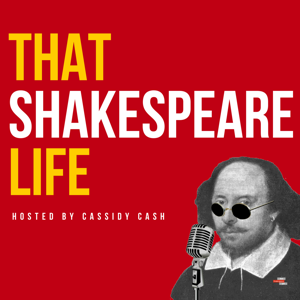
Hosted by Cassidy Cash, That Shakespeare Life takes you behind the curtain and into the real life of William Shakespeare.

More shows like That Shakespeare Life

HistoryExtra podcast by Immediate

HistoryExtra podcast

3,175 Listeners

Gardeners' Corner by BBC Radio Ulster

Gardeners' Corner

103 Listeners

Folger Shakespeare Library: Shakespeare Unlimited by Folger Shakespeare Library

Folger Shakespeare Library: Shakespeare Unlimited

823 Listeners

Sidedoor by Smithsonian Institution

Sidedoor

2,229 Listeners

The English Heritage Podcast by English Heritage

The English Heritage Podcast

230 Listeners

Tudors Dynasty & Beyond by RedTop Media / Rebecca Larson

Tudors Dynasty & Beyond

748 Listeners

Historic Royal Palaces Podcast by Historic Royal Palaces

Historic Royal Palaces Podcast

470 Listeners

The Ancients by History Hit

The Ancients

3,351 Listeners

The Rest Is History by Goalhanger

The Rest Is History

15,608 Listeners

Gone Medieval by History Hit

Gone Medieval

1,886 Listeners

Not Just the Tudors by History Hit

Not Just the Tudors

2,051 Listeners

Lexicon Valley by Lexicon Valley

Lexicon Valley

577 Listeners

Short History Of... by NOISER

Short History Of...

2,830 Listeners

Betwixt The Sheets: The History of Sex, Scandal & Society by History Hit

Betwixt The Sheets: The History of Sex, Scandal & Society

1,384 Listeners

What Did You Do Yesterday? with Max Rushden & David O'Doherty by Keep It Light Media

What Did You Do Yesterday? with Max Rushden & David O'Doherty

215 Listeners