That Shakespeare Life

That Shakespeare Life

By Cassidy CashSociety & CultureHistory
Download on the App Store

That Shakespeare Life episodes

  • Ep 168: Court with Natalie Mears
    When we study court in Shakespeare history the phrase "appeared at court" or "performed at court" frequently gets used to describe what Shakespeare was doing at various points of his life. However, the overlap between "court" legally (as in, where you go for a legal trial) and the social phenomenon of Renaissance England where the monarch gathered their "court" together can make it hard to know what it means to go to court. This week we've set out to rectify this gap in knowledge with our guest, Natalie Mears, who is here to share her research into Courts, Courtiers, and Culture in Tudor England, an article which she published in The Historical Journal back in 2003. In that paper, Natalie cites a play by Thomas Norton and Thomas Sackville called Gorboduc that was performed in 1561-1562 at court, and that play is an example of how performances were used to not only comment on events of the day by the performers (similar to what you might think of today as an editorial cartoon) but in the case of Gorboduc, the play commented directly to Elizabeth I to try and influence her decision to marry and to comment on Robert Dudley as a potential candidate. Natalie's work goes on to cite sermons selected by James VI and I to scold the Scottish Presbyterians at Hampton Court in 1606, as well as a sermon by Edward Dering in 1570 that "lambasted the Queen" for perceived failures at political reform. These examples have us wondering if the instances of Shakespeare appearing at court were more than just event entertainment. Were plays like Shakespeare's similar political weapons in the same way as Gorboduc? Would Shakespeare's plays have been brought to court for their power to influence politics and if so, does that explain why Shakespeare wrote so frequently about political issues? Natalie Mears joins us today to answer some of these questions about Shakespeare and Court Life

    Hosted on Acast. See acast.com/privacy for more information.

    36 min
  • Ep 167: Shareholders with Lucy Munro
    When William Shakespeare first arrived in London sometime in the 1580s, James Burbage was already making waves in the early modern performance industry by establishing The Theater, a playhouse which the Burbages owned. After a fight with the owner of the land on which The Theater was built, the building itself would be dismantled by the Burbages and William Shakespeare who helped the Burbages clandestinely move the building timber by timber across the Thames to create the theater known as The Globe. Today, we refer to The Globe, as well as the first indoor playhouse, the Blackfriars, as Shakespeare's theaters. Of course, the bard was intimately involved and arguably held a position of leadership in these establishments but defining terms from his lifetime like shareholder, leaseholder, and housekeeper, all help us take a closer look at who exactly owned the theater and how that was different from being an owner in a playing company. Our guest this week, Lucy Munro, is the author of the article for King's College London, titled "Who Owned the Blackfriars Playhouse" and she is here with us today to share the mechanics behind theater and playing company ownership in the 16-17th century, as well as to answer the question of whether Shakespeare really did own the theaters we give him credit for today.

    Hosted on Acast. See acast.com/privacy for more information.

    30 min
  • Ep 166: Elizabethan Street Fighting with Casey Kaleba
    In the 1950s when Shakespeare's Romeo and Juliet was adapted into West Side Story, popular culture in the US resonated with the gang culture and street fighting depicted on stage because the brass knuckled "rumbles" taking place on streets like those in New York City were current events of the day. Turns out, historically, these gang fights were a real issue for Shakespeare's lifetime as well, and scenes like Mercutio and Romeo fighting in the streets of Verona, the mob that goes after Cinna the Poet in Shakespeare's Julius Caesar, and the tavern brawls that break out in several scenes across Shakespeare's works would have been viewed by Shakespeare's 16th century audience as a reflection of their current events and realities of life on the streets of Elizabethan London. Here this week to help us explore the 16th century history, current events, street fights and even gangs that were present during Shakespeare's lifetime as he wrote about the Capulets and Montagues being "warring families" duking it out in the streets of Verona, is our guest and expert in Elizabethan street crime and one of the Washington, DC, area's most sought-after fight coaches for stage plays, Casey Kaleba.

    Hosted on Acast. See acast.com/privacy for more information.

    55 min
  • Ep 165: The Broom Besom with Wendy Wall
    It seems even William Shakespeare had household floors to keep clean. While it likely wouldn't have been the actual William doing the majority of the sweeping in his household, one item the bard seems to have been familiar with through his nineteen uses of the word "sweep" and one use of the word "besom" across his works is the household broom used for sweeping floors. The bard uses "broom" at least 3 times in his plays, mentioning once a broom-staff, and in The Tempest, Shakespeare calls attention to a "broom-grove" suggesting there was a particular plant or tree used for growing the material to make brooms in the 16th century. Here today to help us explore the people who made brooms, exactly who was doing the sweeping in Shakespeare's lifetime, as well as the folklore surrounding the broom also called broom-besom, is our guest and author of "Why does Puck Sweep?" the article examining the household cleaning scene of one of Shakespeare's most famous characters in A Midsummer Night's Dream. Please welcome our guest, Wendy Wall.

    Hosted on Acast. See acast.com/privacy for more information.

    21 min
  • Ep 164: Iron Gall Ink with Lucas Tucker
    In Cymbeline, Act I Scene 1 Posthumus Leonatus says "I'll drink the words you send though ink be made of gall" and in Twelfth Night Sir Toby Belch calls attention to a particular kind of ink when he says "Let there be gall enough in thy ink, though thou write with a goose-pen…" in Act III Scene 2. Both of these scenes from Shakespeare's plays are referencing the most popular kind of ink used in Shakespeare's lifetime and that is iron gall ink. The phrase iron gall ink was a phrase used to describe common, or standard, ink and as Sir Toby Belch illuminates with his lines, the ink was used to dip your goose-pen into to write letters or any kind of correspondence on paper you wanted to write down. The ink was made from a fermentation of oak galls which is partially where the ink gets it's name, the other part--the iron--comes from the iron salt that is added during the fermentation process to create iron gall ink. Here today to share with us the history of iron gall ink and explain exactly how the ink of Shakespeare's lifetime was created is historical calligrapher, chemist, and owner at Scribal Workshop, Lucas Tucker.

    Hosted on Acast. See acast.com/privacy for more information.

    24 min
  • Ep 163: Crocodiles and Alligators with Spencer Weinreich
    Shakespeare mentions the word "crocodile" five times in his plays, but crocodiles not being native to England must have been introduced to the bard from outside his natural habitat there in London. The crocodile itself was well known in English literature, having been written about in association with Egypt and Africa by writers like Pliny the Elder centuries prior to Shakespeare. This particular beast was brought back to the forefront of popular imagination during Shakespeare's lifetime, however, when explorers to the New World came home with stories of a new creature similar to the crocodile and unique to North America named the alligator. The alligator is mentioned only once in Shakespeare's works in Act V Scene 1 of Romeo and Juliet where it is included on a list of items on display in an apothecary shop. That reference is particularly interesting when you consider that a display of natural specimens in an apothecary shop is very likely one of the real places Shakespeare himself might have encountered one. Here to take us back to the mid 1590s as Shakespeare wrote about the alligator in Romeo and Juliet and explain for us what 16th century science believed about the alligator/crocodile is our guest, Spencer Weinreich.

    Hosted on Acast. See acast.com/privacy for more information.

    49 min
  • Ep 162: The Grass Snake and the Basilisk with Rob Lenders
    In Elizabethan England, the basilisk was a feared and hateful creature, capable of killing someone with just a glance. Of the 8 references to basilisks in Shakespeare's plays, half of these invoke the reputation of being able to kill with a look. European bestiaries record the basilisk as a legendary serpent ruling as King of the reptiles and while the folklore far outpaces the science, recent historical studies of animals from Elizabethan England reveal that the basilisk may have been a term applied to a real snake that made its home across Northern Europe when Shakespeare was writing about basilisks in his plays. Our guest this week is author of The Grass Snake and the Basilisk, a research project that takes a historical perspective on how the specific attributes of human life in Elizabethan England created an ideal home for the grass snake, an animal who defends itself by creating a death like gaze. We are pleased to welcome Rob Lender to the show this week to explain the history of the real animal Shakespeare calls a basilisk.

    Hosted on Acast. See acast.com/privacy for more information.

    22 min
  • Ep 161: The Mermaid Tavern with Michelle O'Callaghan

    In Elizabethan England on the corner of Friday Street and Bread Street was a fine dining and drinking establishment called the Mermaid Tavern. The building itself burned down in the Great Fire of London in 1666, but the legend of this storied tavern lives on through the records of people like Ben Jonson and 17th century travel writer Thomas Coryat, who wrote about the Mermaid Tavern in the early 1600s, when Shakespeare was in his late 40s to early 50s, describing it as the meeting place of Fraternity of Sireniacal Gentlemen, a drinking club that met on the first Friday of the month and is thought to have included famous members, most with very close ties to Shakespeare. Men like Ben Jonson, John Fletcher, and Francis Beaumont, were thought to have been members and there are a few scholars who think that William Shakespeare might have been among the members of this club as well. Our guest this week, Michelle O'Callaghan, is a historical researcher into the history of English taverns, and the author of the article Patrons of the Mermaid Tavern. She joins us today to share the story of the Mermaid Tavern, what we can know about the Fraternity of Gentlemen who met there, and what her research concludes about whether Shakespeare might have attended.

    Michelle O'Callaghan is a Professor of Early Modern Literature and currently Head of the Department of English Literature at the University of Reading. She has published extensively on early modern literature and culture, from the Inns of Court and tavern societies to women's engagement in literary cultures. Her major books are The 'shepheards nation': Jacobean Spenserians and early Stuart political culture, 1612-1625 (Oxford, 2000), The English Wits: Literature and Sociability in Early Modern England (Cambridge, 2007), Thomas Middleton, Renaissance Dramatist (Edinburgh, 2009), and, most recently, Crafting Poetry Anthologies in Renaissance England: Early Modern Cultures of Recreation, which was published by Cambridge University Press in December, 2020.

    Hosted on Acast. See acast.com/privacy for more information.

    40 min
  • Ep 160: Characterie and Elizabethan Short Hand with Bryan Crockett
    In 1588, one man named Tom Bright introduced an innovative new method for quickly writing down what you hear during a live performance, publishing a manual he called "Charactery." A term of Bright's own invention, Charactery is the first English version of an ancient method of shorthand dating back to the time of Cicero, that allowed anyone to pirate versions of live performance, provided they had enough patience to learn the complicated system. Bright's innovative technology applied a complicated array of symbols and characters that while intimidating to review today, was a huge hit in Elizabethan England, with several additional shorthand methods being published in England within just a few years of Bright's work. Walking the line between illegal behavior and artistic prowess, masters of shorthand in the late 16th century are responsible for many of the surviving copies of the sermons from Shakespeare's lifetime, and our guest this week argues in his publication, Shakespeare, Playfere, and the Pirates, that shorthand may be behind the many errors we find in Shakespeare's Bad Quartos. The obvious question when you realize audience members at The Globe theater were writing down the play as they heard it is to wonder, how did they accomplish that feat in the age of quill pens and in wells? And did they get arrested for pirating the works of the greatest playwrights of the age? Here this week to explain the mechanics of stealing words from the air as they are spoken, what kind of impact charactery had on the theater culture of the 16th century, as well as the mechanics of Tom Bright's 16th century disruptive innovation, is our guest Bryan Crockett.

    Hosted on Acast. See acast.com/privacy for more information.

    32 min
  • Ep 159: Elizabethan Dogs with Jeff Crosby and Shelley Ann Jackson

    In Elizabethan England two of the most popular forms of public entertainment were animal baiting and hunting. Bull and bear baiting happened in a dedicated arena while hunting was usually done on private lands or hunting parks where private, usually very elite, groups of people would gather for the hunt. What each of these sports has in common is they both employ use of dogs. Hunting dogs were raised meticulously with manuals from Shakespeare's lifetime outlining the detailed husbandry involved in how to build kennels, how to feed, and even how to groom hunting dogs. When it came to choosing the right dog for the job, there were specific breeds of dogs that were favored for particular sport. Shakespeare gives us a glimpse into the world of dogs and favoring specific breeds when he mentions "hounds and greyhounds, mongrels, spaniels, curs, Shoughs, water-rugs and demi-wolves" in Macbeth Act III. Shakespeare uses the word dog or hound over 200 times across his works, writing about spaniels, beagles, the Thessalian bull (considered to be an ancestor to the basset hound), and the Iceland dog in 4 additional plays.

    Here today to help us explore the husbandry of dogs popular in Elizabethan England, which ones were used for bull and bear baiting, as well as what we can know about the breeds Shakespeare calls out by name in his plays are our guests and co authors of, "Little Lions, Bull Baiters, and Hunting Hounds", Jeff Crosby and Shelley Ann Jackson.

    Hosted on Acast. See acast.com/privacy for more information.

    32 min

About That Shakespeare Life

From the publisher's feed

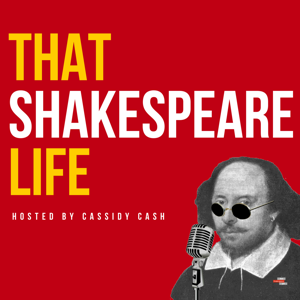
Hosted by Cassidy Cash, That Shakespeare Life takes you behind the curtain and into the real life of William Shakespeare.

More shows like That Shakespeare Life

HistoryExtra podcast by Immediate

HistoryExtra podcast

3,178 Listeners

Gardeners' Corner by BBC Radio Ulster

Gardeners' Corner

102 Listeners

Folger Shakespeare Library: Shakespeare Unlimited by Folger Shakespeare Library

Folger Shakespeare Library: Shakespeare Unlimited

823 Listeners

Sidedoor by Smithsonian Institution

Sidedoor

2,228 Listeners

The English Heritage Podcast by English Heritage

The English Heritage Podcast

229 Listeners

Tudors Dynasty & Beyond by RedTop Media / Rebecca Larson

Tudors Dynasty & Beyond

749 Listeners

Historic Royal Palaces Podcast by Historic Royal Palaces

Historic Royal Palaces Podcast

470 Listeners

The Ancients by History Hit

The Ancients

3,346 Listeners

The Rest Is History by Goalhanger

The Rest Is History

15,575 Listeners

Gone Medieval by History Hit

Gone Medieval

1,889 Listeners

Not Just the Tudors by History Hit

Not Just the Tudors

2,050 Listeners

Lexicon Valley by Lexicon Valley

Lexicon Valley

577 Listeners

Short History Of... by NOISER

Short History Of...

2,829 Listeners

Betwixt The Sheets: The History of Sex, Scandal & Society by History Hit

Betwixt The Sheets: The History of Sex, Scandal & Society

1,384 Listeners

What Did You Do Yesterday? with Max Rushden & David O'Doherty by Keep It Light Media

What Did You Do Yesterday? with Max Rushden & David O'Doherty

215 Listeners