
Sign up to save your podcasts
Or

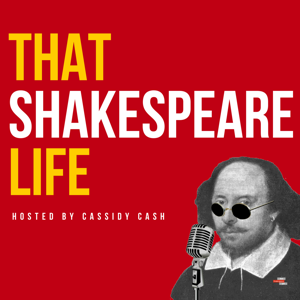


It is Thanksgiving this week here in the US where we take time to intentionally be grateful for what we've been given and count our blessings, but it is also the one time of year where the whole nation remembers an event that began during the life of William Shakespeare: the journey of the Pilgrims on the Mayflower. Not many people realize the story of William Shakespeare overlaps with that of the Pilgrims, due mostly to the fact that the Pilgrims wouldn't actually set sail from Plymouth until 1620, which is 4 years after the death of William Shakespeare. However, The Puritans were a major part of Shakespeare's life in England prior to that fateful day in 1620, including Puritans who lived within walking distance of the known residences Shakespeare took up in London. The story of the Mayflower, Pilgrims, and so-called "Strangers" that travelled with them including Miles Standish, William Brewster, and William Bradford, informs our understanding of Shakespeare's culture and the strong religious tensions that were building up in early 17th century England..
As many countries were flocking to the New World and trying to establish colonies there, England, too was placing a mark on the new land with settlements like Jamestown being established under Captain John Smith in 1607. At the same time, the Pilgrims were seeking to go to this New World, but for a decidedly different reason. As a group of religious separatists, as they were known then, they were seeking the right to freedom of religion. The group capitalized on the popular wave of exploration under James I to secure a land patent that allowed them to travel to England and set up a new colony where they could worship, and live, in freedom. Accompanied by the Merchant Adventurers and sanctioned by the Plymouth Colony, the Pilgrims set sail on September 6, 1620.
Here today to tell us about the history behind the Pilgrim's journey from England to Plymouth and the realities of that First Thanksgiving are our guests and historians behind the 1620 Experience, David and Aaron Bradford.
Hosted on Acast. See acast.com/privacy for more information.
Hosted on Acast. See acast.com/privacy for more information.
Hosted on Acast. See acast.com/privacy for more information.
Hosted on Acast. See acast.com/privacy for more information.
Hosted on Acast. See acast.com/privacy for more information.
In Shakespeare's Henry VI part II, Lord Clifford exclaims, "To Bedlam with him! Is the man grown mad?" That's from Act V Scene 1. This use of the word Bedlam both as a place associated with madness, is because there was a real Bedlam Hospital within steps of The Curtain and Globe theaters where this play was performed in the 16th century and that hospital specialized in the care for the insane. Bedlam Hospital was a psychiatric hospital in early modern London. It was founded in the mid-13th century in service to the Church of Bethlehem, as a house for the poor. By the time Henry VIII gave administrative control of Bedlam to the city of Bethlem in 1547, it had become a hospital for the nation's mentally ill and specifically those who were considered violent or dangerous. Initially, the term "Bedlam" was an informal namebut by the time Shakespeare was writing about Bedlam in Henry VI Part II, the word "bedlam" was part of everyday speech, defined as madness or chaos. In addition to Shakespeare's 8 uses of "bedlam" across his works, Bedlam Hospital itself was staged in many early modern plays including The Duchess of Malfi by John Webster, and Bartholomew Fair by Ben Jonson, among many others during the early 1600s. One potential reason for the popularity of using Bedlam in early modern plays can be attributed to the display of insane people that began in London in 1576 as a way to raise money for the hospital. Bedlam Hospital continues in operation today as a psychiatric hospital, with one of their specialist services including the National Psychosis Unit.
Here today to help us understand the history of Bedlam Hospital and what it is important to know when we see Shakespeare referencing this hospital in his plays is our guest, Duncan Salkeld.
Hosted on Acast. See acast.com/privacy for more information.
Hosted on Acast. See acast.com/privacy for more information.
Hosted on Acast. See acast.com/privacy for more information.
Hosted on Acast. See acast.com/privacy for more information.
Hosted on Acast. See acast.com/privacy for more information.
From the publisher's feed

3,178 Listeners

102 Listeners

823 Listeners

2,228 Listeners

229 Listeners

749 Listeners

470 Listeners

3,346 Listeners

15,575 Listeners

1,889 Listeners

2,050 Listeners

577 Listeners

2,829 Listeners

1,384 Listeners
215 Listeners