
Sign up to save your podcasts
Or

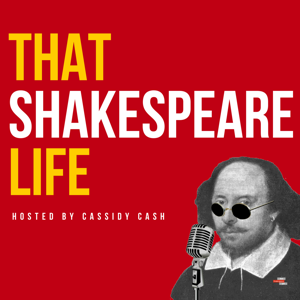


In 1612—just one year after Shakespeare wrote The Tempest—Venetian physician Santorio Santori transformed Galileo's simple thermoscope into the world's first thermometer by adding a calibrated scale and sealing the device. His invention marked the birth of quantified medicine, turning vague sensations of "hot" and "cold" into measurable data that could guide treatment. In this episode, historian of medicine Dr. Fabrizio Bigotti joins us to explore Santorio's remarkable innovations, how they predated Galileo's own instruments, and why this quiet inventor deserves recognition as the true father of the thermometer.
Hosted on Acast. See acast.com/privacy for more information.
This week, we're dipping into the strange, the enchanted, and the eerily familiar with a sampling of the rich world of 16th-century folklore during Shakespeare's lifetime. From medieval hares and charmed pilgrim tokens to tales of mermaids, dragons, and accidental witchcraft, the folklore of this era reveals a world both magical and deeply human.
To help us explore the kinds of beliefs that shaped everyday life—and occasionally show up in Shakespeare's plays—we're joined by two leading voices in folklore studies: Owen Davies and Ceri Houlbrook, co-authors of the new book Folklore.
Rather than a deep dive into any one custom, today's conversation offers glimpses into a few of the many fascinating traditions and superstitions that colored Shakespeare's world.
Hosted on Acast. See acast.com/privacy for more information.
"What's in a name? That which we call a rose by any other name would smell as sweet." – Romeo and Juliet, Act II, Scene ii.
In Shakespeare's England, roses were more than poetic symbols of love and beauty—they were political emblems, medicinal ingredients, culinary flavorings, and the foundation of a flourishing perfumery trade. From the red and white blooms of civil war to the distillation practices in early modern households, the rose occupied a central place in the sensory world of the 16th and 17th centuries.
This week, we're speaking with historian Dr. Aysu Dincer, whose research uncovers the real-life role roses played in Shakespeare's lifetime. From cultivation and trade to the recipes for perfumes and rosewaters that would have been familiar to Shakespeare's contemporaries, Aysu joins us to share the historical backstory of this iconic flower and explore what it meant to smell sweet in the Elizabethan age.
Hosted on Acast. See acast.com/privacy for more information.
Linlithgow Palace, set between Edinburgh and Stirling, was one of the great royal residences of the Scottish crown. It was the birthplace of Mary Queen of Scots and a favored court for the Stuart monarchs long before the Union of the Crowns in 1603. When her son, James VI of Scotland, ascended the English throne as James I—the very monarch under whom William Shakespeare's company became the King's Men—the cultural and political world of Linlithgow directly fed into the world Shakespeare inhabited and wrote for.
While Shakespeare likely never visited Linlithgow himself, the palace remained symbolically important in his lifetime. In fact, when part of the palace collapsed in 1607, a formal report was sent to James—now James I of England—detailing the damage and requesting royal attention. That connection between a crumbling Scottish stronghold and an English king who patronized Shakespeare makes for a compelling link between the palace and the playwright.
Admittedly, exploring Linlithgow as part of Shakespeare's world requires a slight chronological and geographical stretch—but it's a leap well worth taking. The palace was a cultural and ceremonial stage for the Scottish monarchy, and its chapel in particular would have resonated with sacred music and royal spectacle that shaped the theatricality of early modern power on both sides of the border.
Today's guest, James Cook, is a scholar and musician who led a remarkable project to recreate the sound of choral music as it might have been heard at Linlithgow Palace in that very year—1512. Using a blend of historical research, vocal performance, and virtual reality technology, James and his team brought this long-lost acoustic experience back to life.
In our conversation today, we'll explore Linlithgow Palace itself—its significance in the lives of Mary Queen of Scots, James VI, and Anne of Denmark—and how music played a role in shaping royal image, religious devotion, and political theater. We'll also talk with James about the recreation of the 1512 performance, how virtual reality is reshaping historical interpretation, and what it might have sounded like if you were a member of the royal household, listening to sacred music in that chapel over 500 years ago.
Hosted on Acast. See acast.com/privacy for more information.
When Shakespeare wrote Othello, he set his Moorish general against the "general enemy Ottoman." Elsewhere in his plays, he invoked "Turks," "Saracens," and "infidels"—terms that reveal just how present the Islamic world was in the English imagination. From Elizabeth I's diplomatic exchanges with Persia to the cultural impact of the Ottoman Empire, the Islamic world loomed large in the politics, religion, and drama of Shakespeare's England.
This week, we're joined by Dr. Chloe Houston (University of Reading), a leading authority on Persia in early modern drama, and Dr. Mark Hutchings (University of Valladolid), whose research explores England's engagement with Islam on the Renaissance stage. Together, they unpack how Elizabethans understood the Ottomans, Persians, and North Africans, and how those encounters shaped both history and Shakespeare's works.
Discover how global trade, diplomacy, stereotypes, and real-life ambassadors influenced depictions of Moors, Persians, and "Turks" onstage, and why Shakespeare's audiences would have found these references powerful, familiar, and sometimes unsettling.
Listen now and explore the fascinating world of Elizabethan encounters with Islam in Shakespeare's plays.
Hosted on Acast. See acast.com/privacy for more information.
When Falstaff cries, "Let the sky rain potatoes" in The Merry Wives of Windsor, Shakespeare's audience heard more than a vegetable—they heard novelty, superstition, and even scandal. In Elizabethan and Jacobean England, the potato was still a strange newcomer from the Americas, rumored to be an aphrodisiac, a medicine, and an oddity of the garden.
This week, historian and food scholar Rebecca Earle (University of Warwick), author of Feeding the People, joins us to explore the early history of potatoes in England. Together we trace how this humble tuber arrived on English soil, why it carried bawdy associations in Shakespeare's plays, and what it meant for early modern diets, folklore, and global trade.
From Sir Walter Raleigh myths to potato pies at aristocratic tables, discover how Shakespeare's world first encountered the vegetable that would one day feed nations.
Listen now and dig into the surprising story of potatoes in Shakespeare's lifetime.
Show notes and extras: www.cassidycash.com/ep388
Hosted on Acast. See acast.com/privacy for more information.
For Shakespeare and his contemporaries, the line between history and myth was often delightfully blurred. Legends of King Arthur and the fabled Holy Grail captured the imaginations of 16th-century England, weaving their way into royal propaganda, courtly entertainments, and even the education of young scholars. Elizabeth I herself was likened to the Grail Maiden, and stories of sacred relics mingled with Renaissance curiosity and Protestant skepticism.
While Shakespeare doesn't mention the Grail directly in his plays, the ideas and imagery surrounding it would have been well known to his audiences. In a world shifting from medieval tradition to early modern innovation, what did the Holy Grail mean in Shakespeare's England?
To help us explore this fascinating blend of myth, politics, and early modern belief, we're joined today by historian and author Sean Munger.
Hosted on Acast. See acast.com/privacy for more information.
Hosted on Acast. See acast.com/privacy for more information.
From the publisher's feed

3,175 Listeners

103 Listeners

823 Listeners

2,229 Listeners

230 Listeners

748 Listeners
470 Listeners

3,351 Listeners

15,608 Listeners

1,886 Listeners

2,051 Listeners

577 Listeners

2,830 Listeners

1,384 Listeners
215 Listeners