
Sign up to save your podcasts
Or

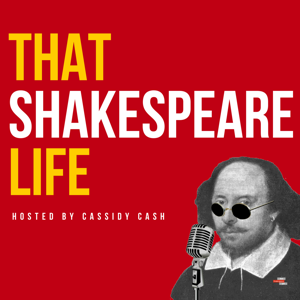


Discover how Anne of Denmark shaped the culture of the Stuart court—from dazzling masques and groundbreaking stagecraft to political influence, artistic patronage, and a powerful performance legacy that helped define the world Shakespeare lived in. In this episode, Clare McManus joins us to explore how Anna's identity, her innovations in court performance, and her role as a cultural force reveal a very different picture of queenship in early modern England.
In Shakespeare's play Henry IV, Part 1, Falstaff declares on more than one occasion, "I am a rogue." Several exchanges between Falstaff, Henry V, and others like Hostess Quickly and Doll Tearsheet, see characters throwing the word "rogue" back and forth as both an insult and a badge of honor.
The term connects to a real form of slang underworld language known as rogue cant. Which was a secret, cryptic lexicon, spoken and understood only by criminals. Falstaff and his companions are the closest depictions of criminals in Shakespeare's works. Their roguish behavior includes gathering at the Boar's Head in Eastcheap to plan their crimes and divide their spoils. By choosing to use the word "rogue," Shakespeare was deliberately connecting his characters to the real criminal underworld of 16th-century England that trafficked in this mysterious and coded language.
To introduce us to this rogue cant, and to help us unlock the hidden meanings of these words so that we can better understand the culture that produced them, we are excited to welcome Ari Friedlander back to the show.
Ari joins us today to take a closer look at rogue cant: where the words came from, how they were used, and what they reveal about Shakespeare's world.
Hosted on Acast. See acast.com/privacy for more information.
In Shakespeare's play Henry IV, Part 1, Falstaff declares on more than one occasion, "I am a rogue." Several exchanges between Falstaff, Henry V, and others like Hostess Quickly and Doll Tearsheet, see characters throwing the word "rogue" back and forth as both an insult and a badge of honor.
The term connects to a real form of slang underworld language known as rogue cant. Which was a secret, cryptic lexicon, spoken and understood only by criminals. Falstaff and his companions are the closest depictions of criminals in Shakespeare's works. Their roguish behavior includes gathering at the Boar's Head in Eastcheap to plan their crimes and divide their spoils. By choosing to use the word "rogue," Shakespeare was deliberately connecting his characters to the real criminal underworld of 16th-century England that trafficked in this mysterious and coded language.
To introduce us to this rogue cant, and to help us unlock the hidden meanings of these words so that we can better understand the culture that produced them, we are excited to welcome Ari Friedlander back to the show.
Ari joins us today to take a closer look at rogue cant: where the words came from, how they were used, and what they reveal about Shakespeare's world.
When we think of King Arthur, many of us imagine medieval romance—knights in shining armor, enchanted swords, or chivalric quests. But for the Tudors, Arthur wasn't just storybook material. In the 16th century, Arthurian legend was a political tool, a national symbol, and—for some—an actual piece of English history. From Henry VII naming his heir "Prince Arthur," to Elizabeth I being welcomed at Kenilworth with Lady-of-the-Lake imagery, the Tudors used Arthurian myth to define their dynasty, elevate their authority, and shape the emerging idea of English nationalism.
This week, we're exploring how Arthur, Merlin, and the world of Geoffrey of Monmouth were reinvented for a new age of politics, performance, and propaganda. Our guest, historian Andrew, walks us through royal pageants, literary allegory, and visual symbols that connected the Tudor monarchy to a heroic—and sometimes ominous—legendary past.
Hosted on Acast. See acast.com/privacy for more information.
In November 1621, two communities—Wampanoag and English—came together at the edge of Patuxet for a shared harvest meal. While today we call this moment "The First Thanksgiving," the historical reality is far richer and more culturally complex than the simplified story many of us grew up hearing.
In this week's episode, we explore this early moment of connection with Malissa Costa (Mashpee Wampanoag) and Richard Pickering (Plimoth Patuxet Museums). Together, they guide us through the world of the Wampanoag in the early 17th century—what they wore, how they prepared deerskin through traditional brain-tanning methods, how diplomacy often involved gift-giving, including venison, and what agricultural knowledge they shared with the English that ultimately saved lives.
Rather than a single act of generosity, the 1621 harvest feast emerges as a meeting point of two sophisticated cultures—each with its own traditions of giving thanks, diplomacy, and seasonal celebration. As we step into this history, we learn how deeply both communities valued gratitude, relationship, and the generosity of the land.
When we imagine Elizabethan dining tables, we might picture roast meats, trenchers of bread, or tankards of ale. But lurking beneath the surface of rivers, marketplaces, and even the economy itself was a creature so valuable that it could pay rent, feed a nation, and still appear in Shakespeare's humor — the eel.
Eels once filled England's rivers in such massive quantities that they became a crucial source of protein for the poor and a delicacy for the wealthy. They appear in legal documents, household accounts, market records, and yes — in Shakespeare's plays. In Love's Labour's Lost, Don Adriano says:
"What, that an eel is ingenious?" — Love's Labour's Lost (I.2)Today we'll discover just how ingenious eels really were.
This week, I'm speaking with Dr. John Wyatt Greenlee — medievalist, cartographic historian, and the internet's favorite eel enthusiast — to explore the culinary, economic, and cultural world of eels in Shakespeare's England. From eel rents and floating aquarium-ships to eel pies and insult comedy, we're diving into how this slippery fish shaped daily life in the world Shakespeare lived in.
Hosted on Acast. See acast.com/privacy for more information.
When we imagine Elizabethan dining tables, we might picture roast meats, trenchers of bread, or tankards of ale. But lurking beneath the surface of rivers, marketplaces, and even the economy itself was a creature so valuable that it could pay rent, feed a nation, and still appear in Shakespeare's humor — the eel.
Eels once filled England's rivers in such massive quantities that they became a crucial source of protein for the poor and a delicacy for the wealthy. They appear in legal documents, household accounts, market records, and yes — in Shakespeare's plays. In Love's Labour's Lost, Don Adriano says:
"What, that an eel is ingenious?" — Love's Labour's Lost (I.2)Today we'll discover just how ingenious eels really were.
This week, I'm speaking with Dr. John Wyatt Greenlee — medievalist, cartographic historian, and the internet's favorite eel enthusiast — to explore the culinary, economic, and cultural world of eels in Shakespeare's England. From eel rents and floating aquarium-ships to eel pies and insult comedy, we're diving into how this slippery fish shaped daily life in the world Shakespeare lived in.
In All's Well That Ends Well, a character is described as "That with the plume: 'tis a most gallant fellow" (III.5), and in Love's Labour's Lost, the Princess of France mockingly asks, "What plume of feathers is he that indited this letter?" (IV.1), revealing how feathers could both elevate and satirize their wearer.
Feathers might seem like a simple decoration today, but in the 16th and early 17th centuries, feathered clothing—especially feathered hats—spoke volumes about a person's status, identity, and even their participation in the expanding global economy.
To better understand the culture behind feathers in clothing for Shakespeare's lifetime, we're sitting down this week with Professor Ulinka Rublack, whose article Befeathering the European investigates the history of feathers in clothing, to help us explore where the feathers come from, what they looked like, and how they were used.
Hosted on Acast. See acast.com/privacy for more information.
In All's Well That Ends Well, a character is described as "That with the plume: 'tis a most gallant fellow" (III.5), and in Love's Labour's Lost, the Princess of France mockingly asks, "What plume of feathers is he that indited this letter?" (IV.1), revealing how feathers could both elevate and satirize their wearer.
Feathers might seem like a simple decoration today, but in the 16th and early 17th centuries, feathered clothing—especially feathered hats—spoke volumes about a person's status, identity, and even their participation in the expanding global economy.
To better understand the culture behind feathers in clothing for Shakespeare's lifetime, we're sitting down this week with Professor Ulinka Rublack, whose article Befeathering the European investigates the history of feathers in clothing, to help us explore where the feathers come from, what they looked like, and how they were used.
From the publisher's feed

3,175 Listeners

103 Listeners

823 Listeners

2,229 Listeners

230 Listeners
748 Listeners

470 Listeners

3,351 Listeners

15,608 Listeners

1,886 Listeners

2,051 Listeners

577 Listeners

2,830 Listeners

1,384 Listeners

215 Listeners