The Accessible Stall

The Accessible Stall

Download on the App Store

The Accessible Stall episodes

  • [35] Acquiring Disability and Hearing Aids - The Accessible Stall
    In this episode, we talk about acquiring disability. Even though we have had ours from birth, acquiring disability can still affect us. For example, our reasoning for making this episode was that Emily recently figured out she needed hearing aids. Although hearing aids are just another piece of assistive technology, Emily’s first day with them made us think: If acquiring disability is this challenging for someone born with another one, what would it feel like to have lived a non-disabled life and be thrust into having a disability? We discuss that and more in this episode. We hope you enjoy it! A transcript for this episode can be found here.
    Please note: In the episode, Emily says she has “profound” hearing loss, but this is not technically correct. Her hearing loss is significant, though.

    Acquiring disability
    We’ve talked about access before on this show. We’ve talked about disability on this show (obviously!) But, we both don’t know what it’s like to have your first disability be one that you’ve acquired, or what it’s like to have your access suddenly limited or changed. However, Emily recently getting hearing aids due to hearing loss gave us a glimpse into what that might be like. We recorded this episode on the first day Emily had her new hearing aids. She did not like them. But if it takes so long to become comfortable with an acquired disability when you already have a disability, it must be a challenge to acquire your first one late in life. That isn’t to say there aren’t exceptions. But Emily’s “day 1” struggle was real.
    Above all else, what this episode really taught us was that change takes time. And that’s okay. Acceptance doesn’t happen overnight. In Emily’s example, the hearing aids were “an attack on [her] senses”.
    It made us realize that being “born this way” helped us deal with acceptance because we simply had to from the minute we were born. This is different from self-acceptance, which we also touch on. But our lives never vastly changed overnight like they can when you acquire disability. And we realized that in a very roundabout way we were grateful for being “born this way.”
    40 min
  • [34] Sheltered Workshops vs. Sweatshops - The Accessible Stall
    In this episode, we discuss sheltered workshops. Sheltered workshops are places that can employ people with disabilities and pay them lower than the minimum wage. Obviously, we think this is horrific.  We talk about them in this episode, and compare them to sweatshops, because Kyle found another article which he thinks is absurd called The Feminist Side of Sweatshops. Enjoy! A transcript of this episode can be found here.
    What are sheltered workshops?
    If there’s ever been one thing that all people can agree on, it’s that the purposeful exploitation of people is wrong. And yet, according to the Department of Labor:
    Under FLSA Section 14(c), a worker who has a disability for the job being performed is one whose earning or productive capacity is impaired by a physical or mental disability, including those relating to age or injury. Disabilities that may affect productive capacity include blindness, mental illness, mental retardation, cerebral palsy, alcoholism, and drug addiction. The following, taken by themselves, are not considered to be disabilities for purposes of paying special minimum wages: educational disabilities, chronic unemployment, receipt of welfare benefits, nonattendance at school, juvenile delinquency, and correctional parole or probation.
    Often, these “wages” are much lower than the federal minimum wage. How much lower?  “Rates may go as low as less than a dollar per hour”. Yes, you read that correctly.
    This sounds terrible!
    It is. Sheltered workshops need to be stopped. It’s that simple. We need to take action. And if you’re thinking to yourself “how bad could it be?” We’ll show you. This map from Rooted in Rights shows all known companies and organizations in the US that have certifications which them to pay workers with disabilities a wage less than the federal minimum. This is a huge problem. Why? Because it’s not only exploitation of labor and people with disabilities. It’s also that this is a problem nobody knows about. And if you don’t have a disability? Odds are you probably didn’t know about this.
    There is simply no excuse for them.
    Notes from this episode: Fair Labor Standards Act (FLSA) Section 14(c) Advisor, Fact Sheet #39: The Employment of Workers with Disabilities at Subminimum Wages
    41 min
  • [33] Accessibility = Wheelchairs?! - The Accessible Stall
    In this episode, we talk about why disability seems to be synonymous with a wheelchair. There’s a lot to unpack here and we really liked it so we’re trying to get this one out as fast as possible! Please excuse lazy show notes. Enjoy! A transcript for this episode can be found here.
    38 min
  • [32] Carly Findlay, Rude People, and Australia - The Accessible Stall
    We’re SO excited about this episode. On this episode, we have our friend, and fellow activist Carly Findlay on to talk about her activism, rude people, and Australia. Carly Findlay is an award winning writer, speaker and appearance activist. Carly has the rare, severe skin condition called Ichthyosis. You won’t believe some of the stories she has to tell. Some of them we could barely believe ourselves! Enjoy!
    Who is Carly Findlay?
    She writes on disability issues for publications including ABC, Daily Life and SBS. She was named as one of Australia’s most influential women in the 2014 Australian Financial Review and Westpac 100 Women of Influence Awards. Carly has appeared on ABC’s You Can’t Ask That and Cyber Hate with Tara Moss, and has been a regular on various ABC radio programs. She is currently writing her first book – a memoir. Read her writing on appearance diversity and disability at carlyfindlay.com.au.
    She sounds cool!
    She is cool. We know how to pick our guests, if we do say so ourselves.
    58 min
  • [31] Disability and College - The Accessible Stall
    We recently received a request for an episode from a listener. We’ve never gotten one of those before, so to say we were excited about it would be putting it very mildly. As it turns out, the request was from a young autistic woman named Nicole who is starting college soon, and wanted to hear our thoughts on how disability affects the college experience. As always, we hope you enjoy this episode! A transcript for this episode can be found here.
    Disability and College
    This was a very strange episode for us to make. We both had extremely different college experiences. Emily dormed at school, I did not. Emily had friends, I did not. Emily utilized her school’s ODS, I did not. Basically, our time at college couldn’t have been any more different if we planned them out.
    Because of this, we have totally different stories to tell. We meet in the middle as usual though! Accessibility is a huge problem at many colleges. While Emily and I were generally fortunate in that we went to colleges that had the resources to provide a (mostly) accessible time at college, we also talk about times where we’ve had to work with our professors and instructors to get things done.
    Self-reliance is important for anyone to learn starting college. But having a disability adds an entire separate layer on top of it all. On the other hand, having a disability allows you to learn self-reliance very quickly. It’s a skill that you will use for the rest of your life.
    We also share our embarrassing first day stories, so if nothing else about this episode catches your attention, you may want to listen just for that. We hope you enjoy this episode, but especially Nicole. We hope this episode helps you (and anyone else who listens!) a little. And if you’re someone starting college soon, don’t worry! You’ll be fine.
    43 min
  • [30] Jessy Yates, the MTA, and Buttons - The Accessible Stall
    It seems like we just can’t get enough of the MTA. On this episode, we discuss the newest pilot program by the MTA to encourage riders to get up for people with disabilities or pregnant women. How is the MTA trying to achieve this? With buttons that you pin onto your shirt. We thought this was so odd that we brought our good friend Jessy Yates on to discuss this with us. Enjoy! By the way, we get a little bit risque and racy in this episode, so consider this a small content note.
    Who is Jessy Yates?
    Jessy Yates is an actor, performer, burlesque dancer, and *~professional disabled person~*. What’s more, she is a very good friend of ours. We have been trying to get her on our show for a long time. As a result, we are very excited!
    Tell us more about these buttons.
    The idea behind these buttons is that it will encourage people riding the train to get up for the people wearing them. However, there’s several things about this that is odd.

    * Wheelchair users don’t exactly need a button to tell passengers they need a seat. Wheelchair users need improved access and more space.
    * People who have invisible disabilities could and should just ask someone to get up.
    * If someone who isn’t willing to get up for you when you ask, they aren’t going to get up for you when you wear a button that asks.
    * It’s just a button. What can it actually achieve?

    However, we are both skeptical (and of course we ordered buttons, I mean, come on), and we have an opportunity to test our hesitations “in the wild” once we receive them.
    During our discussion with Jessy though, our opinions changed. She brought up some really good points that made us go from being generally against them to skeptical. We’re very excited to see if they actually work.
    Where can I find Jessy Yates?
    You can find her:

    * On Instagram here
    * On Twitter here
    * And on Facebook here

    49 min
  • Disability in the News - The Accessible Stall
    We don’t usually do this, but we got so fired up we just had to record an episode immediately.  We spoke about how disability is portrayed in the news, but the show notes will tell you all you need to know about why we’re angry about it.  So angry that we disrupted our own schedule to release this episode as soon as possible. Please enjoy. A transcript for this episode can be found here.
    Show Notes: O.C. Mom Who Attended Every Class With Quadriplegic Son Earns Honorary MBA Alongside Him
    45 min
  • [29] Bureaucracy and Canada with Andrew Gurza - The Accessible Stall
    On this episode, we sit down with fellow podcaster and friend Andrew Gurza. He recently a hard time getting his passport. Such a hard time in fact, that he managed to get himself on national news in Canada. So we thought we’d chat with him about his experience, and the weird little differences between the US and our neighbors to the north. We hope you enjoy this episode! More is always on its way, and we thank all of you, as always, for listening.
    Who is Andrew Gurza?
    He’s just some guy. Just kidding! Andrew is a “Disability Awareness Consultant and Cripple Content Creator working to make the lived experience of queerness and disability accessible to all.” Sounds pretty cool, doesn’t he? We think so too, so naturally we had to have him on our show. He also hosts two podcasts, which you can find at the link above. (Spoiler alert: We have both appeared on his show separately and those are the best episodes in our not-so-humble opinion!)
    What’s the big deal then?
    Andrew Gurza was denied service at a passport office in Canada because of some stupid bureaucratic rule. The rule states that a government employee can’t assist someone filling out a form, for fear that they will lead on the person filling out the form. That makes sense on paper, but what if someone can’t fill out a form? Shouldn’t the rules be bent in that case? According to the Canadian government, no.
    We talk about various bureaucratic BS like that that you have to navigate when you’re someone with a disability. And we also talk about how weird Canada is! Did you know their milk comes in bags?! We didn’t!
    Anyway, we hope you enjoy this episode as much as we did making it! Go check out Andrew’s podcast!
    38 min
  • [28] New York Subway Lawsuits - The Accessible Stall
    On this episode, we talk about the recent lawsuits filed by disability rights activists suing New York City for having a subway system so inaccessible it’s practically unusable some days. A transcript for this episode can be found here. This transcript is due to our generous supporters on Patreon. Thank you.
    Notes from this episode: New York City’s Subway System Violates Local and Federal Laws, Disability Groups Say, Disabled NYers File Class Action Lawsuit Against MTA Over Inaccessible Subway Stations
    Oh, and Emily’s shirt.

    34 min
  • [27] Disability and Employment - The Accessible Stall
    Sorry for the wait! It’s been a long time. How have you been? In this episode, we talk about disability employment. Consider this: People with disabilities as a group have one of the highest unemployment rates in the United States. We discuss this issue, along with whether disability impacts the kind of work you do. A transcript for this episode can be found here. This transcript is due to our generous supporters on Patreon. Thank you.

    We genuinely appreciate your patience and we’re happy to finally be back on a normal schedule.
    What’s so important about disability employment?
    If you aren’t someone with a disability, probably not too much. But if you are, employment is likely something you’ve thought about since you were old enough to work, if not earlier than that. People with disabilities are more than three times likely to be unemployed than nondisabled people overall.
    Why is that? There are lots of reasons, but we focus on these two:

    * Employers tend not to hire us because they see us as potential liabilities and grounds for a lawsuit.
    * Employers believe that accommodating an employee with a disability costs a huge amount of money.

    The first reason is one that theoretically could be true, but in practice it isn’t. Seriously, it’s not really difficult to just adhere to the Americans with Disabilities Act (ADA). And disabled people want to work.
    The second reason is completely false. According to a study by JAN and ODEP:
    The employers in the study reported that a high percentage (59%) of accommodations cost absolutely nothing to make, while the rest typically cost only $500.
    While disability employment might not seem like a huge issue, it is. We didn’t even get a chance to discuss something as horrible as sheltered workshops, for example, but that’s for a different episode on a different day.
     
    Notes from this episode: Persons with a Disability: Labor Force Characteristics Summary, Accommodation and Compliance Series Workplace Accommodations: Low Cost, High Impact

    36 min

About The Accessible Stall

From the publisher's feed

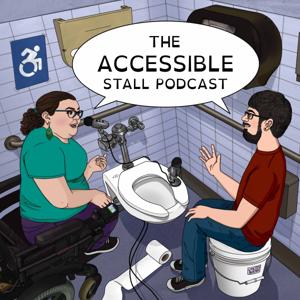
A disability podcast with Kyle and Emily

More shows like The Accessible Stall

Stuff You Should Know by iHeartPodcasts

Stuff You Should Know

78,398 Listeners

The Daily by The New York Times

The Daily

111,865 Listeners

5-4 by Prologue Projects

5-4

3,532 Listeners

Financial Feminist by Her First $100K

Financial Feminist

6,441 Listeners