
Sign up to save your podcasts
Or



Send us Fan Mail
Does quitting drinking have to feel miserable? How the energy you bring changes the experience.
If you picture changing your drinking as crawling through gravel and broken glass, you will put it off as long as you can. Jonathan Ball and Ellen Biggs both pictured it that way, and on this episode of The Alcohol Myth Podcast they make the case that the heaviness was never built into the change. A lot of it came from the energy they brought to it.
Pain can get you moving, and it runs out. Ellen knows the trap: drinking felt miserable, and quitting looked just as miserable, so she stayed put. What moved her were glimpses. Short breaks of a week, two weeks, a month showed her mornings she wanted more of, and about a hundred stories from people outside the rock-bottom script showed her a life she had never pictured. For Jonathan, the pull came from teetotal friends who were some of the most fun, audacious people he knew. Jonathan calls that the difference between being pushed by pain and being pulled toward something good.
The emotion you bring to a task shapes how the task feels, and you get some say in which one you bring. Jonathan's example is two exhausted men reading the same bedtime story, one out of obligation and one with wonder. Same task, and a completely different evening for everyone in the room. He asks the same of the garage or a stack of spreadsheets: what if this were an adventure?
Apply that to a night without alcohol. Ellen's version is the not-knowing mind. Swap "this is going to be hard" for "what am I going to learn about myself tonight?" and the evening becomes something to discover. Curiosity is the fuel that keeps renewing itself.
Try Ellen's swap this week. Every time you catch yourself saying "I have to" or "I should," say "I get to" and notice what shifts. Jonathan is also experimenting with a timer that asks, a few times a day, what energy you are bringing right now!
Work with Jonathan: https://livecreativeaf.com/ | Work with Ellen: https://ellenbiggscoaching.com/
CHAPTERS
00:00 Lighter energy for any task
01:26 The myth: change has to be grueling
03:25 Pushed by pain, pulled by possibility
07:37 Glimpses from short breaks
09:47 Teetotal friends who have more fun
11:45 What is animating energy?
12:58 Two dads, one bedtime story
18:58 Who will you be in a year?
20:57 Why willpower runs out
22:59 Swap "I have to" for "I get to"
25:18 A timer to check your energy
FROM THIS EPISODE
"Why not pick the truth that moves you closer to your goal?"
QUESTIONS THIS EPISODE ANSWERS
Q: Does quitting drinking have to be hard?
A: Quitting drinking does not have to be miserable. There may be hard moments, but much of the heaviness comes from expecting deprivation. Approaching it with curiosity, as an experiment in what you learn about yourself, changes how each alcohol-free evening feels and makes the process easier to sustain.
Q: How do I stay motivated to stop drinking?
A: To stay motivated to stop drinking, move from being pushed by pain to being pulled toward something you want. Pain motivates for a while and then runs out. Picturing who you could be after a year without alcohol, and feeling that now, gives you fuel that lasts.
Q: What does "I get to" mean instead of "I have to"?
A: Saying "I get to" instead of "I have to" is a simple reframe that changes how a task feels. "I should eat healthy tonight" sounds like a chore, while "I get to eat healthy tonight" points at the benefit. Both statements are true, so choose the one that moves you forward.
Q: How can I make an alcohol-free night less boring?
A: You can make an alcohol-free night less boring by treating it as an experiment. Ask what you will learn about yourself tonight, what might surprise you, and whether it could be easier than you expect. Curiosity turns a night of resisting into a night of discovering.
You do not need to wait for rock bottom.
You do not need more willpower.
You just need a new way to understand what you are feeling and why you are reaching for the next drink.
If this episode resonates, please like, share, subscribe, and leave a comment with what stood out to you. We would love to hear what you want more of.
Send your questions, stories, or ideas for future episodes to [email protected]. We read every message. We really do.
CONNECT WITH US
Email: [email protected]
Jonathan Ball, CreativeAF Coaching: https://livecreativeaf.com/
Ellen Biggs Coaching: https://ellenbiggscoaching.com/
LISTEN ANYWHERE
Apple Podcasts: https://podcasts.apple.com/us/podcast/the-alcohol-myth-podcast/id1861472231
Spotify: https://open.spotify.com/show/7DzVqvW3ZkyV80jDYDSOjt
Amazon Music: https://music.amazon.com/podcasts/88964cf0-2b6f-4976-9676-2aa8a36d25be
All episodes: https://www.buzzsprout.com/2562590
Subscribe for more episodes pulling back the curtain on the alcohol myth.
#AlcoholFree #SoberCurious #QuitDrinking #Mindset
Send us Fan Mail
Is AA the only way to quit drinking? Why the label keeps people stuck, and what else exists.
If you have ever typed "am I an alcoholic" into a private browser late at night, and then done nothing because the only answer you could picture was a meeting and a label, you are in very large company. Jonathan Ball and Ellen Biggs both did exactly that, and on this episode of The Alcohol Myth Podcast they take on the belief that AA and the alcoholic label are the only way through.
The label itself is often the barrier. Ellen knew she was drinking more than she wanted to, and saying "I am an alcoholic" still did not feel true to her. "Powerless" did not fit either. Jonathan learned about AA almost entirely from film and television, where it carried shame and a sense of being marked for life. With "alcoholic" on one side and "I'm fine" on the other, both of them stayed stuck in the middle for years.
The language clinicians use has moved on. The current diagnosis is alcohol use disorder, a condition that runs from mild to severe, rather than an identity you have to adopt. Jonathan points out where the emphasis lands: a condition you have is something you can address. Alcohol is an addictive substance for human beings in general, and getting caught by it does not make you a different kind of person. For Ellen, hearing the phrase gray area drinking was the moment it clicked. Her life looked fine from outside and she still knew she was not okay.
Neither host is knocking AA. Ellen names what it does beautifully, community, mentorship and service, and says those belong in any path. The point is that there are now many paths, from science-based coaching to online groups and books, and the right one is the one that fits you. Ellen spent roughly fifteen years looking for hers.
The label is optional, and the freedom is the point. This week, swap the search. Instead of googling whether you are an alcoholic, google sober curious and see what you find!
Work with Jonathan: https://livecreativeaf.com/ | Work with Ellen: https://ellenbiggscoaching.com/
CHAPTERS
00:00 More than one way to get free
01:14 The myth: AA or nothing
02:47 The label as the price of entry
05:08 Stuck between alcoholic and fine
07:01 Stigma, secrecy and the media
09:53 Alcoholic vs. alcohol use disorder
11:14 Discovering gray area drinking
13:38 You're not alone in this
16:16 What AA gets right
17:05 Keep going until you're free
18:48 Google something different
FROM THIS EPISODE
"Don't stop until you're free."
QUESTIONS THIS EPISODE ANSWERS
Q: Is AA the only way to quit drinking?
A: AA is not the only way to quit drinking. Science-based coaching, online communities, books, and approaches like This Naked Mind help many people change their relationship with alcohol. AA offers real community and mentorship, and the right path is whichever one you will actually keep walking.
Q: Do I have to call myself an alcoholic to get help?
A: You do not have to call yourself an alcoholic to get help. Clinicians now diagnose alcohol use disorder on a spectrum from mild to severe, and many coaching and community approaches never ask you to adopt a label. You only need to want something different.
Q: What is the difference between alcoholic and alcohol use disorder?
A: The difference between alcoholic and alcohol use disorder is where the emphasis falls. "Alcoholic" names an identity a person carries, while alcohol use disorder describes a condition someone has, ranging from mild to severe. A condition is something you can address without it defining you.
Q: What is a gray area drinker?
A: A gray area drinker is someone who drinks more than they want to but does not fit the stereotype of an alcoholic. Life may look successful from outside, while inside the drinking is taking up more time, attention and energy than they are comfortable with.
You do not need to wait for rock bottom.
You do not need more willpower.
You just need a new way to understand what you are feeling and why you are reaching for the next drink.
If this episode resonates, please like, share, subscribe, and leave a comment with what stood out to you. We would love to hear what you want more of.
Send your questions, stories, or ideas for future episodes to [email protected]. We read every message. We really do.
CONNECT WITH US
Email: [email protected]
Jonathan Ball, CreativeAF Coaching: https://livecreativeaf.com/
Ellen Biggs Coaching: https://ellenbiggscoaching.com/
LISTEN ANYWHERE
Apple Podcasts: https://podcasts.apple.com/us/podcast/the-alcohol-myth-podcast/id1861472231
Spotify: https://open.spotify.com/show/7DzVqvW3ZkyV80jDYDSOjt
Amazon Music: https://music.amazon.com/podcasts/88964cf0-2b6f-4976-9676-2aa8a36d25be
All episodes: https://www.buzzsprout.com/2562590
Subscribe for more episodes pulling back the curtain on the alcohol myth.
#AlcoholFree #SoberCurious #QuitDrinking #GrayAreaDrinking
Send us Fan Mail
Does a drink after work actually help you relax? Why the evening pour stops working, and what does.
If you walk in the door wound up and the first thing you reach for is a drink, it probably feels like the only reliable off-switch you have. Jonathan Ball and Ellen Biggs both believed that for most of their working lives, and on this episode of The Alcohol Myth Podcast they put that belief under real pressure.
Start with the mechanism. Alcohol creates a need for itself. The first drink brings a genuine lift, then your body pushes back toward balance and you land a little lower than where you started, so the next drink is relieving the last one. Jonathan drank for years to cope with job stress and only saw after he stopped how much of that stress the drinking had been producing. Add the broken sleep and the harder morning, and the evening drink keeps buying relief from a problem it renews.
The need underneath is completely legitimate! You do need a way to leave the workday behind, and with phones and late email that line has mostly disappeared. Hold "I need a drink to relax" while trying not to drink, and you end up stuck between a real need and the only tool you believe can meet it. Jonathan calls that feeling a hostage situation.
So change the sentence before you change the habit. Jonathan swaps "I need a drink to relax" for "a drink would relax me, and I'm learning other ways to unwind." Learning is an active verb, and it hands your agency back. Ellen kept the ritual and changed what was in it: an apple cider vinegar sipper in a fancy glass while she cooks dinner, every night around five. The ritual was doing more of the unwinding than the drink ever did.
Tonight, try Jonathan's step one-and-a-half. Make your first drink a really good alcohol-free one, and notice how much better you feel the moment you open the fridge, before anything touches your lips. That feeling is your first piece of evidence!
Work with Jonathan: https://livecreativeaf.com/ | Work with Ellen: https://ellenbiggscoaching.com/
CHAPTERS
00:00 Groundhog Day evenings
01:13 The myth: a drink to unwind
03:47 Where we learned the belief
06:33 Screen drinking with no next day
08:27 When the drink causes the stress
10:03 Why only the first drink relaxes
12:11 The hostage situation
16:24 "I'm learning other ways to relax"
19:56 Ellen's five o'clock ritual
25:21 Protect the work-to-home threshold
31:33 First steps to try tonight
FROM THIS EPISODE
"As an addictive substance it creates a need for itself."
QUESTIONS THIS EPISODE ANSWERS
Q: Does alcohol help you relax after work?
A: Alcohol helps you relax after work for a short window, then your body pushes back toward balance and you feel a little worse than before. Add poorer sleep and a harder next morning, and the evening drink ends up relieving tension it helped create in the first place.
Q: Why do I feel like I need a drink after a long day?
A: You feel like you need a drink after a long day because the habit was learned early, from parents unwinding at home and from screen heroes who pour one after work. Repetition turned the glass into your cue for being off the clock, so relaxation now feels tied to it.
Q: How can I unwind after work without drinking?
A: You can unwind after work without drinking by keeping the transition ritual and changing what fills it: an alcohol-free drink in a good glass, a brisk walk, a shower, or a call with a friend. Quick switches shift your state tonight, while habits like reading build calmer evenings.
Q: Does switching to alcohol-free beer help you cut back?
A: Switching to alcohol-free beer helps many people cut back, and both hosts used it early on. Changing what is in the glass keeps the evening ritual intact, and many people notice they start relaxing the moment they open the can, which shows how much the ritual was doing.
You do not need to wait for rock bottom.
You do not need more willpower.
You just need a new way to understand what you are feeling and why you are reaching for the next drink.
If this episode resonates, please like, share, subscribe, and leave a comment with what stood out to you. We would love to hear what you want more of.
Send your questions, stories, or ideas for future episodes to [email protected]. We read every message. We really do.
CONNECT WITH US
Email: [email protected]
Jonathan Ball, CreativeAF Coaching: https://livecreativeaf.com/
Ellen Biggs Coaching: https://ellenbiggscoaching.com/
LISTEN ANYWHERE
Apple Podcasts: https://podcasts.apple.com/us/podcast/the-alcohol-myth-podcast/id1861472231
Spotify: https://open.spotify.com/show/7DzVqvW3ZkyV80jDYDSOjt
Amazon Music: https://music.amazon.com/podcasts/88964cf0-2b6f-4976-9676-2aa8a36d25be
All episodes: https://www.buzzsprout.com/2562590
Subscribe for more episodes pulling back the curtain on the alcohol myth.
#AlcoholFree #SoberCurious #QuitDrinking #StressRelief
Send us Fan Mail
How to stop negotiating with alcohol cravings, and why a firm no for today beats maybe later.
If one stray thought about wine at eleven in the morning can turn into a day-long debate with yourself, you know how exhausting a craving gets when you argue with it. Ellen Biggs and Jonathan Ball call that the negotiation, and on this episode of The Alcohol Myth Podcast they teach the tactic they both use to end it.
The negotiation is what feeds the craving. Every "let's see how I feel at three" leaves the door cracked, and with a substance that creates a need for itself, a cracked door is as good as an open one. Ellen describes the deferrals she used to make, and how by five o'clock the craving had grown every time she reopened the question.
Duck Mode is the alternative. The name comes from Annie Grace of This Naked Mind and her picture of kids in the back seat asking for ice cream: hedge once and they ask all the way home, while a loving, firm "not today" lets the asking run out of steam. You make the decision once, for today, and every argument rolls off like water off a duck's back. Ellen finds five or ten clean no's and the voice stops asking. Jonathan tried it on a post-lunch ice cream craving and found it gone within five minutes.
Ellen is upfront that this takes some muscle early on, alongside the deeper belief work. Then give your brain a better question to chew on, and it will go find one.
Picture the craving as a bonfire. Attention is kindling, and every drink is a log. Jonathan sees this with men who come to him wanting to cut back: wishing for a smaller fire while you keep feeding it is the hardest path there is. A craving you stop arguing with runs out of fuel.
For today, pick a window as short as fifteen minutes and ask whether your next move adds fuel or takes heat away. Then go get a few reps in the leave-it column!
Work with Jonathan: https://livecreativeaf.com/ | Work with Ellen: https://ellenbiggscoaching.com/
CHAPTERS
00:00 Fuel on the fire, or less heat?
02:37 The myth: you have to negotiate
04:00 Shut every door for today
05:13 A cracked door is an open door
06:17 Jonathan's ice cream test
07:50 Ellen and the Halloween candy
10:31 What is Duck Mode?
12:38 Give your brain a better question
14:58 Your craving is a bonfire
17:07 Why cutting back is the hardest path
19:47 Reps in the leave-it column
FROM THIS EPISODE
"Five, ten nos and it stops asking."
QUESTIONS THIS EPISODE ANSWERS
Q: How do I stop thinking about drinking all day?
A: To stop thinking about drinking all day, make one firm decision early, for today only, and stop reopening it. Every maybe-later restarts the debate and gives the craving time to grow. A clear no leaves your brain nothing to bargain with, so it moves on to other things.
Q: What is Duck Mode for alcohol cravings?
A: Duck Mode is a craving tactic from Annie Grace of This Naked Mind. You make a firm, loving decision once, for today, then let every argument against it roll off like water off a duck's back. With no negotiation left to win, the craving voice usually goes quiet.
Q: Why is cutting back on drinking so hard?
A: Cutting back on drinking is hard because every drink feeds the craving you are trying to shrink, so moderation means tending a fire while wishing it smaller. A stretch of not drinking lets that fire die down, and the choice you make afterward becomes a real one.
Q: Do alcohol cravings go away if you don't give in?
A: Alcohol cravings usually fade when you stop engaging them. Arguing with a craving, planning around it or postponing the decision all count as engaging, and each one adds fuel. Ellen Biggs finds five or ten firm no's are usually enough for the voice to stop asking that day.
You do not need to wait for rock bottom.
You do not need more willpower.
You just need a new way to understand what you are feeling and why you are reaching for the next drink.
If this episode resonates, please like, share, subscribe, and leave a comment with what stood out to you. We would love to hear what you want more of.
Send your questions, stories, or ideas for future episodes to [email protected]. We read every message. We really do.
CONNECT WITH US
Email: [email protected]
Jonathan Ball, CreativeAF Coaching: https://livecreativeaf.com/
Ellen Biggs Coaching: https://ellenbiggscoaching.com/
LISTEN ANYWHERE
Apple Podcasts: https://podcasts.apple.com/us/podcast/the-alcohol-myth-podcast/id1861472231
Spotify: https://open.spotify.com/show/7DzVqvW3ZkyV80jDYDSOjt
Amazon Music: https://music.amazon.com/podcasts/88964cf0-2b6f-4976-9676-2aa8a36d25be
All episodes: https://www.buzzsprout.com/2562590
Subscribe for more episodes pulling back the curtain on the alcohol myth.
#AlcoholFree #SoberCurious #QuitDrinking #SoberOctober
Send us Fan Mail
Is there an addictive personality? What the science says, and why it matters.
If you have ever asked what is wrong with you that you cannot leave it alone, the honest answer is probably nothing.
The story most of us absorbed says there are normal drinkers and there are broken ones, and the difference is written into you somewhere. It traces largely to the AA Big Book and its framing of an allergy and "the unfortunates". Researchers have gone looking for the mechanism behind that story, a single alcoholism gene or a measurable addictive personality, and have not produced one. Family history raises risk, but risk is not a switch you were born holding.
What research has produced describes everybody. Douglas Lisle and Alan Goldhamer named three drives that run in every human brain: seek pleasure, avoid pain, conserve energy. Not one is a defect. They are the reasons your ancestors ate, rested and stayed alive. Alcohol is dangerous precisely because it appears to answer all three at once, fast and predictably, which is exactly what a system built to save effort is scanning for.
The escalation is ordinary too. Met with repeated artificial dopamine, your brain protects its own balance by dialling down receptors, so the same drink returns less than it used to and you drink more chasing the level you remember. That is adaptation doing its job, not a character defect showing itself.
Which is where the reframe lands. Jonathan Ball's version: what if, instead of broken, you are working exactly as intended? That is not permission to carry on. It removes the shame that was keeping you from looking at any of this honestly. Ellen Biggs puts it plainly, and it is the whole episode in four words: you are not uniquely flawed.
Try this tomorrow. The next time you reach, name which of the three you are answering, pleasure, pain or energy. You cannot change what you have not noticed.
Work with Jonathan: https://livecreativeaf.com/ | Work with Ellen: https://ellenbiggscoaching.com/
CHAPTERS
00:00 The broken people premise
02:28 Nobody has found an alcoholism gene
04:56 The physical he lied through
07:24 Alcohol is an addictive substance
09:52 Seeking pleasure is not a flaw
12:20 Dopamine receptors switching off
14:48 Lizard brain vs. prefrontal cortex
17:16 A painkiller you retake every hour
19:44 Refusing just good enough
22:12 Which of the three is this?
24:40 You are not uniquely flawed
FROM THIS EPISODE
"You are not uniquely flawed."
QUESTIONS THIS EPISODE ANSWERS
Q: Is there such a thing as an addictive personality?
A: There is no established addictive personality type, and researchers have looked. Alcohol is addictive to human brains generally, so heavy drinking is better explained by exposure, habit and circumstance than by a fixed trait you were supposedly born carrying.
Q: Is alcoholism genetic?
A: No single alcoholism gene has been identified despite decades of searching, which is the point made on this episode. Family history does raise risk, but that is not the same as a switch you were born with, and it does not make anyone biologically different from everyone else.
Q: What are the three pillars of motivation?
A: The three pillars of motivation, named by Douglas Lisle and Alan Goldhamer, are seeking pleasure, avoiding pain and conserving energy. Every human brain runs all three. Alcohol is unusually compelling because it appears to answer all three at once, quickly and predictably.
Q: Why do I need more alcohol than I used to?
A: You need more alcohol than you used to because your brain adjusts to the repeated artificial dopamine by dialling down its own receptors to hold itself in balance. The same drink then returns less feeling, so you drink more chasing the level you once got easily.
You do not need to wait for rock bottom.
You do not need more willpower.
You just need a new way to understand what you are feeling and why you are reaching for the next drink.
If this episode resonates, please like, share, subscribe, and leave a comment with what stood out to you. We would love to hear what you want more of.
Send your questions, stories, or ideas for future episodes to [email protected]. We read every message. We really do.
CONNECT WITH US
Email: [email protected]
Jonathan Ball, CreativeAF Coaching: https://livecreativeaf.com/
Ellen Biggs Coaching: https://ellenbiggscoaching.com/
LISTEN ANYWHERE
Apple Podcasts: https://podcasts.apple.com/us/podcast/the-alcohol-myth-podcast/id1861472231
Spotify: https://open.spotify.com/show/7DzVqvW3ZkyV80jDYDSOjt
Amazon Music: https://music.amazon.com/podcasts/88964cf0-2b6f-4976-9676-2aa8a36d25be
All episodes: https://www.buzzsprout.com/2562590
Subscribe for more episodes pulling back the curtain on the alcohol myth.
#AlcoholFree #SoberCurious #QuitDrinking #ThisNakedMind
Send us Fan Mail
Two practical tactics to drink less, and how to use both before dinner tonight.
Most advice about drinking less arrives as a system. Steps, stages, a whole identity to take on. The size of it is the problem, because none of it can start at 4:55 this afternoon, which is when you actually need something.
Here is the first of two things that can. Ellen Biggs calls it a capital-D decision, or burning the boats. The value is not the willpower in it, it is the silence afterwards. Once the question is genuinely settled, the will-I-won't-I negotiation that has been running all afternoon stops, and the attention it was eating comes back to you. The trap is scale. "I am never drinking again," decided on a Tuesday, is a wish rather than a decision, and breaking it costs you more than the drink would have. Make it small enough that you will certainly keep it. Move your usual five o'clock to 5:15. Decide about Friday and leave Saturday out of it.
What you are rebuilding underneath is trust. Jonathan Ball spent years setting rules and knowing, somewhere below the surface, that he had an out, because he had taken it a hundred times before. Every promise you keep to yourself is evidence you can keep the next one, and small ones produce that evidence faster than dramatic ones.
The second tactic is for the moment the decision comes under pressure, standing in the wine aisle with the cart. Do not jump ahead to tomorrow's hangover, because you have very little loyalty to tomorrow-you. Start where you are and run it forward: the drink, the fade, the second one to chase it, the 3am wake-up, the anxious morning. Then run the other version, the one where you sleep and wake up clear. Both are honest. Only one gets rehearsed.
Pick one tonight. Decide one small thing and keep it, or run the movie once before you reach.
Work with Jonathan: https://livecreativeaf.com/ | Work with Ellen: https://ellenbiggscoaching.com/
CHAPTERS
00:00 Two tactics, not a ten-step plan
02:23 The capital-D decision, explained
04:46 Push your start time 15 minutes
07:09 One decision costs less than fifty
09:32 Why January gym plans collapse
11:55 There is no failure here, only data
14:18 Playing the movie forward
16:41 The patio, priced honestly
19:04 Curiosity beats beating yourself up
21:27 Savor the quiet in your head
23:50 Feel the win before you get it
FROM THIS EPISODE
"Noticing is the win."
QUESTIONS THIS EPISODE ANSWERS
Q: What is the easiest way to start drinking less?
A: The easiest way to start drinking less is to make one small commitment you are certain you can keep, such as pushing your usual drink time back fifteen minutes. Commitments you actually honour rebuild self-trust, and that trust is what makes the bigger decisions possible later on.
Q: Why is it easier to decide once than to decide over and over?
A: Deciding once is easier because repeated decisions drain energy. While the question stays open you renegotiate it all afternoon, which is mentally expensive. Settling it in advance removes the negotiation, and the relief of that quiet is often more noticeable than the missing drink.
Q: What does playing the movie forward mean?
A: Playing the movie forward means running the whole sequence of a drink before you take it, starting from where you are standing now. Not only the first sip, but the fade, the next one, the poor sleep, the 3am wake-up and the anxious morning. Then run the other version.
Q: Why do I keep breaking the promises I make about drinking?
A: You keep breaking promises about drinking because they are usually too big to keep, and each broken one teaches you that your word to yourself does not hold. Smaller commitments you reliably honour reverse that lesson faster than any single dramatic decision will.
You do not need to wait for rock bottom.
You do not need more willpower.
You just need a new way to understand what you are feeling and why you are reaching for the next drink.
If this episode resonates, please like, share, subscribe, and leave a comment with what stood out to you. We would love to hear what you want more of.
Send your questions, stories, or ideas for future episodes to [email protected]. We read every message. We really do.
CONNECT WITH US
Email: [email protected]
Jonathan Ball, CreativeAF Coaching: https://livecreativeaf.com/
Ellen Biggs Coaching: https://ellenbiggscoaching.com/
LISTEN ANYWHERE
Apple Podcasts: https://podcasts.apple.com/us/podcast/the-alcohol-myth-podcast/id1861472231
Spotify: https://open.spotify.com/show/7DzVqvW3ZkyV80jDYDSOjt
Amazon Music: https://music.amazon.com/podcasts/88964cf0-2b6f-4976-9676-2aa8a36d25be
All episodes: https://www.buzzsprout.com/2562590
Subscribe for more episodes pulling back the curtain on the alcohol myth.
#AlcoholFree #SoberCurious #QuitDrinking #SoberTools
Send us Fan Mail
Why people hide their drinking from a partner, and what happens when they stop.
There is a version of you your partner knows, and a version that stays up after they go to bed. The distance between the two is not a character flaw. It is one of the most ordinary features of drinking more than you meant to, and the secret costs more to keep than the drinking does.
The concealment usually starts before the struggle does. Jonathan Ball was managing what his wife saw of his drinking early in their relationship, well before he would have called it a problem. Staying up after she fell asleep. Starting another film so he could keep going. Explaining away the glass of wine that spilled into the bed. By the time there was something real to tell her, the habit of not telling her was already years old.
What holds it in place is the arithmetic of disclosure rather than shame alone. Saying it out loud feels like signing something. If you tell the person you love that this is hard, the next line in the script appears to be "then stop", and you are not sure you want to stop or have any idea how. Ellen Biggs names the other half: you are guessing at the support you would get, and the guess is always the worst one. Someone counting your drinks. Someone watching your glass. She never gave her husband Chris the chance to answer, and when they finally talked about it, more than two years alcohol-free, his own read was that he probably would have built a spreadsheet, which he could see would not have helped.
What actually changes is the isolation. Shame is mold, and mold needs the dark. Said out loud, what comes back is closeness far more often than distance, and the thing you were bracing for turns out to have been a conversation that never happened.
You do not have to start with your partner. Get the reps somewhere lower stakes first, until the words come out steady. Then decide who gets them.
Work with Jonathan: https://livecreativeaf.com/ | Work with Ellen: https://ellenbiggscoaching.com/
CHAPTERS
00:00 Shame only grows in the dark
03:07 You are not the only one doing this
06:14 The wine that spilled in the bed
09:21 Presenting as a social drinker
12:28 Driving home to protect the image
15:35 Saying it out loud feels like a vow
18:42 What support could actually look like
21:49 Vulnerability usually brings closeness
24:56 Healthy differentiation, explained
28:03 Getting your reps in first
31:10 Chris and the spreadsheet
FROM THIS EPISODE
"It's easier to carry with other people."
QUESTIONS THIS EPISODE ANSWERS
Q: Why do people hide their drinking from their partner?
A: People hide their drinking from a partner because saying it out loud feels like a commitment to quit. Disclosure seems to close off the option of continuing, and it exposes the gap between the person your partner thinks they married and how you have been behaving in private.
Q: Should I tell my partner I am drinking too much?
A: Telling your partner you are drinking too much is a personal call rather than a rule, and it tends to go better once you have had practice saying it somewhere else first. In most cases disclosure produces more closeness than distance, because shame depends on staying hidden.
Q: What kind of support should I ask my partner for?
A: Ask your partner for a non-judgmental space rather than monitoring. Most partners default to counting drinks or watching your glass because it is the obvious move. Naming what actually helps, including no recrimination if you slip, gives them something genuinely useful to do.
Q: How do I talk to my partner about my drinking?
A: Talk to your partner about your drinking once you can say the words without flinching, which usually means practicing in a lower-stakes setting such as a group or with a coach. Lead with your own experience rather than a plan, and let them react on their own terms.
You do not need to wait for rock bottom.
You do not need more willpower.
You just need a new way to understand what you are feeling and why you are reaching for the next drink.
If this episode resonates, please like, share, subscribe, and leave a comment with what stood out to you. We would love to hear what you want more of.
Send your questions, stories, or ideas for future episodes to [email protected]. We read every message. We really do.
CONNECT WITH US
Email: [email protected]
Jonathan Ball, CreativeAF Coaching: https://livecreativeaf.com/
Ellen Biggs Coaching: https://ellenbiggscoaching.com/
LISTEN ANYWHERE
Apple Podcasts: https://podcasts.apple.com/us/podcast/the-alcohol-myth-podcast/id1861472231
Spotify: https://open.spotify.com/show/7DzVqvW3ZkyV80jDYDSOjt
Amazon Music: https://music.amazon.com/podcasts/88964cf0-2b6f-4976-9676-2aa8a36d25be
All episodes: https://www.buzzsprout.com/2562590
Subscribe for more episodes pulling back the curtain on the alcohol myth.
#AlcoholFree #SoberCurious #QuitDrinking #Relationships
Send us Fan Mail
Freedom to drink versus freedom from wanting it, and why only one changes your week.
The part of you that stalls at the idea of drinking less is rarely arguing about health. It is defending something that feels like a right. You want the option to stay open, and being told it is closing lands as a restriction rather than a relief.
Hold that up to the light and the arithmetic reverses. If your plans have to accommodate the drink, the option was never open. The stop at the store on the way. The seat near the bar. The check on whether you can drive yourself home at eight. Jonathan Ball spent years building rules to protect his freedom to drink and only later noticed the rules were the tell. Anything you have to build scaffolding around is not something you are free with.
The distinction that does the work is small enough to carry around. Freedom to drink is permission, and you already have it. Nothing is stopping you. Freedom from wanting it is a different thing, and it is the one that changes your Tuesday. Ellen Biggs puts the sharp edge on it: you can stop drinking entirely and still be unfree, because restricting yourself from something you badly want is a stricter version of the same cage. Not drinking while wanting to drink is white-knuckling. Not wanting to is freedom.
This is also why the usual picture of a non-drinker misleads you. Film and television frame it as someone who cannot drink, because of a problem or an illness, so deprivation is the only model on offer. Almost nobody shows you the version where the desire is simply gone and the evening belongs to you.
Pick up a pen this week and make two lists. What does having alcohol in your life give you, and what does it take off the table? Not what it is supposed to give you. What it actually does, this month, in your life. Most people find the second list runs longer than expected, and that much of it is written in hours.
Work with Jonathan: https://livecreativeaf.com/ | Work with Ellen: https://ellenbiggscoaching.com/
CHAPTERS
00:00 The freedom you think you'd lose
02:13 The rules built to protect drinking
04:26 You can't picture the other side
06:39 Everyone on screen who can't drink
08:52 Free from the desire, not the bottle
11:05 Alcohol is a numbing agent
13:18 Who you become without the crutch
15:31 Free to buy whatever you want
17:44 The 8pm invitation you can accept
19:57 Two lists to write this week
22:10 Turning it down as rebellion
FROM THIS EPISODE
"Restriction is not freedom."
QUESTIONS THIS EPISODE ANSWERS
Q: Does quitting drinking mean giving up your freedom?
A: Quitting drinking does not mean giving up freedom, although it feels that way at first. The freedom to drink is permission you already have. Freedom from wanting alcohol removes the planning, the negotiating and the limits that keeping it in your life imposes on your week.
Q: What is the difference between freedom to drink and freedom from alcohol?
A: Freedom to drink means nothing is stopping you from having one, which is true for almost everyone. Freedom from alcohol means the desire itself is gone, so no willpower is being spent. The first is permission, and the second is the one that changes your daily life.
Q: Why is white-knuckling not the same as being alcohol-free?
A: White-knuckling is not the same as being alcohol-free because the wanting is still running underneath it. If you still believe alcohol offers you something and you are simply denying yourself, you have swapped drinking for restriction. Freedom means the belief changed, so the denial becomes unnecessary.
Q: How do I stop wanting to drink instead of resisting it?
A: You stop wanting to drink by examining what you believe alcohol gives you rather than fighting the urge itself. Once the perceived benefit no longer holds up, the desire loses its source. Listing what alcohol adds to your life against what it removes is a practical first step.
You do not need to wait for rock bottom.
You do not need more willpower.
You just need a new way to understand what you are feeling and why you are reaching for the next drink.
If this episode resonates, please like, share, subscribe, and leave a comment with what stood out to you. We would love to hear what you want more of.
Send your questions, stories, or ideas for future episodes to [email protected]. We read every message. We really do.
CONNECT WITH US
Email: [email protected]
Jonathan Ball, CreativeAF Coaching: https://livecreativeaf.com/
Ellen Biggs Coaching: https://ellenbiggscoaching.com/
LISTEN ANYWHERE
Apple Podcasts: https://podcasts.apple.com/us/podcast/the-alcohol-myth-podcast/id1861472231
Spotify: https://open.spotify.com/show/7DzVqvW3ZkyV80jDYDSOjt
Amazon Music: https://music.amazon.com/podcasts/88964cf0-2b6f-4976-9676-2aa8a36d25be
All episodes: https://www.buzzsprout.com/2562590
Subscribe for more episodes pulling back the curtain on the alcohol myth.
#AlcoholFree #SoberCurious #QuitDrinking #AlcoholFreedom
Send us Fan Mail
Is it harder to quit drinking or keep drinking? The honest math on both columns.
You have already priced out what quitting would cost you. The Friday nights, the explanations, the evenings with nothing in your hand. What nobody prices is the other column: the arithmetic running all day, the planning, the recovery hours, the low-grade "less than good" you stopped calling a hangover because it never fully lifts.
That comparison is rigged. You are weighing a cycle you know intimately against a life you have never lived. Your only data on not drinking comes from the times you wanted a drink and could not get one, and you project that one uncomfortable hour across the rest of your life. Ellen Biggs spent years doing exactly that, certain not drinking would be unbearable, while overlooking that the cycle was already unbearable and simply familiar. The choice was never hard versus easy. The choice is which hard has an end.
What settles it is data rather than motivation. Every stretch of alcohol-free days gives you something real to compare against, and it is the only evidence that answers it. Ellen's verdict, once she had enough of it: her life was more manageable without alcohol, and for someone who dislikes doing hard things, not drinking was the least expensive option on the table. Moderation, the sensible-sounding middle path, was the most expensive of the three.
The hard part also ends, which is what the cycle never offers. Research cited on the episode puts a craving at roughly twenty minutes. Two or three strong ones on a bad day is an hour out of twenty-four, and each one you ride out makes the next one cheaper. Jonathan Ball calls these FFTs, the freaking first times, and the point of a first time is that it stops being first.
Try the inventory this week. What is drinking costing you mentally, physically, financially and relationally, and what would move into that space if it were gone?
Work with Jonathan: https://livecreativeaf.com/ | Work with Ellen: https://ellenbiggscoaching.com/
CHAPTERS
00:00 The myth: quitting is the hard part
02:46 What the cycle already costs you
05:32 Projecting today onto future you
08:18 The alcohol math that never stops
11:04 Comparing the data both ways
13:50 Why moderation is the hardest option
16:36 Alcohol made the hard things harder
19:22 More easy hours than hard ones
22:08 FFTs and the first Friday without it
24:54 100 days is a blip in time
27:40 Take the inventory, then dream bigger
FROM THIS EPISODE
"Not drinking is the easiest of all the options for me."
QUESTIONS THIS EPISODE ANSWERS
Q: Is it harder to quit drinking or to keep drinking?
A: Quitting drinking is harder for a short, defined stretch, while continuing is harder with no end date. The cycle carries daily mental arithmetic, physical recovery and no finish line, whereas the effort of stopping drops off measurably as your brain builds new patterns and cravings lose their intensity.
Q: How long do alcohol cravings last?
A: Alcohol cravings last around twenty minutes, according to research cited on the episode. Even a difficult day usually holds two or three strong ones, so the genuinely hard part is roughly an hour out of twenty-four, and every craving you ride out makes the next one cheaper.
Q: Why is moderation harder than quitting drinking?
A: Moderation is harder than quitting because it keeps the decision permanently open. Every occasion needs a fresh negotiation about how much, when to stop, and whether you are still managing it, so the mental effort never ends and the desire is never actually resolved.
Q: Does it get easier to stop drinking over time?
A: Stopping drinking does get easier over time, and the change is physical rather than motivational. As alcohol-free days accumulate your brain forms new pathways, so what took real effort at thirty days takes almost none by sixty, and the desire fades into the background.
You do not need to wait for rock bottom.
You do not need more willpower.
You just need a new way to understand what you are feeling and why you are reaching for the next drink.
If this episode resonates, please like, share, subscribe, and leave a comment with what stood out to you. We would love to hear what you want more of.
Send your questions, stories, or ideas for future episodes to [email protected]. We read every message. We really do.
CONNECT WITH US
Email: [email protected]
Jonathan Ball, CreativeAF Coaching: https://livecreativeaf.com/
Ellen Biggs Coaching: https://ellenbiggscoaching.com/
LISTEN ANYWHERE
Apple Podcasts: https://podcasts.apple.com/us/podcast/the-alcohol-myth-podcast/id1861472231
Spotify: https://open.spotify.com/show/7DzVqvW3ZkyV80jDYDSOjt
Amazon Music: https://music.amazon.com/podcasts/88964cf0-2b6f-4976-9676-2aa8a36d25be
All episodes: https://www.buzzsprout.com/2562590
Subscribe for more episodes pulling back the curtain on the alcohol myth.
#AlcoholFree #SoberCurious #QuitDrinking #GreyAreaDrinking
Send us Fan Mail
Do you have a drinking problem if nobody else is getting hurt? Why that test gives a wrong answer.
There is a test you run on your own drinking, and it has nothing to do with how much you drink. It goes: is anyone else getting hurt? Nobody is complaining, the job is fine, you have never endangered anyone. Test passed. Jonathan Ball and Ellen Biggs take that test apart, because it is built to return the wrong answer.
Outward harm is the last thing to show up and the least reliable thing to measure. Ellen drank a bottle of wine a night for years without a single person raising it with her, and spent those same years awake at three in the morning asking what was wrong with her. Nobody complaining is not evidence that you are okay. It only means the people around you are being spared, which was the point of the performance.
Look at what you build to keep that performance running. After one uncomfortable night at a work event, Ellen made a firm rule about never behaving that way again. It worked. It also meant she stopped wanting to go to work events and drank more at home. That is what a guardrail is really for. It kept the drinking safe by heading off the incident that might have made somebody say something out loud.
The same instinct shows up as protecting people from your struggle. Jonathan kept how bad it had been from his wife for years and called it sparing her. What he built was a wall she could feel and could not name. When he finally told her, she handled it fine. What hurt her was having been kept out of it.
Your own experience is enough. You do not need a witness to it and you do not need it to get worse first. Try this the next time someone close to you is in a mood: pause, notice the story you just attached to it, and then just ask. Ellen finds that nine times out of ten it has nothing to do with her.
Work with Jonathan: https://livecreativeaf.com/ | Work with Ellen: https://ellenbiggscoaching.com/
CHAPTERS
00:00 The myth: no harm, no problem
03:30 Nobody complained, so I was fine
07:00 The wall I built and never mentioned
10:30 What the facade costs your self-worth
14:00 Curiosity instead of self-blame
17:30 Ellen's work event in Seoul
21:00 Guardrails that protect the habit
24:30 You cannot control how they feel
31:30 Permission to take an hour a day
35:00 The WAIT technique for relationships
38:30 Just ask instead of assuming
FROM THIS EPISODE
"Me not being okay wasn't enough to make a change."
QUESTIONS THIS EPISODE ANSWERS
Q: Do I have a drinking problem if I am not hurting anyone?
A: Whether you have a drinking problem is not settled by whether you are hurting anyone. Outward harm is a late and unreliable signal. If you are awake at three in the morning arguing with yourself about last night, that internal cost is already the evidence you need.
Q: Do you have to hit rock bottom to change your relationship with alcohol?
A: You do not have to hit rock bottom to change your relationship with alcohol. Rock bottom is a threshold people invent so they can postpone the decision. You can act on quiet, private evidence long before anything in your outer life visibly breaks. There is no prize for waiting.
Q: What does high functioning drinking look like?
A: High functioning drinking looks like everything working. The job holds, the family is fine, nobody comments. What it hides is a private cost: the three in the morning self-criticism, the social life quietly shrinking, and the daily effort of keeping the performance running. None of it shows outwardly.
Q: How do I stop taking responsibility for other people's feelings?
A: You stop taking responsibility for other people's feelings by putting a beat between what they do and how you respond. Ask what story you just attached to their mood, then ask them directly what is going on. Most of the time it is not about you.
You do not need to wait for rock bottom.
You do not need more willpower.
You just need a new way to understand what you are feeling and why you are reaching for the next drink.
If this episode resonates, please like, share, subscribe, and leave a comment with what stood out to you. We would love to hear what you want more of.
Send your questions, stories, or ideas for future episodes to [email protected]. We read every message. We really do.
CONNECT WITH US
Email: [email protected]
Jonathan Ball, CreativeAF Coaching: https://livecreativeaf.com/
Ellen Biggs Coaching: https://ellenbiggscoaching.com/
LISTEN ANYWHERE
Apple Podcasts: https://podcasts.apple.com/us/podcast/the-alcohol-myth-podcast/id1861472231
Spotify: https://open.spotify.com/show/7DzVqvW3ZkyV80jDYDSOjt
Amazon Music: https://music.amazon.com/podcasts/88964cf0-2b6f-4976-9676-2aa8a36d25be
All episodes: https://www.buzzsprout.com/2562590
Subscribe for more episodes pulling back the curtain on the alcohol myth.
#AlcoholFree #SoberCurious #QuitDrinking #GrayAreaDrinking
From the publisher's feed
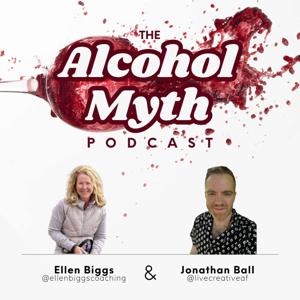
The Alcohol Myth Podcast features certified coaches Ellen and Jonathan having real conversations about alcohol, sobriety, and reclaiming a life that feels exciting to wake up to.