
Sign up to save your podcasts
Or



Based on Podcast App listening data
Often thought of as an ancient, mythical idea, immortalised in the works of Homer, it's hard to imagine Troy as real place. But when Heinrich Schliemann started excavations of the city in the late 19th Century, our understanding of the ancient world would change forever. Troy stood for over millennia, and in that period was destroyed and rebuilt time and time again. So what do we know about the real people who lived there, and what does the modern archaeology tell us?
In today's episode Tristan is joined by Professor C. Brian Rose, the James B. Pritchard Professor of Archaeology at the University of Pennsylvania, to take us through this city's magnificent past. Looking at the people who first occupied the settlement, through to the modern age beauty contests that still take place on the surrounding slopes, there's a wide breadth of history to be covered. So what really happened during the Trojan War, if it actually happened at all?
Hosted on Acast. See acast.com/privacy for more information.
This episode contains graphic descriptions of violence and cruelty against animals.
The Romans were - and still are - infamous for the brutal gladiatorial contests they held in their ancient amphitheatres. But often what made their games so spectacular were the exotic animals they put on show. Viciously hunted on an industrial scale, elephants, lions, crocodiles and even rhinos were thrust onto the arena floor and slaughtered, all for the pleasure of the Roman crowds.
In today’s episode of The Ancients, Tristan talks to Caroline Freeman-Cuerdan to explore these beast hunts and the massive industry that lay behind them. Together they discover how the animals acted as both ‘hunter and hunted’ and why Roman statesmen were so obsessed with beasts from far-away lands.
The Senior Producer was Elena Guthrie.
The Assistant Producer was Annie Coloe.
Edited by Joseph Knight.
For more Ancients content, subscribe to our Ancients newsletter here.
If you'd like to learn even more, we have hundreds of history documentaries, ad free podcasts and audiobooks at History Hit - subscribe today! To download, go to Android or Apple store
Hosted on Acast. See acast.com/privacy for more information.
Shrouded in mystery, the Nuragic culture was an enigmatic Bronze Age Civilisation that lived on the Mediterranean island of Sardinia. With their name deriving from the Island's iconic fortress-like Nuraghe monument - they have not only defined Bronze Age history, but even the very land from which they originated. But why were the Nuragic so obsessed with building these fortresses, and what can we learn from them?
In this episode, Tristan is joined by Fitzwilliam Museum curator, Dr Anastasia Christophilopoulou, to unravel the mysteries of ancient Sardinia. The builders of the nuraghes left no written records, but new discoveries have shed light on the civilisation and its people. So who what can we learn from the archaeology, and is it possible to find out where they went?
Anastasia is the curator of the new Fitzwilliam Museum exhibit Islanders: The Making of the Mediterranean.
Senior Producer was Elena Guthrie. The Assistant Producer was Annie Coloe. Edited by Aidan Lonergan.
Hosted on Acast. See acast.com/privacy for more information.
Over 100 miles further than the northern reaches of Britain, beyond Orkney, are a remote group of islands that make up Shetland. It’s one of the best kept secrets of prehistoric Scotland, containing evidence of the lives that were lived there some 5,000 years ago. With Viking archeology as well as prehistoric remains, it's a one of a kind insight into the past.
In today’s episode, Tristan talks to Dr Val Turner, one of Shetland's regional archaeologists. Together they take us to this edge of the prehistoric world, to find out about what life on these distant islands would have been like. From the axe factories that were discovered there, to the incredible Iron Age skyscrapers that are the brochs, what can we learn about this remote part of the world?
Senior Producer was Elena Guthrie. The Assistant Producer was Annie Coloe. Edited by Stuart Beckwith.
Hosted on Acast. See acast.com/privacy for more information.
Perhaps best known from the Biblical tale of David and Goliath, the Philistines were an ancient civilisation who lived on the south coast of Canaan. Despite living over a millennia ago, their name has been rebranded as a description of someone who disregards intellectual pursuits - but how, and why, was this connection made? Just who were the philistines, and what do we know about them?
In today's episode, Tristan is joined by archaeologist, and leading Philistine expert, Dr Aren Maeir, leader of excavations for several years at Gath, the ancient Philistine city. Looking at the archaeology, Aren is able to build a picture of how Philistine civilisation functioned, and what they were really like. So is it fair to use their culture as an insult, or have we been wrong this entire time?
Hosted on Acast. See acast.com/privacy for more information.
Ares is the god of war and bloodlust in Greek mythology.One of the twelve Olympian gods, Ares was often depicted as a fierce and bloodthirsty deity - both feared, and revered by the Ancient Greeks. But despite being a major figure in the Greek pantheon, Ares has often been overshadowed by more famous siblings, or legendary heroes. So why in an Ancient society, so defined by warfare, was Ares not a more central figure?
In the latest episode of our special series on Greek Gods and Goddesses, Tristan is joined by Professor Susan Deacy from the University of Roehampton to delve into Ares messy character. Together, they explore the role of Ares in Greek mythology, looking at the first kin-slayer and the reputation he left across history - asking just who was the god of war, and why should we be so afraid of him?
The Senior Producer was Elena Guthrie
Script written by Andrew Hulse
Voice over performed by Nichola Woolley
The Assistant Producer was Annie Coloe
Edited by Aidan Lonergan
Hosted on Acast. See acast.com/privacy for more information.
Given his incredible career, you'd perhaps expect the name of Roman Emperor Septimius Severus to be better known. Born in North Africa in 145AD, he rose to power after distinguishing himself as a military commander at a time of great instability in the Roman Empire. Finally bringing the Year of the Five Emperors to an end, Severus was in power for nearly two decades - so how did he end up perishing in York?
In this episode, Tristan welcomes back author (and Severus' unofficial 21st Century biographer) Dr Simon Elliot. Together, they explore the life and legacy of Septimius Severus - looking at his impact on the history of Ancient Rome, as well as the bloody events surrounding his campaign in Scotland, and asking how one of the most powerful men in the world was eventually bought down.
For more Ancients content, subscribe to our Ancients newsletter here.
If you'd like to learn even more, we have hundreds of history documentaries, ad free podcasts and audiobooks at History Hit - enter promo code ANCIENTS for a free trial, plus 50% off your first three months' subscription.
Hosted on Acast. See acast.com/privacy for more information.
Around 66 million years ago, an asteroid the size of Mount Everest slammed into our planet, triggering the mass extinction of the dinosaurs and countless other species unable to adapt to the sudden environmental catastrophe that followed. What exactly happened on that fateful day, and what about the thousands of years after? Why did the most prominent creatures on the planet, the huge dinosaurs we know and love, die instantly, and how did other creatures like birds and crocodiles survive through to today?
In this episode, Tristan is joined by author Riley Black to take a deep dive into the disaster’s immediate effects, including the massive shockwaves, earthquakes, tsunamis and years of darkness that would trigger the extinction of three-quarters of all plant and animal species on our planet. Welcome to the single worst day in the history of life on Earth.
Riley's new book The Last Days of the DInosaurs is available here.
For more Ancients content, subscribe to our Ancients newsletter here.
If you'd like to learn even more, we have hundreds of history documentaries, ad free podcasts and audiobooks at History Hit - enter promo code ANCIENTS for a free trial, plus 50% off your first three months' subscription.
Hosted on Acast. See acast.com/privacy for more information.
Where do humans come from? Or, perhaps more interestingly, who did humans evolve from? A question once posed by the likes of Charles Darwin and other early naturalists, the answer has changed throughout history. But now, thanks to advancements in archaeology and developments in genetics, we know more about our early ancestors than ever before. But what exactly makes us human, and who do we have to thank for these early evolutionary traits?
In this fascinating episode, Tristan travelled to London's Natural History Museum to chat with Professor Fred Spoor, a leading expert on the topic. Join them as they journey back millions of years to examine the earliest known hominids - from the Homohabilis, to early Homoerectus, and checking in on paranthropus and australopithecines along the way. Together they aim to ask the question, where exactly did humans come from?
For more Ancients content, subscribe to our Ancients newsletter here.
If you'd like to learn even more, we have hundreds of history documentaries, ad free podcasts and audiobooks at History Hit - enter promo code ANCIENTS for a free trial, plus 50% off your first three months' subscription.
To download, go to Android > or Apple store >
Hosted on Acast. See acast.com/privacy for more information.
Princess, Queen, and political influencer - Shirin should be a name as famed as Cleopatra, but how come so few know of her? Coming to influence in Iran during the early 7th Century, Shirin was the Christian wife of the Sasanian King Khosrow II, and was forced to flee to Syria in the aftermath of radical revolution. Upon their return, she was crowned Queen, and ultimately used her influence to help support those in need. But beyond the tragic poems that have posthumously defined her, what do we actually know about Shirin, and what can we learn from her?
In this episode, Tristan welcomes back Dr Eve MacDonald from Cardiff University, to delve into this incredible moment of history. Looking at the role women played in politics, and how they could use positions of power to their advantage, together they delve into Shirin's story and shine a light on this remarkable figure from history.
The Senior Producer was Elena Guthrie.
The Assistant Producer was Annie Coloe.
Edited by Joseph Knight.
For more Ancients content, subscribe to our Ancients newsletter here.
If you'd like to learn even more, we have hundreds of history documentaries, ad free podcasts and audiobooks at History Hit - enter promo code ANCIENTS for a free trial, plus 50% off your first three months' subscription.
To download, go to Android > or Apple store >
Hosted on Acast. See acast.com/privacy for more information.
From the publisher's feed
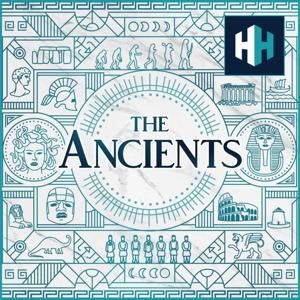
A podcast for all ancient history fans! The Ancients is dedicated to discussing our distant past. Featuring interviews with historians and archaeologists, each episode covers a specific theme from antiquity. From Neolithic Britain to the Fall of Rome. Hosted by Tristan Hughes.
New episodes every Sunday and Thursday.
From History Hit, the world's best history channel and creators of award-winning podcasts Dan Snow's History Hit, Gone Medieval, and Betwixt the Sheets.
History Hit is part of Little Dot Studios, a Certified B Corp™
Sign up to History Hit for hundreds of hours of original documentaries, with a new release every week and ad-free podcasts. Sign up at https://www.historyhit.com/subscribe.
Hosted on Acast. See acast.com/privacy for more information.
Ranked by our users in the last 21 days

5,523 Listeners

3,172 Listeners
1,857 Listeners

4,749 Listeners
6,246 Listeners
787 Listeners
5,215 Listeners
110 Listeners

530 Listeners

15,473 Listeners

1,887 Listeners

2,190 Listeners
2,812 Listeners

180 Listeners

263 Listeners
1,578 Listeners

1,590 Listeners
1,145 Listeners