
Sign up to save your podcasts
Or



Based on Podcast App listening data
The world is constantly changing, and so has the perception of civilisation, but what exactly are the origins of this concept? Helping us answer this question from an anthropological and archaeological perspective, Professor Nam Kim joins Tristan once again on The Ancients. We explore how advances in these disciplines are helping to answer this long-examined question.
Nam is an anthropological archaeologist and Professor of Anthropology at the University of Wisconsin-Madison
Hosted on Acast. See acast.com/privacy for more information.
Hosted on Acast. See acast.com/privacy for more information.
In 83/84 AD a battle was fought somewhere in Scotland between the Roman forces of Gnaeus Julius Agricola and the 'Caledonians' – the great climax to Agricola’s campaigns in Northern Britain. Details of the clash are few and far between, with our sole literary source for the event being the writings of the Roman historian Tacitus. But how much of Tacitus’ account can we really believe? And what locations have archaeologists suggested as being the site of this lost battlefield? Taking on the challenge of this much-debated ancient military event is Dr Andrew Tibbs, a History Hit veteran and an expert on the Romans in Scotland.
In the first part of this podcast Andrew explains the background to Agricola’s campaigns in the north and the account of the Battle of Mons Graupius itself. In the second segment we look at some of the locations proposed as the site of this enigmatic ancient battle.
For Ancients updates and behind the scenes footage follow Tristan on Instagram @ ancientstristan
Hosted on Acast. See acast.com/privacy for more information.
Hosted on Acast. See acast.com/privacy for more information.
Nan Madol. It is one of the most awesome, enigmatic and unique ancient sites in the World, and yet most people have never heard the name. Labelled the ‘Venice of the Pacific’ by US aviators during the Second World War, this ancient Micronesian metropolis is not your usual city. Situated offshore, it was constructed on corals – ‘a floating citadel’. All across the site today, the remains of centuries-old monumental architecture can be seen, built on top of artificial islets.
So what do we know about this stunning ancient site in the Pacific Ocean? When do we think it was constructed? How did the ancient population go about building this off shore citadel? In this episode we’re going to delve into what we know (and what we don’t know) about Nan Madol. From the earliest archaeology at the site to the structural layout of this enigmatic urban centre.
Joining Tristan for this special podcast is Dr Felicia Beardsley, from the University of La Verne. A leading expert on Nan Madol and on the archaeology of many other ancient sites from across Micronesia, it was a real privilege to interview Felicia all about this extraordinary ‘lost city’.
Hosted on Acast. See acast.com/privacy for more information.
Hosted on Acast. See acast.com/privacy for more information.
Today it is the second largest city in France. But Marseilles is also the country’s oldest city. Founded at the turn of the 7th century BC by Greek settlers, the ancient history of Marseilles (known to the Greeks as Massalia and the Romans as Massilia) is rich. Strategically positioned close to the River Rhone it soon became a wealthy trading metropolis. Notable names are plenty. Artemis is closely linked with the city’s foundations; the explorer Pytheas hailed from Massalia. And who can forget the great Carthaginian general Hannibal Barca, who passed close by Massalia with his army enroute to Italy in 218 BC.
To talk through the early ancient history of Marseilles, from its mythical Greek Mama Mia foundation story to the Battle of Alalia, Dr Joshua Hall returned to the podcast.
Hosted on Acast. See acast.com/privacy for more information.
He was one of the greatest enemies the Romans ever faced. An excellent general and a larger-than-life figure, he led an army across the alps and dealt a series of crushing defeats upon the Romans on Italian soil. His achievements have become a thing of legend and his name has become immortalised. He was Hannibal Barca. Hannibal rests amongst antiquity's greatest generals, but how did he rise to become such a stellar commander, leading his men to incredible victories against the then dominant powerhouse in the Mediterranean? In this episode, Dr Louis Rawlings, Dr Adrian Goldsworthy and Dr Eve MacDonald explore the impressive ascent of the Carthaginian general to the status of one of the most famous military leaders in antiquity.
The Rise of Hannibal can be found at https://access.historyhit.com/what-s-new/videos/rise-of-hannibal
Hosted on Acast. See acast.com/privacy for more information.
Hosted on Acast. See acast.com/privacy for more information.
Hosted on Acast. See acast.com/privacy for more information.
From the publisher's feed
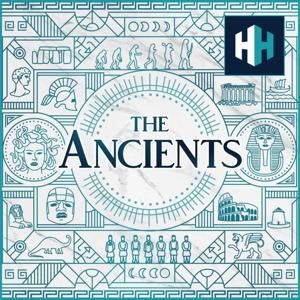
A podcast for all ancient history fans! The Ancients is dedicated to discussing our distant past. Featuring interviews with historians and archaeologists, each episode covers a specific theme from antiquity. From Neolithic Britain to the Fall of Rome. Hosted by Tristan Hughes.
New episodes every Sunday and Thursday.
From History Hit, the world's best history channel and creators of award-winning podcasts Dan Snow's History Hit, Gone Medieval, and Betwixt the Sheets.
History Hit is part of Little Dot Studios, a Certified B Corp™
Sign up to History Hit for hundreds of hours of original documentaries, with a new release every week and ad-free podcasts. Sign up at https://www.historyhit.com/subscribe.
Hosted on Acast. See acast.com/privacy for more information.
Ranked by our users in the last 21 days

5,523 Listeners

3,172 Listeners
1,857 Listeners

4,749 Listeners

6,246 Listeners

787 Listeners
5,215 Listeners

110 Listeners

530 Listeners

15,473 Listeners

1,887 Listeners
2,190 Listeners

2,812 Listeners

180 Listeners

263 Listeners

1,578 Listeners

1,590 Listeners
1,145 Listeners