
Sign up to save your podcasts
Or



Based on Podcast App listening data
In c.142 AD the Emperor Antoninus Pius ordered the construction of a new wall in Northern Britain. Situated between the Firth of Forth and the Firth of Clyde it stretched the neck of modern day central Scotland and was called the Antonine Wall. Although its ‘lifespan’ was relatively short-lived, this wall beyond ‘The Wall’ boasts a remarkable history. Archaeological discoveries continue to reveal more about this monumental structure and its accompanying features. From the terrible ‘lillia’ spike pits the Romans placed in front of the rampart to the Wall’s strong stone foundations.
I was delighted to be joined by Andrew Tibbs to learn more about the Antonine Wall and why we must NOT call it the northernmost physical barrier of the Roman Empire. Andrew is the author of 'Beyond the Empire: A Guide to the Roman Remains in Scotland'.
Hosted on Acast. See acast.com/privacy for more information.
Housesteads Roman Fort is one of the great, surviving treasures of Roman Britain. Once an auxiliary fort, it occupied a dominant position on Hadrian’s Wall. The Fort has proven vital in helping archaeologists and historians achieve a greater understanding about life on Hadrian’s Wall. From the worship of peculiar deities to everyday sanitation.
To chat through Housesteads’ extraordinary archaeology and what it can tell us about life along this frontier, I’m joined by Professor Jim Crow from the University of Edinburgh. Jim has conducted excavations at several locations along Hadrian’s Wall, including Housesteads. He also lectured me a few years back, so it was great to catch up.
Hosted on Acast. See acast.com/privacy for more information.
The origins of biological and chemical warfare stretch far back; modern technology has not brought about these terrifying weapons. Throughout antiquity we have cases of societies using poisonous gases, incendiary materials and living organisms against their enemies. From snake and scorpion bombs to the use of ancient naphtha grenades. But how did the ancients view these infamous weapons? Did they try to refrain from using them? And if they did use them, why?
I was thrilled to be joined by Adrienne Mayor to chat through this extraordinary topic. Adrienne is a folklorist and historian of ancient science at Stanford University. She is the author of numerous books including Greek Fire, Poison Arrows and Scorpion Bombs: Biological and Chemical Warfare in the Ancient World.
Hosted on Acast. See acast.com/privacy for more information.
Hosted on Acast. See acast.com/privacy for more information.
Hosted on Acast. See acast.com/privacy for more information.
From the publisher's feed
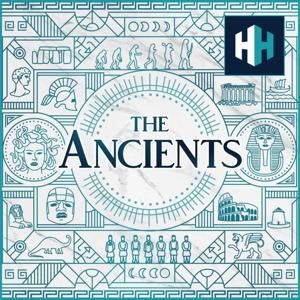
A podcast for all ancient history fans! The Ancients is dedicated to discussing our distant past. Featuring interviews with historians and archaeologists, each episode covers a specific theme from antiquity. From Neolithic Britain to the Fall of Rome. Hosted by Tristan Hughes.
New episodes every Sunday and Thursday.
From History Hit, the world's best history channel and creators of award-winning podcasts Dan Snow's History Hit, Gone Medieval, and Betwixt the Sheets.
History Hit is part of Little Dot Studios, a Certified B Corp™
Sign up to History Hit for hundreds of hours of original documentaries, with a new release every week and ad-free podcasts. Sign up at https://www.historyhit.com/subscribe.
Hosted on Acast. See acast.com/privacy for more information.
Ranked by our users in the last 21 days

5,523 Listeners

3,172 Listeners
1,857 Listeners

4,749 Listeners
6,246 Listeners
787 Listeners
5,215 Listeners

110 Listeners
530 Listeners

15,473 Listeners

1,887 Listeners

2,190 Listeners

2,812 Listeners

180 Listeners

263 Listeners

1,578 Listeners

1,590 Listeners
1,145 Listeners