
Sign up to save your podcasts
Or



Based on Podcast App listening data
200,000 years ago in what is now Tibet, two children left a set of hand and foot prints on a travertine boulder, still identifiable today and is thought to be the earliest example of cave art.
In today’s episode, Tristan Hughes is joined by Dr Sally Reynolds from the University of Bournemouth, who describes the evidence that suggests this was a deliberate act of creativity, highlighting the human urge to make art goes back millennia.
We also learn that these feet and hands likely belong to Denisovans, predating Homo sapiens in Europe and Asia.
It’s a fascinating discussion around not just art, but also the earliest evidence of humans living high altitude anywhere in the world, and a glimpse into what human behaviour would have been like to allow for children to be this creative nearly a quarter of a million years ago.
For more Ancients content, subscribe to our Ancients newsletter here.
If you'd like to learn even more, we have hundreds of history documentaries, ad free podcasts and audiobooks at History Hit - enter promo code ANCIENTS for a free trial, plus 50% off your first three months' subscription.
To download, go to Android > or Apple store >
Hosted on Acast. See acast.com/privacy for more information.
Tutankhamun is one of the most famous names in ancient history. Known as the 'Boy King', he ascended the Egyptian throne at the age of 9 and ruled for just under a decade. In this time, there's evidence of his sporting activities, his religious restoration, and even his penchant for an ancient Egyptian board game. But is there more to the Boy King than his tomb tells us?
In this episode, Tristan is joined by Professor Joyce Tyldesley to launch our new November mini-series diving into all things Tutankhamun. Together they discuss what the available sources tell us about Tutankhamun's life, and help debunk some of the popular myths out there about King Tut.
For more Ancients content, subscribe to our Ancients newsletter here. If you'd like to learn even more, we have hundreds of history documentaries, ad free podcasts and audiobooks at History Hit - subscribe today!
Hosted on Acast. See acast.com/privacy for more information.
Located in modern day Ukraine, Olbia was the largest ancient Greek settlement on the coast of the Black Sea. A mix of Scythian and Greek culture, Olbia interacted with settlements and cultures across the ancient world.
In this episode, Tristan is joined by Dr Owen Rees to talk about the fascinating and wonderful history of this peripheral city state - that despite all odds, managed not only to survive, but ultimately thrive.
For more Ancients content, subscribe to our Ancients newsletter here.
If you'd like to learn even more, we have hundreds of history documentaries, ad free podcasts and audiobooks at History Hit - enter promo code ANCIENTS for a free trial, plus 50% off your first three months' subscription.
To download, go to Android > or Apple store >
Hosted on Acast. See acast.com/privacy for more information.
Nicknamed the 8th wonder of the ancient world, the Colosseum still stands in splendour today. Located in the heart of Rome, nestled at the bottom of the Palatine Hill, neighbouring the ancient Roman Forum - the Colosseum is nearly 2000 years old. But who is responsible for this colossal amphitheatre, and what exactly was it built for?
Tristan is joined by Dr Nathan Elkins to talk about this monument of Roman imperialism, and to take a look at the role it has played throughout history. Taking 10 years and 3 emperors to be completed - the crumbling marble was once decorated with vibrant colours and architectural features, representative of Roman might and decadence. Home to beast hunts, gladiatorial games, and one of the most remarkable sewage systems in the ancient world - what can we learn about Roman life from one of the world's most famous monuments?
For more Ancients content, subscribe to our Ancients newsletter here. If you'd like to learn even more, we have hundreds of history documentaries, ad free podcasts and audiobooks at History Hit - subscribe today!
Hosted on Acast. See acast.com/privacy for more information.
Born to slaves in 1863, John Wesley Gilbert was the first student of the Paine Institute, a graduate of Brown University, and the first black archaeologist.
While at Brown, he was awarded a scholarship to study abroad at the American School of Classical studies in Athens, Greece. Here, he helped to shape modern archaeology as we know it today. Working tirelessly, and meticulously on excavations where he helped uncover the ancient city of Eretria, Gilbert also travelled across the country to beautiful ancient sites, and even attended the funeral of Heinrich Schliemann - the man who discovered Troy.
In this episode, Tristan is joined by Professor John W.I Lee from UC Santa Barbara to talk about Gilbert's incredible life, and the legacy that he left behind.
For more Ancients content, subscribe to our Ancients newsletter here. If you'd like to learn even more, we have hundreds of history documentaries, ad free podcasts and audiobooks at History Hit - subscribe today! Enter promo code ANCIENTS for a free trial, plus 50% off your first three months' subscription.
Hosted on Acast. See acast.com/privacy for more information.
One of Antiquity's greatest poets, Virgil's legacy is seen across history. Following in the footsteps of his predecessor's Homer and Hesiod - Virgil's work inspires people even today. With inspiration for his poems coming from the political turmoil and change around him, Virgil's work offers insight into the tumultuous time he was living in.
But who was Virgil, and why are his work's still so revered?
In this episode, Tristan is joined by Dr Anne Rogerson from the University of Sydney to help shed some light on this mysterious figure. Looking at Virgil's three most famous works, The Georgics, The Eclogues, and of course The Aeneid - why has Virgil's legacy and name persevered throughout history?
For more Ancients content, subscribe to our Ancients newsletter here. If you'd like to learn even more, we have hundreds of history documentaries, ad free podcasts and audiobooks at History Hit - subscribe today!
Hosted on Acast. See acast.com/privacy for more information.
Around 5200 years ago, during the Neolithic period, when farming first took hold, Orkney was a hugely influential cultural centre. Yet, as Europe moved into the Bronze Age, the islands’ influence dwindled and Orkney became more insular. But what do we know about the arrival of the Bronze Age in Orkney and Scotland?
In today’s episode of The Ancients, Tristan is joined by Professor Martin Richards from University of Huddersfield, one of the leaders of an exciting new research project. Working along side researchers who uncovered DNA evidence that brings to light new information for this moment of Britain’s prehistory, Martin and the team's work is helping change the way Stone Age Orkney is viewed.
By combining archaeology with the study of ancient DNA from Bronze Age human remains, researchers now know much more about this time than ever before, and the results have come as a great surprise to geneticists and archaeologists alike.
To watch our brand new documentary series on Prehistoric Scotland click here:
https://access.historyhit.com/ancient-and-classical/videos/mysteries-of-prehistoric-scotland-episode-one
For more Ancients content, subscribe to our Ancients newsletter here.
For your chance to win five non-fiction history books - including a signed copy of Dan Snow's On This Day in History - please fill out this short survey: https://www.surveymonkey.co.uk/survey-taken/?sm=IthGeoCcJUiKNx0R8Pv7Ogn50xYWgriQdyDMjMZwy8jmNE1jQh63NtWjK1DQdAssMjnsuFzX5eJOGw0w3NS4sgHthi59y72wWjesdfmNxyU_3D
If you'd like to learn even more, we have hundreds of history documentaries, ad free podcasts and audiobooks at History Hit - enter promo code ANCIENTS for a free trial, plus 50% off your first three months' subscription.
To download, go to Android > or Apple store >
Hosted on Acast. See acast.com/privacy for more information.
In July 1799 a group of French soldiers stumbled upon a stone that was set to change our understanding of the ancient world.
The iconic Rosetta Stone, a stela or inscribed slab, was dug up in the foundations of a fort in the town of Rasheed - a port city east of Alexandria. The Stone was central in kickstarting antiquarians such as Jean-Francois Champollion and Thomas Young down the path of unlocking ancient Egypt’s enigmatic language within just c.20 years of the Stone's rediscovery. Today, it ranks amongst the most famous artefacts in the world. So what exactly is it? And what does it say?
To explain the Rosetta Stone and so much more, Tristan interviews Dr Ilona Regulski, curator of the British Museum’s new exhibition 'Hieroglyphs Unlocking Ancient Egypt'. Looking at the hieroglyph script and how it was deciphered, alongside key figures in the race to decipherment, such as Jean-Francois Champollion, Thomas Young, William Bankes, it's an event not to be missed.
If you want to find out more about the exhibition click here: https://www.britishmuseum.org/exhibitions/hieroglyphs-unlocking-ancient-egypt?gclid=Cj0[…]L_5Yn8vOaYEdKDmCGW6_SQo9UMZqsHuriJctr1WMm5z8kaAl-dEALw_wcB
For more Ancients content, subscribe to our Ancients newsletter here.
For your chance to win five non-fiction history books - including a signed copy of Dan Snow's On This Day in History - please fill out this short survey: https://www.surveymonkey.co.uk/survey-taken/?sm=IthGeoCcJUiKNx0R8Pv7Ogn50xYWgriQdyDMjMZwy8jmNE1jQh63NtWjK1DQdAssMjnsuFzX5eJOGw0w3NS4sgHthi59y72wWjesdfmNxyU_3D
If you'd like to learn even more, we have hundreds of history documentaries, ad free podcasts and audiobooks at History Hit - enter promo code ANCIENTS for a free trial, plus 50% off your first three months' subscription.
To download, go to Android > or Apple store >
Hosted on Acast. See acast.com/privacy for more information.
History is littered with devastating accounts of prejudice that shines a harsh light on the atrocities humans have inflicted on each other for centuries.
But has racism always plagued our society?
From the African son of Peter the Great of Russia, to the one-eyed black leader of the Kushite army - Warrior Queen Amanirenas, it seems skin colour presented no barriers for a person of African decent to amount to greatness in antiquity.
In this episode, Tristan is joined by Luke Pepera who is a writer, broadcaster, anthropologist, and historian to talk about the attitudes towards race in the ancient world.
For more Ancients content, subscribe to our Ancients newsletter here. If you'd like to learn even more, we have hundreds of history documentaries, ad free podcasts and audiobooks at History Hit - subscribe today!
Hosted on Acast. See acast.com/privacy for more information.
Recorded by Xenophon, the 10,000 were a force of Greek mercenaries employed by Cyrus the Younger, with the aim of taking back the Persian Empire from his brother, Artaxexes. Travelling over 1,766 miles to the north of Babylon, where forces eventually clashed at the Battle of Cunaxa, Cyrus ultimately perished in the battle leaving the Greeks stranded and leaderless.
Choosing to flee the scene rather than see themselves become slaves to the Persians, the Greeks began the perilous journey back to their homeland.
In this episode, Tristan is joined by Owen Rees from Manchester Metropolitan University, to talk about the March of the 10,000 and the carnage they left in their wake.
For more Ancients content, subscribe to our Ancients newsletter here. If you'd like to learn even more, we have hundreds of history documentaries, ad free podcasts and audiobooks at History Hit - subscribe today!
Hosted on Acast. See acast.com/privacy for more information.
From the publisher's feed
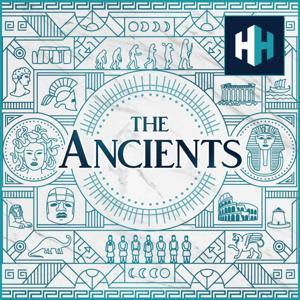
A podcast for all ancient history fans! The Ancients is dedicated to discussing our distant past. Featuring interviews with historians and archaeologists, each episode covers a specific theme from antiquity. From Neolithic Britain to the Fall of Rome. Hosted by Tristan Hughes.
New episodes every Sunday and Thursday.
From History Hit, the world's best history channel and creators of award-winning podcasts Dan Snow's History Hit, Gone Medieval, and Betwixt the Sheets.
History Hit is part of Little Dot Studios, a Certified B Corp™
Sign up to History Hit for hundreds of hours of original documentaries, with a new release every week and ad-free podcasts. Sign up at https://www.historyhit.com/subscribe.
Hosted on Acast. See acast.com/privacy for more information.
Ranked by our users in the last 21 days

5,527 Listeners

3,174 Listeners

1,893 Listeners
1,854 Listeners

4,745 Listeners
221 Listeners

905 Listeners
514 Listeners

3,334 Listeners

15,460 Listeners

2,116 Listeners

2,189 Listeners

261 Listeners
1,576 Listeners
1,145 Listeners