
Sign up to save your podcasts
Or



Based on Podcast App listening data
In 218 BCE, Hannibal Barca's Carthaginian army, accompanied by horses and elephants, completed one of the most audacious military marches of ancient Mediterranean history. Setting off from southeast Spain, on their way they overcame a number of hostile Celtic tribes and traversed two major mountain ranges: the Pyrenees and then, most famously, the Alps. Battered and bruised Hannibal and his men eventually descended from the Alpine passes and arrived in Northern Italy at the end of 218 BC, where they soon clashed with the Roman legions awaiting them near the River Trebbia. This battle, fought on a snowy plain in freezing conditions, was the climax of the 218 BC campaign and the first of Hannibal's great victories against Rome.
From the outbreak of the Second Punic War to the Battle of the River Trebbia, in this two-part podcast Dr Louis Rawlings, Senior Lecturer in Ancient History at Cardiff University, dives into the events of 218 BC and the incredible leadership of Hannibal. In this first episode, Tristan and Louis discuss the background to Hannibal Barca's march to Italy, before focusing in on one of the greatest adventure stories from antiquity: Hannibal's crossing of the Alps.
Episode two, covering the Battle of the River Trebbia, will be released in a couple of weeks.
Hosted on Acast. See acast.com/privacy for more information.
Hosted on Acast. See acast.com/privacy for more information.
Hosted on Acast. See acast.com/privacy for more information.
Hosted on Acast. See acast.com/privacy for more information.
Hosted on Acast. See acast.com/privacy for more information.
‘I’m Spartacus!’ In the field of epic film making, the 1960 historical drama ‘Spartacus’, is legendary. Directed by Stanley Kubrick, adapted from the Howard Fast novel by Red Scare blacklisted screenwriter, Dalton Trumbo, and starring Kirk Douglas, Laurence Olivier, Peter Ustinov and Jean Simmons; it is a classic. But how much of the plot has emerged from the true story of a Thracian gladiator and slave who escaped his Roman captors and led an unsuccessful but impressive rebellion against their oppressors? How much of the film’s message was formed by the personalities involved in its creation, and the context in which it was made.
In her own words, Dr Fiona Radford devoted years of her life to the man with the most memorable chin cleft in the world - Kirk Douglas, specifically as Spartacus. Her thesis traced the production history of this film, examining in particular the effect that the turbulent process had on the portrayal of female characters. Having taught at Macquarie University, ANU and the University of Sydney, she currently teaches history at secondary school level, and her conversation with Tristan in this episode is an eye-opener to 1950s film making as well as the legend of Spartacus.
Hosted on Acast. See acast.com/privacy for more information.
When we think of Pompeii, we remember the city which became frozen in time after a natural catastrophe. Well, in 1920, exactly 100 years ago, another 'frozen city' was rediscovered. This time it was Dura-Europos, and rather than falling victim to a volcano, this city was destroyed after a bloody siege in 256 AD. Whilst there is no historical record of life in the Hellenistic, Parthian and Roman border city and garrison, its remains have proven to be a rich source for archaeologists since the 1920s. Between the only complete example of the semi-cylindrical Roman legionary shield and the perfect oval shields with beautiful paintings of Greeks and Trojans or Greeks and Amazons; beyond the regimental records and complete horse armour and the Palmyrene Gate; archaeologists have uncovered the story of the city.
Tristan was joined on the podcast by Simon James from the University of Leicester, who talked through what we now know about life in Dura-Europa and the relationships between the Roman garrison, their dependents and the other inhabitants. He also offers a play-by-play of the battle which brought this city to a halt, and possibly one of the earliest examples of chemical warfare, all discovered through archaeology.
Hosted on Acast. See acast.com/privacy for more information.
Pompeii is back in the news. An extraordinary new, touching discovery, found during the Great Pompeii Project of Professor Massimo Osanna and his team. Roughly 700 metres northwest of Pompeii, in the remains of a suburban Roman villa, archaeologists have unearthed the incredibly-preserved remains of two men, victims of the infamous eruption of Mount Vesuvius that occurred almost 2,000 years ago in 79 AD.
So what do we know about the eruption? What do we know about this terrible event that has left Pompeii with this astonishing legacy? Daisy Dunn came back on the show for this special, emergency podcast to talk through what we know about the eruption and those who witnessed it.
Daisy is the author of In The Shadow of Vesuvius: A Tale of Two Plinys. She has also appeared on the Ancients podcast earlier this year, talking about Rome’s most erotic poet Catullus.
Hosted on Acast. See acast.com/privacy for more information.
The House of the Faun in Pompeii is known for being one of the largest and most impressive private residences in the ancient city. Among its many works of art is a depiction of Alexander the Great in battle. In previous episodes we have discussed Alexander’s rule and empire, but this time, let’s focus on his armour, as shown in this mosaic on the floor of the House of Faun, the only contemporary portrayal of linothorax on a known figure. For, instead of wearing bronze or iron armour as one might expect, Alexander is going into battle wearing a breastplate of linen.
Gregory Aldrete has spent 12 years studying the composition and effectiveness of this ancient armour used by many nations around the Mediterranean. To do so, he recreated the armour from scratch, using authentic materials. In this episode Gregory, Professor Emeritus from The University of Wisconsin, Green Bay, speaks with Tristan about how this armour protected one of the most powerful conquering armies of all history, despite being made of a soft fabric.
Hosted on Acast. See acast.com/privacy for more information.
An ancient town, buried and preserved beneath volcanic ash, Pompeii is a gift to archaeologists and historians seeking to find out more about the lives of the civilians in a regular Roman town. Beyond the well recognised plaster casts of the bodies of people and animals alike, and the structures and artwork maintained in situ, however, is evidence of a very specific system. That is the system of the cultivation of grapes and the process of extracting every usable substance from them to make wine. Positioned in the Campania region of Italy, Pompeii shared fertile soils, perfect climatic conditions and proximity to a busy sea port. The grapes of Pompeii may have ended up on the tables of the house at which they were grown; they might have been made into low quality wine for manual workers or better quality wine valued at more than the wages of many; or, they might have been shipped far and wide.
Emlyn Dodd is a Fellow at the Australian Archaeological Institute in Athens and is currently directing a survey project across Cycladic islands which, among other things, is investigating the production of wine and oil in the Classical to Late Antique eras. He spoke to Tristan about what the evidence from Pompeii tells us about grape growth and wine production there, and whether this can be scaled out to other settlements in the Roman Mediterranean.
Hosted on Acast. See acast.com/privacy for more information.
From the publisher's feed
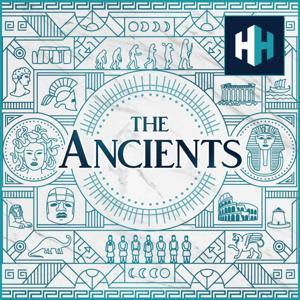
A podcast for all ancient history fans! The Ancients is dedicated to discussing our distant past. Featuring interviews with historians and archaeologists, each episode covers a specific theme from antiquity. From Neolithic Britain to the Fall of Rome. Hosted by Tristan Hughes.
New episodes every Sunday and Thursday.
From History Hit, the world's best history channel and creators of award-winning podcasts Dan Snow's History Hit, Gone Medieval, and Betwixt the Sheets.
History Hit is part of Little Dot Studios, a Certified B Corp™
Sign up to History Hit for hundreds of hours of original documentaries, with a new release every week and ad-free podcasts. Sign up at https://www.historyhit.com/subscribe.
Hosted on Acast. See acast.com/privacy for more information.
Ranked by our users in the last 21 days

5,527 Listeners

3,174 Listeners

1,893 Listeners

1,854 Listeners

4,745 Listeners

221 Listeners

905 Listeners

514 Listeners

3,334 Listeners

15,460 Listeners

2,116 Listeners
2,189 Listeners

261 Listeners

1,576 Listeners
1,145 Listeners