
Sign up to save your podcasts
Or

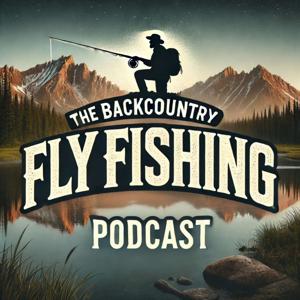


After a close encounter with a rattlesnake in a remote canyon, Ross reflects on something bigger than fishing: why we’re really drawn to wild places in the first place.
This episode explores the difference between beauty and consequence—between simply enjoying nature and willingly stepping into environments that demand competence, awareness, preparation, and respect. From wilderness, risk, and mortality to self-reliance, personal growth, and the honesty that exists in places indifferent to human comfort, this is a deeper conversation about what the backcountry gives us that modern life often cannot.
This isn’t an episode about catching fish. It’s about confrontation, judgment, growth, and the search for something real in a world increasingly designed to soften every edge.
Because sometimes the wilderness isn’t asking whether you can catch trout. It’s asking who you are when nothing else is there to protect you from consequence.
-----
If you're enjoying the show, don't forget to follow us and (if you're feeling gracious) leave us a five-star review on your favorite podcast platform.
Have questions or suggestions for the podcast? Email Ross at [email protected]
Follow us on Instagram: https://www.instagram.com/backcountry_flyfishing_podcast/
At some point, every serious backcountry angler runs into the same question: when does a fishing trip stop being a day trip and become an overnighter?
In this episode, Ross breaks down the thought process behind deciding when it’s time to camp, backpack, or prepare to spend the night outside. From mileage, elevation gain, and fishing time to weather, navigation problems, physical limits, and unforeseen emergencies, this is a practical look at the factors that can turn a simple outing into something much bigger.
This episode is also about more than logistics. It’s about what happens when you fully immerse yourself in wild places instead of just visiting them for a few hours. Camping and backpacking force a different kind of self-reliance, awareness, and connection to the outdoors—and in many cases, they’re the gateway to truly remote water and experiences that can’t be reached any other way.
Ross also discusses preparedness, risk management, and why every backcountry angler should carry at least basic overnight gear, even on a “simple” day trip. Because the outdoors doesn’t care what your plans were.
Sometimes the best trips become overnights by choice. Sometimes they become overnights because nature made the decision for you.
-----
If you're enjoying the show, don't forget to follow us and (if you're feeling gracious) leave us a five-star review on your favorite podcast platform.
Have questions or suggestions for the podcast? Email Ross at [email protected]
Follow us on Instagram: https://www.instagram.com/backcountry_flyfishing_podcast/
Summer means one thing: it’s time to throw big bugs.
In this episode, Ross dives deep into the world of terrestrial fly fishing—grasshoppers, beetles, ants, and the explosive eats that make them one of the most addictive ways to catch trout. From favorite patterns and simple fly design to rigging hopper-droppers and understanding where these insects actually fit into the ecosystem, this is a full breakdown of how and why terrestrials work.
Ross explains why trout treat these bugs like high-calorie “steak dinners,” why the strikes are so violent, and why some of the biggest fish in the river will move for a hopper when they won’t move for anything else. The episode also covers presentation, storytelling, and the importance of putting these flies where they naturally make sense—because trout may not be rocket scientists, but they know when something feels right.
Whether you tie your own foam bugs or just want an excuse to throw giant dry flies all summer, this one’s all about one of the most fun and effective ways to fish.
Tie on a hopper.
Things are about to get violent.
-----
If you're enjoying the show, don't forget to follow us and (if you're feeling gracious) leave us a five-star review on your favorite podcast platform.
Have questions or suggestions for the podcast? Email Ross at [email protected]
Follow us on Instagram: https://www.instagram.com/backcountry_flyfishing_podcast/
What if the most “normal” way of fishing isn’t actually the best way?
In this episode, Ross makes the case for ditching waders and embracing wet wading as the default approach for backcountry fly fishing. From the simple definition—getting in the water without a barrier between you and it—to the deeper philosophy behind it, this is a full breakdown of why wet wading changes the way you move, fish, and experience the outdoors.
Waders are hot, restrictive, heavy, and clunky—especially when you’re hiking miles into the backcountry. But more than that, they create distance between you and the environment. Wet wading strips that away. It’s lighter, simpler, and far more connected.
Ross walks through when it makes sense to wet wade (and when it doesn’t), how to do it safely, and the full system that makes it work—from pants and socks to boots, pack setup, and how to transition in and out of the water without turning your day into a mess. Because getting wet is the point, but staying comfortable and efficient still matters.
This isn’t about being hardcore. It’s about being practical.
And in the backcountry, simplicity almost always wins.
-----
If you're enjoying the show, don't forget to follow us and (if you're feeling gracious) leave us a five-star review on your favorite podcast platform.
Have questions or suggestions for the podcast? Email Ross at [email protected]
Follow us on Instagram: https://www.instagram.com/backcountry_flyfishing_podcast/
The best days on the water don’t start at the river—they start at home.
In this episode, Ross breaks down the power of building systems and routines that make your fishing simpler, more efficient, and far less prone to failure. From preseason prep to dialing in your gear, pack, and process, this is about removing friction before it ever has a chance to show up on the water.
Because missed opportunities, wasted time, and avoidable mistakes usually aren’t bad luck—they’re the result of weak systems.
This episode is a practical look at how to streamline your approach, reduce decision fatigue, and maximize the time that actually matters: your time on the water.
The goal isn’t perfection. It’s consistency—and the kind of preparation that lets you fish with confidence when it counts.
-----
If you're enjoying the show, don't forget to follow us and (if you're feeling gracious) leave us a five-star review on your favorite podcast platform.
Have questions or suggestions for the podcast? Email Ross at [email protected]
Follow us on Instagram: https://www.instagram.com/backcountry_flyfishing_podcast/
Season 6 of the BCFF Podcast begins with a reminder: you don’t have to go far to find something wild.
In this episode, Ross explores the idea of frontier water—those overlooked stretches of river and hidden pockets of backcountry that exist just beyond the edges of well-known fisheries, and sometimes even just outside of town. These are places that don’t give themselves up easily. They require effort, curiosity, and a willingness to step off the path—but for those who do, the reward is solitude, beauty, and fish that feel earned.
This episode also reflects on what makes The Backcountry Fly Fishing Podcast different. It’s not just about tactics or numbers. It’s about connection to nature. About real experiences in real places. About the kind of time outside that strips things down and gives something back.
Frontier water isn’t a location.
It’s a mindset.
And it’s closer than you think.
-----
If you're enjoying the show, don't forget to follow us and (if you're feeling gracious) leave us a five-star review on your favorite podcast platform.
Have questions or suggestions for the podcast? Email Ross at [email protected]
Follow us on Instagram: https://www.instagram.com/backcountry_flyfishing_podcast/
Season 5 of The Backcountry Fly Fishing Podcast comes to a close with a look at how far the show has come—and where it’s headed next.
In this final episode of the season, Ross reflects on the growth of the podcast, the wide range of topics covered throughout Season 5, and the community that’s formed around thoughtful conversations about fly fishing, wilderness, stewardship, and outdoor life. It’s also a candid discussion about what’s changing behind the scenes, including potential shifts in season structure, the addition of video content, and how the show can continue to evolve without losing what makes it grounded and authentic.
Looking forward, Ross lays out a roadmap for the future: a deeper focus on outdoor skills beyond fishing—like backpacking, camping, and time spent living well in wild places—along with the possibility of ethical, transparent partnerships with gear brands he personally uses and trusts. There’s also a discussion of potential hosted trips and other ways to bring the community together off the screen and out into the field.
Season 5 may be ending, but this is very much a beginning. We’ll be back in early April with Season 6.
Thank you for listening—and for being part of what this has become.
-----
If you're enjoying the show, don't forget to follow us and (if you're feeling gracious) leave us a five-star review on your favorite podcast platform.
Have questions or suggestions for the podcast? Email Ross at [email protected]
Follow us on Instagram: https://www.instagram.com/backcountry_flyfishing_podcast/
When disaster hits, the damage doesn’t stop at roads and homes—it tears through rivers, streams, and the communities that depend on them.
In this episode, Ross sits down with Jared Dubin and Miguel Huerta of The Beacon Network, a small, community-based nonprofit doing critical recovery work along the South Toe River in North Carolina following the devastation of Hurricane Helene.
The conversation explores what recovery actually looks like on the ground—navigating a complicated political environment, coordinating volunteers and resources, and staying focused on long-term watershed health rather than quick fixes. Jared and Miguel share why restoring damaged streams matters, not just for fish and ecosystems, but for the people who live alongside them.
This episode is also a call to service. It’s about how anglers and outdoor communities can show up when the waters they love are damaged—and why stewardship doesn’t end when the storm passes.
If you care about rivers, resilience, and being useful when it matters most, this is an episode worth listening to.
-----
If you're enjoying the show, don't forget to follow us and (if you're feeling gracious) leave us a five-star review on your favorite podcast platform.
Have questions or suggestions for the podcast? Email Ross at [email protected]
Follow us on Instagram: https://www.instagram.com/backcountry_flyfishing_podcast/
Some places change you—not because they’re comfortable or accessible, but because they demand something from you. Deep in Mongolia’s backcountry, far from roads, towns, and certainty, those places still exist.
In this episode, Ross sits down with Peter Fong, head guide with Mongolia River Outfitters, the team that made Ross's life-altering expedition into one of the wildest landscapes on Earth possible. Driving deep into the steppe and living on the land in one of the most remote (and cold) places on the planet, this was a trip that reshaped how Ross thinks about wilderness, risk, and what it means to truly earn an experience.
Peter shares what it takes to guide in this incredible place, the history and spirituality of Mongolia's ancient taimen rivers, and the importance of protecting places like these for coming generations. The conversation explores humility, preparation, cultural respect, and the responsibility that comes with bringing anglers into landscapes that are still largely untouched.
This episode isn’t just about fishing—it’s about transformation, perspective, and the rare privilege of stepping into places that still play by their own rules.
-----
If you're enjoying the show, don't forget to follow us and (if you're feeling gracious) leave us a five-star review on your favorite podcast platform.
Have questions or suggestions for the podcast? Email Ross at [email protected]
Follow us on Instagram: https://www.instagram.com/backcountry_flyfishing_podcast/
In this episode, Ross sits down with Allen Law of Western Rivers Conservancy to talk about one of the most effective—and often overlooked—approaches to protecting wild rivers in the American West.
Western Rivers Conservancy works to permanently protect rivers by acquiring them and then handing them back to the public in various ways. Allen explains how this model works, why it’s so powerful, and how it differs from traditional conservation strategies that rely solely on regulation or advocacy.
The conversation dives into what it really takes to keep rivers wild in the face of development pressure, fragmentation, and changing land use. From success stories to ongoing challenges, this episode offers a clear-eyed look at conservation that produces real, lasting results.
If you care about wild water, public access, and the future of fly fishing in the West, this is an episode worth your time.
-----
If you're enjoying the show, don't forget to follow us and (if you're feeling gracious) leave us a five-star review on your favorite podcast platform.
Have questions or suggestions for the podcast? Email Ross at [email protected]
Follow us on Instagram: https://www.instagram.com/backcountry_flyfishing_podcast/
From the publisher's feed
Tired of overcrowded water? In love with catching wild fish in wild places? Addicted to exploration? Awed by the rugged beauty of nature? Then this is the podcast for you.
We aim to build a…
1,934 Listeners
1,342 Listeners
38,064 Listeners
1,490 Listeners
408 Listeners
877 Listeners
511 Listeners
1,066 Listeners
189 Listeners
7,439 Listeners
909 Listeners
354 Listeners
27 Listeners
120 Listeners