
Sign up to save your podcasts
Or



Based on Podcast App listening data
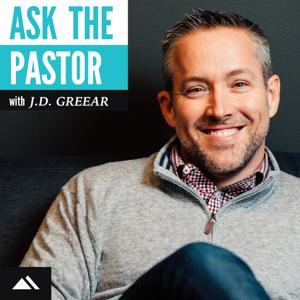
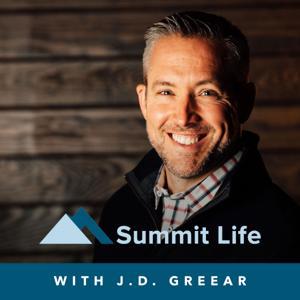
This week, Pastor J.D. answers a question submitted from Ruperto. He asked, “Is it ever OK to lie?”
Show Notes:
Want to ask J.D. a question? Head to our Ask Me Anything hub to submit your question.
As always, don’t forget to rate and review this podcast!
Find Pastor J.D. on Twitter, Instagram, and Facebook.
This week, Pastor J.D. answers the question, “How do I tell someone of another religion they’re wrong?”
Show Notes:
Want to ask J.D. a question? Head to our Ask Me Anything hub to submit your question.
As always, don’t forget to rate and review this podcast!
Find Pastor J.D. on Twitter, Instagram, and Facebook.
This week, Pastor J.D. answers a question in his recent sermon: “What stands in the way of ethnic unity?”
Show Notes:
Want to ask J.D. a question? Head to our Ask Me Anything hub to submit your question.
As always, don’t forget to rate and review this podcast!
Find Pastor J.D. on Twitter, Instagram, and Facebook.
This week, Pastor J.D. answers a question that was submitted by Jesse. She asked, “What does it mean to be “poor in spirit?”
Show Notes:
We all love the verse: Matthew 5:3. If you’ve grown up in church, you know it: “Blessed are the poor in spirit, for theirs is the kingdom of heaven.” It sounds so poetic and idealistic… but I’m going to be honest with you. When I try to really get my mind around that verse, I don’t naturally like it. I’ve never wanted to be poor in spirit — I’ve spent my entire life trying to become anything but poor in spirit. I guarantee you also don’t really want to be poor in spirit.
Maybe some of you listening really grew up poor, or went through a “poor season” (like college). When you’re poor, you feel helpless. It takes away your agency, your power, your freedom… it’s no fun!
I’ve always wanted to be “capable in spirit” or “competent in spirit…” if anything, at least “middle class in spirit!” That’s just how we’re wired as people.
So what does it mean to be poor in spirit and why do people say it’s so important?
First, it means that you have no worthiness at all by which you can claim God’s blessing.
Second, you realize that you have no ability to obtain God’s blessing.
God seems to have a way of bringing his people into a situation of helplessness before using them greatly.
At times, God creates in us a “poverty of spirit” so that we are reliant on him, and so that he is set up to perform a miracle. Every miracle in the Bible started with a problem that no person could fix… no problems, no miracles.
Here’s a controversial sentence: in one sense, Jesus was the neediest person who ever lived. I don’t mean that he was sinful or didn’t have capability in himself, but that he demonstrated dependence on the Father. It’s why he was so often in prayer. He retreated to prayer to be able to obtain the resources of the Father.
We have to understand how needy we are, but also how willing our Father is to help us in our need. God doesn’t delight in hurting us, but he delights when we trust him. So often, he’ll put us in the presence of a problem we can’t fix, and we’ve got no choice but to lean on him. When you’re flat on your back, you’re looking in the right direction.
If dependence is the objection, weakness becomes your advantage. Scripture warns us to beware our strengths; not our weaknesses. A.W. Tozer said, “It is doubtful whether God can use a man greatly until he has hurt him deeply.
It’s like Hudson Taylor said: “[God] wants you to have something far better than riches and gold—or personal charisma or talent—and that is helpless dependence upon him.” Dependence is the objective, so weaknesses become our advantage.
Want to ask J.D. a question? Head to our Ask Me Anything hub to submit your question.
As always, don’t forget to rate and review this podcast!
Find Pastor J.D. on Twitter, Instagram, and Facebook.
This week, Pastor J.D. answers a question that was submitted by Annie. She asked, “How should a believer handle guilt from sinning?”
Show Notes:
That’s a great question. To be very upfront, there are sins in my life that I would love to leave behind in the rearview mirror, and it’s not from a lack of sincerity or fasting and praying or accountability, but there are sometimes that we fall back into patterns that run deep. And they grieve me. It was very encouraging for me to learn that John Newton, and this was published in the book Letters of John Newton, talked about how as an 86 year old, he thought by at this point in his life (and this was the guy who wrote “Amazing Grace”) he thought he’d be past some of the struggles of sin, but he said some of them feel harder and more difficult than ever. It was encouraging to me to know that there’s not anything fundamentally wrong with me — or that I’m not saved.
I wrote a book several years ago called “Stop Asking Jesus Into Your Heart,” all about the assurance of salvation, which is something I struggled with for a long time. And for a lot of people, one of the biggest reasons for that struggle is because of this – the fact that we still keep sinning after we’re saved. And then comes the guilt… And the enemy (after tempting us to sin) whispers, “If you were a REAL Christian, you wouldn’t have done that. No way God still loves you. No way you have this whole ‘salvation’ thing right.”
So how do we handle that? And how do we differentiate conviction over sin post-salvation from not really being saved?
There are two big things I’d say here:
So in the end, once you understand that truth – that there’s nothing you can do to make God love you more, and nothing you can do to make him love you any less – that’s when you begin to understand the depth and the beauty of the gospel. Of course, you SHOULD feel conviction over your sin – but not the kind that crushes you; instead, the Spirit in us uses that conviction to bring about change in us while reassuring us of his everlasting love for us.
Want to ask J.D. a question? Head to our Ask Me Anything hub to submit your question.
As always, don’t forget to rate and review this podcast!
Find Pastor J.D. on Twitter, Instagram, and Facebook.
This week, Pastor J.D. welcomes back Pastor Tony Merida, author of Gather, to answer, “How do you find a good church?”
Show Notes:
J.D.: Every now and then on Ask Me Anything, I get the chance to sit down with someone who I think can answer a question a whole lot better than me, and that’s the case today. I’m sitting here with Dr. Tony Merida, the author of several books including his newest book, called Gather. Tony, the question today is, how should someone go about finding a good, solid local church? What qualities are underrated and which are overrated in looking for a new church?
Tony Merida: The Reformers used to say there are two marks of a church: the right preaching of the gospel and the administration of the sacraments. Tied to the sacraments was church discipline. That’s not all there is, but those are two starting points by which, if you don’t have those, you don’t really have a church. If you don’t have the gospel, you don’t have a church.
So the first question I’d ask is, what does this church believe that the gospel message is, and do they not just assume it, but preach it all the time? Is it the “main thing?”
Beyond that, you might start with Acts 2:42-47. You have what seems like the “perfect” church. I think you can categorize what Luke describes in that church with four vital signs, so to speak.
There’s also vibrant worship evident, and then there’s “word and deed” outreach — or mission. Evangelism seemed to be a daily thing. Those are some good starting points to look for in a healthy church.
J.D.: So, you start with the right teaching of the gospel. How important is expository preaching?
Tony: I don’t know that I would say it is necessarily expository preaching that is the absolute requirement; instead, I would ask, is the preaching substantive and is Christ exalted from his Word week by week? Or to say it another way, is there Word-driven preaching present?
I don’t think you have to go through a book of the Bible at all times, necessarily, for it to be considered a Bible church (though I think a Bible-teaching pastor will eventually do a lot of that).
I like to say expository preaching is the “meat and potatoes” of our preaching, but occasionally, we go out to eat.
As far as community is concerned, it’s good to consider if the church is just a place where people simply come and go rather than thinking of the church as a people that we can serve.
If I were looking for a church, I’d be in prayer. I’d do my research. I’d want to try to meet with pastors and leaders… It’s not easy. There’s a whole lot more to church than the website.
Want to ask J.D. a question? Head to our Ask Me Anything hub to submit your question.
As always, don’t forget to rate and review this podcast!
Find Pastor J.D. on Twitter, Instagram, and Facebook.
This week, Pastor J.D. answers a question in his recent sermon: “How does the church achieve diversity?”
Show Notes:
We must seek to reach all people in the Triangle, not just one kind.
Want to ask J.D. a question? Head to our Ask Me Anything hub to submit your question.
As always, don’t forget to rate and review this podcast!
Find Pastor J.D. on Twitter, Instagram, and Facebook.
This week, Pastor J.D. is joined by Pastor Tony Merida, author of Gather, to answer, “Why is it important to go to church in person?”
Show Notes:
J.D.: Today on Ask Me Anything, we’re “flipping the mic.” I’m sitting here with Dr. Tony Merida holding in my hand two books. One is called Love Your Church: Eight Things About Being a Church Member. And then your newest book, called Gather. Tony, we know you’re passionate about the local church. So, what would you say to the person who, after COVID, feels like it just works better for them to watch church on their laptop or their TV. Do you think that’s a good idea? And if not, why not?
Here are a few thoughts:
Our habits form us. That’s true in any part of life. Missing worship in-person is going to have an effect. The sacrifice that it takes to be there in person really does have an impact on our lives.
We’re made for embodied relationships. Jesus didn’t just Zoom us from Heaven… He dwelt among us. He walked among us. We were with him. The resurrection was a bodily resurrection, and there’s something theologically significant about being with each other in-person. I’ve always loved the ending of 2 and 3 John, where he says that he has much more to write to them, but he’d rather be with them so that “our joy may be complete.”
“Don’t neglect to meet together.” That comes from Hebrews chapter 10. The author doesn’t say, “Meet together so you can hear the sermon,” or “to sing together;” he actually puts the emphasis on meeting together so that we can stir up one another. So, worship is not just about receiving or about listening and hearing — because yeah, you can do that at home. But, what are you giving in corporate worship? How are you contributing to the family of faith if you’re not there in person? You can’t do those things — at least not at the same level — if you’re tuning in from home.
J.D.: Tony, what would you say to someone who’s saying, “That all sounds great if I had a really good church like yours (Imago Dei) near me, but I just get more spiritual edification listening to another church than I do from any of the churches near me.” What would you say to that person?
Tony: Well, I think I would go back to how you can contribute to your gathering. Sure, your preacher may not be at the same level as someone else’s preacher. But, we’re called to live out all of the “one another’s” of Scripture… and there are a ton of them! And so many of them, we can do on a Sunday morning or whenever we meet for worship. Think about how you might honor and encourage one another at your gathering… which you can’t do on Zoom, at least not in the same way.
So, you may not have the “dream church” you want near you, but there are probably still plenty of ways you could live out Scripture’s “one another” commandments… and that’s satisfying and fulfilling.
J.D.: If you are talking about a church that is not a gospel-preaching church, then you should not go. But, a lot of times that is not the case… a lot of times, the church just isn’t what you want it to be.
Tony: I’ve asked people at our church what the most important part of the church is to them… They never say preaching. It’s always about relationships. Community is what we’re built for.
Want to ask J.D. a question? Head to our Ask Me Anything hub to submit your question.
As always, don’t forget to rate and review this podcast!
Find Pastor J.D. on Twitter, Instagram, and Facebook.
This week, Pastor J.D. begins a two-part series leading up to Southern Baptist Convention Annual Meeting. The first question he answers is, “What gives you hope about the direction of the SBC?”
Show Notes:
The shrinking ACP numbers… everybody wants to use them as if they’re a club to insist on what they want. They are in large part because of the death of cultural Christianity. I’m not trying to put a happy face on a drop in numbers; I lament them. But, I do think we need to rejoice where we need to rejoice (like the increase in engagement), while asking God to turn around the overall numbers trending downwards, with people that really are following Jesus.
Preparing for New Orleans:
I hope we see continued resolve to have a culture that is committed to protecting our children and members from abuse, and to caring well for those who come forward.
I hope we can stand together and refuse to give in to the temptation to fight instead of being about the Great Commission.
What can we do in this room do to help move the mission of the convention forward?
Don’t be part of escalating the division. Remember the mission. Remember we are about cooperation.
We do not have a doctrinal problem. We do not have a missional problem. We have a cultural problem. We are too shaped by the godless ideology of division rather than our unity in Christ. We should be celebrating what’s working well and not allowing the loud vocal few set the direction. We need folks stepping up and leading.
Want to ask J.D. a question? Head to our Ask Me Anything hub to submit your question.
As always, don’t forget to rate and review this podcast!
Find Pastor J.D. on Twitter, Instagram, and Facebook.
This week, Pastor J.D. begins a two-part series leading up to Southern Baptist Convention Annual Meeting. The first question he answers is, “How should we think about disfellowshipping churches in the SBC that have women as pastors?”
Want to ask J.D. a question? Head to our Ask Me Anything hub to submit your question.
As always, don’t forget to rate and review this podcast!
Find Pastor J.D. on Twitter, Instagram, and Facebook.
From the publisher's feed
Ranked by our users in the last 21 days

3,936 Listeners
1,451 Listeners
1,458 Listeners

4,753 Listeners
525 Listeners
1,291 Listeners
1,419 Listeners

5,400 Listeners

1,054 Listeners
765 Listeners
1,562 Listeners

4,382 Listeners
2,097 Listeners

345 Listeners

79 Listeners