
Sign up to save your podcasts
Or



Based on Podcast App listening data
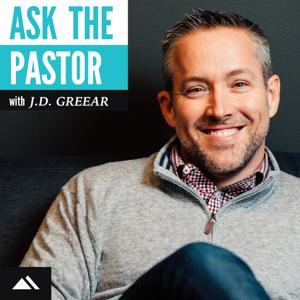
Pastor J.D. discusses the origins of privilege, its influence in society, and the responsibility Christians have in the issue.
A glimpse inside this episode:
This term “privilege” was first developed by a white woman in the 1980’s to talk not about race but male privilege in academics. (Learned from Dr. George Yancey)
Definition: “An invisible package of unearned assets that whites can count on cashing in each day.”
We want to see all people in our society have access to the same rights and privileges. When Dr. George Yancey, an African-American sociologist from North Texas University, came to speak to our church recently, he made a really interesting comment about privilege: He said “privileges” are like “rights.” It’s not that we want to take rights from one group and give them to others, but we want to see the rights that one group enjoys extended to all. He said often, in discussing privilege (white privilege or male privilege), there’s an unspoken assumption: “Things are not equal between these two groups, and we need to make them equal by pulling the top group down.” But if we think about privilege more like rights, it changes the conversation. When I think of the privileges that I have as a white person, or as a man, what I want is to see those privileges extended to as many people as possible. I don’t want people to lose all of their rights. I want more people to have those rights!
These are just a handful of examples that show us that at least at some level, privilege exists. Another way to say it (that I’ve found helpful) is that the judicial and empowerment structures in our society, while better than in generations past, are still tilted. There is a sort of center-of-gravity toward the majority culture.
What to do about it?
Pastor J.D. shares why Christianity that is not built on “it is written” is insufficient for both personal faith and sparking a worldwide resurgence of the Christian movement.
A glimpse inside this episode:
Todd: Pastor J.D., some are saying today (Andy Stanley, for example) that because our culture no longer accepts the authority of the Bible, we should refrain from saying, “the Bible says” in our preaching. What do you think about this?
Response:
Pastor J.D. talks about creating a sending culture in the church by sending as many people as possible on short-term mission trips to open eyes to missional culture and principles.
A glimpse inside this episode:
First, let’s answer why we would want to create a sending culture in our churches. All of the promises Jesus gave about the church had to do with the church being raised up and sent outside its doors. God grows his church through multiplication. Paul’s entire strategy was centered around going to strategic cities and planting churches.
Then, let’s talk for a second about culture. Sometimes we go to a conference or read a book and then go home and try to implement what we learned. Nearly always, it fizzles out.
So, one very practical thing you can do to encourage a sending mentality is to send as many people on short-term mission trips as possible.
During the first two years after our church’s re-launch, we sent an inordinate amount of our people and leaders overseas. It cost a lot of money and took up valuable time, but it did two things.
When you create a sending culture in your church, you will likely lose some of your best people to a church plant or a missions assignment. But don’t be afraid; the sending culture creates more leaders to take their place. It has worked for us like the five loaves and two fish: the more we give away, the more is multiplied and given back to us.
Resources:
Pastor J.D. gives parents some helpful guidelines for navigating conversations about sexual identity with their kids.
A glimpse inside this episode:
This is an excellent question, and one that more and more pastors, specifically, need to be equipped to answer. I am still learning how to navigate questions like this, and I’ve been incredibly thankful for Brad Hambrick, the counseling pastor at the Summit, for teaching me how to think through this not only theologically, but also pastorally.
Now, when talking with kids about “sexual identity,” here are a handful of ideas, most of which I’ve borrowed from Brad:
Pastor J.D. discusses his hopes and goals for the new year.
A glimpse inside this episode:
Each new year gives us an opportunity to refocus and recalibrate about the year ahead. A practice I’ve learned from John Piper is taking some dedicated time to pray about my calling and specifically if we’re called overseas each year.
On our staff team, each December we prepare for the next year. For example, in 2019, we’re praying for 1,000 baptisms in the coming year through our Who’s Your One? initiative. Another thing we’re focusing on is the number of people in small groups. Those are re-calibration items we’re seeking God for this year.
Personally, I have a standard set of goals each year. One is a goal for the number of books I’ll read next year, and I spend time researching what I want to read and if there is a theme. My wife and I set time each week to plan ahead for the next week. And then every three months, we set time to talk about the next six months. And so, going into 2019 we have plan for our shepherding our kids and mission trips we plan to take.
What happens when the Bible and humanity collide? Not what you’d expect. Living & Effective, a podcast collaboration between Christianity Today and the Christian Standard Bible, journeys through history, current events, theology, and the human condition to uncover surprising ways the Bible accomplishes God’s plan in the world.”
Pastor J.D. speaks to the recent claim that Christians should unhitch their faith from the Old Testament and explains why doing so is unwise and untrue to the nature of Scripture.
A glimpse inside this episode:
True: Wrong use of the Old Testament has been a major obstacle to faith.
Throughout history, Christians have found two uses of Old Testament Law:
But should we unhitch from the Old Testament altogether?
The real problem that “de-converts” have:
And so much more!
What happens when the Bible and humanity collide? Not what you’d expect. Living & Effective, a podcast collaboration between Christianity Today and the Christian Standard Bible, journeys through history, current events, theology, and the human condition to uncover surprising ways the Bible accomplishes God’s plan in the world.”
Pastor J.D. explains why it’s important to not only read but also remember what you read with some helpful tips he’s found throughout the years.
A glimpse into this episode:
A guy once told me that in 5 years you’ll be the same person except for the books you read and the people you meet.
First of all, you should be reading.
But assuming you already are a reader… I talk to people all the time who read a lot but are frustrated at how little they seem to retain. They want to know the secret to reading books well.
People always see my library, which is pretty large–over a thousand books, and invariably ask me the same question, “Have you read all of these?”
I believe it really doesn’t matter how many books you’ve read if you can’t remember what’s in any of them. As Proverbs 12:27 says, “Whoever is slothful will not roast his game, but the diligent man will get precious wealth.”
Here are my two action items for you on how to read a book well:
First, take notes.
Second, create a cheat sheet.
I keep track of all of the books that I read, but it ends up being about 65-70 books a year. I also use a service called Blinkist that gives short summaries of leadership books.
What happens when the Bible and humanity collide? Not what you’d expect. Living & Effective, a podcast collaboration between Christianity Today and the Christian Standard Bible, journeys through history, current events, theology, and the human condition to uncover surprising ways the Bible accomplishes God’s plan in the world.”
Pastor J.D. discusses the difference between playing along with the idea of Santa Claus and helping kids distinguish truth from fiction.
A glimpse into this episode:
Every year my wife and I take a Santa doll and cut it into shreds and burn the remnants in front of our children’s eyes to remind them how badly that God hates lies. Then we read all the passages in the Bible about lying, and then we show them that by simply switching 2 of the letters, “Santa” becomes “Satan.”
Just kidding.
I think there is an appropriate place for fantasy in a child’s life, and I don’t mind playing “kids’ games” with my children when they are kids. So, when my kids were 4 or 5, we talked about Santa as if he was real. But all of my kids are older, now, and they realize that what we did when they were little kids was “playing a game.”
Now, I will say that things were a little different when my kids asked me directly about Santa. I’m not about lying to my kids about anything, but I didn’t want my kid being the one telling everyone in their class that their parents were liars. So when my kids asked, I tried turning the question around. “What do you think?” And then changing the subject.
My oldest, of course, had a lawyer’s mind from the time she was 3. (She’s 15 now.) So she wouldn’t let us get away with dodging the question. When she was 6 she cross-examined my wife like a grizzled court attorney, and my wife cracked. The next month we went to a local mall, and that was the first time she saw someone dressed as Santa, and she grabbed my arm and said, “Dad, Mom told me he wasn’t real, but there he is.”
Personally, I don’t think playing along with a fantasy with young kids is damaging. But trust matters, and at a certain age (say, 5 or 6), your kids will ask you directly. They’re learning to separate truth from fiction, and it’s important we reinforce that by being honest with them.
I know some families who parse this differently. One couple I know tells their kids that Santa is pretend, but that part of the game is not telling other kids that he’s pretend. Other parents just lay out from Day 1 that Santa is a fairy tale. Having parented four kids through those early years, I’m willing to show a lot of grace, because other people may have it figured out better than me. (Before I had kids, I had 4 great ideas on parenting and 0 kids. Now I have 4 kids and 0 great ideas on parenting.)
By the way, if there’s any kids listening in, this is all just a joke. Of course Santa is real.
What happens when the Bible and humanity collide? Not what you’d expect. Living & Effective, a podcast collaboration between Christianity Today and the Christian Standard Bible, journeys through history, current events, theology, and the human condition to uncover surprising ways the Bible accomplishes God’s plan in the world.”
Pastor J.D. shares his process for developing his weekly sermons, from research to manuscript and everything in between.
A glimpse inside this episode:
What happens when the Bible and humanity collide? Not what you’d expect. Living & Effective, a podcast collaboration between Christianity Today and the Christian Standard Bible, journeys through history, current events, theology, and the human condition to uncover surprising ways the Bible accomplishes God’s plan in the world.”
Pastor J.D. explains the three concentric circles of friendship—care, influence, and intimacy—and gives wisdom for how to approach relationships in each one, especially those affected by negativity.
A glimpse inside this episode:
Part of this depends on what kind of “friend” we’re talking about:
When it comes to It’s wise to have different ways of assessing our relationships based on which circle we’re talking about.
From the publisher's feed
Ranked by our users in the last 21 days

3,933 Listeners

1,450 Listeners

1,458 Listeners

4,757 Listeners

525 Listeners

1,291 Listeners
1,420 Listeners

5,402 Listeners

1,053 Listeners

765 Listeners

1,563 Listeners

4,379 Listeners

2,097 Listeners

346 Listeners

79 Listeners