
Sign up to save your podcasts
Or



Send us Fan Mail
Why does feedback still feel so difficult, even when we know how to give it?
In this episode of The Chief Psychology Officer, Dr Amanda Potter and Caitlin Cooper explore the psychology behind feedback culture, challenging the idea that better feedback simply comes down to learning the skills for how to give it.
Together, they discuss why giving and receiving feedback can trigger feelings of threat, discomfort and defensiveness, and why psychological safety is essential for creating an environment where people feel comfortable having honest conversations. Drawing on neuroscience, the SCARF model and negativity bias, they explore why we often fixate on one negative comment, how feedback can threaten our sense of identity, and why even well-intentioned leaders can unintentionally discourage others from speaking up.
You'll discover practical ways to:
If you're a leader, manager or someone looking to create a more open and constructive workplace, this episode challenges you to consider not only if your people know how to give feedback, but whether they feel safe enough to give it.
Tune into Episode 102: Some Feedback on Feedback Culture...
Episodes are available here https://www.thecpo.co.uk/
To follow Zircon on LinkedIn and to be first to hear about podcasts, publications and news, please like and follow us: https://www.linkedin.com/company/betalent-by-zircon/
To access the research white papers mentioned in this and other podcasts, please go to: https://www.betalent.com/research
For more information about the BeTalent suite of tools and platform please contact: [email protected]
Send us Fan Mail
Why do some teams thrive under pressure while others unravel?
Former professional rugby player and founder of 101st Will Fraser joins Dr Amanda Potter and Angela Malik to explore the psychology behind team resilience, psychological safety and high performance.
Will challenges the idea that resilient teams are simply made up of resilient individuals. Instead, resilience is built through a team's ability to solve problems together under pressure and that depends on clarity, shared understanding and creating an environment where people feel safe to question, challenge and admit, “I don't understand.”
Together, they explore the hidden assumptions that can quietly derail even experienced teams, including the curse of knowledge, expertise reversal and the tapping mistake. They discuss why people nod along when they're actually confused, how individual incentives can undermine teamwork, and why leaders may be too quick to blame someone's competence when performance slips.
You'll discover practical ways to:
If you lead, develop or work within a team, this conversation will leave you with one deceptively simple question:
Just because it's obvious to you, does everyone else really understand it?
Episodes are available here https://www.thecpo.co.uk/
To follow Zircon on LinkedIn and to be first to hear about podcasts, publications and news, please like and follow us: https://www.linkedin.com/company/betalent-by-zircon/
To access the research white papers mentioned in this and other podcasts, please go to: https://www.betalent.com/research
For more information about the BeTalent suite of tools and platform please contact: [email protected]
Send us Fan Mail
For the 100th episode of The Chief Psychology Officer Podcast, Dr Amanda Potter is joined by cohosts Caitlin Cooper, Angela Malik and Kristian Lees-Bell to revisit some of the conversations, ideas and research that have shaped the podcast so far.
Across the episode, they return to discussions on psychological safety, cognitive diversity, resilience, decision-making, human judgement, connection and the changing world of work. Taking time to reflect on how those ideas have evolved and what they mean for organisations today.
The episode features clips and reflections from conversations with:
We also revisit episodes featuring Figen Murray OBE, Simon Rogerson and Lucy Becque as each host reflects on the conversations that have stayed with them most.
A special episode looking back at what we have learned, how some of that thinking has evolved, and the questions that feel most important for organisations now.
Episodes are available here https://www.thecpo.co.uk/
To follow Zircon on LinkedIn and to be first to hear about podcasts, publications and news, please like and follow us: https://www.linkedin.com/company/betalent-by-zircon/
To access the research white papers mentioned in this and other podcasts, please go to: https://www.betalent.com/research
For more information about the BeTalent suite of tools and platform please contact: [email protected]
Send us Fan Mail
What really gets in the way of good decision making?
In this final Best Bits episode, Angela Malik and Kristian Lees-Bell reflect on some of our most memorable conversations about decision making and human judgement.
Revisiting Dr Amanda Potter’s insights, alongside a conversation with Mark Herbert, the episode explores the psychology and neuroscience behind the choices we make, and what better decision making looks like for leaders and teams.
Together they unpack why we procrastinate, how fear of failure and sunk cost can keep us stuck, and how brain chemistry, pressure and our emotional state influence the decisions we make.
In essence, this episode explores what better decision making means for leaders and teams. From choosing clarity over speed and understanding different decision styles, to knowing when to change course and how our choices affect those around us.
Episodes are available here https://www.thecpo.co.uk/
To follow Zircon on LinkedIn and to be first to hear about podcasts, publications and news, please like and follow us: https://www.linkedin.com/company/betalent-by-zircon/
To access the research white papers mentioned in this and other podcasts, please go to: https://www.betalent.com/research
For more information about the BeTalent suite of tools and platform please contact: [email protected]
Send us Fan Mail
What does resilience really look like when pressure keeps building?
In this Best Bits episode, Angela Malik and Kristian Lees-Bell revisit some of our most memorable conversations about resilience, stress and recovery.
Featuring insights from Dr Amanda Potter of BeTalent by Zircon; Martin Hewitt, founder of Adaptive Grand Slam; Figen Murray OBE, campaigner behind Martyn’s Law; John N Cooper, Chief Connection Officer at Thomas International; Lucy Becque, Group Chief People Officer at Coventry Building Society; and Professor Jo Yarker of Birkbeck, University of London and Affinity Health at Work.
Together, they explore why resilience is more than simply coping or pushing through. The episode covers the neuroscience of stress, the difference between persistence and resilience, why high resilience scores do not always create stronger teams, and how relationships, leadership and working environments shape our ability to recover and adapt.
From personal adversity to sustained organisational change, these conversations challenge us to think differently about who is responsible for resilience and what people really need when the pressure does not let up.
Go deeper and listen to the original conversations:
Episodes are available here https://www.thecpo.co.uk/
To follow Zircon on LinkedIn and to be first to hear about podcasts, publications and news, please like and follow us: https://www.linkedin.com/company/betalent-by-zircon/
To access the research white papers mentioned in this and other podcasts, please go to: https://www.betalent.com/research
For more information about the BeTalent suite of tools and platform please contact: [email protected]
Send us Fan Mail
In the second Best Bits episode of The Chief Psychology Officer Podcast, we explore how strengths, cognitive diversity and leadership behaviour shape high-performing teams.
Caitlin Cooper and Kristian Lees-Bell revisit standout conversations with Dr Amanda Potter, Stuart Desson, Simon Rogerson and Joe Wicks to unpack what energises people at work, why strengths are different from motivation and skill, and how leaders can create the conditions for people to perform at their best.
The episode explores the role of strengths in employee engagement, team performance, leadership development, recruitment, psychological safety and organisational culture. It also looks at the risks of profile matching, clone teams and overusing strengths, showing why diverse thinking and different strengths are essential for innovation, adaptability and sustainable performance.
For HR leaders, people professionals, coaches and anyone interested in organisational psychology, this episode offers practical insight into how strengths-based development can help individuals, teams and leaders build greater energy, trust, resilience and performance at work.
Episodes are available here https://www.thecpo.co.uk/
To follow Zircon on LinkedIn and to be first to hear about podcasts, publications and news, please like and follow us: https://www.linkedin.com/company/betalent-by-zircon/
To access the research white papers mentioned in this and other podcasts, please go to: https://www.betalent.com/research
For more information about the BeTalent suite of tools and platform please contact: [email protected]
Send us Fan Mail
In the first part of our Best of Series, Caitlin Cooper and Angela Malik revisit some of the most powerful conversations we have had on psychological safety and high-performing teams.
As we approach our 100th episode, this special round-up brings together insights from previous guests including Megan Giannini from Philips, Mike Wright from Network Rail, Laura McLean from Santander, Alex Myers, and Professor Adrian Furnham.
Together, these conversations explore what psychological safety really means at work, why it is not about being nice all the time, and how it supports performance, learning, innovation, inclusion, and healthier challenge.
From speaking up and listening up, to dealing with failure productively, measuring team climate, and creating environments where people can contribute honestly, this episode brings together the science, stories, and practical lessons that have shaped our thinking on psychological safety.
Listen now to Best Bits: Driving High Performance Through Psychological Safety.
Episodes are available here https://www.thecpo.co.uk/
To follow Zircon on LinkedIn and to be first to hear about podcasts, publications and news, please like and follow us: https://www.linkedin.com/company/betalent-by-zircon/
To access the research white papers mentioned in this and other podcasts, please go to: https://www.betalent.com/research
For more information about the BeTalent suite of tools and platform please contact: [email protected]
Send us Fan Mail
In this episode of The Chief Psychology Officer, Dr Amanda Potter and Kristian Lees-Bell explore cognitive dissonance, the mental discomfort we feel when our beliefs, values, and behaviours do not align. From everyday choices to high-pressure leadership decisions, they discuss why the brain often rushes to reduce discomfort by rationalising, justifying, or reframing decisions, even when those decisions may not be the most effective.
Amanda and Kristian also examine how cognitive dissonance influences decision-making, bias, self-awareness, and workplace behaviour, particularly during periods of stress, ambiguity, and organisational change. They explore the links between cognitive dissonance, confirmation bias, anchoring bias, optimism bias, and resilience, highlighting why leaders need to create space for reflection rather than defaulting to the path of least resistance.
This practical conversation offers insight into how we can notice cognitive dissonance, challenge our assumptions, and make better decisions by becoming more honest with ourselves about the gap between what we believe and how we behave.
Episodes are available here https://www.thecpo.co.uk/
To follow Zircon on LinkedIn and to be first to hear about podcasts, publications and news, please like and follow us: https://www.linkedin.com/company/betalent-by-zircon/
To access the research white papers mentioned in this and other podcasts, please go to: https://www.betalent.com/research
For more information about the BeTalent suite of tools and platform please contact: [email protected]
Send us Fan Mail
In this episode of The Chief Psychology Officer Podcast, Dr Amanda Potter and Caitlin Cooper are joined by occupational psychologist and Chief Connection Officer John Cooper to explore why human connection is essential to performance at work.
Together, they discuss why great teams are not built through harmony alone, but through the quality of connection that allows people to challenge, support, trust, and understand each other. John shares why the “chemistry” between people matters, and Amanda reflects on how this connects to psychological safety, belonging, resilience, and the environments organisations create.
The conversation also explores how AI and new ways of working may be changing the way we connect. As work becomes more efficient, remote, and technology-enabled, there is a risk that we turn to tools before we turn to each other.
This episode asks an important question for leaders and organisations: are we building in the conditions for people to continue to build trust, strengthen relationships, and perform well together?
Tune into Episode 94: Why Great Teams Need Friction with John Cooper.
Episodes are available here https://www.thecpo.co.uk/
To follow Zircon on LinkedIn and to be first to hear about podcasts, publications and news, please like and follow us: https://www.linkedin.com/company/betalent-by-zircon/
To access the research white papers mentioned in this and other podcasts, please go to: https://www.betalent.com/research
For more information about the BeTalent suite of tools and platform please contact: [email protected]
Send us Fan Mail
Ep 93 Stop fixing people: start fixing work with Jo Yarker
What does it take to sustain performance over time?
In this episode of the Chief Psychology Officer podcast, Dr Amanda Potter is joined by Professor Jo Yarker to explore how organisations can create healthy working environments that support both wellbeing and performance.
Many organisations invest in resilience and wellbeing initiatives, yet still struggle with burnout, disengagement, and declining performance. This conversation challenges why and where organisations may be focusing on the wrong solutions.
Rather than placing responsibility on individuals, this episode explores the role of organisational systems, leadership behaviour, and work design in shaping employee health and resilience.
Key themes include:
This episode is for HR leaders, senior executives, and organisations looking to reduce burnout, improve employee wellbeing, and build environments where people can perform consistently under pressure.
Because sustainable performance is not driven by effort alone. it is enabled by healthy work.
Episodes are available here https://www.thecpo.co.uk/
To follow Zircon on LinkedIn and to be first to hear about podcasts, publications and news, please like and follow us: https://www.linkedin.com/company/betalent-by-zircon/
To access the research white papers mentioned in this and other podcasts, please go to: https://www.betalent.com/research
For more information about the BeTalent suite of tools and platform please contact: [email protected]
From the publisher's feed
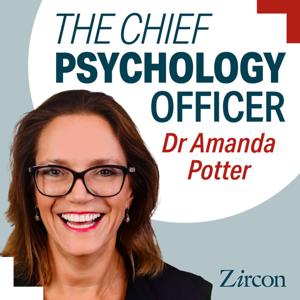
Exploring the topics of workplace psychology and conscious leadership. Amanda is an award-winning Chartered Psychologist, with vast amounts of experience in talent strategy, resilience,…

1,078 Listeners

4,764 Listeners

15,608 Listeners

3,020 Listeners

174 Listeners
701 Listeners

175 Listeners