
Sign up to save your podcasts
Or

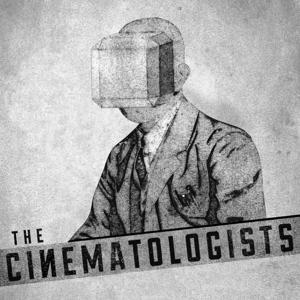


Neil is joined by colleague Dr Victoria Byard to introduce and discuss Tony Scott's erotic vampire horror The Hunger. Staring Catherine Deneuve, Susan Sarandon and, of course, the late David Bowie the film draws a range of different reactions from the audience at Falmouth's School of Film and Television. On the Episode Neil also interviews film making duo the Blaine Brothers about their recent British Horror release Nina Forever and Dario and Neil cover a range of subjects including cinema's ability to preserve star iconography.
For this episode we are back at the Electric Palace in Hastings where Dario talks to Cornish filmmaker Mark Jenkin about his fascinating new film. In Bronco's House a young man strives to provide a home for him, his pregnant girlfriend and their unborn child. The film is an aesthetic meditation on property, power and the future which is shot on a clockwork camera, using 16mm black and white negative stock, and process by hand through and instant coffee based developer.
Bronco's House is available to download and stream. CLICK HERE.
In a wide ranging interview Dario talks to prolific film scholar Murray Pomerance. The discussion touches on everything from Zabriskie Point to The Force Awakes, from The Clouds of Sils Maria to The Bourne Identity, from Marnie to The Dark Knight Professor Pomerance demonstrates an in-depth knowledge, engaging presence and fascinating insights on all things cinema.
Murray Pomerance is Professor in the Department of Sociology at Ryerson University, Toronto. His publications include Moment of Action: Riddles of Cinematic Performance (forthcoming), Marnie (BFI, 2014), Alfred Hitchcock's America (Polity, 2013), The Horse Who Drank the Sky: Film Experience Beyond Narrative and Theory (Rutgers 2008), and An Eye for Hitchcock (Rutgers 2004), among others.He has edited or co-edited numerous volumes, including The Last Laugh: Strange Humors of Cinema (Wayne State, 2013), Hollywood's Chosen People: The Jewish Experience in American Cinema (Wayne State, 2012), Shining in Shadows: Movie Stars of the 2000s (Rutgers 2011), and Cinema and Modernity (Rutgers 2006), among others. In August 2009, he appeared on Broadway in conjunction with a performance of The 39 Steps and in August 2013 his visual essay (co-authored with R. Barton Palmer) appeared on the Criterion DVD of John Frankenheimer's Seconds.
For further details and publications click here.
Our first screening of 2016 is Orson Welles's at times overlooked classic, The Trial. Adapted from Franz Kafka’s dark novel about alienation, bureaucracy, and the fundamental question of freewill. The Trial stars Anthony Perkins in a role every bit as compelling as his star turn in Psycho and features Welles’s trademark kinetic cinematography which perfectly captures the terror of faceless institutional authority.
Read Richard Brody's New Yorker article on The Trial here.
This was our first screening at the wonderful Electric Palace Cinema in Hastings.
The episode features an interview with Josh Karp who recently published an exquisite book on the crazy saga of Welles's final, incomplete film, The Other Side Of The Wind. Find information on the book here.
Read a review from RogerEbert.com here.
In a special bonus episode Dario talks to Dr. Catherine Grant, Senior Lecturer in Film Studies at the University of Sussex and founder of the Film Studies For Free online archive. The conversation covers a wide range of areas including Catherine's route in film academia, the current status of film and film studies particularly in the digital context, the Internet & open source publishing, teaching, research and the challenges of higher education for the arts and humanities, video essays, blogging & podcasting, feminism in film and academia, and discourses of free speech and political correctness.
Link's to Catherine's Websites: Film Studies for Free; InTransition: Journal of Videographic and Film and Moving image Studies; Reframe
Jason Mittell - Complex Television
Catherines's introduction to Laura Mulvey and Possibilities for the Digital
Bordwell and Thompson: Observations on Film Art
Girish Shambu: Film Blog
Kevin Lee: Shooting Down Pictures
Catherine's video essay using Laura Mark's notion of Haptic Criticism
Patricia White: Women's Cinema, World Cinema
Sophie Myers: Political Animal
Richard Dyer: Sissy Representations
Brett Easton Ellis Podcast: with Quintin Tarantino
In one of the highlights of the year The Cinematologists screen Wong Kar-Wai's stylish masterpiece as part of the BFI 'love' season in association with The Poly, Falmouth. A veritable modern masterpiece In the Mood for Love stars Tony Leung and Maggie Cheung in iconic roles as lovers seeking refuge from disappointment, loneliness and the harsh realities of their surroundings. Dario and Neil also discuss their cinematic highlights of the year.
The Guardian article by Peter Walker referred to in the podcast can be found here: http://www.theguardian.com/film/filmblog/2011/dec/19/in-the-mood-for-love
Dario and Neil discuss Ida Lupino's 1953 film noir The Hitch-Hiker. Neil also interviews writer Jack Thorne about, amongst other things, his up-coming theatre adaptation of Harry Potter.
Link to the Film Programme episode discussed in the episode
Link to the Senses of Cinema Ida Lupino piece mentioned by Kingsley in the episode
In our first podcast from the University of Brighton's Hastings campus we screen the strangely superb sci-fi thriller Seconds (1966). John Frankenheimer's key themes revolve around paranoia and conspiracy with titles to his credit including The Manchurian Candidate (1962) and Seven Days in May (1964). This film takes a faustian theme and links it to social contexts of mistrust in government, consumerism and the increasing loss of identity in the modern age.
The episode also features an interview with writer and historian Andy Bass who has recently written an article on the shooting of the film in his home town of Scarsdale:
http://scarsdalenews.com/Scarsdale_Inquirer/8-21-15_NEWS__Rock_Hudson.html
Neil is joined on stage at Falmouth by Kingsley Marshall to introduce John Hughes' comedy Planes, Trains and Automobiles (1987). The influence and persona of John Candy and Steve Martin is discussed along with the career of John Hughes as one the quintessential American 80s directors. The podcast also features an interview with Jeanie Finlay on her surprising and offbeat musical documentary Orion: The Man Who Would Be King (2015).
From the publisher's feed

1,166 Listeners
320 Listeners

154 Listeners
248 Listeners

351 Listeners
114 Listeners
737 Listeners

109 Listeners

58 Listeners
93 Listeners

108 Listeners

479 Listeners
1,119 Listeners
31 Listeners
327 Listeners