
Sign up to save your podcasts
Or



Based on Podcast App listening data
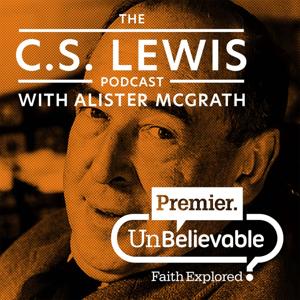
Today we are joined by Dr. Max Baker-Hytch, a tutorial fellow in Philosophy at Oxford University, to discuss Lewis and the argument from desire. Covering topics such as whether our deepest longings point to the existence of another world, how naturalists might respond, and whether such desires could have evolutionary origins. The conversation also looks at critiques of Lewis’ view, how it compares to other arguments for God, and whether it still resonates in our modern, secular age.
For more on Max: https://philpeople.org/profiles/max-baker-hytch
+ Support us here
Today we are joined by Dr. Max Baker-Hytch, a tutorial fellow in Philosophy at Oxford University, to discuss Lewis and Lewis' argument from reason, as explored in Miracles and beyond. They explore Lewis’ claim that if our thoughts are just the result of natural processes, we have no reason to trust them. Can reason really come from something non-rational? They also discuss how this idea challenges naturalism, what it means for science and belief, and whether Lewis’s argument still matters today.
For more on Max: https://philpeople.org/profiles/max-baker-hytch
+ Support us here
Today we are joined by Dr. Max Baker-Hytch, a tutorial fellow in Philosophy at Oxford University, to discuss Lewis and the moral argument for God's existence. What did Lewis mean by a universal moral law, and why did he think it pointed to something beyond nature? They explore the foundations of this argument, its philosophical roots, and the critiques it has faced. Does morality require a Moral Lawgiver? Can natural selection or social convention fully explain our sense of “right” and “wrong”? And what might this argument mean for how we live today, in a culture where moral truth is often seen as relative?
For more on Max: https://philpeople.org/profiles/max-baker-hytch
+ Support us here
Today we are joined by Dr. Max Baker-Hytch, a tutorial fellow in Philosophy at Oxford University, to discuss Lewis and philosophy. Did C.S. Lewis consider himself a philosopher, and should we? What kind of philosophical training did he have, and which thinkers shaped his ideas? How do his arguments compare with other 20th-century philosophers, and why is he often overlooked in academic philosophy today? They also explore whether Lewis’ fiction carries philosophical weight, how his faith influenced his reasoning, and what his work can teach us about tackling life’s big questions today.
For more on Max: https://philpeople.org/profiles/max-baker-hytch
+ Subscribe to The CS Lewis podcast: https://pod.link/1560959545
Ruth Jackson is joined by Traver Carlson, a PHD candidate in Philosophy at the Institute for Christian Studies, to discuss his paper from the 2024 Undiscovered CS Lewis Conference, titled Re-veiling the Secret: Reading The Ransom Trilogy as Spiritual Exercise. We then get to hear his paper from the conference, followed by some helpful clarifications and final thoughts from him.
Other series to listen to:
+ Subscribe to The CS Lewis podcast: https://pod.link/1560959545
Ruth Jackson is joined by Traver Carlson, a PHD candidate in Philosophy at the Institute for Christian Studies, to discuss his paper from the 2024 Undiscovered CS Lewis Conference, which focuses on The Ransom Trilogy. They explore how Lewis uses space, language, and imagination to help us see the world in a new light. From medieval imagery to the idea of “heaven” versus “space,” the conversation looks at how these stories can shape the way we think about life, faith, and the universe.
Other series to listen to:
+ Subscribe to The CS Lewis podcast: https://pod.link/1560959545
Ruth Jackson is joined by Traver Carlson, a PHD candidate in Philosophy at the Institute for Christian Studies, to discuss his paper from the 2024 Undiscovered CS Lewis Conference. He dives into his first discovery of Lewis, the impact he had on his faith and academic journey and his relevance to today, as well as much more.
Other series to listen to:
+ Subscribe to The CS Lewis podcast: https://pod.link/1560959545
In part two, Ruth Jackson and Alister McGrath explore how CS Lewis saw the links between science, philosophy, and faith. They discuss his view that science can point to deeper truths, his idea of Christianity as the “true myth,” and his belief that scientific theories aren’t final facts. The conversation touches on Lewis’s thoughts about the soul, the value of myth, and whether modern science misses something older worldviews grasped. They also consider how The Discarded Image connects to his wider apologetics and his warning against “chronological snobbery.”
+ Subscribe to The CS Lewis podcast: https://pod.link/
From the publisher's feed
Ranked by our users in the last 21 days

15,995 Listeners
5,191 Listeners

1,450 Listeners

2,017 Listeners
1,121 Listeners

1,514 Listeners

19,478 Listeners

206 Listeners
1,277 Listeners
5,412 Listeners

2,054 Listeners
244 Listeners
26 Listeners

217 Listeners
280 Listeners
449 Listeners

63 Listeners