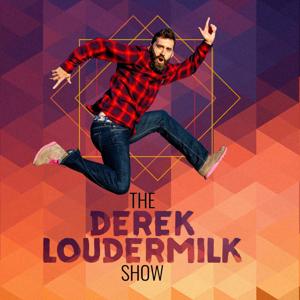
The Derek Loudermilk Show
Download on the App Store

The Derek Loudermilk Show episodes

  • Alex Hutchinson | Testing the Limits of Endurance


    Today’s guest on the Art of Adventure podcast is the New York Times bestselling author and national award-winning journalist, Alex Hutchinson. Alex primarily focuses on endurance and fitness. In fact, his latest book, ENDURE: Mind, Body, and the Curiously Elastic Limits of Human Performance, explores the science of endurance.


    Alex
    began his career as a physicist, with a Ph.D. from the University of Cambridge,
    and worked for the U.S. National Security Agency. He is a two-time finalist in
    the 1500-meters in the Canadian Olympic trails. While at the NSA, he also
    trained and competed as a middle- and long-distance runner for the Canadian
    national team.


    In this episode, Alex talks about the limits of endurance and human performance, and how he spent years researching about this project. He breaks it down so well, you can go and test every variable that he is talking about. Whether or not you’re a runner, listening to this episode will pique your interest about your limits and how to defy it.


    What
    you’ll learn in this episode:


    * Understanding the limits of endurance* How Alex defines endurance* How zapping your brain with electricity helps endurance* Aging and endurance* How deception in workouts can expand possibilities* How endurance applies to parenting and entrepreneurship, among others* What Alex did during his decade-long research for his project on endurance* What Alex wants to do next after his bestselling book and other insights on his life and career


    Quotes:


    "Pain might just be confirmation you are doing something hard" - Alex Hutchinson


    "I'm willing to talk to scientists - I don't shy away from complexity in my writing" - Alex Hutchinson


    Continue
    the Adventure:


    Alex Hutchinson


    Twitter:
    @sweatscience


    ENDURE: Mind, Body,
    and the Curiously Elastic Limits of Human Performance


    Outside Online


    1 hr 24 min
  • Robert Waggoner | The Wild World of Lucid Dreaming

    Today’s guest on the Art of Adventure podcast is the author, speaker, and a well-known thought leader on lucid dreaming, Robert Waggoner. Robert wrote the book, Lucid Dreaming: Gateway to the Inner Self. For ten years, he has been co-editing the The Lucid Dreaming Experience online magazine. He has been lucid dreaming for over four decades, since the 70’s, with over a thousand lucid dreams logged.
    Robert is a popular speaker all over the world, speaking at universities, conferences, and workshops. He has been on CNN, CBS, ABC, and also on Iowa Public Radio, among others, talking about lucid dreaming. This interview is going to be a treat because Robert is one of the most experienced lucid dreamers there is.
    In this episode, Robert talks about lucid dreaming – becoming aware that you are dreaming, within the dream. He will share his experience and other cool stories and encounters in his dreams. If you are not a lucid dreamer yet, this episode will surely spark your interest and inspire you.
    What you’ll learn in this episode:


    * What lucid dreaming is
    * How Robert learned about lucid dreaming
    * Robert’s discovery that he could lucid dream
    * Stories and encounters while Robert was in a state of lucid dream
    * What it is like being in a lucid dream
    * How Robert cured his hay fever with his mind
    *

    Quotes:
    "Just like in dreams, beliefs and expectations are important and influence your waking life" - Robert Waggoner
    "Pay attention to dream figures with awareness in their eyes" . -Robert Waggoner
    "Use the power of suggestion: 'Tonight in my dreams I will become more critically aware'"-Robert Waggoner
    "If you are going to heal yourself in a dream, you need a good plan"-Robert Waggoner
    "What lies beyond lucid dreaming?"-Robert Waggoner
    Continue the Adventure:
    Robert Waggoner: Lucid Advice
    Lucid Dreaming Experience
    Lucid Dreaming: Gateway to the Inner Self
    1 hr 3 min
  • Understanding Motivation | Five Minute Friday

    Have you ever been un-motivated?
    Today, let us talk about that because this is something that happens to everyone, even myself.
    Motivation is not just a problem where you need to work harder or apply more will power. It is full of information - it is telling you something.
    Your lack of motivation may be because you are not connected with who you are trying to serve. You are not clear about how you can help your customer. If you do not believe something is going to work for you, you will not be able to follow through, because you have already taken yourself out of the game.
    Perhaps, you don’t have a goal yet. In that case, if you don’t have an ambition or a purpose, then you need to figure out that something that you want to do then you will be able to start moving towards it. It may take some reflections, internalizations, talking to people, and learning what you like and don’t like. You can then start taking action by doing these little steps and having that momentum.
    It could be that you are not having fun. If what you are doing is boring, then you may need to be a little creative. Think of different ways that you can play around with the things that you are trying to do.  A lot of times, it is super motivating just to learn or try something new. Maybe motivation is coming because you don’t expect it.
    Maybe you are not connected with the outcome. You don’t know what it is going to do for you. You don’t know how it is going to make you feel. It is hard to tie hard work and effort, so tap into that feeling which you wish to have once you complete this goal.
    Understand that where you place your attention is important. This is about curating your surroundings - your physical surroundings, what you are watching, and even the people around you. So many different inputs can change your thought patterns, your feelings, and your habits. If you are around excited people who want to learn, grow, and achieve things, then that is going to become how you are.
    Again, this is all information. Your level of motivation is telling you about yourself.
    8 min
  • Jim Fortin | Transforming your Life with Brain Science, Ancient Wisdom, and Psychology


    Today’s guest on the Art of Adventure podcast is the leader in subconscious self-transformation, Jim Fortin. Jim is a Neuro-Linguistic Programming (NLP) master practitioner. Jim is a well known international sales trainer for 6,7, and 8 figure businesses. He runs the podcast, Transform Your Life from the Inside Out.

    Jim may be best known for his expertise in transforming businesses to achieve their greatest potential, but he also helps in transforming individuals with the way they think in order to also become the best version of themselves. He shares the importance of silencing the mind to let it perform its highest ability. He also explains where money comes from – is  it from hard work, or from something else?

    In this episode, we get to learn about Jim’s other side. He considers himself as a shaman’s apprentice after working alongside his brother-in-law for decades. He discusses transformation through the application of quantum physics, the psychology of one’s thinking, and even ancient wisdom. Enjoy this super fascinating episode as Jim uncovers the metaphysical connections that will even help you explore your own perception of reality.
    What you’ll learn in this episode:

    * The relation of quantum physics and our mind
    * How our intentions affect reality
    * What is a shaman and shamanism are
    * Why there are certain places on the planet that have specific types of energy
    * How physics has discovered the different dimensions of reality and where humans fit into that
    * How counting what you are doing can lead you to giving up early

    Quotes:

    "We can only perceive 1% of the electromagnetic spectrum" - Jim Fortin

    "The majority of humans are living thousands of years ago because of their inherited beliefs" - Jim Fortin

    "To silence your mind is to hear everything" - Jim Fortin

    "Any time you give up, it is because you are counting" - Jim Fortin

    "If you want something, stop needing it" - Jim Fortin

    Continue the Adventure:

    Jim Fortin

    The Jim Fortin Podcast: Transform Your Life from the Inside Out

    Master Thought Formula

    The Science of The Mind by Ernest Shurtleff Holmes

    57 min
  • Living in Portugal For Three Months | Five Minute Friday

    Today’s Five-Minute Friday episode is about the time when I moved my family - my wife and my two little kids - to Portugal, in the spring of 2019.
    We moved to Portugal for three months were we ended up living in a town called Atouguia Da Baleia, near one of the surfing capitals of Portugal - Peniche. It was pretty close to the beach. We were in this tiny village because it happened to have another digital nomad friend. She happened to mention that place before we were going. It was just perfect. She had an AirBnb rental where we stayed at and to add to that, she let us use her car. Everything worked out.
    What was it like for our family when we moved there?
    From St. Louis, we flew to Lisbon. We then had about an hour drive to this small village of about ten thousand people. We haven't really lived anywhere that small. It was a quiet and chill place, pretty different from living in Lisbon. Lisbon, on the other hand, is a digital nomad and entrepreneurship hotspot. There are a lot of start-ups and friends over there who travel through.
    We didn't know what to expect. We did not end up meeting as many friends as we did in other places. So, when people asked us, "How was Portugal?” it is kind of, hard for us to say because every day was really nice. There are beautiful things to do. The place was quiet and calm. The weather was great. The thing that was missing was proximity to a lot of people that we could get to know.
    Here are some of the highlights of our stay: 
    I went cycling and saw so much scenery. I could see little villages, farm roads, different castles, rivers, and mountains. While I was out riding, I was thinking to myself about the development of the country, Portugal. At one point, they had this massive empire. Essentially, they were the first to have a global empire. They have since declined and the glorious buildings built long ago are now in a state of despair. The country, however, is now coming back, economically speaking. It is starting to revitalize.
    I am just imagining this ebb and flow of the culture of Portugal and its people. There is this type of music, the Fado music, which is popular in Portugal. It is like this longing-for-the-days-gone-by, sort of, folk music, and that feeling, pervaded every place I went. It is hard to think of another country where the music is so appropriately described; that you would just like to be there.
    I was surprised that it was so windy in Portugal. There were wind turbines, old and modern ones, everywhere. Apparently until recently, Portugal was the leading wind power producer.
    We happened to live near this town called Obidos, a medieval old-walled city. There is a castle and old walls in this city, which is super beautiful which have been preserved, frozen in time. It is very touristy now because of its beauty. We would regularly go just to spend the evening, for dinner, or when anyone came to visit us. We would show them this jewel of a city. They say it is the most beautiful city in Portugal.
    We also took a road trip to Sevilla, Spain, which I think is even cooler than Lisbon. We would eat dinner super late at night and I could remember walking home at eleven in the evening and buying ice cream with my two-year old. This is very out of the ordinary, but it was super fun. The trip was made interesting by the great architecture of the place. We also went to where all the beaches were.
    Another interesting thing we saw on our way over to Spain is this place outside a town called Evora. We visited the Cromeleque dos Almendres which means, stone circles. It was like the Stonehenge, but with almond-shaped stones and older, over 5000 years old. It was just special, way out of the middle of nowhere and the hot part drive of Portugal.
    A lot of people in Portugal spoke English, so we were able to get by pretty well. As you might imagine, the food and wine is really good.
    12 min
  • David Wood | Master Coach and Super Learner | How to Train Yourself to Train Others

    Today’s guest on the Art of Adventure podcast is one of the best learners in the world, David Wood. David has appeared in our previous episodes and now he’s back with more interesting things to impart.
    David shares how he is reinventing his coaching business. As if he is not as interesting as he already is, David had, at one point, the world’s largest life coaching business. He was basically number one when he left it in the nineties, and now, he has gotten his way back and is redefining his coaching practice.
    In this episode, we deconstruct how David is as a super learner who is an expert at skill and memory development. As we listen to him, we get to discover how he is really good at learning – and he doesn’t even realize that! David is a master coach and you’ll enjoy learning tons of really good stuff in this episode.
    What you’ll learn in this episode:


    * How David identifies when people are doing the wrong thing by the tone of their voice or their non-verbal communication
    * What happens when one withholds his truth and how to combat that
    * The balance of perseverance with cutting your losses
    * What to do when you start a project that starts to fizzle out

    Quotes:
    "Notice and catch when you are witholding your truth" - David Wood
    "Are you built for perseverance? For long term success? - David Wood
    "A vision is a scattering of ideas. We are responsible for both vision and realism" - David Wood
    "Get to know the ways that your projects fizzle out"- David Wood
    Continue the Adventure:
    Play for Real
    David Wood | Get Paid For Who You Are: Coaching
    David Wood | Make Money While You Sleep: Creating Products
    David Wood and Sarah Gajek | Get Real and Build Better Relationships
    1 hr 19 min
  • What I Learned From Fasting | Five Minute Friday
    Ghandi Fasting
    In the last five years, I have gone about forty days without food, mostly just consuming water. Some of these fasts are short, just two sleeps - basically a day of fasting - some of them are long, having gone for as long as eight days.
    I started experimenting with fasting when I lived in Bali, because a lot of people do juice fasts there. Bali has a big, healthy-eating culture and I wanted to see what fasting was like. How much can you know about yourself if you have never gone without food? I started experimenting with baby steps. I started with one day, and then  worked up from there.
    Recently Ive been doing 36 hour fasts every Monday and I noticed some patterns in the experience. I just want to share with you, if you haven't done any fasting, what you might expect, or if you have done fasting, what you may have experienced, whether it be similar of different.
    I needed less sleep. If I normally sleep eight hours, but while fasting, I wake up feeling refreshed after six and a half hours. I also feel very light.
    I save time and become more productive. In the first couple of days into the fast, my mind is generally working really well. If you couple that with not having to take time to eat and brush your teeth, and just all those things you are saving a couple of hours each day, so you end being very productive in the early parts of the fast.
    It can feel very fatiguing. Some people say they maintain high energy levels for an entire fast. I experienced that I was very lethargic after three to five days of fasting. I find it really hard to physically move my body and I just felt weaker and this process of your body wherein it is somewhat starting to eat itself off. Autophagy happens, or when your body gets rid of older cells and cleans it out. You really feel amazing after, but, during that process it is a very tiring feeling, at least, for me.
    Food starts to smell really good! My kid was eating a rice cracker and I thought it smells amazing! Of course, that first bite of food after a fast is so much more delicious. Like many things, absence makes the heart grow fonder.
    My body temperature goes down. I will be wearing sweatshirt and pants because I get the shivers. I think that is because I eat a pretty high-sugar low-glycemic index diet, I have a lot of fuel and my body temperature runs pretty hot, but then when I am fasting, it gets cold.
    Working out becomes hard. I tried to do some work outs, runs, frisbee, and dancing, and it is all just really hard. I would expect that maybe, without the lightness that I feel, that sometimes when I run, I feel really good. However, I feel physically willing myself each footstep to happen or if you somehow forget that you are working out, for  few seconds, you quickly remember because your body is just complains. Fasting should be a time of not pushing yourself because it would be harder to recover.
    Change in body odor. One really interesting thing that I noticed is that I smell really bad. It's a totally different smell from my normal body odor and maybe perhaps that is from the autophagy.
    It is hard to ramp up eating after fasting. You really have to ease into it and sometimes it takes two full days before you can eat certain complex food. I usually start with a banana or some juice. You can actually feel the food, sitting in there, in your stomach, before your digestive system realizes that there is food.
    Losing the anxiety from lack food. Besides doing it for the health benefits, that you can feel good and have clarity and productivity, one of the best things that I have noticed is that just not needing food. I always had a lot of anxiety about not eating. I always had food with me because, what if I get hungry? Now, if I miss a meal, or a day of meal, I know that I am going to be fine. I may be a bit hungry but that is okay because in days that I eat three times a day,

    10 min
  • What it is Like to Discover New Species | Five-Minute Friday
    The round things are the virus I discovered
    Some of you may know that I used to be a scientist. I was in grad school, studying viruses in the hot springs of the Yellowstone National Park and I discovered a new species of virus.
    I recently interviewed my academic mentor and adviser, Mark Young, and he talked about his discoveries. Now, I want to tell you about how it was for me.
    I was sitting there in a dark microscope room, looking in the electron microscope and I am looking at this very thin gold-coated surface, looking for geometric patterns - that would be a signal for a virus. All of a sudden, to my field of view, there were polka dots, full of hexagons. I jumped out of my chair! THIS IS IT! I just discovered a virus!
    That was a single, exciting moment that was only possible with the year and a half of preparation and was only provable with another year and a half of research to back it up.
    So, when you see something, and you see that it is a new discovery, you still have to prove and characterize it. You need to describe and learn more about it.
    Discovering it was a big process. We designed an experiment explicitly to discover new species. We went out to over a hundred different hot springs and took samples and spent over a year trying to grow microorganisms. Once I was able to grow them, I had to concentrate with the living material from the vials.
    I began to think, I could, maybe, find something new.
    I spent time screening through the samples over the microscope and didn't find anything. But because I had seen viruses, I knew what I was looking for. And so, after I saw it, I quickly took photos and there were just lots of virus particles. I took them to my colleagues and advisers, and we all looked at it. Did it look like something already discovered? It looked different enough that we decided to characterize and describe it. One of the most important things is to see what the genome is, because once you understand the DNA or the RNA of the genome, you can compare it to all other known viruses.
    So, all this took a really long time. It was emotional roller coaster! When you see the thing right there, there is nothing like that feeling of knowing you are the first person to look at it, and just knowing that you found something new. To the long hours of manipulating things in the lab, trying to take some evidence, learning some technique, and failing it, until you finally get a new piece of evidence – that's  what a lot of people don't see in research. There are months of trying things. Trying to get a little piece of information takes so much work, and that was really hard for me.
    I'm really glad that I had the chance to work as an academic scientist because there is such rigor and it's a phase wherein you really need to put in a lot of work. Having that long-term focus really translates to almost anything else. It's very similar to endurance sports – you train for several years and you still won't hit the peak of your ability. A long-term thinking is involved. You build something over the long haul.
    The other best part of it all is going out into Yellowstone and setting up an experiment where you have to go on an adventure!
    12 min
  • Five Business Lessons that I Learned from my Toddler | Five-Minute Friday

    It's amazing how much overlap there is between parenting and coaching. Half the time, I am coaching high performers, entrepreneurs, and thought leaders. The other half, I'm dealing with a two-year old. Both of them make me become better at the other. So here are the lessons that I learned from my toddler that you can use for your business.
     

    * Feel all of your emotions

    When you are trying something really hard, and you just can't get it, or you fail, make sure you feel all of your emotions. Process through that feeling of frustration, anger, or disappointment. My toddler throws a mini tantrum but feels better afterwards. He then comes back and tries again. This is so important. The most successful people are prolific creators. If you are stuck on the sidelines, you are going to be way behind.
     

    * Take a breather

    I see my toddler give up right when he is about to get the puzzle piece in. Oftentimes, we are  so close to success and we just can't quite see how to get there. All you need is taking a breather and coming at it from a different angle.
     

    * Ask for help

    For toddlers, it is totally normal to be a beginner. But for us, we do not like to feel like beginners, so it is harder. As a result, it becomes harder to ask for help. One may already have had some success in his adult life but it becomes crucial when you get outside perspective and emotional support. Go back on that thing that is giving you the hard problem and frustration and work on it, this time, with the help of others.
     

    * Manage your energy well

    You have probably seen some screaming kids in the middle of the afternoon. That's because it is about naptime. When we start getting tired, our physical energy dips and it becomes hard to deal with challenges. If you do not have a full cup, then all of a sudden, your problems are going to be way harder. It is thus super crucial that you manage your internal state.
     

    * The power of reciprocity

    My toddler started bringing gifts and looking for hugs to try to get attention and I listen just for a moment, which pretty much solves everything. If you can figure out how to continue to be a giver, then people will be programmed to want to help you.
     

    Also, don't forget to celebrate!

    6 min
  • Mark Young | Synthetic Viruses, The Beginnings of Life, and Yellowstone National Park

    My guest in this episode is the Virologist, Mark Young. Mark is a fellow in the American Academy of Microbiologists, an awarded distinguished lecturer, and on the board of the society of virology and many universities and organizations.  His work has been cited over 15,000 times.
    Mark Young was my academic adviser and mentor when I was a grad student at Montana State University. Together, we designed the experiment that led to my discovery of a new species of virus in the hot springs of Yellowstone.
    I chose to work with Mark not just for his academic credentials, but our shared interest in adventure and unconventional thinking. Mark's mentorship ultimately led to the creation of this podcast.
    Mark is known in the scientific community for discovering viruses in the hot springs of Yellowstone and for the discovery that you can do chemistry inside a virus particle.
    Recently, Mark has become the first person to synthetically create a new virus from scratch. (Don't worry it doesn't infect humans, just E. coli).
    Mark is both a highly social, adventurous, and unconventional scientists and a rigorous academic focused on excellence.
    What you will learn in this episode:


    * What it is like to discover a new species
    * The challenges of doing field research in Yellowstone
    * How Mark seeks out wild and crazy ideas
    * What it takes to succeed in academic research
    * What we need to know about synthetic biology
    * Ethical questions about biology and the future of humanity

    Thanks to this week’s sponsors
    Publishizer: The crowdfunding literary agency I used to launch Superconductors and Experience the Revolution.  If you are a Social media marketer, podcaster, coach, speaker, and woman in leadership, activist, founder, trendsetter, educator, entertainers or the like, submit your book idea to the Business Impact Book proposal contest – an agent will review your proposal and help you get started.
    Quotes:
    "Viruses are beautiful tools for asking biological questions" - Mark Young
    "To succeed in academic research, you can either be better at what you do than everyone else, or you can do something nobody else has done"- Mark Young
    "I purposely interact with people way outside my field to achieve a constant and diverse input of ideas"- Mark Young
    "Effective scientists are highly social"- Mark Young
    "We designed this synthetic virus evolve. I've always wanted to observe evolution from the beginning"- Mark Young
    "I would like to see open access to all journals and new discoveries"- Mark Young
    "We need a mechanism where we build trust in experts"- Mark Young
    "Our rate of technological growth is outpacing our ability to understand consequences" - Mark Young

    Continue the Adventure:
    Mark Young Faculty Page at MSU
    1 hr 13 min

About The Derek Loudermilk Show

From the publisher's feed

The Derek Loudermilk Show is your home for: Metaphysics, Adventure, Entrepreneurship, Spirituality, Science, and Peak Performance! This podcast is designed to bring you to a world class understanding…

More shows like The Derek Loudermilk Show

The Diary Of A CEO with Steven Bartlett by DOAC

The Diary Of A CEO with Steven Bartlett

8,527 Listeners

Extraordinary Minds by Vishen Lakhiani

Extraordinary Minds

1,275 Listeners

World Awakenings: The Fast Track to Enlightenment by Karl Gruber

World Awakenings: The Fast Track to Enlightenment

22 Listeners

On Purpose with Jay Shetty by Perfect Strangers

On Purpose with Jay Shetty

27,826 Listeners

My First Million by Hubspot Media

My First Million

2,647 Listeners

Mayim Bialik's Breakdown by Mayim Bialik

Mayim Bialik's Breakdown

5,474 Listeners

Next Level Soul Podcast with Alex Ferrari by Alex Ferrari

Next Level Soul Podcast with Alex Ferrari

869 Listeners

The Telepathy Tapes by Ky Dickens

The Telepathy Tapes

8,792 Listeners