
Sign up to save your podcasts
Or

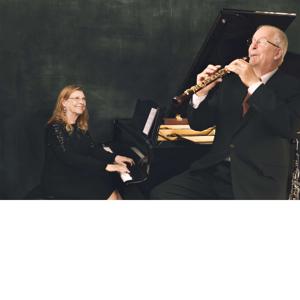


Fratres, ("Brothers") by the Estonian composer Arvo Pärt (1935–), is a set of nine variations on a slow, sustained melody that suggests liturgical chants of Estonian Orthodox religion. The composition uses three parallel voices, one high, one middle and one low, each with a distinctive tonality and rhythmic texture. The variations are six to nine measures long, the pitches dictated by an unchanging mathematical algorithm that generates variety and a sense of calm progression within a unified framework. Each variation ends in a percussive two-measure "refuge," used like the bell in a group meditation, signaling that the participants will pause, reflect and move on. Pärt refers to his compositional technique as tintinnabuli, Latin for the little bells carried in a procession.
Fratres was first composed in 1977 as an instrumental piece for chamber orchestra with variable instrumentation. In 1980 Pärt scored it for piano and violin. It has become widely popular in concert music, in over a dozen films and documentaries, and in recordings for guided meditation. From 2011 to 2018, Pärt was the world's most performed living composer.
Dolci thanks Gloria Cheng, our friend and mentor, for her invaluable help in adapting Fratres for piano and oboe and in preparing our performance. Our changes from the published score for violin and piano retain the original pitches and rhythms as best we can. Our occasional octave transpositions and instrumentation changes reflect technical and metabolic necessity.
Sonatine (1905) Maurice Ravel (1875-1937)
Arranged for oboe and piano by David Walter
1. Modéré (moderate)
2. Mouvement de menuet (Minuet tempo)
3. Animé (animated)
Ravel opens each movement of his Sonatine with a two-note interval that establishes a precise mood with its color and rhythm.
The first movement, marked Modéré, opens with a tentative-sounding descending fourth – F# to C#. This is an emotionally laden interval for Ravel. For example, in his opera “L’enfant et les sortilêges” (“The child and the magic spells”), he sets the word “maman” to this interval as a frightened child cries out for his mother.
The second movement, a minuet, opens with a stable, decisive interval, a rising fifth. The minuet form hints of a magnificently costumed ball in a palace long forgotten, like Ravel’s earlier “Pavane for a Dead Princess.”
The final movement, marked Animé and then Agité, opens with the original notes of the first movement, but in reverse order: a rising fourth, C# to F#. It is a questing rising fourth, leaping forward. Between forays into mysterious realms, the melody rocks indecisively, its meter stretching into four- and five-note bar lengths. A second version of the two-note motto emerges, now back in its original shape as a falling fourth.
Chansonette Sir Hamilton Harty (1879-1941)
Sir Herbert Hamilton Harty, born in Northern Ireland, had a successful career as organist, conductor, accompanist and composer. He moved to London in 1900 and became known for his skillful accompaniments of such vocalists and instrumentalists as Fritz Kreisler. He composed constantly throughout his career, and published Chansonette as the second of Three Minatures for Oboe and Piano in 1911.
From 1932 to 1935, he was conductor of the London Symphony Orchestra and spent the rest of his life guest conducting, despite the loss of his right eye from a brain tumor in 1936.
Fantasy Pieces for Oboe and Piano, op. 2 Carl Nielsen (1865-1931)
Carl Nielsen offered the following description in a program note for his 1889 Fantasy Pieces: “The first slow piece gives the oboe the opportunity to sing out its notes quite as beautifully as this instrument can. The second is more humorous, roguish, with an undertone of Nordic nature and forest rustlings in the moonlight.” Both pieces suggest fanciful tales in the spirit of Nielsen’s Danish compatriot Hans Christian Andersen.
Each of Felix Mendelssohn’s eight books of Songs Without Words is a cycle of six short, distinctive pieces in song form for solo piano. This arrangement of his Book 3 for oboe and piano is by the eminent French oboist and composer David Walter.
Mendelssohn’s friend Marc-André Souchay once asked for permission to set his own poems to the Songs Without Words. Mendelssohn refused, and explained: “What the music I love expresses to me is not too indefinite to put into words, but on the contrary, too definite.”
Song number 6 was given the title Duetto by Mendelssohn. It was composed in Frankfurt in June 1836, soon after he had met his future wife.
Book III, opus 38 (1836-37)
Marin Marais (1656-1728) was a composer and gamba player whose job was to provide bedtime music for King Louis XIV, Les folies d’Espagne was a popular song on which Marais composed a set of 31 variations for this purpose, and published as part of his second book of “Pieces de viole” in 1701. This version was arranged by Jennifer Paull.
Sonata for Oboe and Piano (2009) Peter Hope (1930 - )
Peter Hope’s Oboe Sonata opens with an elegaic theme that he weaves through the entire composition. He transforms it through increasingly lively dance forms, until it becomes a jitterbug over a boogie-woogie bass. This sonata challenges the performers with intricate rhythms and harmonies, and rewards the audience with a stream of singable, danceable, memorable music.
Hope wrote title and theme music for a great many popular British radio and TV programs, making his music more familiar than his name to the British public. About the year 2000 he returned to writing concert music. He was commissioned in 2009 to write a tribute to the English oboist Lady Evelyn Barbirolli (1911-2008), who had played in the first symphony orchestra concert Peter Hope ever attended. The outcome of this commission was his Sonata for Oboe and Piano.
Three Romances, opus 94, by Robert Schumann (1810-1856)
Nicht schnell — Einfach, innig — Nicht schnell
Three Romances are a set of instrumental love songs Robert Schumann wrote in 1849 as a Christmas present to his young bride Clara. They open with confessional intimacy, the oboe personifying Robert, the piano Clara. At first the couple sing tentative questions and answers, but in the second Romance the voices become agitated as they interrupt each other in a staggered rhythm. In the last Romance, the lovers declare love in a recurring unison motive, but Clara’s piano answers each unison with a solo cadence, sadly prefiguring for us her long life alone after Robert’s suicide.
Today’s compositions have been arranged for oboe d’amore and piano. Most were composed for other instruments, but Debussy designated oboe d’amore (on the top staff of the score!) in his orchestration of “Gigues” for Images for Orchestra.
The modern oboe d’amore is a slightly larger and lower-pitched version of the modern oboe, with a globular bell. These differences from the standard oboe lend it a mellower, less edgy tone that blends nicely with other instruments and with the human voice. Its native pitch of “A” below middle “C” places it in the sweet spot among melody instruments.
1 “Andante sostenuto” (originally for solo piano) from Songs Without Words
by Felix Mendelssohn (Germany, 1809-1847)
2 “Adagio” (originally for solo piano) from Songs Without Words
3 “Salut d’Amour” by Edward Elgar (England, 1857-1934) (originally for violin
and piano)
4 “Arietta” by S. M. Maykapar (Ukraine, 1867-1938) (originally for solo piano)
5 “Gigues” from Images by Claude Debussy (France, 1862-1918) (originally for
oboe d’amore and orchestra,)
#1-2 were arranged by David Walter and published by Billaudot.
#3-5 were arranged by Robert Rainford and published by Forton Music
The oboe d’amore is the gentle mezzo-soprano member of the oboe family. It was developed in the 17th century, flourished as a solo instrument in the time of Bach and Handel, and was mostly ignored by the Romantic composers. Debussy and Ravel specified oboe d’amore for successful orchestral pieces, spurring the development of modern instruments with similar acoustics to their Baroque predecessors, but with key mechanisms similar to the modern oboe. “The Swan” was choreographed by Mikhail Fokine in 1905 for Anna Pavlova, who performed it over 4,000 times. Today’s compositions were arranged for modern oboe d’amore and piano by Robert Rainford and published by Forton Music.
1. “Qui Sedes” from Mass in B-minor by J. S. Bach (1685-1750)
2. “Largo” from Serse by George Frideric Handel (1685-1759)
3. “Voi, che sapete” from The Marriage of Figaro by W. A. Mozart (1756-1791)
4. “Traumerei” from Kinderszenen by Robert Schumann (1810-1856)
5. “The Swan” from Carnival of the Animals by Camille Saint-Saëns (1835-1921)
6. “Anitra’s Dance” from Peer Gynt by Edvard Grieg(1843-1907)
The story continues. The miller-maid asks the young miller for the green ribbon by which his lute hangs, and he gives it to her, still imagining she loves him. Before he can summon the courage to tell her his love, a horn blows, dogs yap in chromatic cacophony, and a bragging, noisy hunter gallops down to the mill (all described in the text and echoed in the piano part (“The Hunter”). The miller's response, “Jealousy and Pride” is a hissy fit worthy of grand opera. The poor fellow nonetheless loses the miller-maid to his noisy rival (“Withered Flowers”). After a long dialogue in which the brook tries but fails to reassure him that better times will come to him in the springtime (“The Miller and the Brook”), he throws himself into the millpond, and the brook rocks him gently into endless sleep.
These are today’s song titles, as translated by Michèle Lester.
13. With the Lute’s Green Ribbon
14. The Huntsman
15. Jealousy and Pride
16. The Beloved Color
17. The Wicked Color
18. Withered Flowers
19. The Miller and the Brook
20. The Brook's Lullaby
From the publisher's feed