
Sign up to save your podcasts
Or

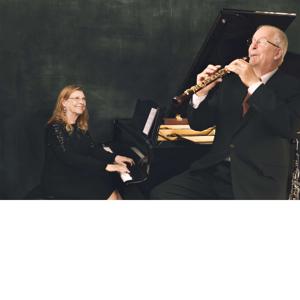


Die Schöne Müllerin Franz Peter Schubert (1797-1828)
(“The Pretty Miller-Maid”)
When the Austrian composer Franz Schubert wrote this song cycle he was chronically ill, frustrated in love, and knew he would soon be dead. He was fascinated, however, by Goethe's belief that experiencing the beauty of nature would purify his soul. This cycle of 20 songs is drawn from a long narrative poem by Schubert’s German contemporary Wilhelm Müller (1794-1827). We will present it in two episodes, beginning with Songs 1-12.
In the story, an eager young miller has just completed his apprenticeship and sets off to find new work (“Wandering”). The water’s lively sound, which flows and burbles in the piano part through most of the songs, urges the youth to follow the stream (“Where To?”). He comes to a mill (“Halt!”) and is hired by its owner, who has pretty daughter. The young man falls in love at first sight. He works hard to impress them (“After the Day’s Work”). He sings to the brook, but not to her, of flowers, stars and dewdrops. She sits trustingly with him by the brook (“Rain of Tears”). He imagines she shares his love (“Mine!”). Unable to tell her how he feels, he hangs his lute on the wall. Untouched, its strings vibrate quetly in the air (“Pause”).
These are today’s song titles, as translated by Michèle Lester.
1. Wandering
2. Where to?
3. Halt!
4. Thanks to the Brook
5. After the Day’s Work
6. Curiosity
7. Impatience
8. Morning Greeting
9. The Miller's Flowers
10. Rain of Tears
11. Mine
12. Pause
In Episode 25 we will present songs 13-20.
Sonatina, opus 100 Antonin Dvorak (1841-1904)
I. Allegro risoluto
II. Larghetto
III. Scherzo
IV. Finale
Dvorak wrote this Sonatina for his teenaged son and daughter while living in America with his family for three years in the 1890s to study American folk music, with a goal of helping to create an American style of classical music. During his summers in the Czech-speaking prairie town of Spillville, Iowa, he composed four concert works on American themes: the symphony "From the New World," the "American" string quartet, the Cello Concerto, and this Sonatina. It opens with a quote from a Gold Rush song, "My Darling Clementine". The second movement is based on Native American chants and dances the family heard on a visit to Minnehaha Falls. The Scherzo suggests city park carousel music. The Finale, though a polka, is in the spirit of another rural hoe-down.
This adaptation for oboe and piano was arranged by Dolci to fit within the range of an oboe and the respirational needs of an oboist.
Minuet from Suite Bergamasque (1890-1905) Claude Debussy (1862-1918)
In 1889, Claude Debussy, already an accomplished and innovative composer, heard Javanese gamelan music at the Exposition Universelle in Paris, and soon changed Western music by demonstrating how music could be structured in scales and rhythms far removed from the rules then taught at the Paris Conservatoire. This piece was written for piano solo and arranged for oboe and harp or piano by the harpist Susan Jolles and the oboist Bert Lucarelli.
Sonata for Oboe and Piano (1921) Camille Saint-Saëns (1835-1921) Camille Saint-Saëns wrote this joyful oboe sonata in a year of sadness at the end of his life, self-exiled in Algiers. Each of its three movements is a tone poem with its own mood and locale. The first movement, a Barcarolle, paints a watery scene. Opening calmly, the tempo increases like an afternoon sea breeze, then returns to calmness. The second movement suggests a solitary shepherd sounding a horn call across a magnificent valley, then piping a lilting Siciliano and closing with a farewell horn call. The finale is a Fandango, with sounds of frenzied castanets and the stamping boots of Spanish dancers.
Prélude et Valse lente (1886) Marie de Grandval (1828-1907)
Marie, Vicomptesse de Grandval, was an accomplished French composer, and a generous supporter of other composers. To avoid scandalizing her titled family she published mostly under pseudonyms and little of her work is now available. She dedicated this Prélude and Slow Waltz to her friend Georges Gillet of the Paris Opera, who was especially renowned for his beautiful tone and expressive playing on the cor Anglais. Grandval’s gratitude to her teacher Chopin is made clear when a Mazurka, not a trio, pops up in the middle of her waltz. This modern edition is by Bruce Gbur for Prairie Dawg Press.
Variations on a Theme of Joseph Haydn (1968) Hendrik Andriessen (1892-1981)
Hendrik Andriessen was a prominent Dutch composer and organist. His family populated the Netherlands with excellent composers and musicians throughout the 20th century. This piece for cor Anglais and piano is based on a clever, syncopated theme from the trio of Haydn’s Piano Sonata #26. It retains Haydn’s genial spirit while transforming the theme with rhythms and harmonies of his own time.
The cartoon is by Gerard Hoffnung.
Songs Without Words by Felix Mendelssohn (1809-1847)
Each of Felix Mendelssohn’s eight books of Songs Without Words is a cycle of six short, distinctive pieces in song form for solo piano. This arrangement of his Book 2 for oboe and piano is by the eminent French oboist and composer David Walter.
Mendelssohn was probably the first composer to use the title “Songs Without Words.” His friend Marc-André Souchay once asked for permission to set his own poems to the Songs Without Words. Mendelssohn refused and explained: “What the music I love expresses to me is not too indefinite to put into words, but on the contrary, too definite.”
Book II, opus 30 (1833-34)
7. Andante espressivo
8. Allegro di molto
9. Adagio non troppo
10. Agitato e con fuoco
11. Andante gracioso
12. Venetianisches Gondollied
Mikhail Ivanovich Glinka (1804-1857) was the first Russian composer to earn international fame in the world of European classical music. His work reflected the early Romantic icons of his era – he admired Berlioz, Bellini and Mendelssohn. He traveled throughout Europe and visited Liszt. He studied Russian liturgical and folk melodies and incorporated them into his writing, beginning with his second opera, Ruslan and Ludmila (1842).
Ruslan and Ludmila is based on an epic fairy tale by Pushkin. Set in medieval Kiev and mythical realms, it tells of the abduction of Ludmila and her rescue by her suitor Ruslan, with the aid of a gigantic talking head, a kindly wizard, and a great deal of stage magic. In Dolci’s performance the transcription of the opera score for oboe and piano is by G. Konrada.
Ludmila’s Cavatina from Act 1
At Ruslan and Ludmila’s wedding feast, Ludmila tells her father she is afraid bad things are about to happen. She has no idea. A crash of thunder, a blinding flash, the stage goes dark, and when the lights come up she has vanished, abducted by the giant Chernomor. Ruslan sets off to rescue her.
Dances from Act 3
In the mad sorceress Naina’s castle, captive maidens perform exotic dances to distract the knights who are searching for Ludmila.
The Mariinsky Ballet has published a video of these dances, conducted by Valery Gergiev, at https://www.youtube.com/watch?v=RYqjQiFgn9g.
At the age of 20, Johannes Brahms (1833-1897) lived with Robert and Clara Schumann in Düsseldorf, helping to care for their children in return for lessons in composition. Brahms wrote “Mondnacht” in that year, using the same text as Schumann’s “Mondnacht,” from more than a decade earlier. Robert praised Brahms in his writing and influenced his own publisher to print the song, launching Brahms as a composer. After composing his fourth and last symphony in 1884, Brahms devoted the rest of his career mainly to solo piano pieces, chamber music and songs.
Mondnacht (Moonlit Night, 1853)
Five Songs, op. 107 (1886-1888)
#1. To the Haughty Woman
Your heart: do you even have one?
#2. Salamander
A bad girl throws a salamander into a fire. A cool devil,
though, he thrives on hot love.
#3. The Girl Speaks
She speaks to a swallow, asking about her new husband.
#4. Catkins
Pussywillows welcome the springtime. I break one off
and tuck it in my old hat.
#5. Girl’s Song
In the spinning shop, boys come to woo the girls. I weep
because I was not chosen.
Gypsy Songs, op. 103 (1888)
#6 Three Little Roses in a Row
Green Grass Snake (from Serpent Music, 1977) Michael Kibbe (1945- )
“A sunlit emerald shimmering to tease the eye; a parting of the grass—this ribbon passes by.” Kibbe wrote this music for a performance piece. “It was premiered in Los Angeles with the composer playing the oboe. A group of interpretive dances writhed, snakelike, across the floor around the two instrumentalists.”
The Grasshopper (from Two Insect Pieces,1934) Benjamin Britten (1913-1976)
At the age of 21, Benjamin Britten wrote Two Insect Pieces for his friend, the oboist Sylvia Spencer, and played it with her privately. Its first public performance was after both their deaths, in a memorial service for Spencer.
That Mockingbird (from On Holt Avenue, 2006) Jenni Brandon (1977- )
“Written for the oboist Jennifer Mitchell, this piece portrays life ‘On Holt Avenue’ in Los Angeles, California as told by the composer.” Mockingbirds are garrulous, accurate mimics of other birds. They fool nobody, however, because they are way too loud and have no editor. Their nonstop recitals are strings of unrelated sound bites, like an iPod running amok.
Gardens (1975) Peter Schickele (1935- )
1. Morning
2. Noon
3. Night
Peter Schickele is a prolific composer, musician, author and satirist. He writes musical parodies in the persona of P.D.Q. Bach. For other compositions he uses his own name. In this piece he shows his reflective side and his skill as a musical colorist.
All quotes are from the composers. Internet links to their biographies are:
https://www.michaelkibbe.com
https://www.britannica.com/biography/Benjamin-Britten
https://jennibrandon.com
https://www.schickele.com/psbio.htm
Sonata for Oboe and Piano (2004) Bill Douglas (1944-)
Bill Douglas is a Canadian-born bassoonist, pianist and composer who now lives in Boulder, Colorado. He toured and recorded for thirty years with the classical clarinetist Richard Stoltzman and with his own jazz ensembles. Among the musicians he says influenced him are J. S. Bach, Bill Evans, Keith Jarrett, Josquin Desprez, William Byrd, Dietrich Fischer-Dieskau, Ralph Vaughan Williams and Ali Akbar Khan. He wrote this sonata for the oboist Alan Vogel. He has written that “(his) basic philosophy of music is that it can be helpful to the world. It can evoke such positive emotions as compassion, tenderness, strength, nobility, upliftedness, and joy.”
Bill Douglas provided this program note in the score: “The first and third movements follow the standard bebop jazz form: a somewhat complex theme played in unison, followed by an improvisation on the chord progression of the theme and then a return to the theme with variations. In this case, however, the ‘improvisation’ sections are completely written out. The third movement was influenced by West African rhythms.”
Scores and recordings of Bill Douglas’ work, including a wonderful CD of vocal rhythm exercises, are available at https://billdouglas.cc.
photo ©Lefteris Padavos 2016
Sonata for Oboe and Piano (2009) Daniel Baldwin (1978-)
I. Prairie Song
II. Trail of Tears
III. Spirit of the Prairie
Outside the White House this June 2020 Federal troops dispersed protesters who were attempting to topple an equestrian statue of President Andrew Jackson, a self-proclaimed “Indian Fighter” who signed and enforced the Indian Removal Act of 1830 under which Native Americans of the Southeastern states who would not end their tribal affiliations were forced to leave their ancestral homes and march over 1,000 miles to prairies west of the Mississippi River, with devastating loss of life along the way. Their route is still called “The Trail of Tears.”
Daniel Baldwin was born in Blackwell, OK, a town built by Andrew Jackson Blackwell in the 1890s on land formerly part of the Cherokee Reservation.
Baldwin’s program note: "The first movement conveys the image of a person standing in a wide open field of grass, staring off into the horizon at a spectacular sunrise. The movement is about the sheer beauty of the Great Plains. The second movement is from the perspective of the American Indians. Fear, doubt, uncertainty and sadness ... The final movement, a Native American dance, sweeps one back into the open field, gazing into the Oklahoma sunset."
From the publisher's feed