
Sign up to save your podcasts
Or



Guests: Kelten, James
First, Gilgamesh ignores the branch of the government standing between him and a unilateral declaration of war on King Aga of Kish, the mightiest kingdom in the Mesopotamian alluvium at the time. Infrastructure is boring, kings are always right, and war is always glorious!
Then, we look at the city of Kish during the Archaic period (2900-2600 BCE), which was apparently the seat of a powerful kingdom controlling much more territory than any other Sumerian city-state at the time.
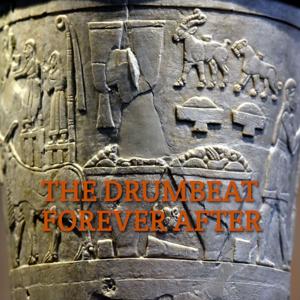
Then, we look at the oldest historical document from Mesopotamia, and our only historical document from this period of Kish's history. The "Prisoner plaque" totals 36,000 prisoners of war taken from at least 25 towns and villages during a series of military campaigns. Zababa is the god of manhood!
Then, a look at the institution of the kingship of Kish (which, as you may know, long outlasted the kingdom of Kish as such). After revisiting the Sumerian King List, we meet two of our best candidates for the first kings to appear in both the Sumerian legendary tradition and the historical record: Enmebaragesi and his son Aga (or Akka), both of whom appear in this episode's Gilgamesh story.
Speaking of which, because this is a Sumerian epic poem, it turns out that kings are always right and war is always glorious (for our heroes)! Gilgamesh captures his rival Aga, son of Enmebaragesi, and refers to a lost historical tradition of past interaction between Unug and Kish in deciding how to treat his prisoner.
Questions? Feedback? Email us at [email protected].
Follow us on Twitter and Instagram @drumbeatforever
Works cited
Guest: James
First: To punish Gilgamesh, Inanna sends the massive Bull of Heaven to ravage Unug. But, as it destroys farmland and drinks the rivers dry, Gilgamesh sits idle, drinking beer and listening to music!
Then, we visit Ur during the Archaic period (2900-2600 BCE) and finally take a look at the first certainly Sumerian writing. Administrative texts record a complex economy centered on the temple of the moon god Nanna, school tablets give us a look at scribal education, and the first lists of deities give us a faint glimpse of early Sumerian religion (although most of the gods listed are obscure).
Also: was Ur part of a league of Sumerian cities? Scattered evidence from the first half of the 3rd millennium BCE points to a confederation of city-states in southern Sumer (Ur, Unug, Nippur, Larsa, etc), who may have allied with each other to counterbalance the power of Kish (a large kingdom in the northern alluvium and our destination next episode!).
Finally, Gilgamesh faces off against the Bull of Heaven! We discuss the logistics of animal sacrifice and what may be a Sumerian euphemism describing Gilgamesh slapping Inanna with a wet bull pizzle.
Questions? Feedback? Email us at [email protected].
Follow us on Twitter and Instagram @drumbeatforever
Works cited
Guest: Lily
First, we finally meet Gilgamesh! Cherished in Unug, heroic bearer of a scepter of wide-ranging power, noble glory of the gods, angry bull standing ready for a fight, etc. We read one of two Sumerian poems dealing with Gilgamesh's conquest of the remote Mountains of Cedar-felling and his fight against the mighty Ḫuwawa, the demigod who rules the mountains at the edge of the world!
Then: an introduction to the Early Dynastic period (2900-late 2300s BCE) in Sumer. We take a first look at the geography of the 3rd-millennium Mesopotamian alluvium; the nature of temples, palaces, and city-states; the emergence of silver as money; the broader world surrounding Sumer; and language and identity in Mesopotamia.
Then, a look at the Sumerian King List, a writing exercise (and an ideological tapestry of various folklore traditions) which often gets mistaken for an objective historical document. What can it tell us about the Early Dynastic period?
Then, a look at our evidence for a historical King Gilgamesh of archaic Unug (2900-2600 BCE?). What does a king have to do in the 28th century BCE to be worshipped as a god by the 26th century?
Then, we read the rest of this version of the Ḫuwawa story. The half-divine Gilgamesh reifies his power over both humans & the natural world by breaking an oath between gentlemen, on the one hand, and domesticating a demigod and exploiting his homeland for raw resources, on the other. Warrior, you lied!
Questions? Feedback? Email us at [email protected].
Follow us on Twitter and Instagram @drumbeatforever
Works cited
Guest: Sheila
First, strong Copper casts his legitimate insults, insults of a miserable dog, against Silver. In my delusional hubris, I've arbitrarily pieced this particular debate text together from disparate fragments and granted it unnatural life beyond death via galvanic abominations beyond the comprehension of its original creator. As usual, I'm using the ETCSL translation.
Then, we track the development of copper metallurgy in the Near East, stretching from the early Neolithic to the Uruk and beyond. Sheila, actual chemistry expert, helps us understand the reactions occurring inside these Chalcolithic crucibles.
Then, a look at specific metals: copper, silver, gold, lead, and iron— all available to smiths at the very beginning of the so-called Bronze Age.
Speaking of which, why do we call it that anyway? Now that this podcast about the Bronze Age has finally reached the beginning of the story, it's worth explaining what exactly the familiar Stone Age / Bronze Age / Iron Age trichotomy means for our understanding of world history.
Then, we learn about arsenical bronze, the first intentional copper alloy to spread across the Near East. This, predictably, segues into an examination of the various health effects of these various metals on the people working with them. I learned something new about some familiar gods, and now you will too!
Finally, the conclusion (such as it is) to Copper's debate with Silver. Silver puts up a valiant defense, given that the constraints of the genre preordained his failure. Father Enlil be praised!
Questions? Feedback? Email us at [email protected].
Follow us on Twitter and Instagram @drumbeatforever
Works cited
Guests: Jojo, Sami
First, at the dawn of cosmic time, Sheep and Grain descend from the abode of the gods, get drunk, and start a fight.
Then, after a quick historical introduction, we take a thorough look at the Uruk-period wool industry, from gathering sheep in one place for shearing to spinning thread to weaving (on various types of loom) to dyeing, fulling, sewing, and so on.
Then, we look at some other fibers: flax, being older and more firmly entrenched than wool, remained a valuable fabric well into historical times; nettles, on the other hand, had a slightly shorter tenure as a botanical source of textile fibers.
Then, Sheep and Grain take their dispute to the gods, who declare the obvious winner. Praise be to father Enki!
Questions? Feedback? Email us at [email protected].
Follow us on Twitter and Instagram @drumbeatforever
Works cited
Guest: Kelten
First: Anzu, the mythical bird guarding the mountains at the edge of the world, comes home to find that Lugalbanda has treated his beloved chick with the utmost generosity. In return, he makes several attempts to grant Lugalbanda his destiny.
Another fully new (as of Nov 2024) episode, which I’ve been waiting to post since summer 2022. This one is about the Proto-Elamite period, Iran’s answer to the Uruk expansion. Scribes at Susa (among other centers) created their own writing system and borrowed Unug’s numerical system to administer literate outposts spanning much of western and southern Iran, likely to facilitate a trade network similar to the one centered on Susa during the Uruk period.
Then, Lugalbanda rejoins the soldiers who left him for dead in a mountain cave! Can he help Enmerkar win Unug's war against Aratta?
Questions? Feedback? Email us at [email protected].
Follow us on Twitter and Instagram @drumbeatforever
Works cited
Guest: Kelten
First, we continue the story of Lugalbanda as he leaves his mountain cave. After he submits to the country of oppression, Zangara, the god of dreams, asks him for a space knife and goats of varying quality.
Then, we head up to central Mesopotamia to visit the land of Akkad during the Jemdet Nasr period, starting with the eponymous town of Jemdet Nasr, which produced over 200 tablets. We also visit the apparent temple to Inanna at Tell Uqair and the famous Blau monuments, which appear to mention the ancient name of Tell Uqair. Then we finish up at Kish, a city founded during this period which would rule much of the Mesopotamian alluvium by the mid-2000s BCE.
Finally, we begin the story of Lugalbanda and Anzu. Still lost in the distant mountains, Lugalbanda sets out to ask Anzu (the mythical bird guarding the mountains at the edge of the world) for directions. Stay tuned for part three!
Questions? Feedback? Email us at [email protected].
Follow us on Twitter and Instagram @drumbeatforever
Works cited
Guest: Kelten
First, the fragile peace has collapsed, and the virtuous king Enmerkar leads the army of fair Unug in an invasion of the faraway mountain kingdom of Aratta. However, en route to otherwise certain victory, the king's mightiest warrior, Lugalbanda, falls sick! His fellow soldiers, unable to help him and fearing the worst, lay him in a cave in the mountain wilderness as if it were his tomb.
Then: the Uruk period is over, long live Unug! We cover the Uruk III period at Unug, elsewhere known as the Jemdet Nasr period, around the turn of the millennium. The same temple administration continued producing the same kinds of bureaucratic records, with some innovations to the writing system.
We look at evidence of what appear to be a tradition of ritual offerings to Inanna sent by a league of other cities from the alluvial plain, from as far north as Jemdet Nasr and Tell Uqair. Also, a text which may be a lexical list or possibly the first work of literature known from human history!
Then, Lugalbanda prays to a series of gods, to forestall the funeral feast his friends have already arranged for him. Will he ever leave the mountain cave?
Questions? Feedback? Email us at [email protected].
Follow us on Twitter and Instagram @drumbeatforever
Works cited
Guest: Kelten
First, a familiar story that just happens to involve monumental construction projects, clay bricks, and universal language. Behold!
Then, we take a look at Unug around the 3200s BCE, when the Uruk expansion came to a close and the city center underwent another monumental renovation. Was this city ruled by the so-called “priest-king” depicted conducting rituals, leading troops in battle, and punishing prisoners of war?
Then, at long last, the bureaucrats in the E-anna temple complex finally get around to inventing writing! We take a stroll through the long prehistory of administrative record-keeping, the means by which young scribes learned to write, and the fundamental shift in world history precipitated by the adoption of cuneiform.
Finally, we close with a hymn to Nisaba, goddess of writing (and cereal agriculture, of course)— good woman, chief scribe of An, record-keeper of Enlil, wise sage of the gods!
Questions? Feedback? Email us at [email protected].
Follow us on Twitter and Instagram @drumbeatforever
Works cited
Guest: Liyan
First, another debate poem! Hoe, child of the poor, bereft even of a loincloth, starts a quarrel with the Plow. A surprising amount of Sumerian literature boils down to the logistical complexity of various tasks facing early state institutions, not least among them the upkeep of various agricultural tools.
Then, we look at the Late Uruk state from the perspective of its labor force. To paraphrase Bertolt Brecht, somebody had to haul up all those lumps of rock, and it certainly wasn’t the priest-kings depicted in visual art. We also look at an industrial revolution of sorts, as unskilled workers started to mass-produce undecorated (beveled-rim) bowls to fulfill the growing needs of the elite households at the center of the state.
Finally, Enlil (god of kingship, king of the gods) intervenes in the debate between Hoe and Plow. Praise be to Nisaba!
Questions? Feedback? Email us at [email protected].
Follow us on Twitter and Instagram @drumbeatforever
Works cited
From the publisher's feed
1,859 Listeners
6,223 Listeners
3,380 Listeners
286 Listeners

2,051 Listeners