
Sign up to save your podcasts
Or

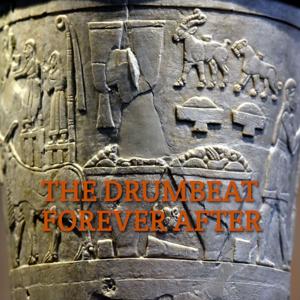


(Re-recorded as of November 28, 2022)
Guest: Kelten
First, the warrior-prince of an orderly Sumerian heaven hears of a challenge to his authority and sets out to meet it with his obsequious talking mace.
Then, we begin our look at the agricultural revolution with a look at the domestication process that turned wild large-seeded grasses on the fringes of Epipaleolithic forests into domestic staple crops of large, complex societies. What role did the volcano Karaca Dağ play in cereal domestication? What does "domestication" mean, anyway?
Then, we follow the histories of specific grains: emmer, einkorn, and barley. Also, humans indulge their fondness for getting drunk and find their oral health scourged by the sequent effects. What do humans give up in return for a reliable grain surplus?
Then, we visit Göbekli Tepe, which ties together a number of threads that will be important throughout this podcast's entire run: monumental construction, feasts, collective labor projects, the role of leaders in their communities, and the various ways those factors interact with each other. Also, more relevant to the Pre-Pottery Neolithic specifically, we take a look at the local head cult!
Finally: After the battle, because Sumerian mythology is rarely subtle, Ninurta invents forced labor, hydraulic engineering, and intensive agriculture.
Questions? Feedback? Email us at [email protected].
Follow us on Twitter and Instagram @drumbeatforever
Works cited
(Re-recorded as of November 26, 2022)
Guests: Kelten, Annika
First, a brief introduction to the focus of the podcast: ten episodes on the Neolithic, about ten more on the Chalcolithic period (the Ubaid and Uruk periods), and then at least twenty episodes on Early Dynastic Sumer.
Then, after a quick jaunt through the Paleolithic, we visit the Epipaleolithic Natufian culture in Syro-Palestine (alias The Levant) around 13,000-10,800 BCE. What did their society look like before the agricultural revolution?
Then, the Younger Dryas (ca 10,800-9600 BCE) was a brief return to glacial climate conditions that marked the boundary between the Pleistocene and the Paleolithic on one side and the Holocene and the Neolithic on the other. How did it affect the Syrian village of Abu Hureyra? What about the local tortoise population?
Then: the dawn of the Neolithic! The early Holocene period (starting ca 9600 BCE) saw a warmer, wetter climate and increasing experimentation with cultivating certain types of large-seeded grasses— keep listening to see what they do with it!
Questions? Feedback? Email us at [email protected].
Follow us on Twitter and Instagram @drumbeatforever
Works cited
From the publisher's feed
1,859 Listeners

6,223 Listeners
3,380 Listeners
286 Listeners

2,051 Listeners