
Sign up to save your podcasts
Or

By Financial Times
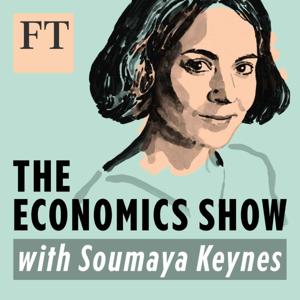
The Economics Show with Soumaya Keynes is a new weekly podcast from the Financial Times packed full of smart, digestible analysis and incisive conversation. Soumaya Keynes digs deep into the hottes
... more

4.7
122122 ratings


The podcast currently has 137 episodes available.
The most played episodes among Podcast App listeners.
Federal Reserve chair Kevin Warsh took to the stage at Jackson Hole under pressure. Inflation is sticky, bond markets have been wobbling and his insistence on minimal Fed communication has been seen by some to make matters worse. Soumaya speaks to Torsten Slok, chief economist at Apollo Global Management, to discuss what Warsh did (and didn’t say), the changing relationship between the Fed and the Treasury and how the central bank should fight America’s growing fiscal issues. Subscribe to Soumaya's show on Apple, Spotify, Pocket Casts or wherever you listen. Join Soumaya Keynes on Saturday September 5 at Kenwood House Gardens in London, or online as the FT Weekend paper comes to life. Register now at ft.com/festival and enjoy 10% off with code FTPODCAST. Further reading: Hawkish Kevin Warsh hints Fed will raise rates if inflation does not fall soon Warsh settles some nerves at Jackson Hole Scott Bessent’s bond intervention puts US Treasury on collision course with Fed Presented by Soumaya Keynes. Produced by Mischa Frankl-Duval. Original music and sound design by Breen Turner. Manuela Saragosa is the executive producer. Flo Phillips is the FT’s head of audio. Read a transcript of this episode on FT.com Hosted on Acast. See acast.com/privacy for more information.

In the western world, richer people tend to be thinner – especially women. But does wealth make people thin, or does being thin make them wealthy? And could the rise of weight-loss drugs such as Mounjaro and Wegovy give people – especially women – greater control over their economic outcomes? Soumaya speaks to Harvard professor Rebecca Diamond, the author of a new working paper that finds female users of GLP-1 drugs are more likely to find jobs and romantic partners. Soumaya also speaks to FT consumer editor (and GLP-1 user) Claer Barrett to discuss the drugs’ effects on consumer habits – and the economy at large. Subscribe to Soumaya's show on Apple, Spotify, Pocket Casts or wherever you listen. Further reading: The economics of women’s weight Does the weight-loss revolution show up in the data? The challenges of a weight-loss economy Presented by Soumaya Keynes. Produced by Mischa Frankl-Duval. Original music and sound design by Breen Turner. Andrew Georgiades is the broadcast engineer. Manuela Saragosa is the executive producer. Flo Phillips if the FT's head of audio. Read a transcript of this episode on FT.com Hosted on Acast. See acast.com/privacy for more information.
The 1873 Gründerkrach, the spectacular stock market crash that followed Germany’s unification, is one of history’s great financial maelstroms. But its most enduring legacy isn’t about money. Host Robin Wigglesworth speaks to Pulitzer Prize-winning author Liaquat Ahamed about how the resulting economic malaise fuelled social division and transformed old prejudices into antisemitic conspiracy. It gave birth to ideas that would resurface with catastrophic consequences decades later in the 20th century. Further reading: 1873: The Rothschilds, the First Great Depression, and the Making of the Modern World (2026), by Liaquat Ahamed Gold and Iron: Bismarck, Bleichröder, and the Building of the German Empire (1977), by Fritz Stern Hosts: Gillian Tett and Robin Wigglesworth Senior producers: Michela Tindera and Laurence Knight Executive producer: Manuela Saragosa Original music and sound design: Breen Turner Broadcast engineers: Bianca Wakeman and Petros Gioumpasis Podcast development: Laura Clarke FT global head of audio: Flo Phillips Video editors: Josh Divney and Kristen Kenyon at Podcast Discovery Learn more at www.ft.com/tsom or get in touch at [email protected] Hosted on Acast. See acast.com/privacy for more information.
Productivity has been a problem for the past 15 years. In developed countries, weak demand, a lack of competition and a paucity of new ideas have all been blamed. Could AI finally reverse that trend? Soumaya speaks to Stanford economics professor Nick Bloom about why CFOs and CEOs expect AI to supercharge their businesses; how concentrated (or otherwise) the gains might be; and why working from home could be good for labour output… and fertility rates. Subscribe to Soumaya's show on Apple, Spotify, Pocket Casts or wherever you listen. Further Reading Is AI productivity growth in the room with us right now? How much value is AI really creating? Hosted by Soumaya Keynes. Produced by Mischa Frankl-Duval. Original music by Breen Turner. Sound design by Sean McGarrity. Andrew Georgiades is the broadcast engineer. Edwin Lane is the senior producer. Flo Phillips is the FT’s head of audio. Read a transcript of this episode on FT.com Hosted on Acast. See acast.com/privacy for more information.
As wealth becomes increasingly concentrated — and artificial intelligence threatens to shift even more income from workers to investors — has the US tax system become outdated? Stephanie Flanders speaks with Harvard professor Jason Furman, a former economic adviser to President Barack Obama, and Bloomberg reporter Caitlin Reilly about wealth taxes, capital gains, inheritance and whether taxing America's richest is politically or constitutionally possible. Hear more from Trumponomics: https://podcasts.apple.com/us/podcast/trumponomics/id1038108799 Hosted on Acast. See acast.com/privacy for more information.
The podcast currently has 137 episodes available.

4,110 Listeners

926 Listeners

292 Listeners

53 Listeners
355 Listeners

154 Listeners

92 Listeners

197 Listeners

657 Listeners

226 Listeners

2,553 Listeners

1,080 Listeners

140 Listeners

38 Listeners

81 Listeners

139 Listeners

188 Listeners

10 Listeners

18 Listeners