
Sign up to save your podcasts
Or

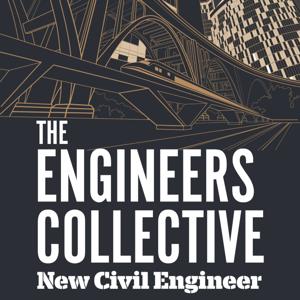


Think of digital twins in a construction setting and what usually comes to mind is a digital representation of physical asset that aids planning, design, delivery and operation of the infrastructure but what if they were used to help drive informed investment decisions too?
The investment opportunity is subject of the latest episode of The Engineers Collective. At the start of the episode NCE editor Claire Smith is joined by former executive director of the Centre for Digital Built Britain, Alexandra Bolton who discusses the findings of some work with the finance industry to look at the broader role of digital twins. Later on Claire looks at how the Cross River Rail project in Brisbane is putting the financial planning aspect of digital twins into action and speaks to the project’s CEO Graeme Newton and digital delivery manager Andrew Curthoys.
Did you enjoy this episode? Get involved and complete our Digital Twin Adoption and Deployment Survey:
https://forms.office.com/pages/responsepage.aspx?id=MpZ-Bkzq2U6ebeKUlW4oS68kcPWtiANHh_fR1lzduxxUN0RWNkswRjFVOVVQQTVHVlhMRE5XRTJHUi4u
The role of Internet of Things to empower fully intelligent infrastructure comes under the spotlight with a look at what it means for the future of civil engineering in this episode, which is sponsored by Farnell Electronics.
This episode is sponsored by Farnell.
Farnell is a global electronics and industrial solution provider, part of the Avnet group. We deliver products, services, and solutions to thousands of customers around the world who focus on electronic system design, manufacturing, industrial environments, as well as across maintenance and repair sectors. We offer a portfolio of close to 1 million products from thousands of world-leading supplier brands. Engineers come to us at any and every stage of their process, as we are well equipped to offer support with the products they need as well as adding value.
Farnell carry a vast product portfolio of around 80,000 industrial products to support customers in their Industrial Automation journey – all available for fast delivery. We are well placed to offer support across multiple leading supplier brands such as Omega, Schneider, Eaton, ABB, Omron, Siemens, Festo, Mitsubishi, and Phoenix Contact. Our Industrial Automation & Control Hub provides access to a wide range of technical resources to facilitate factory floor design and upgrade of existing systems.
Find out more at uk.farnell.com
Research by Cancer Research UK has shown that one in two people born after 1960 will be diagnosed with cancer in their lifetime and only half of those diagnosed will survive for 10 years or more. However, the charity’s evidence suggests that people working in the construction industry are more likely to get cancer and die from the disease compared to the national population.
To look at the factors that raise the risk for employees in the sector and work underway to address those, NCE editor Claire Smith is joined by Cancer Research UK senior cancer awareness nurse Jackie Kelly, Civil Engineering Contractors Association (CECA) national civil engineering director Peter Crosland and Amey managing director for transport infrastructure Peter Anderson.
Together they discuss both lifestyle factors and work-related risks that workers in the construction industry face that increase the potential for them to be diagnosed with cancer.
Jackie talks about how Cancer Research UK works with industry to address cancer risk and the work it is undertaken with Amey and the Stop make a change programme with CECA.
Peter from Amey explains how the firm’s partnership with Cancer Research UK came about and the positive change the workers driving through the business. Meanwhile Peter from CECA explains how his organisation has also been working with Cancer Research UK to create broader industry awareness.
The group discuss lessons they’ve learnt along the way by working in partnership and share those to help other companies looking to emulate the work that Amey and CECA have done.
Finally, Jackie shares some resources for people whose companies have not yet engaged at a corporate level and are looking for better information about cancer and support if they have been diagnosed with cancer. Jackie urged people to use current, credible, research-based information rather than general Internet searches and urge people to visit the Cancer Research UK website at CRUK.org or the NHS website at NHS.uk
Cancer Research UK also has a free helpline staffed by specialist nurses open Monday to Friday 9am to 5pm that anyone can call to get advice. To access that resource please call 0808 800 4040.
The Engineers Collective is powered by Bentley Systems. Around the world, engineers and architects, constructors and owner-operators are using Bentley’s software solutions to accelerate project delivery and improve asset performance for transportation infrastructure that sustains our economy and our environment. Together, we are advancing infrastructure.
Rail Accident Investigation Branch (RAIB) chief inspector Simon French joins NCE senior reporter Catherine Kennedy to discuss the final report into the fatal Carmont derailment in August 2020.
The accident occurred after a passenger train collided with debris washed from a drain onto the track following very heavy rainfall. Tragically three people died and the remaining six people on the train were injured.
French reflects on the key learnings from the report, which found that a drainage system and associated earthworks constructed by Carillion had not been built in accordance with the original design and so were not able to safely accommodate the water flows on the morning of the derailment.
He considers the importance of change management and the challenges posed by extreme weather, before reflecting back on how the rail industry has changed and improved since the RAIB was first set up.
He also reflects on what the industry still needs to address in terms of improving safety and fully embracing a safety culture going forward.
The Engineers Collective is powered by Bentley Systems. Around the world, engineers and architects, constructors and owner-operators are using Bentley’s software solutions to accelerate project delivery and improve asset performance for transportation infrastructure that sustains our economy and our environment. Together, we are advancing infrastructure.
Introducing circular economies into construction projects has been discussed as a concept for a number of years but this episode of the podcast looks at some projects that have actually put it into action.
Following some discussion on the main news stories of the month, NCE’s editor Claire Smith and head of content and engagement Rob Horgan are joined by Sweco Architects head of sustainability Elise Grosse and Sweco’s UK Buildings Division digital manager Andrew Krebs to explore the practicalities of using circular economies.
The group set out by defining what a circular economy is and the drivers for the construction sector to adopt them.
Elise explains that the industry must start to consider carbon as a currency in order for circular economies to become central to projects. Nonetheless, both she and Andrew believe that data digital tools are also critical to the success of a circular economy, particularly when it comes to using material passports to track and plan reuse of demolition waste.
The pair tell Claire and Rob that civil engineering is increasingly coming under the spotlight when it comes to material use and must take big steps to ensure it is focusing on achieving net zero rather than greenwashing. Elise added that recycling is often driven from an economic position rather than a moral one and urged the industry to consider whether the value and cost delivered by decisions today are at the expense of tomorrow.
The Engineers Collective is powered by Bentley Systems. Around the world, engineers and architects, constructors and owner-operators are using Bentley’s software solutions to accelerate project delivery and improve asset performance for transportation infrastructure that sustains our economy and our environment. Together, we are advancing infrastructure.
Find out more at www.bentley.com
With the work from home guidance being relaxed in the UK following the latest wave of Covid, many civil engineers are now starting to return to some office-based working or more site-based activities. But after two years of working through a pandemic and embracing new ways of working, has the industry’s approach to how work is undertaken changed forever?
To talk through the learnings since March 2020 and the opportunities and challenges a new approach presents, NCE editor Claire Smith is joined by Aecom chief operating officer for Europe and India Andy Barker and Ferrovial strategy and preconstruction director Grant Mobbs to discuss the changing dynamic from the consultants’ and contractors’ perspective.
All three are agreed that the end of working from home guidance does not mean that the industry will revert to exactly how it was two years ago and that hybrid working is here to stay.
Andy and Grant started by talking about the policies and approaches their firms had in place in early 2020 before discussing how their approach to work changed dramatically in March 2020. While the changes were challenging both employees and employers learned a lot along the way and both Grant and Andy add some detail to the positives and negatives the change brought.
The trio acknowledge that the change to home working, and now hybrid working, is not felt in the same way for everyone and they look at the impact it has had for early career engineers. Grant and Andy talk about the strategies that their firms have put in place to support this part of the workforce.
The greater focus on wellbeing that emerged during the last two years of working from home is a theme throughout, along with the potential for the change in working patterns to be more inclusive and welcome a more diverse workforce in the long term.
The group conclude that there is no one size fits all approach to hybrid working but the move to more trust and grown up conversations about the topic means the industry has come a long way in two years.
The Engineers Collective is powered by Bentley Systems. Around the world, engineers and architects, constructors and owner-operators are using Bentley’s software solutions to accelerate project delivery and improve asset performance for transportation infrastructure that sustains our economy and our environment. Together, we are advancing infrastructure.
Find out more at www.bentley.com
Creating new public realm as part of commercial development is becoming commonplace in order to meet planning requirements but could these be obligations be extended to add climate resilience too?
The question is explored by founding director of Madeleine Kessler Architecture and Unscene Architecture Madeleine Kessler and Civic Engineers director Gareth Atkinson in the latest episode. Following the monthly news update from NCE editor Claire Smith and senior reporter Catherine Kennedy, the pair join Claire and features editor Sotiris Kanaris to look at the growth in privatised public space and the potential it presents.
Both Madeleine and Gareth use examples from their day to day work to explore what works well in terms of well designed privately owned public realm, as well as share a few stories about what has worked less well. The conversation then turns to how the owners of these spaces could adapt designs to become better neighbours within their communities and include features such as rain gardens and sustainable drainage systems to reduce flood risk in the surrounding area.
The discussion concludes with a look at the barriers to adapting existing spaces to include climate mitigation, which range from planning bureaucracy through to the charging of VAT on upgrades, which is not levelled on new build.
In the absence of an existing planning mandate, Madeleine and Gareth both urge the industry to use new – and review existing – public space as an opportunity to improve both the sense of place in a community, as well as the climate resilience.
The Engineers Collective is powered by Bentley Systems. Around the world, engineers and architects, constructors and owner-operators are using Bentley’s software solutions to accelerate project delivery and improve asset performance for transportation infrastructure that sustains our economy and our environment. Together, we are advancing infrastructure.
Find out more at www.bentley.com
Jacobs senior associate director and practice group lead for intelligent asset management Steve Yule and Collins Engineers director of unmanned aircraft systems, artificial intelligence and reality modelling Barritt Lovelace join NCE editor Claire Smith and reporter Catherine Kennedy to discuss the use of digital engineering on their projects.
Network Rail and Jacobs have used digital twins on the Transpennine Route Upgrade, while Collins Engineers has adopted digital methods for the surveying work ahead of the Stone Arch Bridge Rehabilitation project in Minneapolis.
Both projects were winners in Bentley Systems’ Going Digital Awards in Infrastructure in December. Steve and Barritt discuss how these new approaches can improve project delivery, reduce risk and create better outcomes. They also consider what the future looks like for digital technologies, and lessons learned so far.
At Jacobs, Steve leads on technical input globally for high-profile infrastructure projects across the highway, rail, and utilities sectors, focusing on asset management, digital delivery, and digital twins. He has in-depth experience at working across all stages of the infrastructure lifecycle, giving him a clear perspective of the opportunities and challenges of ensuring alignment between each lifecycle stage.
Barritt is a licenced professional engineer and has over 25 years of bridge design and inspection experience. He has designed over 50 bridges and has performed over 3,000 bridge inspections.
Listeners can learn more about these and other projects in the Mobility gallery of Bentley’s Going Digital Awards in Infrastructure at: https://yii.bentley.com/en/award-finalists/mobility
The Engineers Collective is powered by Bentley Systems. Around the world, engineers and architects, constructors and owner-operators are using Bentley’s software solutions to accelerate project delivery and improve asset performance for transportation infrastructure that sustains our economy and our environment. Together, we are advancing infrastructure.
Welcome to the final episode of The Engineers Collective for 2021!
In this episode editor of New Civil Engineer Claire Smith, head of content and engagement Rob Horgan, and reporter Catherine Kennedy take a look at the top news stories and features of the year so far, and the background behind those headlines.
The team run through the top five most read news stories, and the top five most popular features published by New Civil Engineer this year.
The Engineers Collective will return in 2022. In the meantime, the whole New Civil Engineer team wishes you a very merry Christmas and a happy and prosperous New Year.
The Engineers Collective is powered by Bentley Systems. Around the world, engineers and architects, constructors and owner-operators are using Bentley’s software solutions to accelerate project delivery and improve asset performance for transportation infrastructure that sustains our economy and our environment. Together, we are advancing infrastructure.
Find out more at www.bentley.com
Fresh of the back of being inaugurated as ICE President, Ed McCann joins NCE editor Claire Smith and head of content & engagement Rob Horgan on the podcast to go over the latest news.
Recorded ahead of the Integrated Rail Plan’s publication, Ed explains how a year of uncertainty has affected the industry while remaining sympathetic to the difficult position the government found itself in amid the pandemic.
Ed also looks over the Spending Review as well as announcements made at COP26 and gives his take alongside Claire and Rob on what it means for civil engineers.
The ICE’s 157th President then moves on to discuss his upcoming year at the helm of the Institution, mapping out how he plans to take on the good work done by Rachel Skinner in terms of addressing the climate crisis.
The trio then wind the clock back and discuss how Ed came to be an engineer, uncover how he ended up studying for a masters in Mexico and reminisce about iconic projects in Ed's past such as Heathrow’s Terminal 5 and the Olympic Velodrome.
The Engineers Collective is powered by Bentley Systems. Around the world, engineers and architects, constructors and owner-operators are using Bentley’s software solutions to accelerate project delivery and improve asset performance for transportation infrastructure that sustains our economy and our environment. Together, we are advancing infrastructure.
From the publisher's feed
873 Listeners

30 Listeners
82 Listeners

2,111 Listeners

1,906 Listeners
35 Listeners

366 Listeners

697 Listeners

3,009 Listeners

1,114 Listeners

185 Listeners

684 Listeners

155 Listeners

30 Listeners

181 Listeners