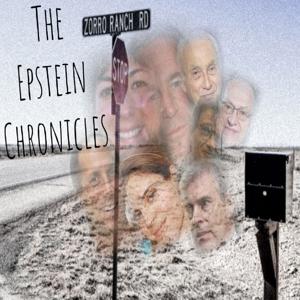
The Epstein Chronicles

The Epstein Chronicles

Download on the App Store
  • Favorites

    64

    Followers

  • Typical duration

    14 min

    per episode

Based on Podcast App listening data

The Epstein Chronicles episodes

  • How Federal Prosecutors Shut Down New Mexico’s Epstein Probe
    In 2019, federal prosecutors with the U.S. Attorney’s Office for the Southern District of New York asked New Mexico authorities to stop their own sex trafficking investigation into Jeffrey Epstein’s sprawling Zorro Ranch, located south of Santa Fe, in an effort to avoid potential conflicts with the federal case and the risk of “inconsistent statements” from parallel investigations. At the time, then-New Mexico Attorney General Hector Balderas agreed to pause the state probe and share investigative materials — including police reports and witness interviews — with the federal team, with the understanding that federal prosecutors would provide information back that could support potential state charges. However, Balderas has since said he is unaware of any substantial information ever being shared back to New Mexico that could have led to prosecutions at the state level before Epstein’s death in August 2019.


    The now-released correspondence shows that the federal request effectively “gutted” New Mexico’s investigation, and Balderas has described the cooperation as essentially one-way. Records also reveal he urged federal authorities to seize the ranch and offered assistance to execute warrants, but received no response, and none of the material New Mexico sent appears among the files released under the Epstein Files Transparency Act. In light of the newly disclosed DOJ records, current New Mexico Attorney General Raúl Torrez has announced that the state is reopening its investigation into alleged trafficking at Zorro Ranch, and a bipartisan legislative truth-finding commission has been formed to subpoena witnesses and gather testimony as part of renewed scrutiny of activities tied to Epstein’s former property.


    to contact me:

    [email protected]


    source:

    Feds asked New Mexico to halt Jeffrey Epstein Zorro Ranch sex trafficking probe, records show

    Become a supporter of this podcast: https://www.spreaker.com/podcast/the-epstein-chronicles--5003294/support.

    19 min
  • From Protecting Epstein to Killing Citizens: How Federal Power Learned It Was Untouchable
    At its core, this hypocrisy dovetails perfectly with the Epstein coverup because it reveals the same moral collapse that allows powerful institutions to operate without accountability while their defenders selectively invoke “law and order” only when it protects the state. The same voices who excuse a federal agent killing a legally armed citizen now are often the same ones who waved away the sweetheart plea deal, the sealed records, the missing cameras, the sleeping guards, and the vanishing evidence in Epstein’s case. In both situations, the pattern is identical: when the federal government abuses power against ordinary people, the so-called defenders of liberty suddenly become apologists for authority. When Epstein was protected, the system closed ranks, hid documents, misled courts, silenced victims, and insulated its own. When Pretti was killed, the instinct was the same: suppress oversight, shape the narrative, block investigators, and demand blind trust in federal actors. The Constitution becomes decorative when power is at stake, and rights become conditional when they interfere with institutional protection. In both cases, the message is unmistakable: there are citizens, and then there are subjects, and the line between them is drawn by who the government decides to protect and who it decides to sacrifice.


    This is what an out-of-control federal government actually looks like, not tanks in the streets, but bureaucracies that operate above consequence while their defenders cheer them on in the name of security, borders, or order. Epstein was not an accident of justice, he was a product of a system that learned it could hide crimes, bury evidence, intimidate oversight, and survive public outrage if it waited long enough. The shooting of Pretti shows that the same machinery now feels comfortable exercising lethal force first and explaining later, knowing that a loyal political audience will rationalize anything so long as the target is politically convenient. This is how republics rot, not in dramatic coups, but in quiet normalization of unchecked power. When people who once screamed about jack-booted thugs now celebrate federal executions, they are not defending the Constitution, they are surrendering it. The Epstein coverup and this killing are not separate scandals, they are symptoms of the same disease: a federal apparatus that no longer fears oversight, no longer respects limits, and no longer believes the Constitution applies when its own authority is on the line.


    to contact me:

    [email protected]

    Become a supporter of this podcast: https://www.spreaker.com/podcast/the-epstein-chronicles--5003294/support.
    17 min
  • Alex Acosta Was The Middleman In The Jeffrey Epstein NPA Negotiation. Who Was The Architect?
    Alex Acosta is frequently singled out as the architect of Jeffrey Epstein’s 2008 non-prosecution agreement (NPA), but mounting evidence suggests that he was more of a functionary than a decision-maker. As the U.S. Attorney in South Florida, Acosta did sign off on the sweetheart deal that allowed Epstein to avoid federal prosecution and serve minimal time in a county jail. However, emails and DOJ records show that once Epstein’s legal team escalated their complaints, the matter was kicked up the chain of command to Washington. Acosta even reportedly told the Miami Herald that he was told Epstein “belonged to intelligence” and that backing off was not a choice, further muddying the narrative that he acted independently. The DOJ’s Office of Professional Responsibility later criticized Acosta’s judgment but stopped short of alleging misconduct.

    The real power players behind the Epstein NPA appear to have been then–Attorney General Michael Mukasey and Deputy Attorney General Mark Filip. When Epstein’s lawyers petitioned to have the case reviewed, DOJ officials in D.C.—including those in the Criminal Division and the Deputy Attorney General’s office—were briefed and ultimately approved the non-prosecution path. In other words, the final green light came from the top of the Justice Department, not Acosta’s office alone. This recontextualizes the NPA as less a rogue local failure and more a coordinated decision at the highest levels of federal power. The narrative that Acosta alone bears the weight of the Epstein scandal not only oversimplifies the truth—it protects the very people who had the authority to stop it and didn’t.


    to contact me:

    [email protected]


    source:

    https://nypost.com/2021/02/04/top-doj-officials-okd-epstein-deal-maxwell-lawyers/

    Become a supporter of this podcast: https://www.spreaker.com/podcast/the-epstein-chronicles--5003294/support.
    17 min
  • Inside The OIG Interview: The Testimony Of An Unnamed CO/Lieutenant (Part 6) (5/23/26)


    In a sworn interview with DOJ Office of Inspector General investigators conducted on June 14, 2021, an unnamed lieutenant and former correctional officer from MCC New York was questioned as part of the investigation into Jeffrey Epstein’s death and the broader security failures surrounding his incarceration. The interview began with investigators explicitly stating that the probe focused not only on Epstein’s death itself, but also “everything that surrounds that time,” including job performance failures and security breakdowns. The correctional officer agreed to a voluntary interview under oath and spent much of the early questioning outlining his career history, including prior work as a New York City probation officer, a brief stint with New York State corrections, and his transfer to MCC New York in 2013 after beginning his BOP career at Allenwood in Pennsylvania.


    The deposition is another piece of the sprawling federal effort to reconstruct exactly what happened inside MCC New York before Jeffrey Epstein was found dead in his cell on August 10, 2019. Investigators were clearly trying to map out the staffing structure, chain of command, and personnel who were present during the chaotic period surrounding Epstein’s incarceration, including after his first alleged suicide attempt.


    to contact me:

    [email protected]


    source:

    EFTA00111284.pdf

    Become a supporter of this podcast: https://www.spreaker.com/podcast/the-epstein-chronicles--5003294/support.

    13 min
  • Inside The OIG Interview: The Testimony Of An Unnamed CO/Lieutenant (Part 5) (5/23/26)


    In a sworn interview with DOJ Office of Inspector General investigators conducted on June 14, 2021, an unnamed lieutenant and former correctional officer from MCC New York was questioned as part of the investigation into Jeffrey Epstein’s death and the broader security failures surrounding his incarceration. The interview began with investigators explicitly stating that the probe focused not only on Epstein’s death itself, but also “everything that surrounds that time,” including job performance failures and security breakdowns. The correctional officer agreed to a voluntary interview under oath and spent much of the early questioning outlining his career history, including prior work as a New York City probation officer, a brief stint with New York State corrections, and his transfer to MCC New York in 2013 after beginning his BOP career at Allenwood in Pennsylvania.


    The deposition is another piece of the sprawling federal effort to reconstruct exactly what happened inside MCC New York before Jeffrey Epstein was found dead in his cell on August 10, 2019. Investigators were clearly trying to map out the staffing structure, chain of command, and personnel who were present during the chaotic period surrounding Epstein’s incarceration, including after his first alleged suicide attempt.


    to contact me:

    [email protected]


    source:

    EFTA00111284.pdf

    Become a supporter of this podcast: https://www.spreaker.com/podcast/the-epstein-chronicles--5003294/support.

    14 min
  • Inside The OIG Interview: The Testimony Of An Unnamed CO/Lieutenant (Part 4) (5/23/26)


    In a sworn interview with DOJ Office of Inspector General investigators conducted on June 14, 2021, an unnamed lieutenant and former correctional officer from MCC New York was questioned as part of the investigation into Jeffrey Epstein’s death and the broader security failures surrounding his incarceration. The interview began with investigators explicitly stating that the probe focused not only on Epstein’s death itself, but also “everything that surrounds that time,” including job performance failures and security breakdowns. The correctional officer agreed to a voluntary interview under oath and spent much of the early questioning outlining his career history, including prior work as a New York City probation officer, a brief stint with New York State corrections, and his transfer to MCC New York in 2013 after beginning his BOP career at Allenwood in Pennsylvania.


    The deposition is another piece of the sprawling federal effort to reconstruct exactly what happened inside MCC New York before Jeffrey Epstein was found dead in his cell on August 10, 2019. Investigators were clearly trying to map out the staffing structure, chain of command, and personnel who were present during the chaotic period surrounding Epstein’s incarceration, including after his first alleged suicide attempt.


    to contact me:

    [email protected]


    source:

    EFTA00111284.pdf

    Become a supporter of this podcast: https://www.spreaker.com/podcast/the-epstein-chronicles--5003294/support.
    12 min
  • Mega Edition: Bill Barr And The Epstein Related Deposition Given To Congress (Part 13-14) (5/23/26)
    Bill Barr’s deposition before Congress on Jeffrey Epstein was a masterclass in calculated deflection. While Barr insisted that Epstein’s death was “absolutely” suicide, he conceded that the prison surveillance system had “blind spots”—a detail that conveniently leaves just enough room for speculation without providing definitive answers. His reliance on flawed or incomplete camera footage, combined with his dismissal of alternative forensic perspectives, came off less like transparency and more like institutional damage control. Instead of holding the Bureau of Prisons accountable, Barr’s narrative positioned the failures as unfortunate but inconsequential, a stance that fails to satisfy the public demand for clarity.

    Just as troubling was Barr’s evasiveness when pressed about Donald Trump’s knowledge of Epstein. He admitted to having spoken with Trump about Epstein’s death but couldn’t recall when one of those conversations occurred—an astonishing lapse considering the gravity of the matter. His reasoning that “if there were more to it, it would have leaked” was not only flippant but dismissive of the very real history of suppression, obstruction, and selective disclosure that has defined the Epstein saga. By leaning on institutional trust in a case defined by betrayal of that very trust, Barr’s testimony did little more than reinforce suspicions that the Department of Justice has long been more concerned with containment than accountability.


    to contact me:

    [email protected]


    source:

    Barr-Transcript.pdf

    Become a supporter of this podcast: https://www.spreaker.com/podcast/the-epstein-chronicles--5003294/support.
    34 min
  • Mega Edition: Bill Barr And The Epstein Related Deposition Given To Congress (Part 10-12) (5/22/26)
    Bill Barr’s deposition before Congress on Jeffrey Epstein was a masterclass in calculated deflection. While Barr insisted that Epstein’s death was “absolutely” suicide, he conceded that the prison surveillance system had “blind spots”—a detail that conveniently leaves just enough room for speculation without providing definitive answers. His reliance on flawed or incomplete camera footage, combined with his dismissal of alternative forensic perspectives, came off less like transparency and more like institutional damage control. Instead of holding the Bureau of Prisons accountable, Barr’s narrative positioned the failures as unfortunate but inconsequential, a stance that fails to satisfy the public demand for clarity.

    Just as troubling was Barr’s evasiveness when pressed about Donald Trump’s knowledge of Epstein. He admitted to having spoken with Trump about Epstein’s death but couldn’t recall when one of those conversations occurred—an astonishing lapse considering the gravity of the matter. His reasoning that “if there were more to it, it would have leaked” was not only flippant but dismissive of the very real history of suppression, obstruction, and selective disclosure that has defined the Epstein saga. By leaning on institutional trust in a case defined by betrayal of that very trust, Barr’s testimony did little more than reinforce suspicions that the Department of Justice has long been more concerned with containment than accountability.


    to contact me:

    [email protected]


    source:

    Barr-Transcript.pdf

    Become a supporter of this podcast: https://www.spreaker.com/podcast/the-epstein-chronicles--5003294/support.
    36 min
  • Mega Edition: Bill Barr And The Epstein Related Deposition Given To Congress (Part 7-9) (5/19/26)
    Bill Barr’s deposition before Congress on Jeffrey Epstein was a masterclass in calculated deflection. While Barr insisted that Epstein’s death was “absolutely” suicide, he conceded that the prison surveillance system had “blind spots”—a detail that conveniently leaves just enough room for speculation without providing definitive answers. His reliance on flawed or incomplete camera footage, combined with his dismissal of alternative forensic perspectives, came off less like transparency and more like institutional damage control. Instead of holding the Bureau of Prisons accountable, Barr’s narrative positioned the failures as unfortunate but inconsequential, a stance that fails to satisfy the public demand for clarity.

    Just as troubling was Barr’s evasiveness when pressed about Donald Trump’s knowledge of Epstein. He admitted to having spoken with Trump about Epstein’s death but couldn’t recall when one of those conversations occurred—an astonishing lapse considering the gravity of the matter. His reasoning that “if there were more to it, it would have leaked” was not only flippant but dismissive of the very real history of suppression, obstruction, and selective disclosure that has defined the Epstein saga. By leaning on institutional trust in a case defined by betrayal of that very trust, Barr’s testimony did little more than reinforce suspicions that the Department of Justice has long been more concerned with containment than accountability.


    to contact me:

    [email protected]


    source:

    Barr-Transcript.pdf

    Become a supporter of this podcast: https://www.spreaker.com/podcast/the-epstein-chronicles--5003294/support.
    42 min
  • Mega Edition: Bill Barr And The Epstein Related Deposition Given To Congress (Part 4-6) (5/19/26)
    Bill Barr’s deposition before Congress on Jeffrey Epstein was a masterclass in calculated deflection. While Barr insisted that Epstein’s death was “absolutely” suicide, he conceded that the prison surveillance system had “blind spots”—a detail that conveniently leaves just enough room for speculation without providing definitive answers. His reliance on flawed or incomplete camera footage, combined with his dismissal of alternative forensic perspectives, came off less like transparency and more like institutional damage control. Instead of holding the Bureau of Prisons accountable, Barr’s narrative positioned the failures as unfortunate but inconsequential, a stance that fails to satisfy the public demand for clarity.

    Just as troubling was Barr’s evasiveness when pressed about Donald Trump’s knowledge of Epstein. He admitted to having spoken with Trump about Epstein’s death but couldn’t recall when one of those conversations occurred—an astonishing lapse considering the gravity of the matter. His reasoning that “if there were more to it, it would have leaked” was not only flippant but dismissive of the very real history of suppression, obstruction, and selective disclosure that has defined the Epstein saga. By leaning on institutional trust in a case defined by betrayal of that very trust, Barr’s testimony did little more than reinforce suspicions that the Department of Justice has long been more concerned with containment than accountability.


    to contact me:

    [email protected]


    source:

    Barr-Transcript.pdf

    Become a supporter of this podcast: https://www.spreaker.com/podcast/the-epstein-chronicles--5003294/support.
    40 min

About The Epstein Chronicles

From the publisher's feed

Jeffrey Epstein was a multi millionaire who had political and business ties to some of the most rich and powerful people in the world. From businessmen to politicians at the highest levels, Epstein…

Best of The Epstein Chronicles

Ranked by our users in the last 21 days

More shows like The Epstein Chronicles

Crime Talk with Scott Reisch by R. Scott Reisch

Crime Talk with Scott Reisch

507 Listeners

The Bulwark Daily by The Bulwark

The Bulwark Daily

12,570 Listeners

BROKEN: Jeffrey Epstein by Hyperobject Industries / Sony Music Entertainment

BROKEN: Jeffrey Epstein

3,072 Listeners

EPSTEIN: Devil in the Darkness by a360media

EPSTEIN: Devil in the Darkness

1,219 Listeners

The Mysterious Mr. Epstein by Audible

The Mysterious Mr. Epstein

7,585 Listeners

The Daily Beast Podcast by The Daily Beast, Joanna Coles

The Daily Beast Podcast

8,327 Listeners

The MeidasTouch Podcast by MeidasTouch Network

The MeidasTouch Podcast

50,438 Listeners

The Lincoln Project by The Lincoln Project

The Lincoln Project

9,192 Listeners

Law&Crime Sidebar by Law&Crime

Law&Crime Sidebar

493 Listeners

When You Know You Know by Podcast WABCRadio

When You Know You Know

1,877 Listeners

Inside Trump's Head by The Daily Beast, Michael Wolff and Joanna Coles

Inside Trump's Head

652 Listeners

The Mary Trump Podcast by Mary Trump Media

The Mary Trump Podcast

792 Listeners

The Jim Acosta Show by Jim Acosta

The Jim Acosta Show

1,004 Listeners

Jeffrey Epstein:  The Coverup Chronicles by Bobby Capucci

Jeffrey Epstein: The Coverup Chronicles

13 Listeners

The Tara Palmeri Show by Tara Palmeri

The Tara Palmeri Show

255 Listeners