
Sign up to save your podcasts
Or

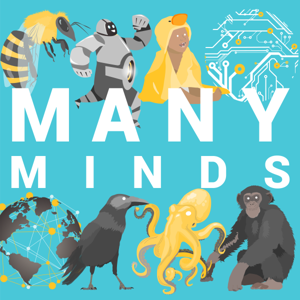

Welcome back all! So, this episode is a first for us. Two firsts, actually. For one, it features our first-ever repeat guest: Andrew Barron, a neuroscientist at Macquarie University. If you're a long-time listener, you might remember that Andy was actually the guest on our very first episode, 'Of bees and brains,' in February 2020. And, second, this episode is our first-ever "live show." We recorded this interview in July at the Diverse Intelligences Summer Institute in St Andrews, Scotland.
Andy and his colleagues—the philosophers Marta Halina and Colin Klein—just released an ambitious paper titled 'Transitions in Cognitive Evolution.' In it, they take a wide-angle view of mind; they zoom out to try to tell an overarching story of how brains and cognition evolved across the tree of life. The story, as they tell it, is not about a smoothly gradual evolution of cognitive sophistication. Rather, it's a story built around five major transitions—fundamental changes, that is, to how organisms process information.
In this conversation, Andy and I discuss their framework and how it takes inspiration from other transitional accounts of life and mind. We lay out each of the five stages—or portals, as we refer to them—and talk about the organisms that we find on either side of these portals. We discuss what propels organisms to make these radical changes, especially considering that evolution is not prospective. It doesn't look ahead—it can't see what abilities might be possible down the road. We talk about how this framework got its start, particularly in some of Andy's thinking about insect brains and how they differ from vertebrate brains. And, as a bit of a bonus, we left in some of the live Q & A with the audience. In it we touch on octopuses, eusocial insects, oysters, and a bunch else.
Speaking of major transitions, I will be going on parental leave for much of the fall. So this is, in fact, the final episode of Season 4 and then the podcast will go on a brief hiatus. Before we get started on Season 5, we'll be putting up some of our favorite episodes from the archive.
Alright friends, on to my conversation with Dr. Andrew Barron, recorded live at DISI 2023. Enjoy!
A transcript of this episode is available here.
Notes and links
3:30 – For further information about the "major transitions" project, see the project's web page here.
7:00 – Many transitional accounts of evolution draw inspiration from the classic book The Major Transitions in Evolution.
8:00 – One influential previous transitional account of the evolution of cognition was put forward by Dennett in Kinds of Minds. Another was put forward by Ginsburg and Jablonka in The Evolution of the Sensitive Soul.
12:45 – A brief introduction to cnidaria.
18:00 – The idea of cellular memory has been garnering more and more attention—see, e.g., this popular article.
21:00 – The idea of "reflective" systems is also used in computer science.
26:00 – The scala naturae, or Great Chain of Being, was the notion that organisms could be arranged on a scale of sophistication, with humans on the top of the scale.
30:00 – The "teleological fallacy" as Dr. Barron and colleagues describe it in their paper is the fallacy of "appeal[ing] to later benefits to explain earlier changes."
34:00 – A brief introduction to the phylum gastropoda.
37:00 – For an overview of Dr. Barron's work on the neuroscience of honey bees, see our previous episode.
48:30 – It's commonly observed in popular coverage of octopuses that their brains are "decentralized" (e.g., here, here, and here).
55:00 – In discussions of human brain evolution, it has been argued that certain kinds of cognitive offloading (e.g., writing) have allowed our brains to actually shrink in recent history. See our earlier episode with Jeremy DeSilva.
58:00 – On the notion of "Turing completeness," see here. The idea of an "Infinite Improbability Drive" comes (apparently) from The Hitchhiker's Guide to the Galaxy.
1:00:06 – For a discussion of eusociality and individuality in the context of "major transitions" ideas, see here.
Many Minds is a project of the Diverse Intelligences Summer Institute, which is made possible by a generous grant from the Templeton World Charity Foundation to UCLA. It is hosted and produced by Kensy Cooperrider, with help from Assistant Producer Urte Laukaityte and with creative support from DISI Directors Erica Cartmill and Jacob Foster. Our artwork is by Ben Oldroyd. Our transcripts are created by Sarah Dopierala.
Subscribe to Many Minds on Apple, Stitcher, Spotify, Pocket Casts, Google Play, or wherever you listen to podcasts. You can also now subscribe to the Many Minds newsletter here!
We welcome your comments, questions, and suggestions. Feel free to email us at: [email protected].
For updates about the show, visit our website or follow us on Twitter: @ManyMindsPod.
 View all episodes
 By Kensy Cooperrider – Diverse Intelligences Summer Institute

4.9
6262 ratings
Welcome back all! So, this episode is a first for us. Two firsts, actually. For one, it features our first-ever repeat guest: Andrew Barron, a neuroscientist at Macquarie University. If you're a long-time listener, you might remember that Andy was actually the guest on our very first episode, 'Of bees and brains,' in February 2020. And, second, this episode is our first-ever "live show." We recorded this interview in July at the Diverse Intelligences Summer Institute in St Andrews, Scotland.
Andy and his colleagues—the philosophers Marta Halina and Colin Klein—just released an ambitious paper titled 'Transitions in Cognitive Evolution.' In it, they take a wide-angle view of mind; they zoom out to try to tell an overarching story of how brains and cognition evolved across the tree of life. The story, as they tell it, is not about a smoothly gradual evolution of cognitive sophistication. Rather, it's a story built around five major transitions—fundamental changes, that is, to how organisms process information.
In this conversation, Andy and I discuss their framework and how it takes inspiration from other transitional accounts of life and mind. We lay out each of the five stages—or portals, as we refer to them—and talk about the organisms that we find on either side of these portals. We discuss what propels organisms to make these radical changes, especially considering that evolution is not prospective. It doesn't look ahead—it can't see what abilities might be possible down the road. We talk about how this framework got its start, particularly in some of Andy's thinking about insect brains and how they differ from vertebrate brains. And, as a bit of a bonus, we left in some of the live Q & A with the audience. In it we touch on octopuses, eusocial insects, oysters, and a bunch else.
Speaking of major transitions, I will be going on parental leave for much of the fall. So this is, in fact, the final episode of Season 4 and then the podcast will go on a brief hiatus. Before we get started on Season 5, we'll be putting up some of our favorite episodes from the archive.
Alright friends, on to my conversation with Dr. Andrew Barron, recorded live at DISI 2023. Enjoy!
A transcript of this episode is available here.
Notes and links
3:30 – For further information about the "major transitions" project, see the project's web page here.
7:00 – Many transitional accounts of evolution draw inspiration from the classic book The Major Transitions in Evolution.
8:00 – One influential previous transitional account of the evolution of cognition was put forward by Dennett in Kinds of Minds. Another was put forward by Ginsburg and Jablonka in The Evolution of the Sensitive Soul.
12:45 – A brief introduction to cnidaria.
18:00 – The idea of cellular memory has been garnering more and more attention—see, e.g., this popular article.
21:00 – The idea of "reflective" systems is also used in computer science.
26:00 – The scala naturae, or Great Chain of Being, was the notion that organisms could be arranged on a scale of sophistication, with humans on the top of the scale.
30:00 – The "teleological fallacy" as Dr. Barron and colleagues describe it in their paper is the fallacy of "appeal[ing] to later benefits to explain earlier changes."
34:00 – A brief introduction to the phylum gastropoda.
37:00 – For an overview of Dr. Barron's work on the neuroscience of honey bees, see our previous episode.
48:30 – It's commonly observed in popular coverage of octopuses that their brains are "decentralized" (e.g., here, here, and here).
55:00 – In discussions of human brain evolution, it has been argued that certain kinds of cognitive offloading (e.g., writing) have allowed our brains to actually shrink in recent history. See our earlier episode with Jeremy DeSilva.
58:00 – On the notion of "Turing completeness," see here. The idea of an "Infinite Improbability Drive" comes (apparently) from The Hitchhiker's Guide to the Galaxy.
1:00:06 – For a discussion of eusociality and individuality in the context of "major transitions" ideas, see here.
Many Minds is a project of the Diverse Intelligences Summer Institute, which is made possible by a generous grant from the Templeton World Charity Foundation to UCLA. It is hosted and produced by Kensy Cooperrider, with help from Assistant Producer Urte Laukaityte and with creative support from DISI Directors Erica Cartmill and Jacob Foster. Our artwork is by Ben Oldroyd. Our transcripts are created by Sarah Dopierala.
Subscribe to Many Minds on Apple, Stitcher, Spotify, Pocket Casts, Google Play, or wherever you listen to podcasts. You can also now subscribe to the Many Minds newsletter here!
We welcome your comments, questions, and suggestions. Feel free to email us at: [email protected].
For updates about the show, visit our website or follow us on Twitter: @ManyMindsPod.
15,255 Listeners
10,742 Listeners

5,534 Listeners
2,455 Listeners
770 Listeners
546 Listeners

824 Listeners
315 Listeners
4,181 Listeners
114 Listeners

5,541 Listeners

16,236 Listeners
357 Listeners
122 Listeners

44 Listeners