
Sign up to save your podcasts
Or

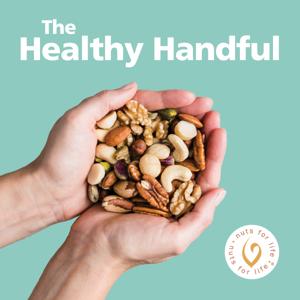


To celebrate Nut Day on 22 October, this episode of The Healthy Handful takes a behind-the scenes look at Australia's diverse and growing nut industry - from the regions where different nuts thrive, to how they're harvested, processed and brought to consumers.
Host Belinda Neville is joined by Clare Hamilton-Bate, Secretariat of the Australian Nut Industry Council and former CEO of the Australian Macadamia Society, for a fascinating look at the people, places and processes behind Australia's nuts.
The episode dives into the size and diversity of the Australian nut industry, the different regions and growing conditions that suit different nuts, and Australia's role in the global nut market through both exports and imports.
Clare also shares insights into sustainability in nut production, including how growers are working to use resources more efficiently and improve environmental outcomes.
Key takeaways
Access episode webpage:
https://www.nutsforlife.com.au/resource/episode-62-a-deep-dive-into-australias-nut-industry/
About today's guest
Clare Hamilton-Bate has extensive experience in both the Australian and international agrifood industries, working at every stage of the supply chain from primary production to retail. She has worked with the Australian produce industry for more than 25 years, supporting fresh produce businesses, industry organisations, R&D providers and government in quality, compliance, supply chain integrity, and value chains.
Previously the CEO of the Australian Macadamia Society, the representative body for Australian macadamia growers, handlers and processors, Clare now provides the Secretariat for the Australian Nut Industry Council (ANIC), supporting and representing the seven Australian tree nut industries on across industry issues where a collective voice is far stronger than any one industry alone.
Supporting resources
Nuts for Life's Sustainability Hub
https://www.nutsforlife.com.au/sustainability/
Australian Nut Industry Council's Growing for Success – Towards 2030
https://www.nutindustry.org.au/growing-for-success/
Sign up to NutENews
Follow us on Instagram, Facebook and LinkedIn
Host: Belinda Neville
Contact us: [email protected]
High blood pressure, or hypertension, is one of the world's most common health concerns, affecting more than 1.4 billion people globally. In Australia, around 39% of adults are estimated to have hypertension - equivalent to approximately 7.2 million people.
Hypertension is also a major contributor to the global burden of disease, accounting for around 7.8% of total disability-adjusted life years.
In this Research Review Series of The Healthy Handful, we take a deep dive into a new systematic literature review and meta-analysis by Metoudi et al., published in the British Journal of Nutrition.
This review provides the most recent assessment of the evidence examining whether nut consumption can influence blood pressure.
Access episode webpage:
https://www.nutsforlife.com.au/resource/nut-consumption-and-the-risk-of-hypertension/
The research discussed in this episode:
Metoudi M, Sadler I, Kassam S, Aune D. Nut consumption and the risk of hypertension: A systematic review and dose–response meta-analysis of prospective studies. British Journal of Nutrition. 2026 Aug 4:1-22. doi: 10.1017/S0007114526108137
https://pubmed.ncbi.nlm.nih.gov/42547492
Supporting resources:
Zhou, D, Yu, H, He, F, et al. (2014) https://pubmed.ncbi.nlm.nih.gov/24808491/
Lelong, H, Blacher, J, Baudry, J, et al. (2017) https://pubmed.ncbi.nlm.nih.gov/28760943/
Mohammadifard, N, Haghighatdoost, et al. (2019) https://pubmed.ncbi.nlm.nih.gov/31248717/
Jung, S, Woo, HW, Shin, J, et al. (2022) https://pubmed.ncbi.nlm.nih.gov/34984486/
Wei, Y, Su, X, Wang, G, et al. (2025) https://pubmed.ncbi.nlm.nih.gov/39639131/
Sign up to NutENews
Follow us on Instagram, Facebook and LinkedIn
Host: Belinda Neville
Contact us:
In this episode of The Healthy Handful, host Belinda Neville speaks with nutrition researcher Dr Stephanie Nishi about the latest evidence on nuts and cardiovascular health, including findings from a recent systematic review and meta-analysis examining the effects of nut consumption on blood lipids.
Together, they explore the role of nuts in improving cardiovascular disease risk factors, including LDL-cholesterol, total cholesterol and triglycerides. Stephanie discusses the unique combination of nutrients and bioactive compounds found in nuts, the biological mechanisms underpinning their cardioprotective effects, and what the evidence tells us about the dose, duration and population groups most likely to benefit.
This episode provides a practical, evidence-based update for health professionals on one of the most robust and well-established areas of nut nutrition research, and reinforces the role of a daily handful of nuts as part of a heart-healthy eating pattern.
Key take-outs:
Access episode webpage:
https://www.nutsforlife.com.au/resource/episode-61-the-lipid-lowering-effects-of-nuts/
About today's guest
Stephanie Nishi is a Registered Dietitian, Researcher, and Educator. She is an Assistant Professor with the School of Nutrition, Faculty of Community Services, at Toronto Metropolitan University in Canada. She was a CIHR Postdoctoral Fellow with the Unitat de Nutrició, Departament de Bioquímica i Biotecnologia at the Universitat Rovira i Virgili in Spain, following completion of a PhD at the University of Toronto in Canada.
For over a decade, Stephanie has been involved in chronic disease prevention from a nutritional perspective (including cardiovascular, type 2 diabetes, and cognitive health), as well as advancing evidence-based practice and knowledge dissemination with the goal of informing public health policy and nutrition guidelines.
Supporting resources
Effect of nut consumption on blood lipids: An updated systematic review and meta-analysis of randomized controlled trials
https://www.nmcd-journal.com/article/S0939-4753(24)00390-9/fulltext
Nut consumption and risk of cardiovascular disease events and all-cause mortality: A systematic review and dose–response meta-analysis of prospective cohort studies
https://www.sciencedirect.com/science/article/abs/pii/S1875213625004656
Effect of nut consumption on blood lipids and lipoproteins: A comprehensive literature update
https://www.mdpi.com/2072-6643/15/3/596
Sign up to NutENews
Follow us on Instagram, Facebook and LinkedIn
Host: Belinda Neville
Contact us: [email protected]
Dementia is one of Australia's greatest health challenges, with a profound impact not only on those living with the condition, but also on families, carers and the broader healthcare system.
While age remains the greatest risk factor, growing evidence shows that lifestyle - including what we eat - can play an important role in supporting brain health and reducing dementia risk.
In this episode of The Healthy Handful, host Belinda Neville speaks with Professor Catherine Itsiopoulos - one of Australia's leading experts in nutrition and the Mediterranean diet - about the relationship between diet, brain health and dementia prevention.
Together, they explore why healthy dietary patterns matter for maintaining cognitive function, the evidence supporting the Mediterranean diet, and how foods such as nuts, extra virgin olive oil, vegetables, legumes, whole grains and fish work together to nourish the brain.
Catherine also discusses how diets rich in highly-processed foods, saturated fats and added sugars may contribute to inflammation, vascular damage and cognitive decline over time.
Key takeaways:
Access episode webpage:
https://www.nutsforlife.com.au/resource/episode-60-food-for-thought-eating-for-brain-health/
About today's guest
Professor Catherine Itsiopoulos is Deputy Vice-Chancellor STEM College, and Head of the Bundoora Health Precinct. As a senior academic leader, Catherine's mission is to build a high performing student-centred culture within academic and professional teams and fostering engaging learning environments co-designed with strategic industry partners.
She is the Vice President of the Mediterranean Lifestyle Medicine Institute, a Board Member of the Australasian Society of Lifestyle Medicine, Advisory Board Member of the British Society of Lifestyle Medicine, and Chair of the Education Task Force for the World Lifestyle Medicine Organisation.
An established research leader in the field of nutrition and dietetics and international standing as a leader in Mediterranean diet studies. Catherine is an extensively cited research scholar with more than 150 scientific publications, book chapters and clinical guidelines on dietary management of chronic diseases.
Supporting resources
Consensus statement on exploring the Nexus between nutrition, brain health and dementia prevention.
https://link.springer.com/article/10.1186/s12986-025-00981-6
MedWalk trial
https://medwalk.com.au/publications.html
Findings of a pilot study investigating the effects of mediterranean diet and aerobic exercise on cognition in cognitively healthy older people living independently within aged-care facilities: The Lifestyle Intervention in Independent Living Aged Care (LIILAC) Study
https://pmc.ncbi.nlm.nih.gov/articles/PMC7228438/
Sign up to NutENews
Follow us on Instagram, Facebook and LinkedIn
Host: Belinda Neville
Contact us: [email protected]
The Health Star Rating (HSR) system is a valuable front-of-pack nutrition labelling tool designed to help consumers compare packaged foods and make healthier choices.
But how accurately does the HSR reflect the healthfulness of core foods? And how well does it align with dietary guidance and nutrition evidence?
In this re-released episode, Associate Professor Sara Grafenauer shares insights from her 2025 research, which explored three evidence-based modelling scenarios to apply to the HSR algorithm. The research examined how the current system scores nuts and nut-containing foods, identified areas where some nuts may be disadvantaged because of their naturally occurring energy and saturated fat content, and evaluated potential changes to improve alignment with current dietary guidance and nutrition evidence.
Sara highlights potential unintended consequences of the current system, discusses the findings from the modelling scenarios, and explains how thoughtful refinements to the algorithm could strengthen public trust and confidence in the system, while better recognising the nutritional value of whole foods.
Key take-outs:
· The current HSR algorithm may not always reflect the overall health value of some nuts, despite their well-established role in healthy dietary patterns.
· Simple, evidence-based refinements to the algorithm could improve alignment with contemporary nutrition science and dietary guidelines.
· As the HSR system evolves, ensuring it accurately represents nutrient-dense whole foods will help maintain consumer trust and confidence in front-of-pack nutrition labelling.
· Mandatory HSR should reinforce, not complicate, advice to eat recommended core foods.
Access episode webpage: https://www.nutsforlife.com.au/resource/improving-the-hsr-for-nuts-re-release/
About today's guest
Associate Professor Sara Grafenauer is the Lead for the Nutrition, Dietetics and Food Innovation Program at UNSW and was instrumental in conceptualising and developing the program. Sara is an APD and Fellow of Dietitians Australia. She is on the Governing Boards for the International Whole Grain Initiative, and Oat Australia. Although Sara loves research and teaching, she still has a weekend private practice in Thirroul, New South Wales, where she lives.
Supporting resources
Improved recognition of the nutrition and health benefits of nuts and seeds within the Health Star Rating System. Nutrients, 2025
https://www.mdpi.com/2072-6643/17/7/1195
Sign up to NutENews
Follow us on Instagram, Facebook and LinkedIn
Host: Belinda Neville
Contact us: [email protected]
As Australia marks Food Allergy Week, we're revisiting this important episode exploring research around nut allergy prevention and management. Australia continues to have one of the highest rates of food allergy in the world, with reactions ranging from mild symptoms through to life-threatening anaphylaxis.
In this episode, Dr Vicki McWilliam explains the current understanding of why allergies are so common in Australia and discusses the major shift in allergy prevention research - particularly the evidence supporting early introduction of peanuts in infancy. She also explores emerging research into treatments and therapies, and what this could mean for the future management of nut allergies.
This timely re-release provides health professionals with an evidence-based overview on one of the most important and rapidly-evolving areas in nutrition and allergy research.
Access episode webpage: https://www.nutsforlife.com.au/resource/allergy-prevention-and-management-re-release/
About today's guest
Dr Vicki McWilliam is a Clinician-Scientist Fellow at the Murdoch Children's Research Institute, a Senior Dietitian at the Royal Children's Hospital and a Senior Research Fellow in the Department of Paediatrics at the University of Melbourne. Dr McWilliam is also an Associate Investigator for the Centre of Food Allergy Research and a member of the National Allergy Centre of Excellence Food Allergy Advisory Group.
Supporting resources
HealthNuts study
https://lifecourse.melbournechildrens.com/cohorts/healthnuts/#overview
EarlyNuts study
https://lifecourse.melbournechildrens.com/cohorts/earlynuts/
Follow-up to Adolescence after Early Peanut Introduction for Allergy Prevention
https://evidence.nejm.org/doi/10.1056/EVIDoa2300311
Update on Tree Nut and Seed Allergies: Prevalence, Clinical Characteristics, Diagnosis, and Management
https://e-aair.org/DOIx.php?id=10.4168/aair.2025.17.6.672
Primary prevention of infant food allergy: a randomised controlled trial of postnatal vitamin D supplementation (VITALITY)
https://lifecourse.melbournechildrens.com/cohorts/vitality/
Websites
https://allergyfacts.org.au/
https://foodallergyaware.org.au/
https://www.nace.org.au/research/food-allergy/
Sign up to NutENews
Follow us on Instagram, Facebook and LinkedIn
Credits
Host: Belinda Neville
Contact us
In this episode of The Healthy Handful, host Belinda Neville speaks with Professor Kelly Lambert about the rising prevalence of kidney disease, the major risk factors including high blood pressure and diabetes, and the important role nutrition plays in protecting kidney health.
Professor Lambert explains how nutrition can help manage chronic kidney disease (CKD), with a focus on the benefits of plant-based eating patterns. She discusses how these diets may support a healthier gut microbiome and help reduce the production of toxins that can place further strain on the kidneys.
The conversation also explores how dietary advice should be tailored according to the stage of kidney disease and any co-existing health conditions. Finally, they unpack the findings of a recent systematic review examining the potential role of nuts in reducing non-traditional CKD risk factors, including chronic inflammation and oxidative stress.
Key take-outs:
· CKD is becoming more common, driven largely by rising rates of diabetes, obesity and cardiovascular disease.
· Nutrition plays a central role in the management of CKD, with plant-rich eating patterns showing strong benefits for kidney and overall health.
· Emerging research suggests nuts may benefit some people with CKD, particularly through their anti-inflammatory and antioxidant effects.
Access episode webpage: https://www.nutsforlife.com.au/resource/episode-59-diet-and-kidney-disease/
About today's guest
Kelly Lambert is a Professor and Discipline Leader in Nutrition and Dietetics at the University of Wollongong in New South Wales, Australia. She is also a Fellow of Dietitians Australia.
Kelly has extensive experience as a clinical dietitian, with more than two decades of her clinical career as specialist kidney dietitian.
Kelly's research interests focus on helping people with kidney disease live better lives. Her research career has focused on cognition and health literacy in people with kidney disease and how this intersects with the way people learn about diet.
She is passionate about helping people living with kidney disease to make optimal diet and lifestyle choices. To achieve this, she works as Co-Director of the Kidney Lifestyle Research Group and Deputy Director of the Health Innovations Research Centre at the University of Wollongong.
Supporting resources
Safety and efficacy of using nuts to improve bowel health in hemodialysis patients
https://pubmed.ncbi.nlm.nih.gov/32001127/
High-diversity plant-based diet and gut microbiome, plasma metabolome, and symptoms in adults with CKD
https://pubmed.ncbi.nlm.nih.gov/40094861/
Nut consumption in chronic kidney disease: A systematic review
https://www.frontiersin.org/journals/nutrition/articles/10.3389/fnut.2025.1659516/full
Dietary transitions and the rising global burden of chronic kidney disease: Insights from nutritional epidemiology
https://www.mdpi.com/2072-6643/18/6/911
Sign up to NutENews
Follow us on Instagram, Facebook and LinkedIn
Host: Belinda Neville
Contact us: [email protected]
In this episode, we speak with gut microbiome researcher, Dr Matthew Snelson to unpack the fascinating and rapidly-evolving science of the microbes that live within our digestive system.
Together, we explore how the gut microbiome develops - from early life through adulthood - and the dietary factors that shape its composition.
Dr Snelson explains what current research tells us about dietary patterns that support a diverse and resilient microbiome, highlighting key nutrients and food groups that appear to promote beneficial microbial changes.
Finally, Matthew walks us through insights from a recent review paper examining the relationship between nut consumption and gut microbiome composition, discussing how nuts may influence microbial diversity and the production of beneficial metabolites.
This conversation offers a clear, evidence-based look at how everyday food choices can shape the ecosystem inside our gut - and what that can mean for overall health.
Key take-outs:
Access episode webpage: https://www.nutsforlife.com.au/resource/episode-58-diet-and-the-gut-microbiome/
About today's guest
Dr Matthew Snelson is an Advanced Accredited Practicing Dietitian and Vice Chancellor's Research Fellow in the Nutrition & Health Innovation Research Institute at Edith Cowan University.
He is interested in how dietary interventions can influence the prevention and management of chronic diseases - such as hypertension, heart failure, diabetes, and kidney disease - through modulation of gut homeostasis.
His work explores how nutrition-driven changes in the gut microbiome, intestinal permeability, and metabolic pathways can reduce disease risk and improve therapeutic outcomes.
Supporting resources
Cardiometabolic benefits of a non-industrialized-type diet are linked to gut microbiome modulation
https://www.cell.com/cell/fulltext/S0092-8674(24)01477-6
The impact of dietary fiber on gut microbiota in host health and disease
https://www.cell.com/cell-host-microbe/fulltext/S193131281830266X
Effects of nut intake on gut microbiome composition and gut function in adults: A systematic review and meta-analysis
https://www.sciencedirect.com/science/article/pii/S2161831325001012
Nutrition and the gut microbiome: a symbiotic dialogue influencing health and disease
https://www.frontiersin.org/journals/nutrition/articles/10.3389/fnut.2026.1761992/full
Sign up to NutENews
Follow us on Instagram, Facebook and LinkedIn
Host: Belinda Neville
Contact us:
Just like the rest of our body, our brain is deeply influenced by our lifestyle. The quality of our sleep, how often we move, and what we eat, all play a powerful role in shaping brain health.
To function at its best, the brain relies on a wide variety of nutrients, which means dietary diversity matters. Growing research shows that improving our eating patterns and incorporating a broad range of whole, nutrient-dense foods can lead to meaningful improvements in mood and overall mental wellbeing.
In this episode, originally recorded in 2022, we explore the science behind the food and mood connection with Dr Wolf Marx from the Food & Mood Centre at Deakin University.
Key take-outs:
· Mental health care isn't just psychological - nutrition is an important, and often overlooked piece of the puzzle.
Access episode webpage: https://www.nutsforlife.com.au/resource/food-and-mood-re-release/
Our guest
A/Prof Wolfgang Marx is the Deputy Director of the Food & Mood Centre. A Senior Research Fellow and NHMRC Emerging Leader, Wolfgang has been a key member of the Centre since 2018, leading major projects in Nutritional Psychiatry. His work spans high-impact systematic reviews, clinical trials on probiotics and nutraceuticals, and international clinical and research guidelines. As President of the International Society for Nutritional Psychiatry Research, he has also played a key role in advancing the field at a global level.
Supporting resources
A randomised controlled trial of dietary improvement for adults with major depression (the 'SMILES' trial)
https://bmcmedicine.biomedcentral.com/articles/10.1186/s12916-017-0791-y
Does the evidence support a relationship between higher levels of nut consumption, lower risk of depression, and better mood state in the general population? A systematic review
https://academic.oup.com/nutritionreviews/advance-article-abstract/doi/10.1093/nutrit/nuac022/6564770?redirectedFrom=fulltext&login=false
High ultra-processed food consumption is associated with elevated psychological distress as an indicator of depression in adults from the Melbourne Collaborative Cohort Study
https://www.sciencedirect.com/science/article/pii/S0165032723006092
Effect of Mediterranean diet on mental health outcomes: A systematic review
https://www.cambridge.org/core/journals/nutrition-research-reviews/article/effect-of-mediterranean-diet-on-mental-health-outcomes-a-systematic-review/1242E715DAD5CCE32FB39573A32D36BB
Sign up to NutENews
Follow us on Instagram, Facebook and LinkedIn
Credits
Host: Belinda Neville
Contact us
Nutrition is a fundamental pillar of performance, influencing everything from fuelling and hydration to recovery, injury prevention, sleep, and mental focus.
In this episode, originally recorded in 2022, Accredited Sports Dietitian Emilie Burgess explores the key nutrition principles that support optimal training and performance. She breaks down the essential nutrients athletes need, while also addressing and debunking common performance-related nutrition myths.
Key take-outs:
· Key nutrition pillars for peak performance include:
o Fuelling foods – quality carbohydrates to power activity.
o Building foods – protein to build and repair muscles.
o "Unlockables" – colourful fruits and vegetables plus quality fats, providing antioxidants, vitamins, and minerals that support immunity, gut and brain health, and aid recovery by reducing inflammation.
· Nuts play a starring role: they support overall health, help prevent diet-related diseases, and provide energy, protein, and essential nutrients that enhance exercise performance.
· For most people, at least a handful of nuts a day is a simple, effective way to boost performance and recovery.
Access episode webpage:
https://www.nutsforlife.com.au/resource/nuts-and-fitness-re-release/
Our guest
Emilie Burgess is an Accredited Sports Dietitian with years of experience in the performance nutrition landscape. Graduating from the University of Sydney in 2007, Emilie went on to complete a Diploma of Sports Nutrition through the International Olympic committee. Based in Tasmania, she is co-director and performance dietitian at The Athlete's Kitchen.
Supporting resources
https://www.nutsforlife.com.au/resource/nuts-for-sport-and-fitness/
Sign up to NutENews
Follow us on Instagram, Facebook and LinkedIn
From the publisher's feed
31 Listeners

820 Listeners
576 Listeners
57 Listeners

2,058 Listeners
3 Listeners