
Sign up to save your podcasts
Or

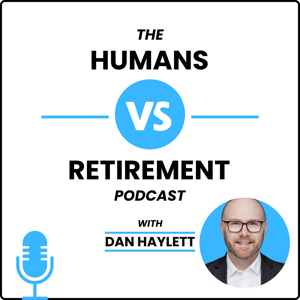
By Dan Haylett


4.7
2121 ratings


The podcast currently has 112 episodes available.
The most played episodes among Podcast App listeners.
You've heard of the sandwich generation — pressed between ageing parents above and growing children below, doing all the lifting. But nobody's named what happens next. When your parents have died. When your children have properly left home. When, for the first time since you were eighteen, you are not the support layer for anyone but yourself. You're an open sandwich. And it is a stranger, lighter, and more disorienting phase of life than anyone tells you. In this episode, Dan explores the freedom of the open sandwich generation — the giddy Wednesday afternoons on the coast, the guilty lightness of nobody needing you — alongside the quieter beats nobody warns you about: the grief that becomes weather, the strange new promotion to senior generation, and the moment you look around and realise you've quietly become the row at the front. But the open sandwich is also a test. Freedom without structure isn't liberation — it's a vacuum. And the retirees who thrive at this stage don't feel only the lightness. They learn to hold both, on the same plate, on a Sunday morning, without flinching. This is the episode that might make you look at the next decade of your life differently. WHAT YOU'LL TAKE FROM THIS EPISODE — Why the open sandwich generation is a distinct phase of life that deserves a name of its own — The lightness that feels almost rude, and why you're allowed to enjoy it — The grief that doesn't end — it just becomes the weather — The strange new "promotion" to senior generation, and the moment you notice it — Why freedom without structure is a vacuum, not a reward — Three thoughts on how to compose the plate of your open sandwich decade — Why the retirees who thrive learn to hold lightness and grief on the same plate CHAPTERS 00:00 — The Sunday morning that feels almost rude 00:50 — Welcome to Humans vs Retirement 01:30 — The sandwich we all know, and what comes after 04:00 — The lightness that surprises you 07:00 — The grief that becomes weather 10:00 — The new row at the front 12:00 — The test inside the freedom 14:00 — Three thoughts, not five moves 17:00 — The composed plate 19:00 — Outro THE LINE TO REMEMBER "The lightness and the grief are not opposites. They share the plate." LINKS AND RESOURCES Read Dan's essay on the same theme on Substack: https://humansvsretirement.substack.com Subscribe to The Retirement Fix newsletter: https://humansvsretirement.com Connect with Dan on LinkedIn: https://linkedin.com/in/danhaylett Dan's book, The Retirement You Didn't See Coming, is available on Amazon. IF THIS EPISODE LANDED FOR YOU Share it with someone who's living in the open sandwich right now — a friend, a sibling, a colleague who's just watched their last child move out or their last parent go. That's how this work spreads. And if you've got thirty seconds, leaving a rating or review on Apple Podcasts or Spotify makes a genuine difference to who finds the show next. — This podcast is for educational and informational purposes only. It does not constitute regulated financial advice or a personal recommendation. Dan Haylett is a financial planner regulated by the FCA, but views expressed are his own.

Retirement is sold to you as a gain event. Freedom. Time. Choice. The world is your oyster. It is, in fact, one of the biggest loss events you will ever go through. And almost nobody warned you. In this episode, I walk through what actually dies when you retire — the ten things that quietly come off in the first five years and that nobody puts in the brochure. Identity. Status. Mastery. Tribe. Structure. Progress. Stimulation. Purpose. Validation. The future tense itself. But this isn't twenty minutes of doom. The second half of the episode is the gift: the five moves the people who genuinely flourish on the other side of retirement actually make. The moves that turn the second half of life into the most fulfilling, richest, most genuinely good chapter you'll ever have. If you're heading into this transition, in it now, or watching someone you love go through it — this is the episode you'll wish someone had played you five years before you retired. WHAT YOU'LL TAKE FROM THIS EPISODE Why retirement is a loss event, not a gain event, and what nobody in the industry will tell you about it The three reasons nobody warns you what's coming (and why the third is the most damaging) What disenfranchised grief is, and why ignoring it costs you the second half of your life The ten things that actually die when you retire Why the spreadsheets are the easy bit The five moves that separate the retirees who flourish from the ones who just survive Why "spend it, or it will quietly spend you" might be the most important sentence in retirement planning CHALLENGE OF THE WEEK Sit down — on your own, or with your partner — and write down three things on a piece of paper. Three things you're quietly worried about losing. Or three things you've already lost without giving yourself permission to feel sad about. Don't fix them. Don't problem-solve them. Just name them. LINKS AND RESOURCES Subscribe to The Retirement Fix newsletter Follow me over on YouTube Connect with Dan on LinkedIn Buy Dan's first book, The Retirement You Didn't See Coming IF THIS EPISODE LANDED FOR YOU Share it with someone who needs to hear it. A friend, a sibling, a colleague heading for the same cliff edge. That's how this work spreads. And if you've got thirty seconds, leaving a rating or review on Apple Podcasts or Spotify makes a genuine difference to who finds the show next. This podcast is for educational and informational purposes only. It does not constitute regulated financial advice or a personal recommendation. Dan Haylett is a financial planner regulated by the FCA, but views expressed are his own.
You've got the money. You've got the time. You've got the freedom. So why can't you actually enjoy it? In this episode, I unpack the Permission Paradox! The reason financially secure retirees still order the cheap coffee, skip the trip, and quietly guard a fortune they'll never spend. It's not a money problem. It's a permission problem. And it's fixable. FULL SHOW NOTES Open your banking app. Look at the number. Now answer honestly: when did that number last get smaller because you actually enjoyed yourself? Not the boiler. Not the tax bill. Not inflation. You — on purpose — spending money on something that made your life better. If you can't think of a date, you don't have a money problem. You have a permission problem. That's where this episode starts. And it goes somewhere you probably didn't expect. What I cover: The Trap — For forty years, your spending had structural alibis. The bonus paid for the holiday. The salary justified the car. The job title covered the nice restaurant. Retirement vaporises every one of those vouchers, and suddenly there's no external authority signing off on anything. Just you, your money, and a question you've never really had to answer before: Am I allowed? Why You're Like This (Not Your Fault, Still Your Problem) — Three reasons. Four hundred years of Protestant work ethic quietly teaching you that unspent money is virtue performed in public. Four decades of training the saving muscle and ignoring the spending one. And the uncomfortable truth that a lot of high-net-worth retirees don't actually believe they deserve it. Imposter syndrome doesn't retire when you do. It just changes its uniform. What's In The Vault — The fears keeping you from spending are almost always fog. "The future." "Care costs." "Inflation." "Something I haven't thought of." When you press on the fog with real numbers, it usually dissolves. You're not protecting against ruin. You're protecting against a story you inherited from people who genuinely did have to worry about the workhouse. You are not your grandfather. You are a millionaire, pretending to be a peasant. And the cost of that pretence is the entire second half of your life. The Good News — The permission problem is a skill problem. Not a personality problem. Not a values problem. A skill. And skills can be learned. Dan shares what it looks like when people finally flip — and what the three permissions actually are that make it happen. The Three Permissions — Permission to enjoy what you've built. Permission to spend the window (that active, healthy retirement window is twelve to fifteen years — not thirty). And permission to become someone new. CHALLENGE OF THE WEEK Do one thing this week that feels slightly uncomfortable. Order the proper coffee. Book the flight you've been talking about for two years. Pay for something for one of your kids without making a thing of it. Take a Wednesday afternoon off, from nothing. Buy the silly shoes. Whatever it is — do it once. Notice the sky doesn't fall. Then do it again next week. That's how the muscle gets built. One flat white at a time. KEY QUOTE "You are a millionaire, pretending to be a peasant. And the cost of the pretence is the entire second half of your life." CONNECT WITH DAN Subscribe to The Retirement Fix newsletter Follow me over on YouTube Connect with Dan on LinkedIn Buy Dan's first book, The Retirement You Didn't See Coming IF THIS EPISODE LANDED FOR YOU Share it with someone who needs to hear it. That's how this work spreads. And if you've got thirty seconds, leaving a rating or review on Apple Podcasts or Spotify makes a genuine difference to who finds the show next. This podcast is for educational and informational purposes only. It does not constitute regulated financial advice or a personal recommendation. Dan Haylett is a financial planner regulated by the FCA, but views expressed are his own.
Your 12 Good Years What if the most important number in retirement isn't your pension pot — it's 12? Not 30 years. Not 25. Twelve. That's roughly how many genuinely good, healthy, fully-capable years the average 60-year-old has before energy, mobility, and independence start to meaningfully decline. And if your retirement plan doesn't account for that? You're planning for the wrong version of your life. In this episode, I cut through the comfortable retirement myths and get brutally honest about the years that actually matter — and why so many people waste them being careful. What We Cover The data nobody wants to hear — UK healthy life expectancy figures tell a very different story to the headline numbers. Life expectancy and healthy life expectancy are not the same thing, and the gap between them should change everything about how you plan. What "good years" actually means — In your 60s and early 70s, you're still fundamentally capable. You can travel, be spontaneous, and start something new. Then, gradually, things shift. This isn't pessimism. It's biology — and ignoring it is expensive. The trap of deferral — Most people spend the first decade of retirement living exactly as they did in the last decade of work: carefully. The habits that built the nest egg are now quietly destroying the retirement. Your 60s are not a rehearsal for your 80s. They're the main event. The front-loading argument — Dan makes the case for front-loading your experiences, energy, and ambition in early retirement — not necessarily your spending. And why a pound spent at 65 on something memorable is worth more than a pound saved at 85 that you're too frail to use. The maths that matters — 12 good years is 4,380 days. How many of those do you want to spend waiting for a 'right time' that keeps not arriving? The question that makes people uncomfortable — What are you actually saving for? And if you're financially secure but still living like you're bracing for catastrophe, what was it all for? Key Takeaway The people who get retirement wrong are almost never the ones who run out of money. They're the ones who run out of time. Don't spend your good years preparing for your declining ones. This Week's Challenge What's the one thing you've been deferring that you need to do in the next 12 months? What are you actually waiting for? Drop it in the comments, send Dan a message, or tell someone you trust. Resources & Links 📖 Dan's book: The Retirement You Didn't See Coming 🌐 TFP Financial Planning 📩 Subscribe to The Retirement Fix newsletter 📺 YouTube: Humans vs Retirement If this episode landed for you, share it with someone who needs to hear it.
Buy My Book The Retirement You Didn't See Coming Let's Chat About Your Retirement Plans Book a time for us to talk Episode Description You're probably not going to run out of money in retirement. Most retirees still have 80% of their savings after 20 years. Couples withdraw just 2.1% annually—half the "safe" rate. Yet 48% of UK retirees are terrified. You're spending your retirement living small to protect against a disaster that's probably not coming. The Brutal Truth After 20 years in retirement, most retirees have 80% of their savings remaining. One-third have higher balances than when they started. Couples spend just 2% annually—the 4% rule says they could spend twice that. The "45% will run out" headlines? Computer models assuming robotic behavior. Real humans adapt. 65% would simply spend less in a downturn. The data is clear: Most people die with most of their money intact. Why You're Wired to Worry Evolution: Your brain is hardwired to hoard. It kept ancestors alive but makes you miserable. Loss aversion: Losing money feels twice as painful as gaining it. No paycheck: Every pound spent feels permanent, not renewable. Unknown lifespan: You plan for 105 even though the odds are vanishingly small. You're using Stone Age software for a modern problem. The Tragic Irony You saved for freedom and security. But fear makes you say no to everything—the trip, helping grandchildren, the nice restaurant. You end up living small, carefully, anxiously. You're experiencing the exact financial stress you spent 40 years trying to avoid. The money grows. You age. The window closes. Experiences slip away. Then you die with most of it still in the bank. That worry didn't protect you. The disaster never came. What to Do About It Get a real financial plan - Numbers kill anxiety Reframe spending - It's not loss, it's use. It's why you saved Treat withdrawals as income - Not "dipping into" savings—it's your paycheck Build flexibility - Spend more in your 60s-70s, less in your 80s naturally Practice spending - Start small. Notice the anxiety. Do it anyway Measure differently - Success = did I live fully? Not how much is left The Bottom Line What if the thing you're most afraid of is the thing least likely to happen? You're worrying about a problem that's not coming while ignoring the one that is: Time is running out. Your health is declining. The window is closing. Stop worrying about running out of money. Start worrying about running out of time. Challenge: What would you do if you knew you weren't going to run out? Humans vs Retirement - Where data meets messy reality.
The podcast currently has 112 episodes available.
448 Listeners
1,318 Listeners
539 Listeners
754 Listeners
698 Listeners
195 Listeners
580 Listeners
191 Listeners
941 Listeners
837 Listeners

202 Listeners
448 Listeners
1,068 Listeners
185 Listeners
144 Listeners